
Training Elite Striker Movement Like Erling Haaland & Vedat Muriqi – Tactical Theory

Football strikers are arguably the most important players on the pitch, making all the difference to their team's results.
Average teams, or good teams producing an average performance, can often be rescued by a prolific goalscoring striker.
Antonio Conte once highlighted the importance of a team's striker, calling the decision to select a striker as vital as choosing a spouse.
A quick look at Tottenham Hotspur’s league positions since the departure of Harry Kane would appear to confirm this.
Much of what makes up a top striker is instinct and a cool head in front of goal.
A lot of it, though, is teachable movements and techniques that have been embedded into the player enough to make it look natural.
This tactical analysis analyses the tactics that allow the best strikers to get into goal-scoring positions.
The tactics of Europe's top strikers are analysed in our tactical theory piece, including Erling Haaland, who currently tops the Premier League goalscoring charts for Manchester City, Vedat Muriqi, who is close on the heels of La Liga’s top goalscorer Kylian Mbappé for RCD Mallorca, and RC Strasbourg’s Joaquín Panichelli, leading the way in France’s Ligue 1.
Also included in this tactical analysis are practical football training exercises to improve strikers' movement and enhance their productivity in front of goal.
Erling Haaland Movement Away From The Ball
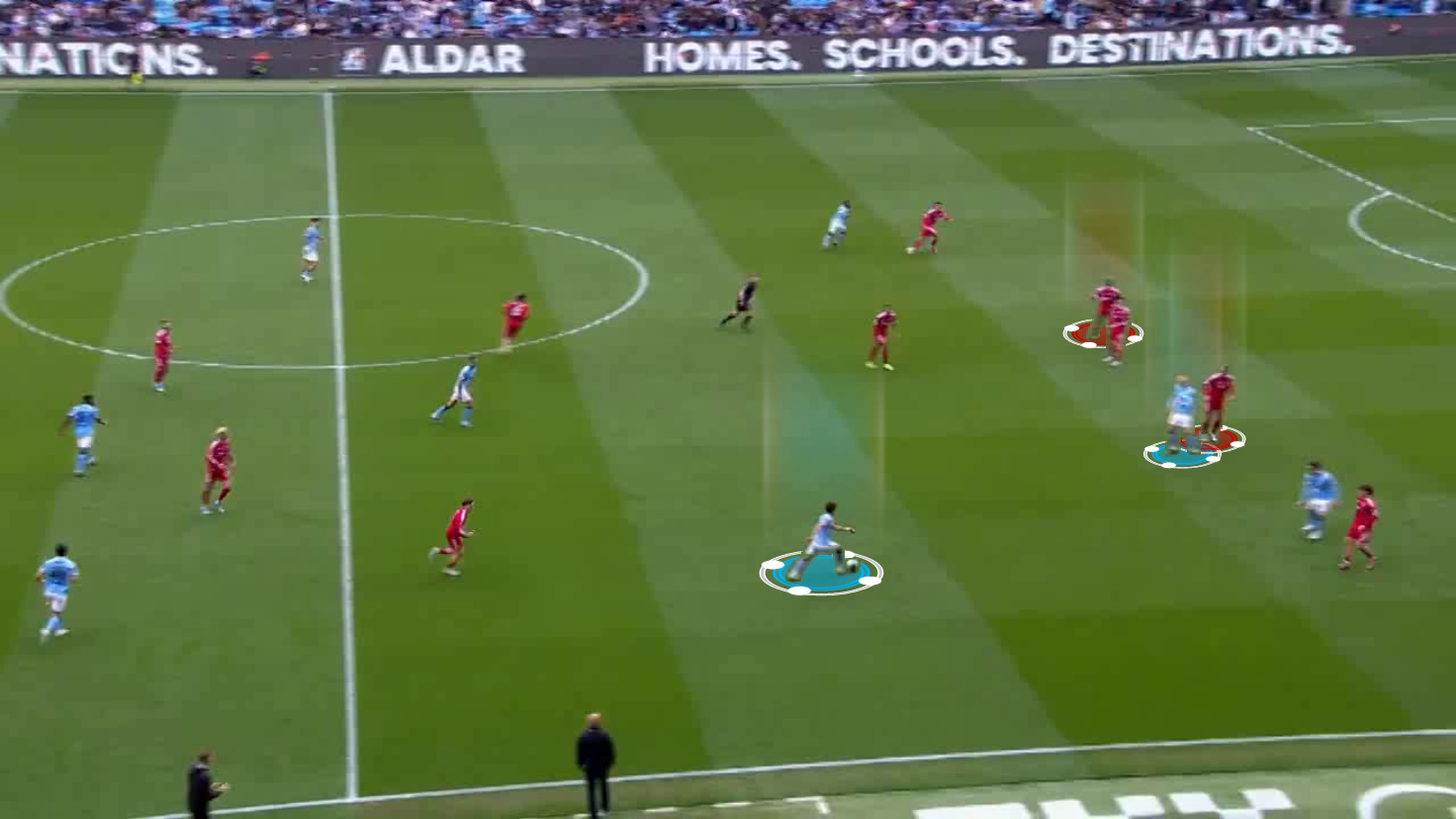
One consistent trait of the strikers analysed in this tactical theory is their propensity to move (and stay) away from the ball until the final moments of an attack.
This play, which began with Liverpool turning over possession from a throw-in in their own defensive third, shows Haaland going to great lengths to stay away from the ball until he is in a goalscoring position.
The Premier League's current top scorer is positioned in front of the ball-near LFC centre-back (highlighted) Virgil van Dijk, the ball-far centre-back (also highlighted) is Ibrahima Konaté.
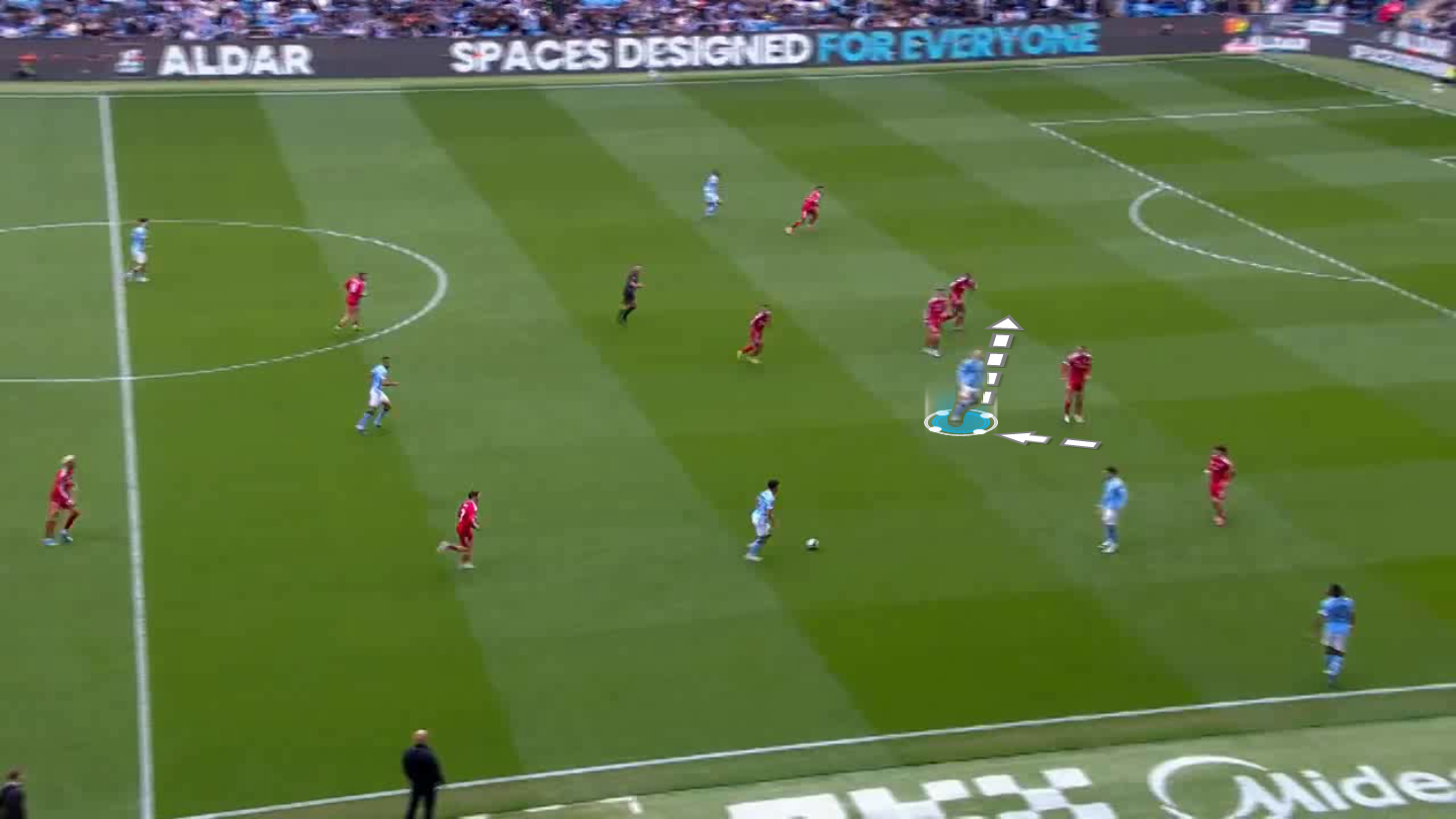
The Norwegian striker, instead of moving towards the ball to combine or to run down the side of Van Dijk into the channel, opens his body up and side-steps away from the ball.
As Haaland moves away from Van Dijk, he scans twice.
Once over his right shoulder to see where his midfielders may be, then over his left to see the positioning of Liverpool‘s defenders.
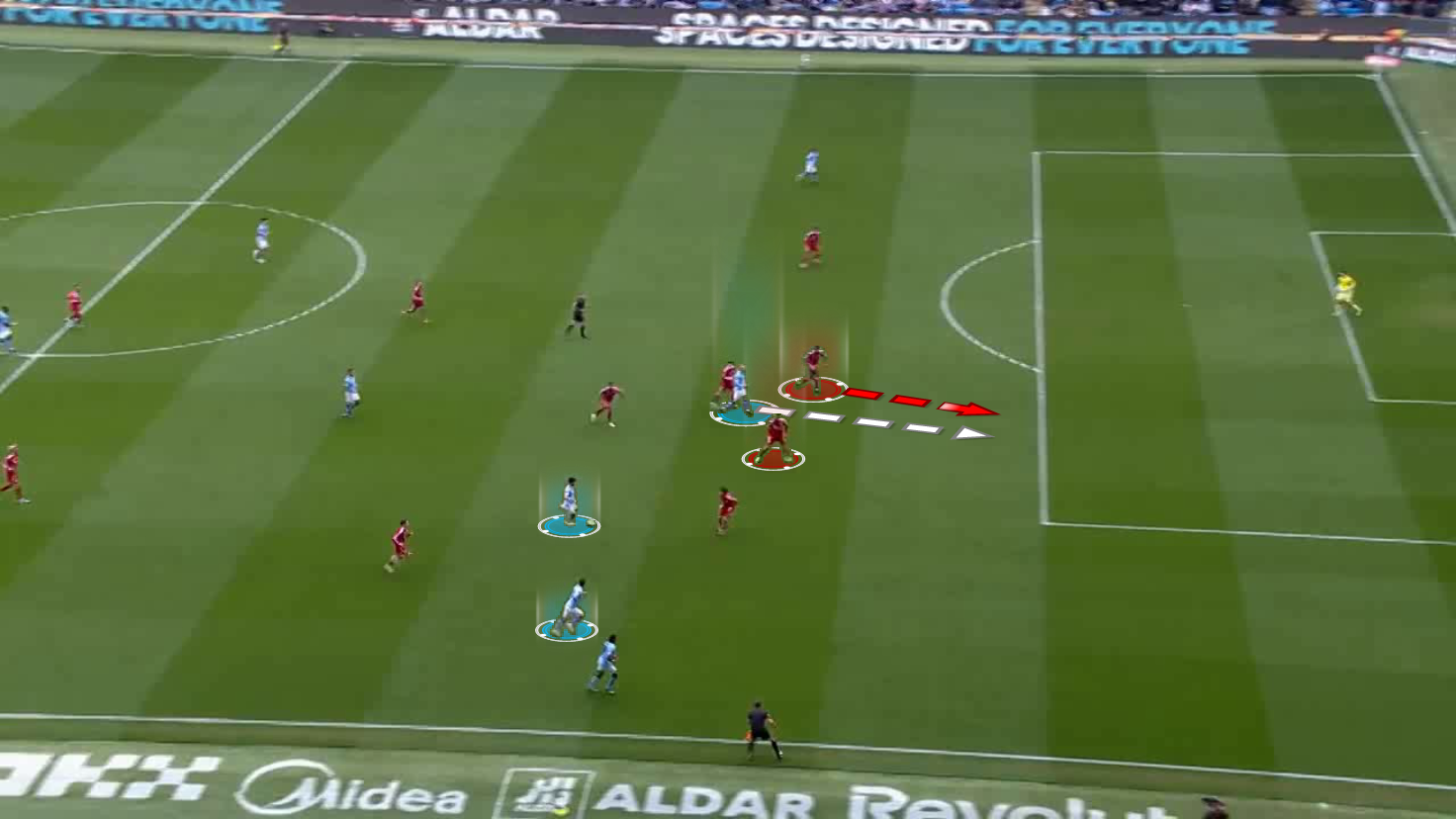
At this point, Haaland threatens to run in behind.
Albeit still further from the goal than he would typically like, this would still put him in a much more dangerous position than had he run into the channel in the first instance.
Having scanned over his left shoulder and seen the positioning of Konaté, he is aware that the right-centre-back has shifted across to track this run, and Van Dijk is positioned to block any pass.
Haaland signals to Matheus Nunes, who is on the ball, that he no longer wants it by halting his brief movement forward and adopting more casual body language.
Nunes instead passes out wide to Rayan Cherki.
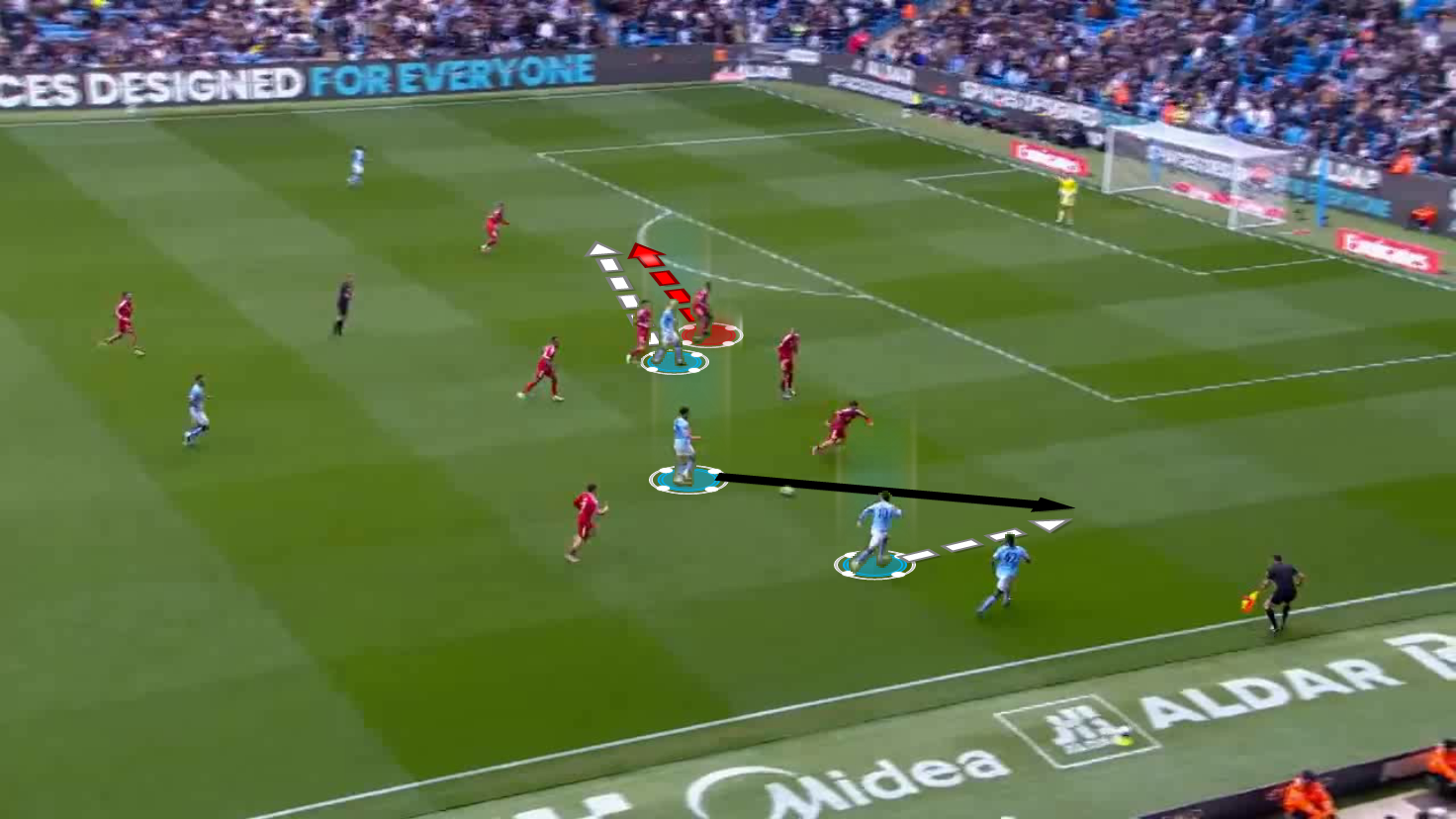
This wide pass is the trigger for Haaland to adjust, changing his run to again move further away from the ball.
Not only does the direction of his movement change, but his entire body language and demeanour also.
The striker drifts away from the ball, looking disinterested, and takes Ibrahima Konaté with him.
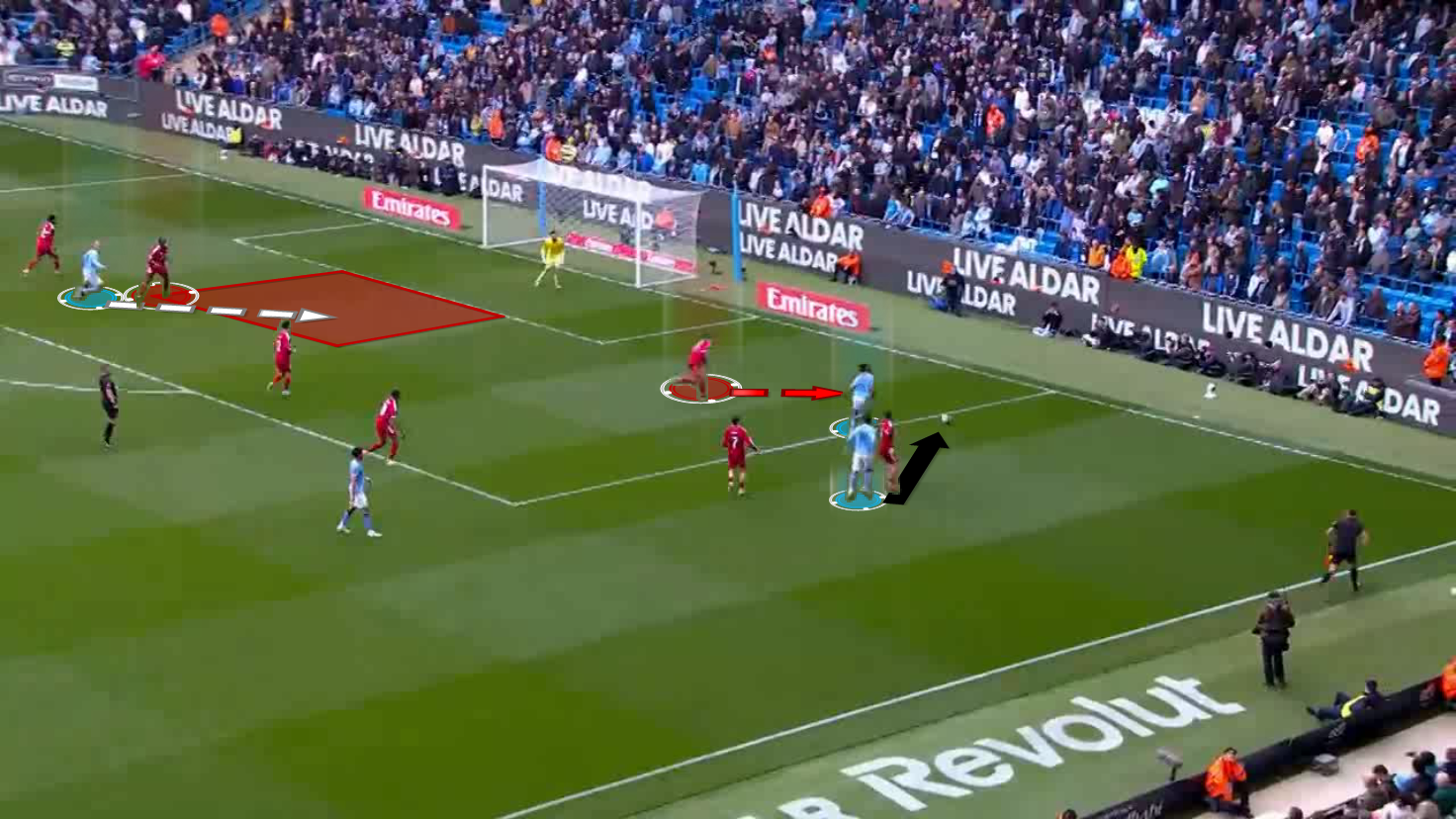
Konaté, wanting to remain as tight as possible to Haaland, is dragged to the outside of the far post.
City winger Antoine Semenyo makes an underlapping run for Cherki and is played in just inside the box.
The weight of the pass encourages Van Dijk to charge at the ball.
The moment Haaland sees that Semenyo is going to receive and deliver a first-time cross, he springs into action.
Like a predator lurking in the long grass, he suddenly comes to life, his previous nonchalance forgotten, and sprints across Konaté.
Haaland first puts his weight on his left foot, allowing him to change direction.
He then puts his left arm across Konaté’s chest to block the defender.
His big first step allows him to push off firmly and build the speed that lets him pounce into the now completely vacated goal area.
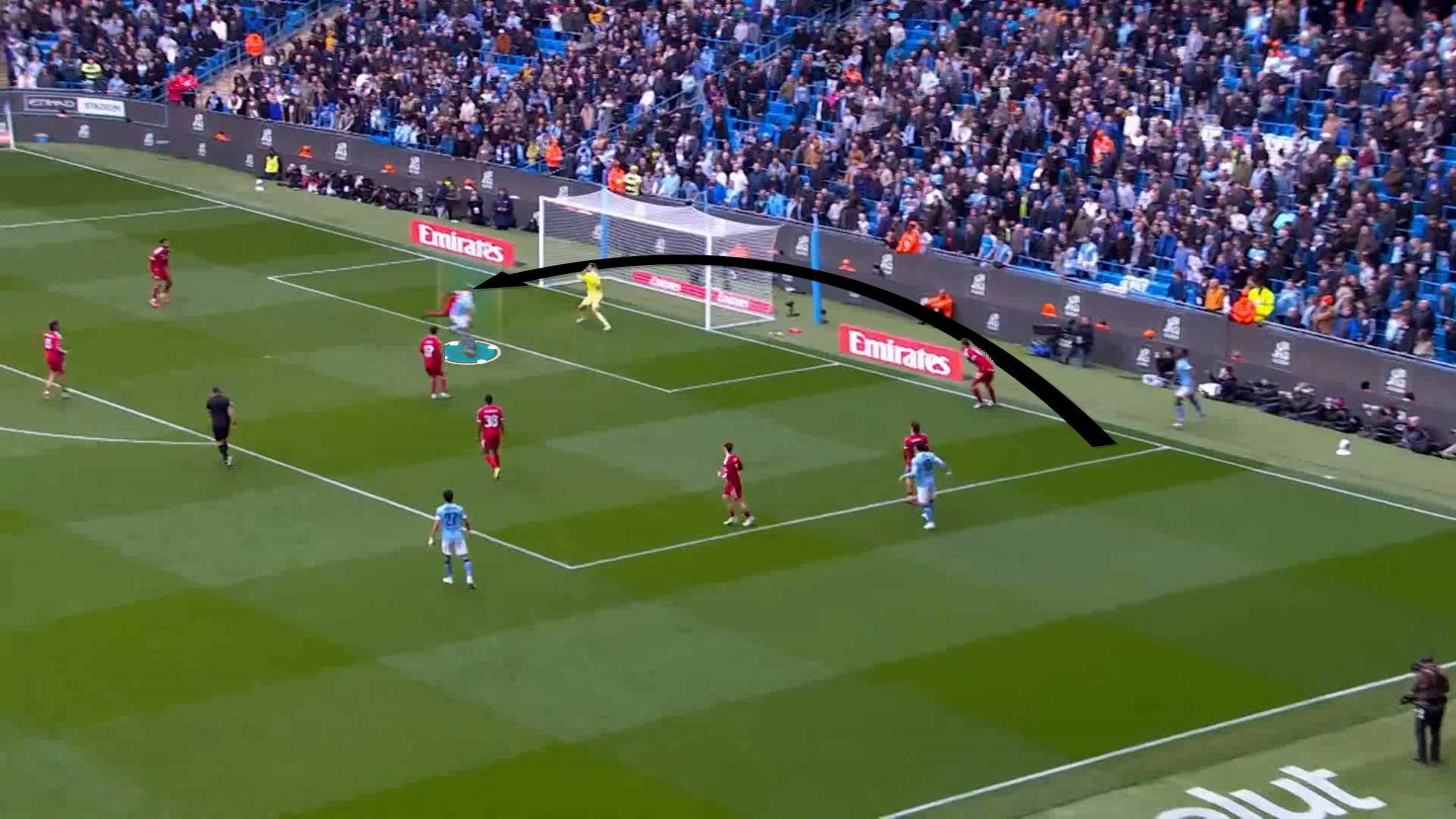
Haaland connects with the ball on the six-yard line, just inside the near half of the goal.
Had he not made his movement away from the ball so wide, on the outside of the back post, the goal may not have been possible.
The centre-back would be in a more comfortable position, in front of the goal, had he not been lured away.
Also, by the time Haaland connected with the ball, he would be on the outside of the post, narrowing his angle and significantly reducing the likelihood of it resulting in a goal.
Attacking The Back Post Area
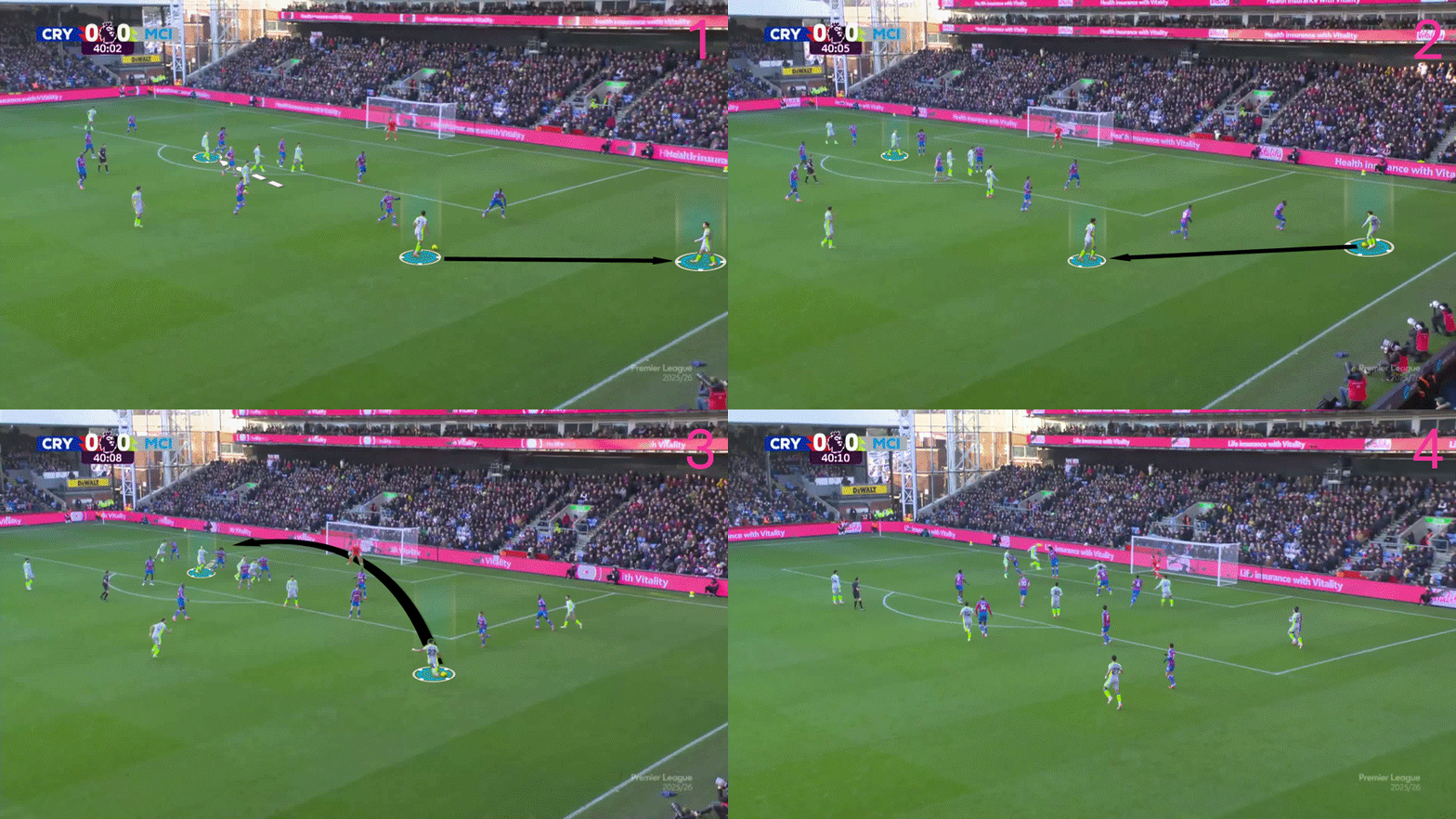
The sequence above shows the moment City, via a Haaland header, opened the scoring in their visit to Crystal Palace.
Haaland began the phase making very similar movements to those analysed above, moving to the far side of the goal as the ball progressed into the final third.
City had initially played down the side of the box but, having been unable to deliver a cross, recycled the ball to the half-space just outside the penalty area.
Haaland, now just inside the box and being tightly marked, has created an almost identical situation for himself.
Should City have managed to work the ball into a deep crossing position, Haaland could run across his marker, as he did with Konaté, and have an empty goal mouth to attack.
In this instance, with the deep cross not coming, and knowing he has a height advantage over his direct opponent, Haaland does not need to run in front of him.
Instead, again coming alive at the very last moment, just as his teammate is set to deliver the ball, he makes a sharp movement just behind the closest defender.
Haaland then outleaps his marker and heads the ball firmly into the net.
Vedat Muriqi At RCD Mallorca
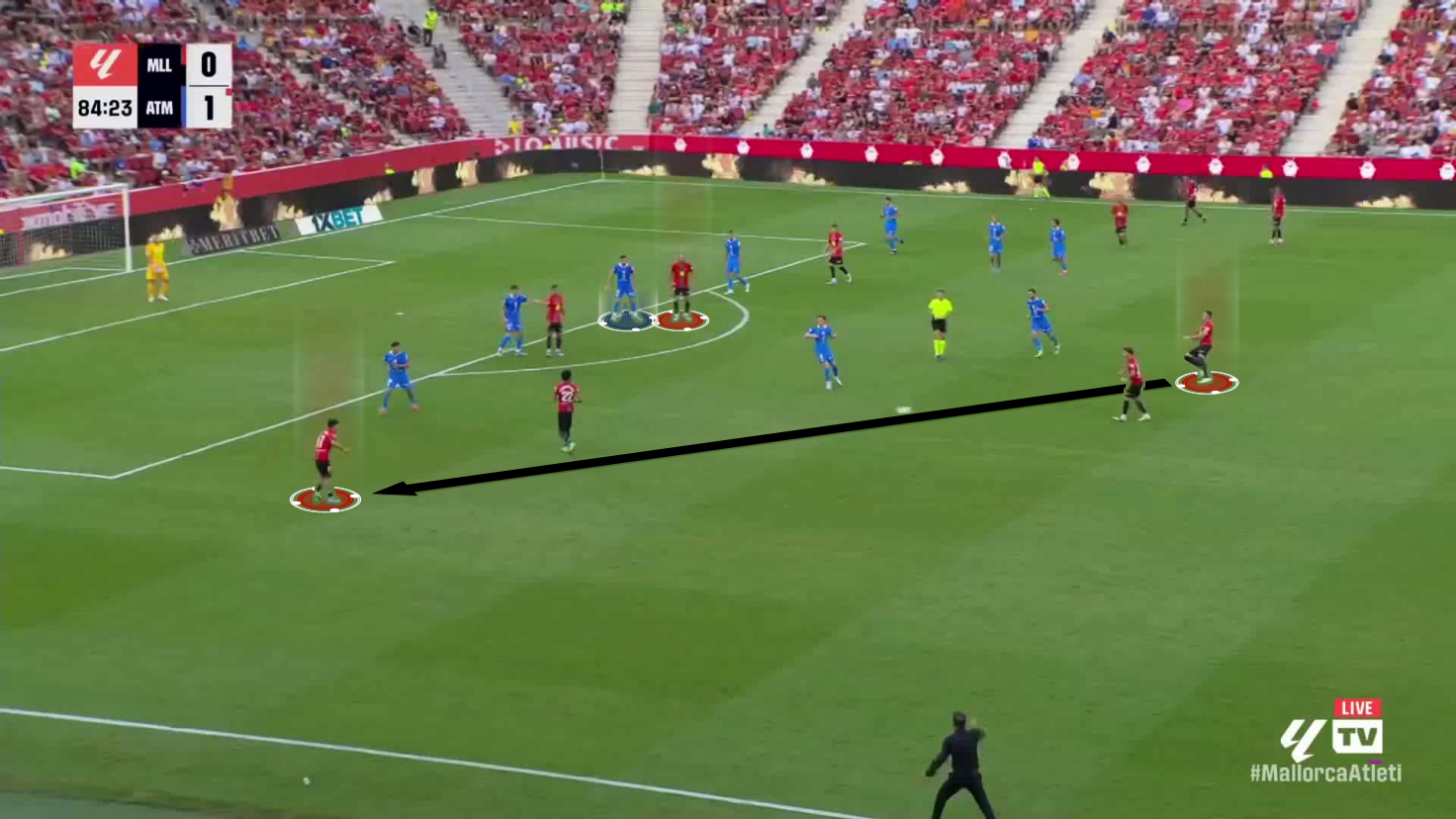
A player with similar traits in their movement, as well as their physical build, is Mallorca’s Muriqi.
Averaging 0.7 goals per match, Muriqi is La Liga’s current second-highest goalscorer, trailing only Mbappé by two goals.
In the image above, from RCD Mallorca’s draw with Atlético Madrid, the 6'4 striker can be seen staying away from the ball as it travels from central midfield to the left wide area.
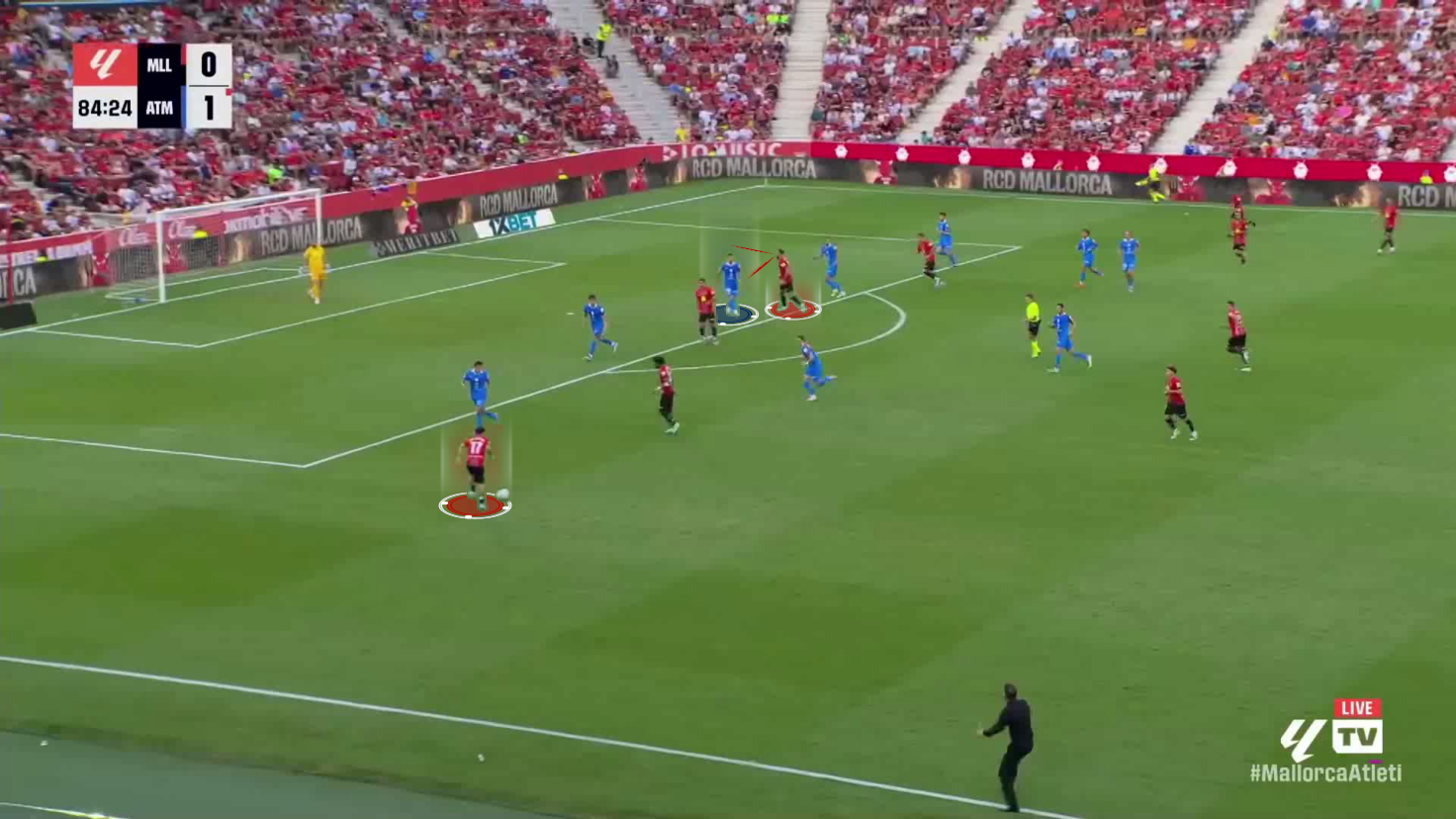
As the left-winger drives towards the box, Muriqi stares directly at his marker to see where he is looking.
![Brighton & Hove Albion Vs Crystal Palace [5-0] Premier League 2026/2027: How Fabian Hürzeler Combined Pressing & Positional Rotations To Dominate The M23 Derby - Tactical Analysis](https://cdn.mymidnight.blog/77f959f119f4fb2321e9ce801e2f5163/size/w600/2026/10/Brighton---Hove-Albion-Vs-Crystal-Palace-2026_2027----Tactical-Analysis.png)
![Newcastle United Vs Aston Villa [0-1] Premier League 2026/2027: How Unai Emery Tactics Punished Wasteful Magpies - Tactical Analysis](https://cdn.mymidnight.blog/77f959f119f4fb2321e9ce801e2f5163/size/w600/2026/10/Newcastle-United-Vs-Aston-Villa--0-1--Premier-League-2026_2027_-How-Unai-Emery-Tactics-Punished-Wasteful-Magpies---Tactical-Analysis.png)
![Celta Vigo Vs Juventus [1-2] Europa League 2026/2027: How The Old Lady Escaped With A Late Comeback Despite Predictable Attacking Play - Tactical Analysis](https://cdn.mymidnight.blog/77f959f119f4fb2321e9ce801e2f5163/size/w600/2026/10/Celta-Vigo-Vs-Juventus---Tactical-Analysis.png)
![Villarreal Vs Napoli [3-1] Champions League 2026/2027: How Iñigo Pérez Tactics Exploited Massimiliano Allegri Mistakes - Tactical Analysis](https://cdn.mymidnight.blog/77f959f119f4fb2321e9ce801e2f5163/size/w600/2026/10/Villarreal-Vs-Napoli---Tactical-Analysis.png)