Luis García Plaza Tactics At Sevilla 2026/2027: Can His Direct, Counterpressing Game Model Revive Los Nervionenses? - Tactical Analysis
Luis García Plaza is building a more aggressive Sevilla side. This tactical analysis examines their build-up, final-third attacking patterns, pressing and transitions, while assessing how they can play proactively without sacrificing defensive balance.

Sevilla began the 2026/2027 season aiming to forge a clearer identity under the guidance of Luis García Plaza, who seeks to establish a stronger presence in the opponent's half, both in and out of possession.
The concept goes beyond possession; it focuses on the team's ability to dictate tempo, regain the ball in advanced areas, and turn sustained pressure into genuine scoring chances.
The season's opening phase highlighted the project's strengths, with victories over Rayo Vallecano, Athletic Club, Valencia, and Deportivo La Coruña.
Conversely, matches against Atlético Madrid and Barcelona underscored the importance of testing this approach against opponents capable of exploiting open spaces and posing unique challenges to the team's defensive structure.
The fundamental question is not whether Sevilla can play an attacking game, but rather how they can achieve this without compromising the balance between the lines, particularly when losing possession or failing to play through the opponent's press.
In this tactical analysis, we tackle that question by analysing Luis García Plaza's Sevilla tactics in four interconnected phases: build-up and play development, chance creation and finishing, defensive organisation, and transitions.
Sevilla Build Up & Progression
A team's identity begins with how it handles the ball in its own defensive third.
The desire to control advanced areas requires a build-up capable of bypassing the initial press, linking the backline with the midfield, and delivering the ball to players in positions that allow them to advance toward the goal.
It is not about the number of passes, but rather the ability of those passes to shift the opposition and open up space for players moving forward.
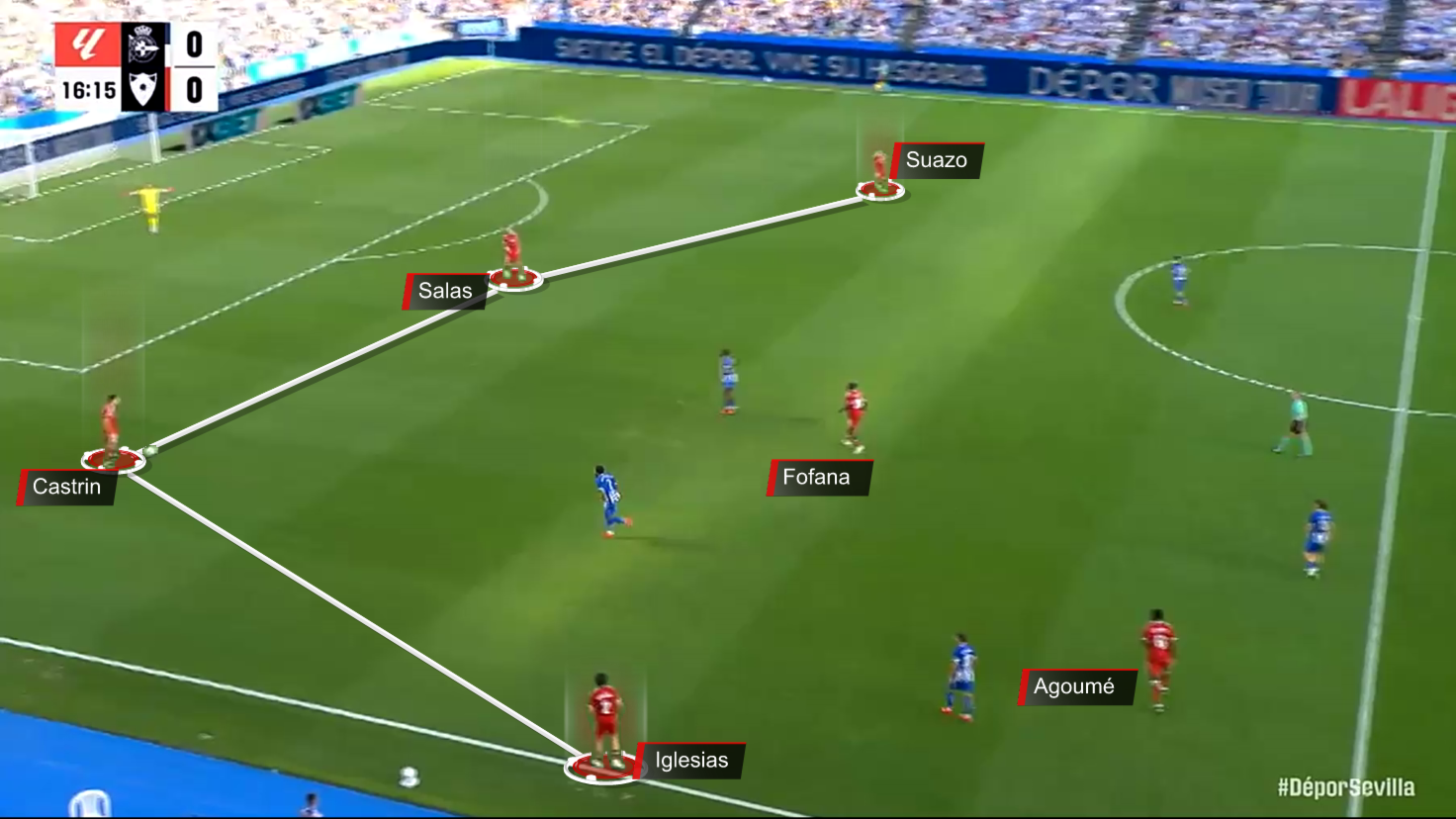
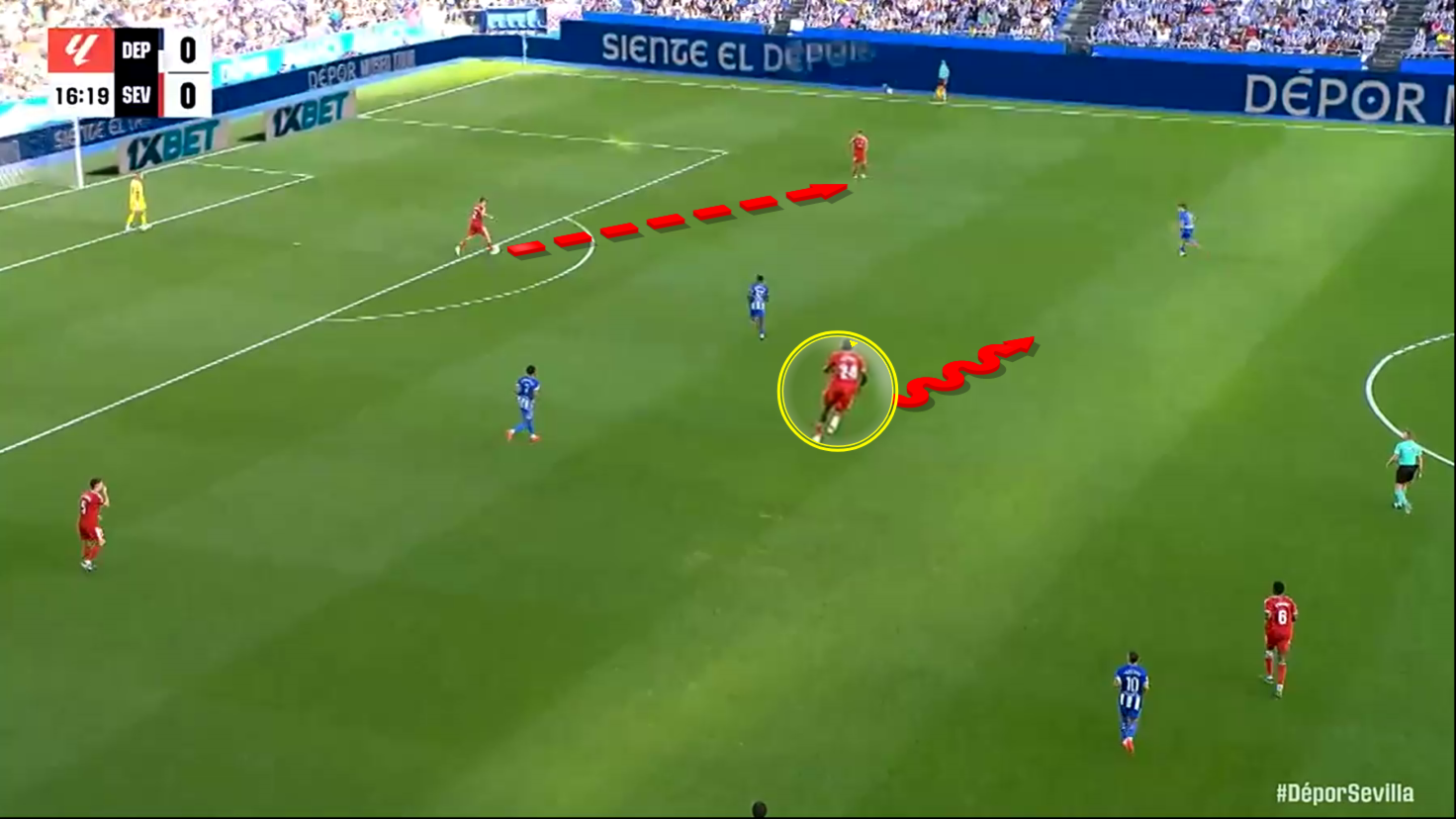
Here, against Deportivo La Coruña, the ball is being circulated from right to left, with Lucien Agoumé or Youssouf Fofana constantly moving in front of the defence.
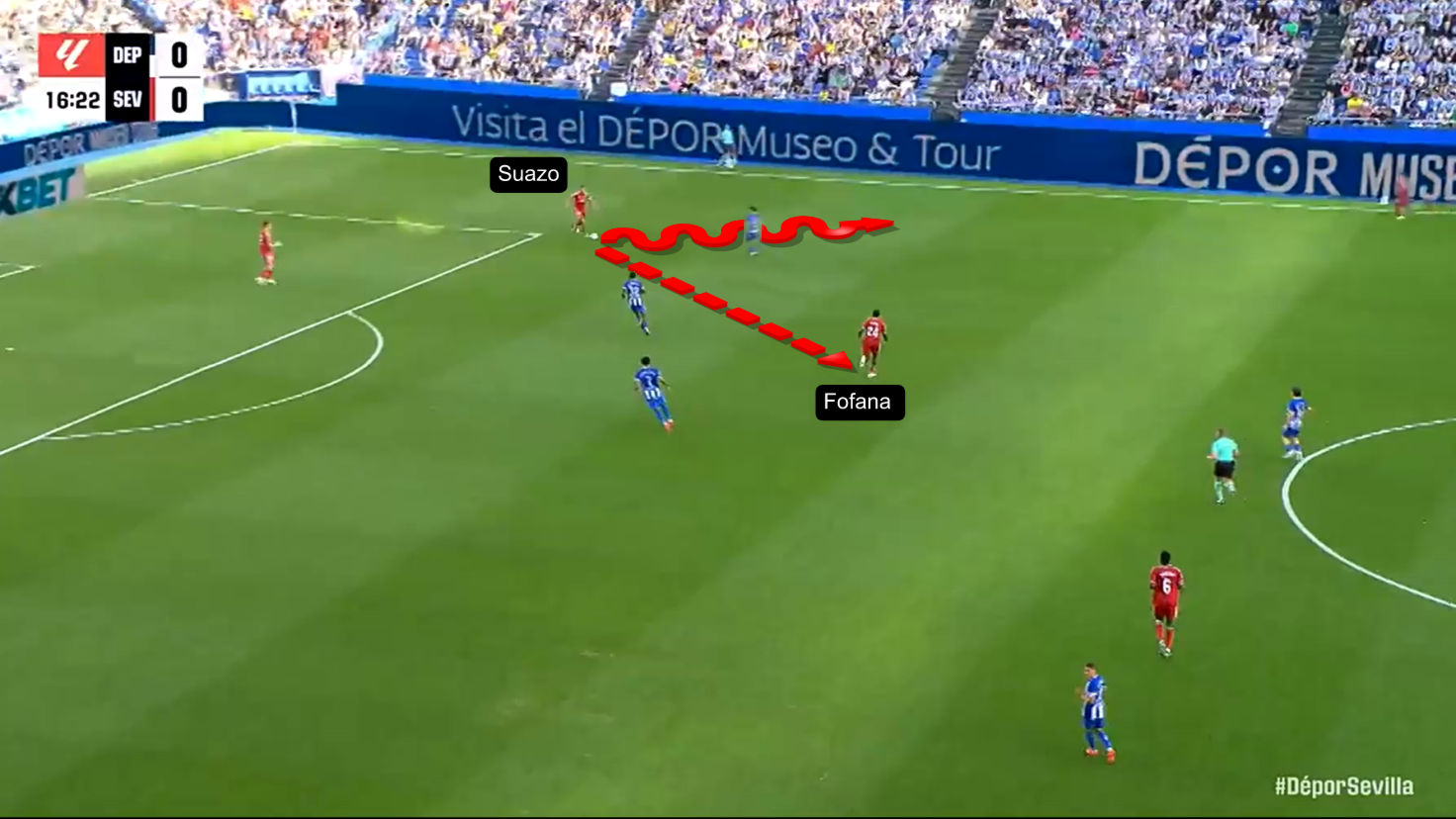
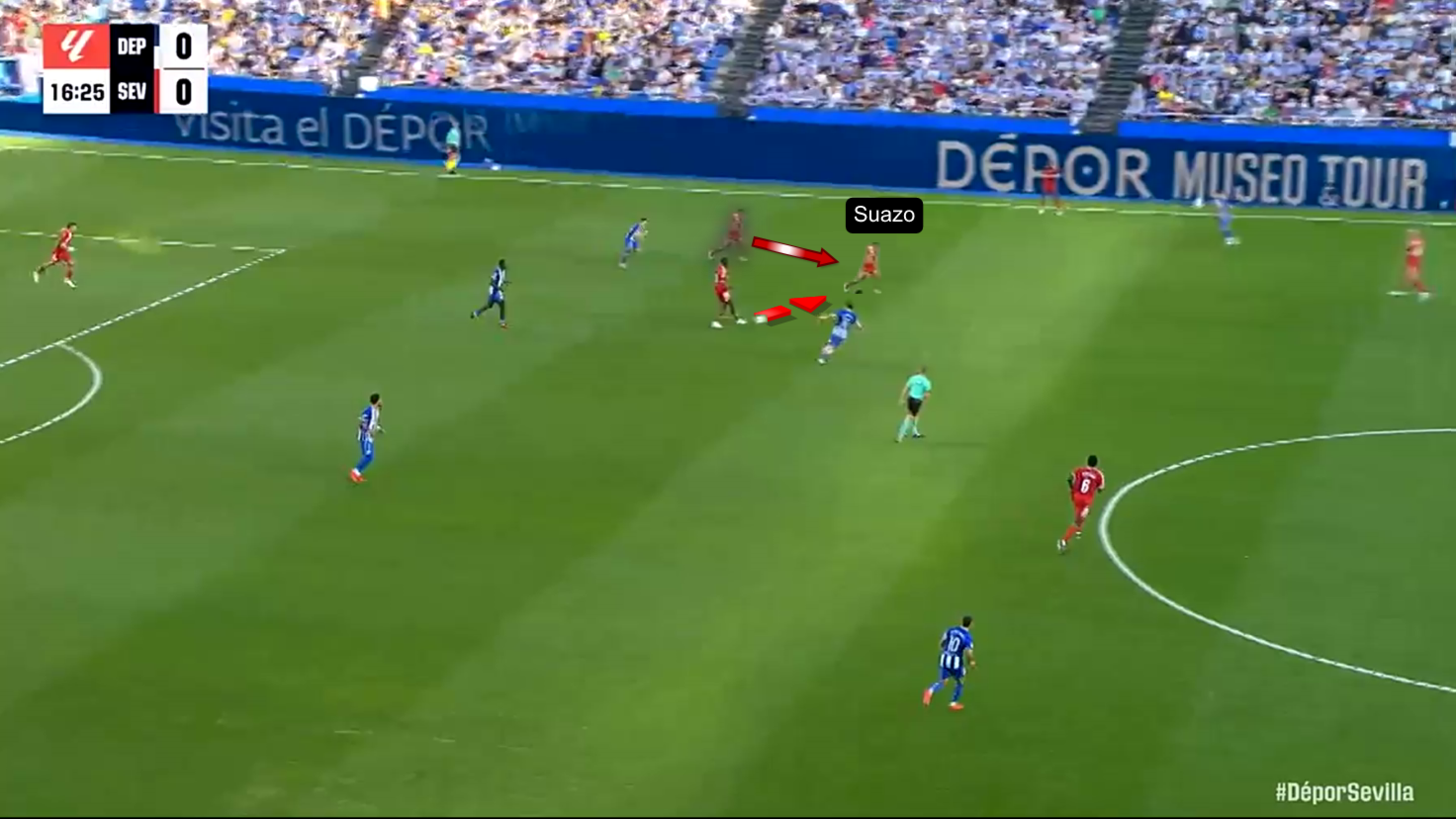
Then, the ball from Gabriel Suazo progresses the attack into the middle third.
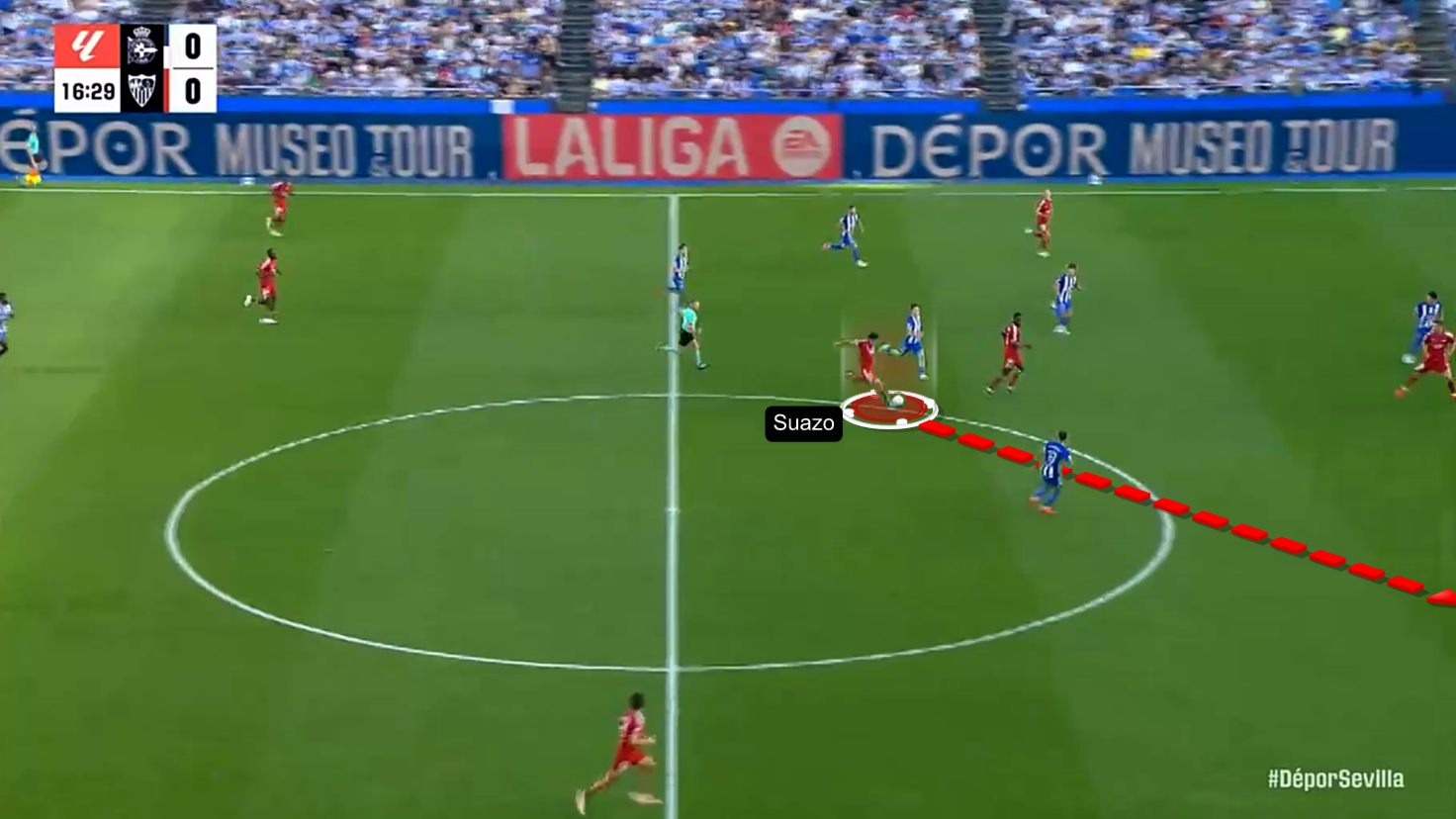
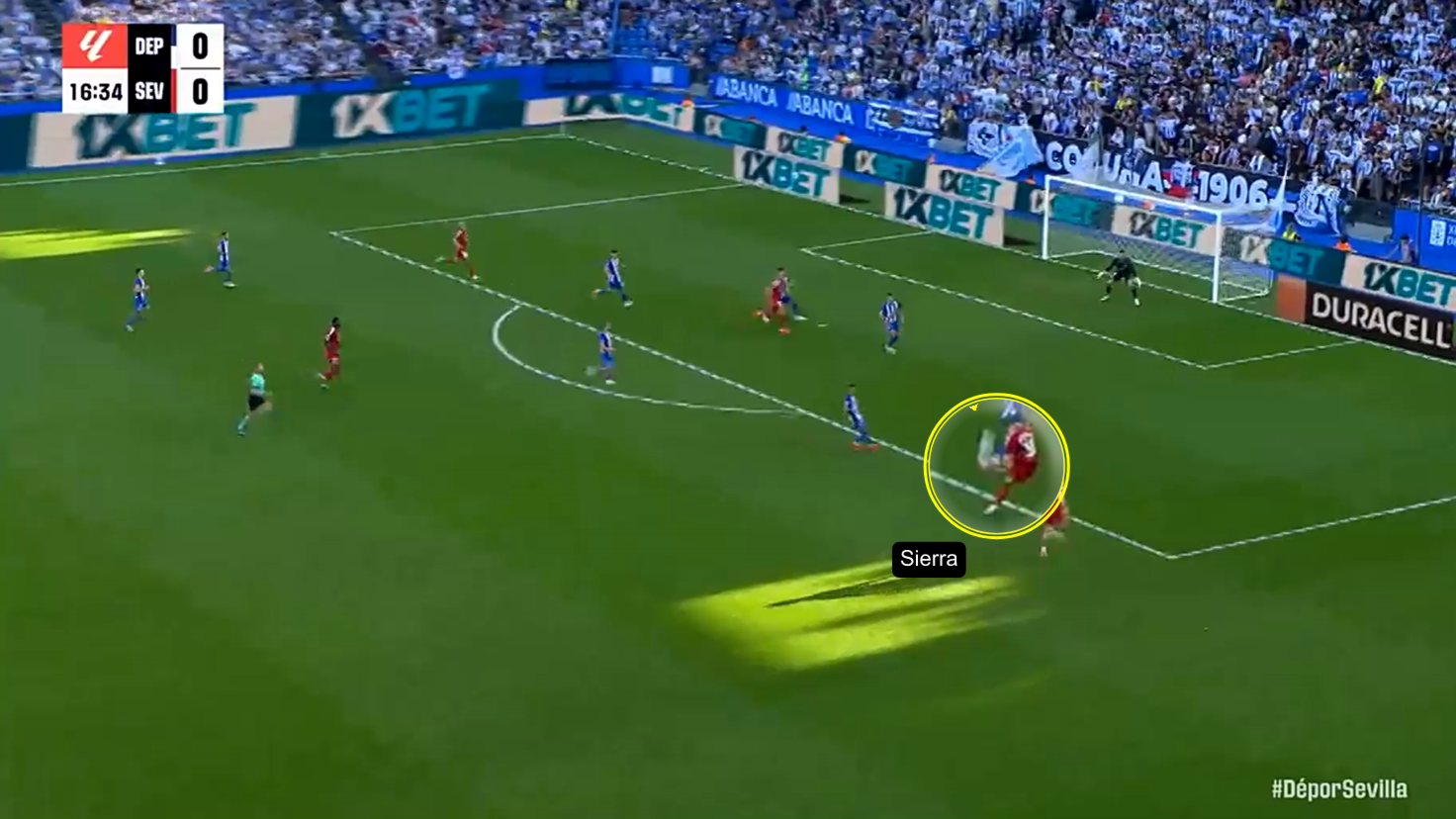
After concentrating play on the left flank, the ball is shifted to the right to create a favourable 2v1.
When Sevilla begin building play from the back, the spacing between the defenders and midfielders becomes a crucial factor.
The player in possession requires multiple passing options, while midfielders must move to create various angles to receive the ball, whether in front of or behind the pressing line.
This highlights the importance of the pivot player’s positioning, such as Lucien Agoumé, in linking the lines and providing an outlet for the ball.
However, the value of this role is defined not merely by receiving passes but by the ability to direct play forward, handle pressure, and choose the right moment for a vertical pass.
When the opponent closes off central channels, Sevilla need to find alternative ways to advance.
This can be achieved through full-backs pushing into advanced areas, wingers drifting into the half-spaces, or direct passes to the striker while midfielders move up to contest the second ball.
Crucially, these movements must be coordinated.
If a full-back advances to provide width, the winger should exploit the inside channel or occupy an opposing defender.
Similarly, if the striker drops deep to receive the ball, another player should attack the space left behind.
In this way, progression becomes the result of manipulating the opponent's defence, rather than simply shifting the ball from side to side.
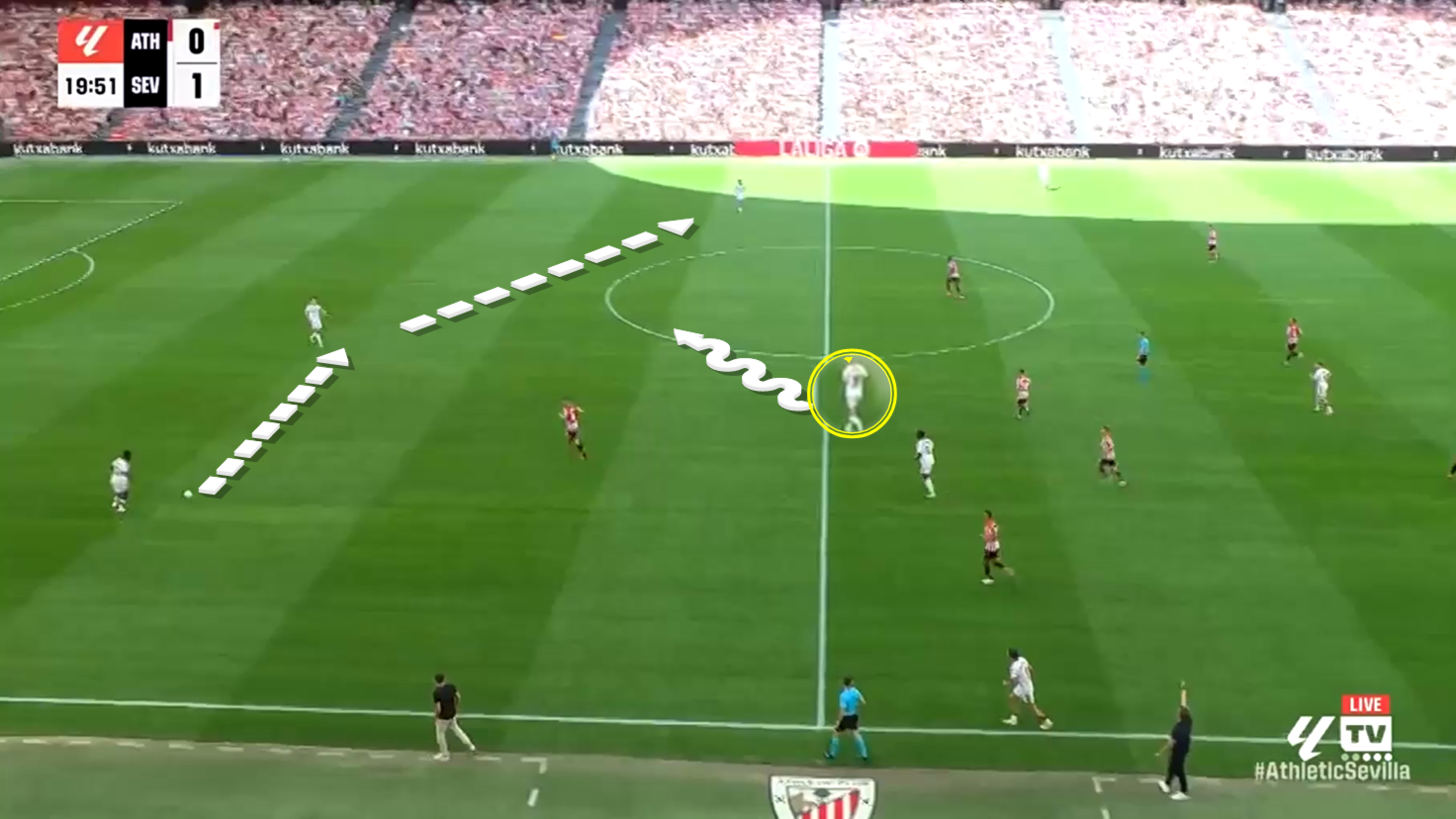
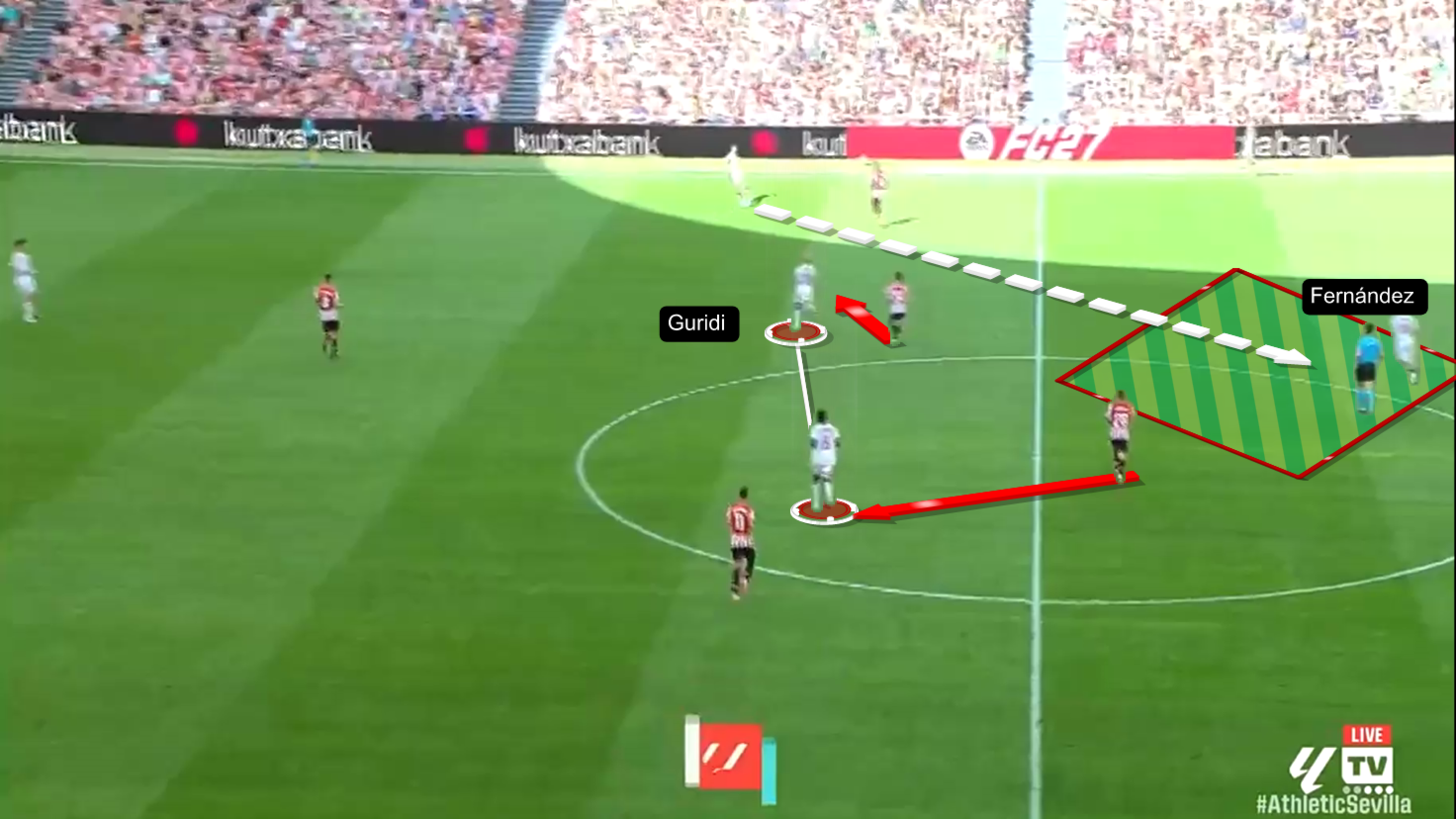
This is the progression phase, yet it begins with the same concept: shifting the ball from right to left to make the opponent move.
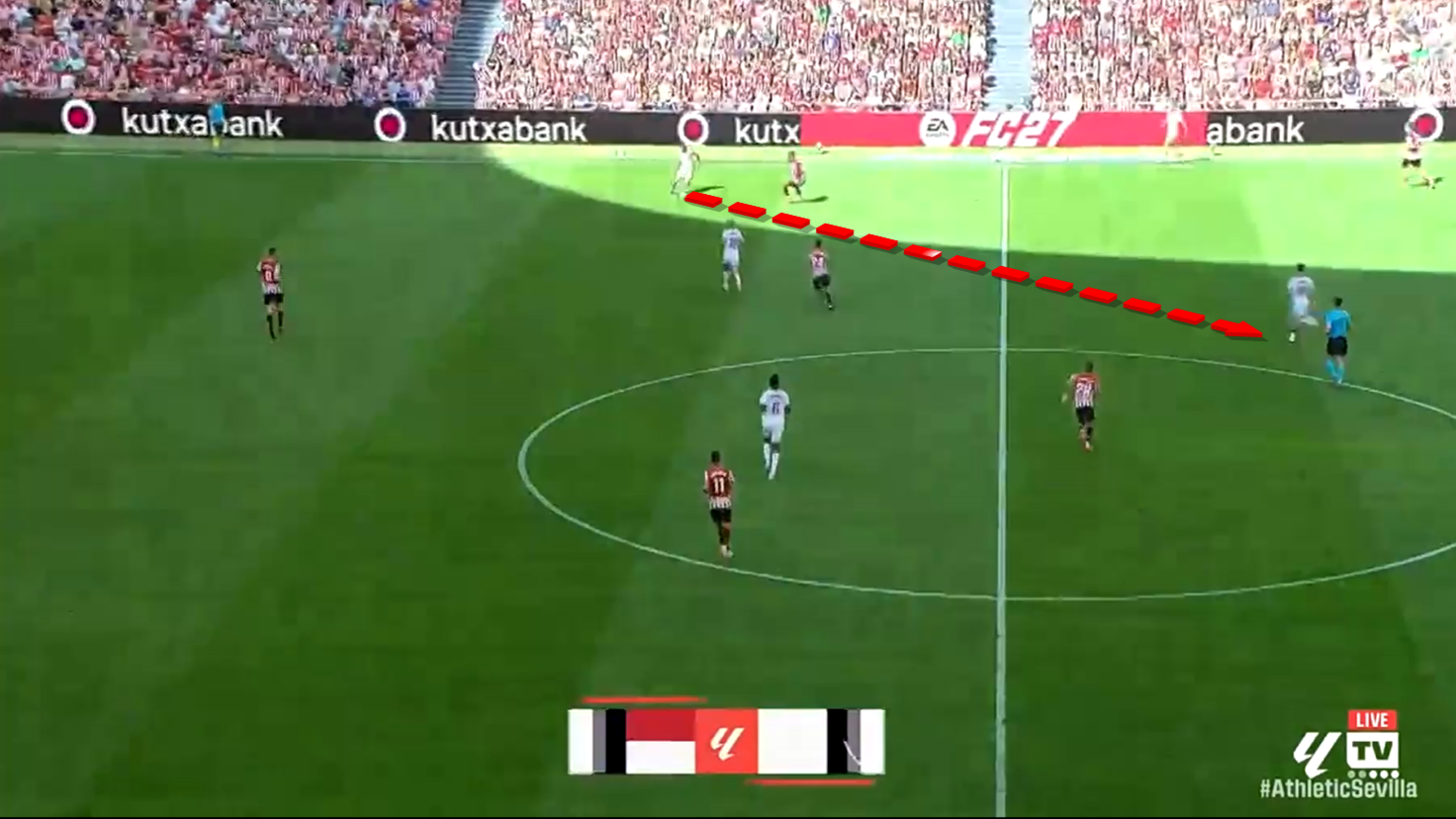
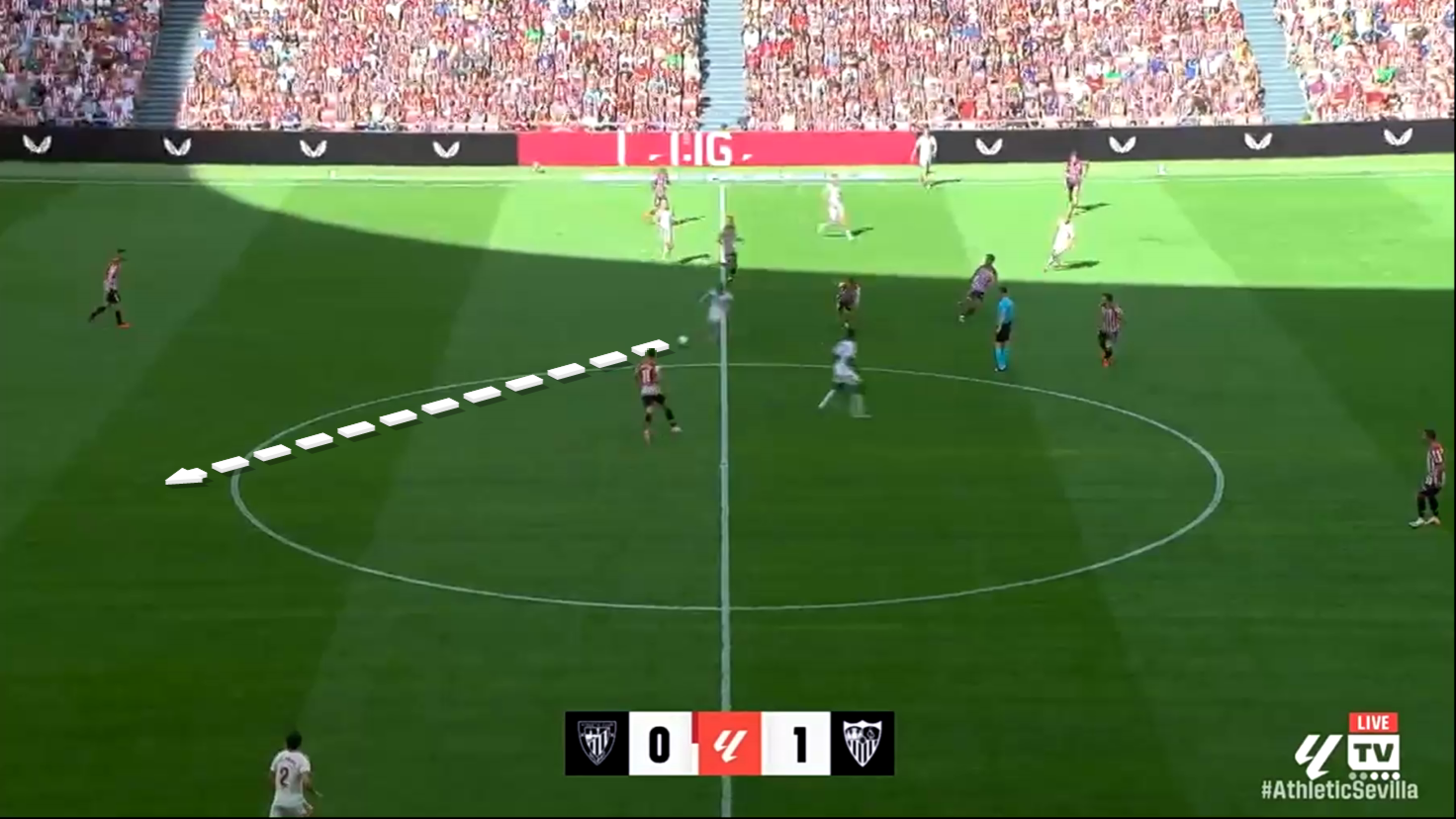
Here, Jon Guridi makes a movement that draws the Athletic Club midfielder away, creating space for Peque Fernández to drop into; this highlights the overloading of the left flank and the clearing of the right side.
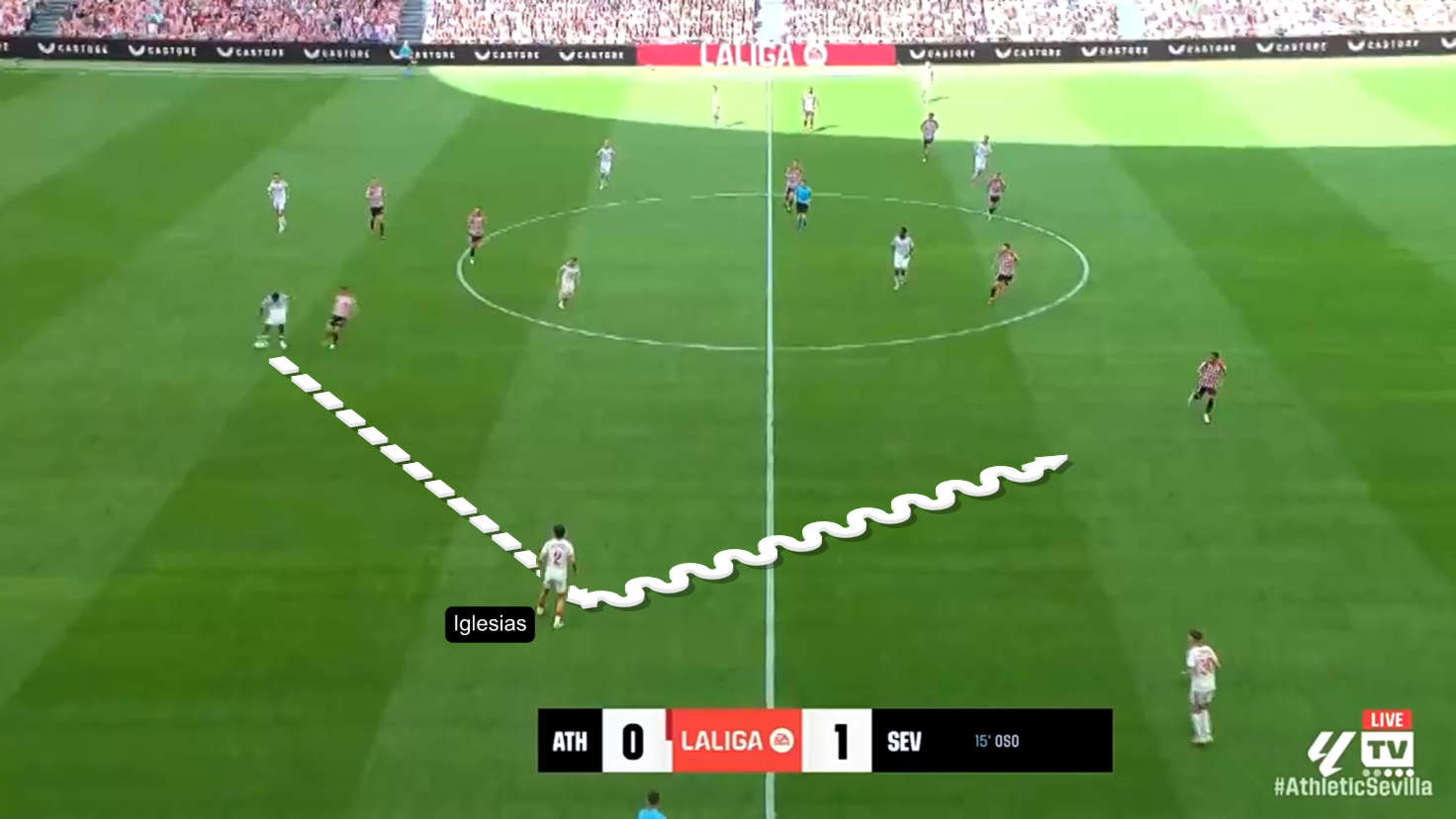
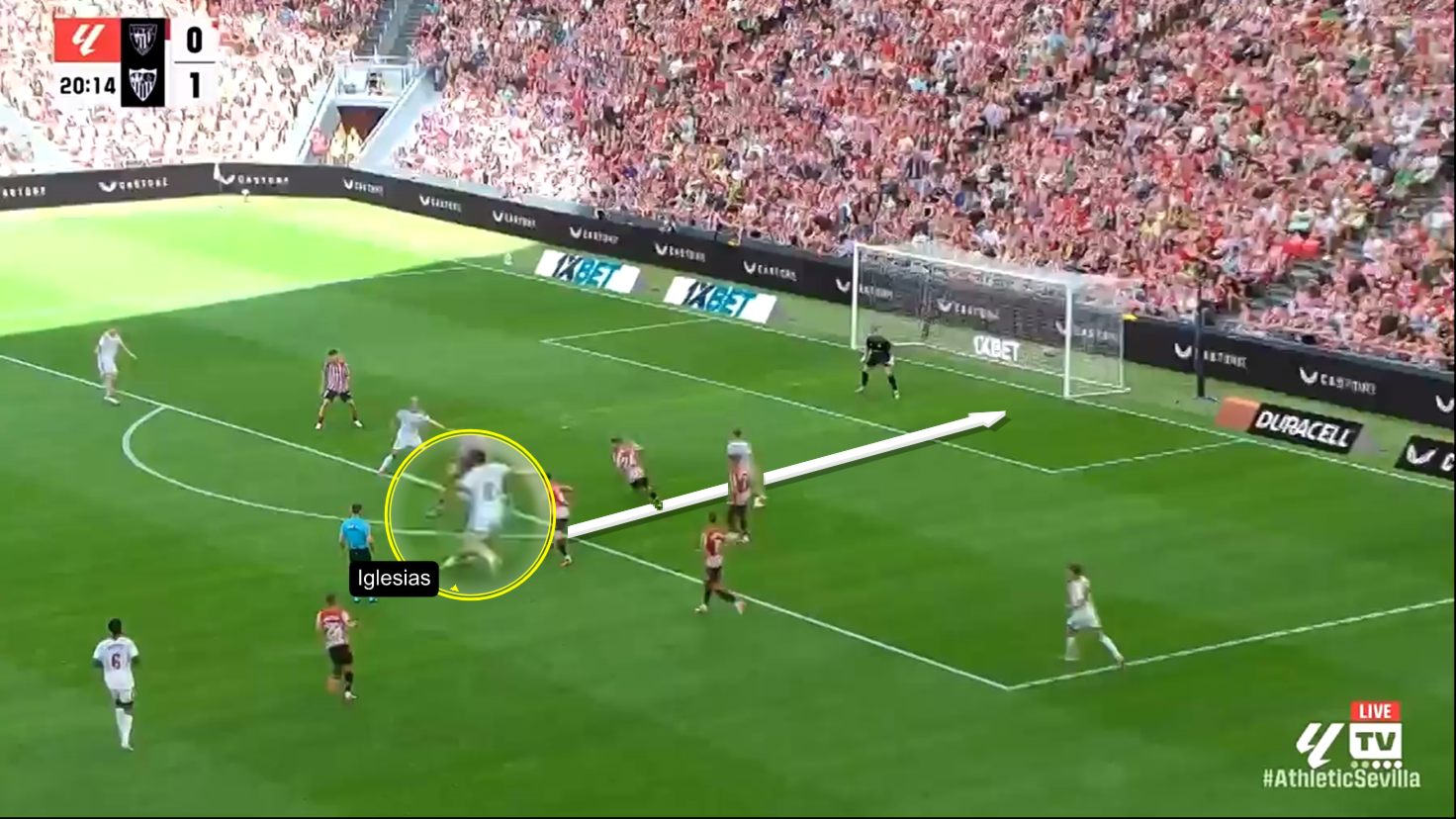
Here, Juan Iglesias carried the ball some distance and then took a shot on his own.
However, this approach presents a significant challenge: can Sevilla maintain the quality of their decision-making when the opponent blocks passes to the pivot or forces defenders to play under direct pressure?
This highlights the importance of varying solutions, alternating between short build-up play and direct passing, based on the available space.
Sevilla In The Final Third & Attacking Style Of Play
Reaching the opponent's half does not necessarily mean controlling the most dangerous areas.
The difference between effective and ineffective possession lies in a team's ability to penetrate the defensive line, force defenders to make difficult decisions, and then exploit the resulting spaces.
Sevilla need to strike a balance between three elements: width to stretch the opponent's defence, depth to threaten the space behind it, and a presence between the lines to provide options for passing and penetration.
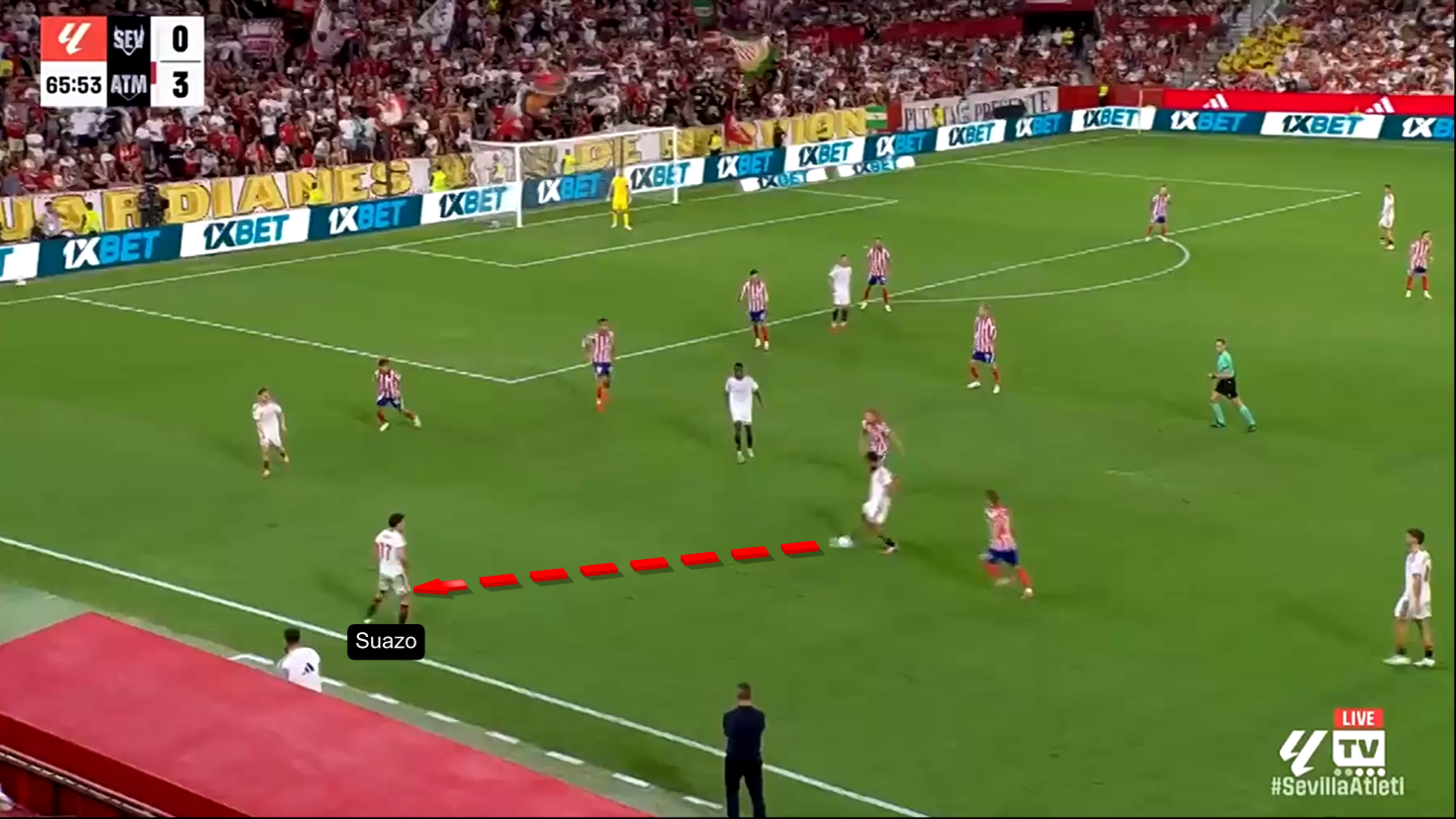
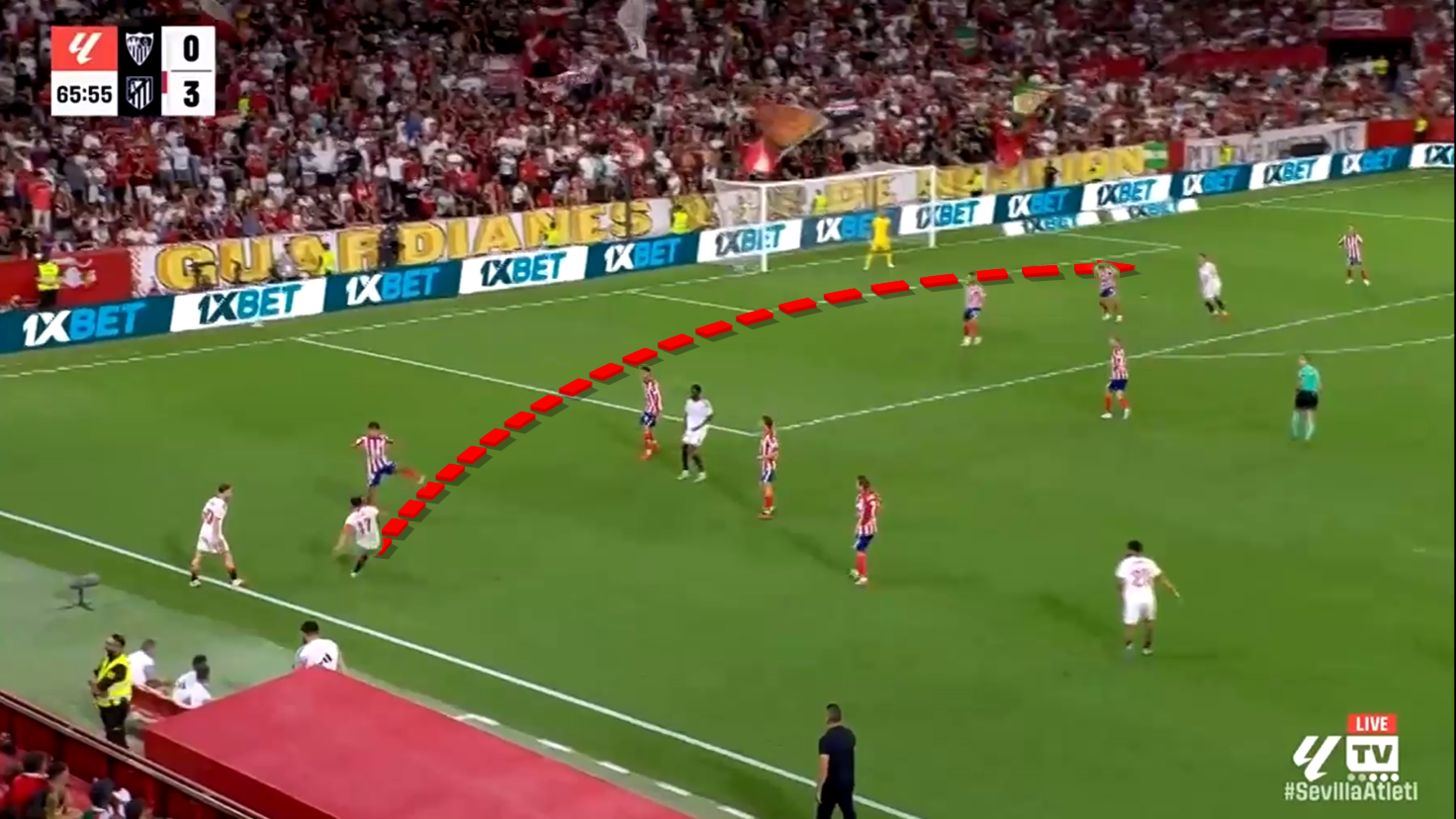
Here, Suazo widens the play, with the striker positioned and the opposite winger making a supporting run.
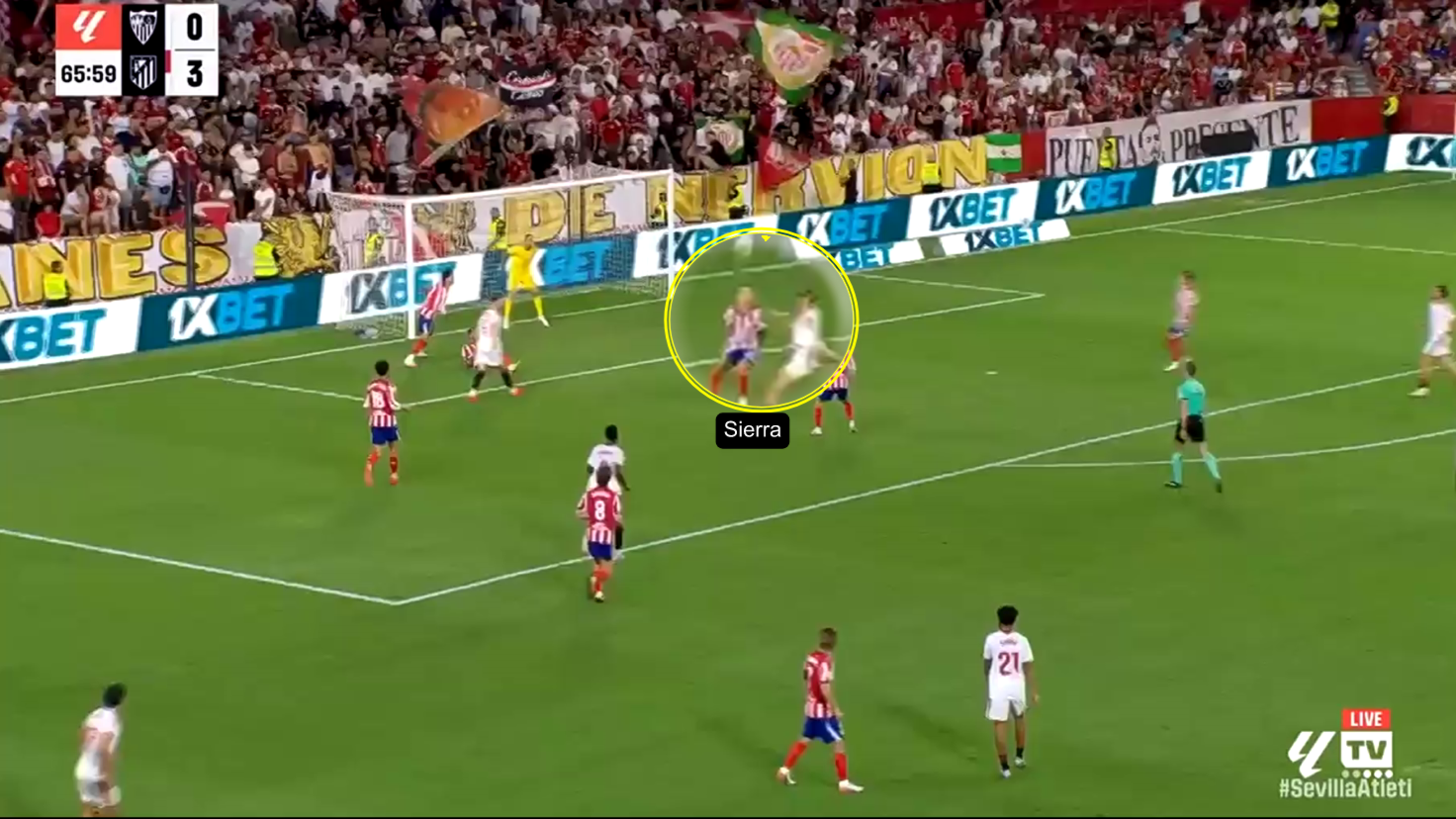
The winger moves in to follow up on the shot inside the penalty area.
The quality of attacking organisation becomes evident when the ball reaches the flanks.
A cross alone is insufficient to create a genuine scoring opportunity; it must be synchronised with well-timed movements inside the penalty area.
One attacker might target the near post while another aims for the central zone, and a midfielder arrives from deep to exploit the space around the penalty spot.
Simultaneously, the team requires a player to cover the far-post area and another ready to react to any rebounds.
When the winger cuts inside, the full-back can provide width on the flank.
When the forward drops deep to receive the ball, a midfielder or the winger can attack the space behind the defence.
However, the success of these movements depends on their timing and the players' ability to avoid occupying the same space.