How To Fake Transitions In A 2-2 Structure Like Fabian Hürzeler & Sebastian Hoeneß - Tactical Theory

Not too long ago, Pep Guardiola said that football is no longer about the positional approach in the modern world.
"It is about rhythm," he added before pointing to the likes of Brighton and Bournemouth, who he believes are currently playing this modern brand of football.
By referring to Bournemouth and Brighton, Guardiola seems to be suggesting that the most important aspect of football in this current era is not dominating or controlling possession but rather transition.
It is fair to say that teams like Bournemouth and Brighton are among the best in the Premier League in terms of transition.
Both teams are really good at creating the transition, either with their pressing or their build-up.
Yes, build-up.
Before we get to the second aspect, it is not rocket science to understand that the team that wants to have more transition moments needs to have less possession.
Take Bournemouth's figures, for example.
They currently sit in the bottom half of the table in terms of possession, averaging just 47% per game this season—below the likes of Brentford, Southampton or Wolves, who have fewer points.
Under Andoni Iraola tactics, Bournemouth were happy to play without possession, as they are more focused on the transition moments.
They allowed the opposition to have more possession so that Bournemouth could press them to win the ball back and then attack in the transition phase.
No team in the league were better than Bournemouth at disrupting the opponent's build-up (they have the best or the fewest opponent passes completed in the build-up and the fewest opponent unsuccessful passes, lost dribbles, or bad touches near their goals).
However, not many teams are as good at pressing as Bournemouth, and more generally, not many coaches are willing to take the risk of pressing the opposition as Iraola did.
It can be high-risk, high-reward, or high-risk, low-reward, and many coaches don't want the latter.
Therefore, many coaches try to find a solution to create the transition without sacrificing their possession numbers.
They do this by developing their team's build-up situation to create a 'fake transition'.
Fabian Hürzeler's Style Of Play
Brighton head coach Fabian Hürzeler often uses a unique build-up method to create fake transitions.
For context, Brighton's impressive possession rate of 51.8% this season means they have only lost possession 12 times in their 29 Premier League games.
Then, Hürzeler relies on his team's in-possession structure to execute transition moments while maintaining possession.
On this occasion, he used a 2-2 structure in the first phase of the build-up, consisting of two centre-backs and two central midfielders.
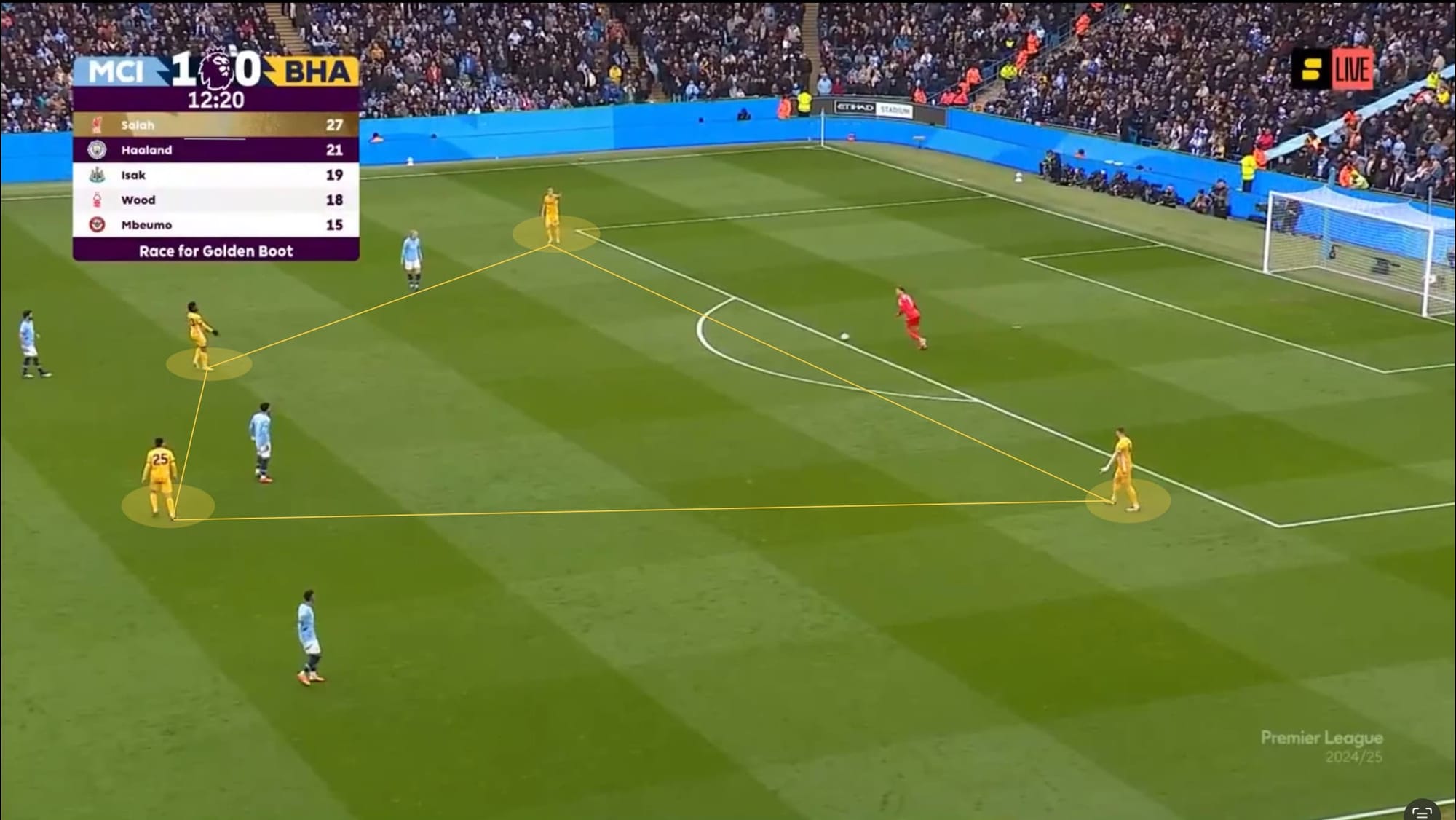
Interestingly, Hürzeler has been using this 2-2 formation since his time at St. Pauli.
However, his approach at St. Pauli was slightly different.
Instead of two centre-backs and two central midfielders, he used two centre-backs and a central-midfielder/centre-back partnership because of the unique role that Eric Smith can play as both a centre-back and a number 6.
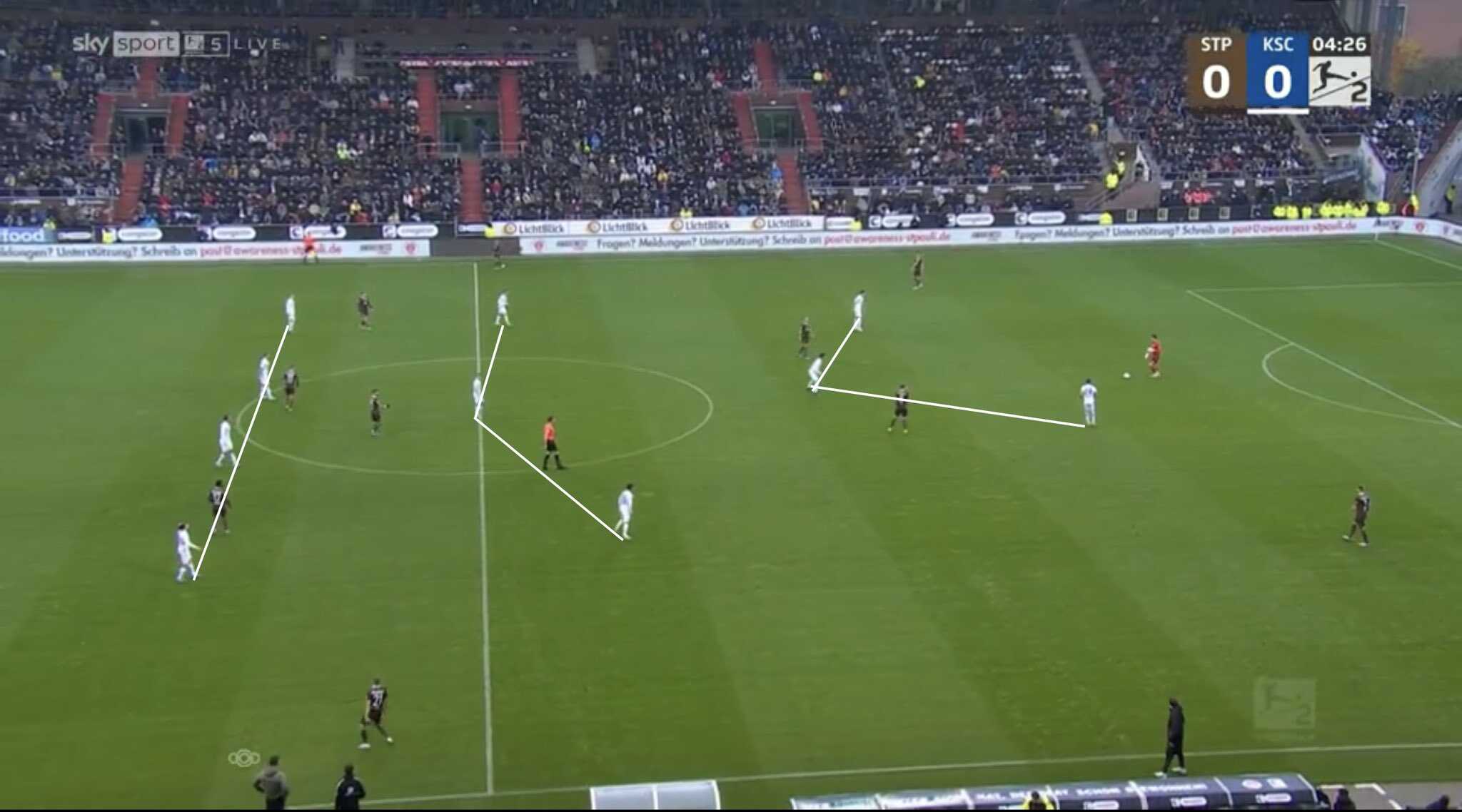
Despite these variations, the underlying principle remains the same.
Hürzeler uses this 2-2 structure in his team's build-up because it allows him to use fewer players in the early stages of an attacking sequence, which in turn allows him to have more options up front.
This means that when his team wants to play direct, they can create a situation where their opponents do not outnumber the attacking units.
They will also have a favourable numerical advantage and plenty of space to get the ball forward.
Many teams strive for this when working in transition: to be able to attack the opponent without being outnumbered and to have enough space in the attacking third to launch an attack.
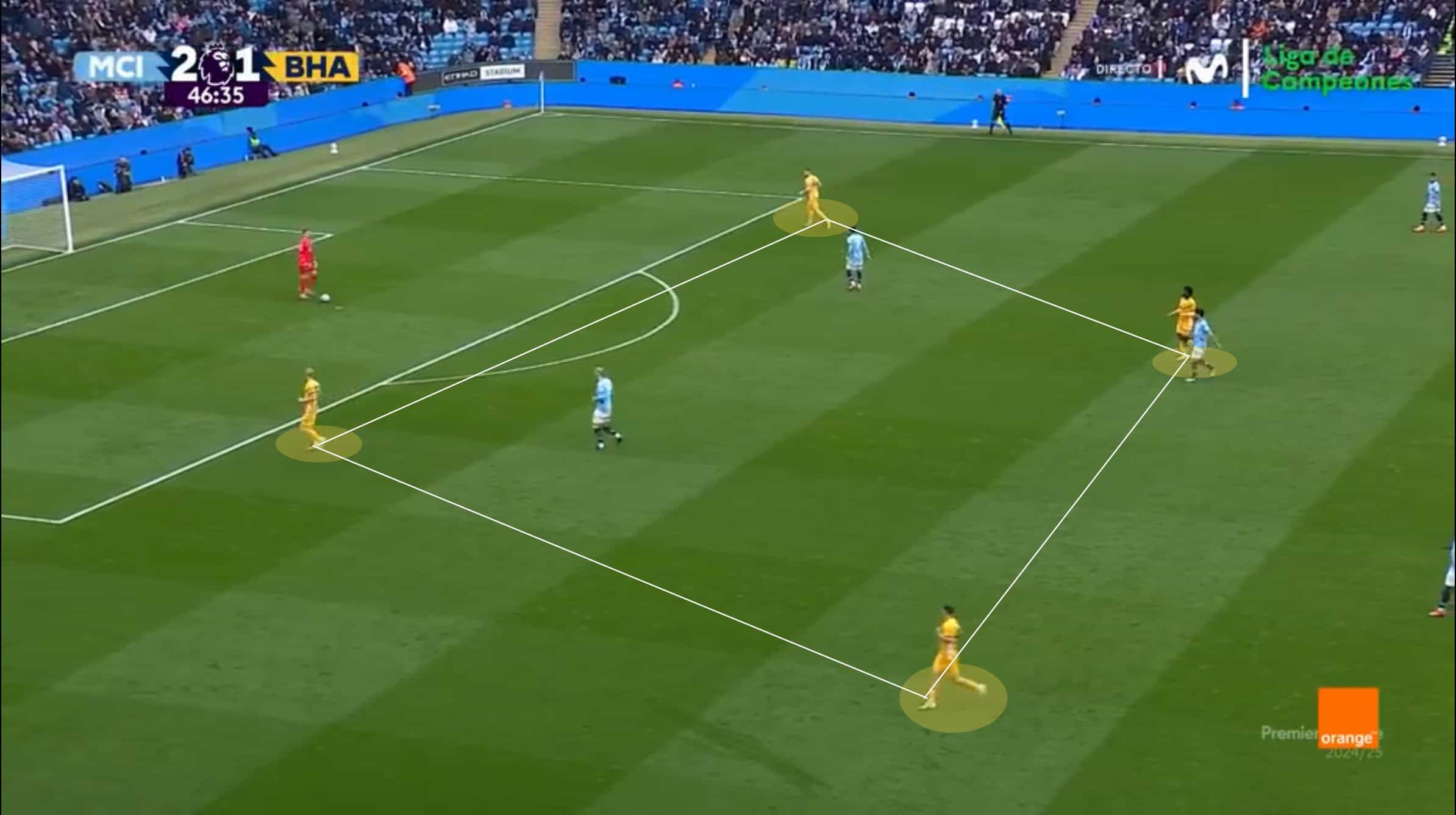
So, with the 2-2 structure, the four players involved in the build-up form a box shape.
If the opponent presses them, they’ll naturally press in a narrow formation, which creates some spaces.
First, if the opponent presses with four players containing two centre-attackers threat and two wingers, they’ll sacrifice the flank spaces that Hürzeler’s team can use as build-up targets.
For instance, during the game against Manchester City before the international break, four of Brighton’s 2-2 players were pressed by four City players.
Brighton’s goalkeeper, Bart Verbruggen, noticed the space on the left side for Pervis Estupinan to receive the ball and pass it there.
Brighton successfully escaped City’s pressing and progressed the ball forward to create a chance.
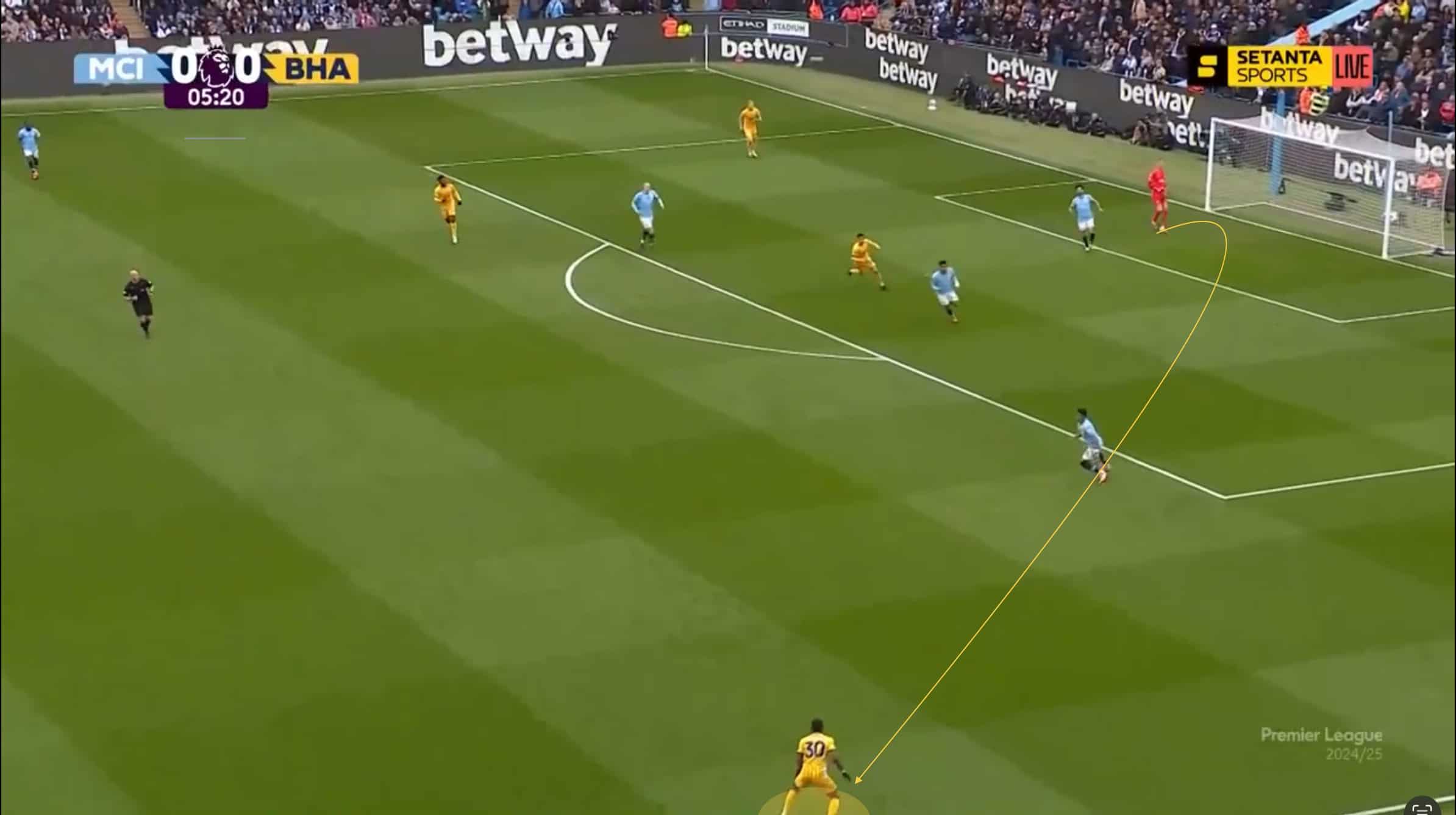
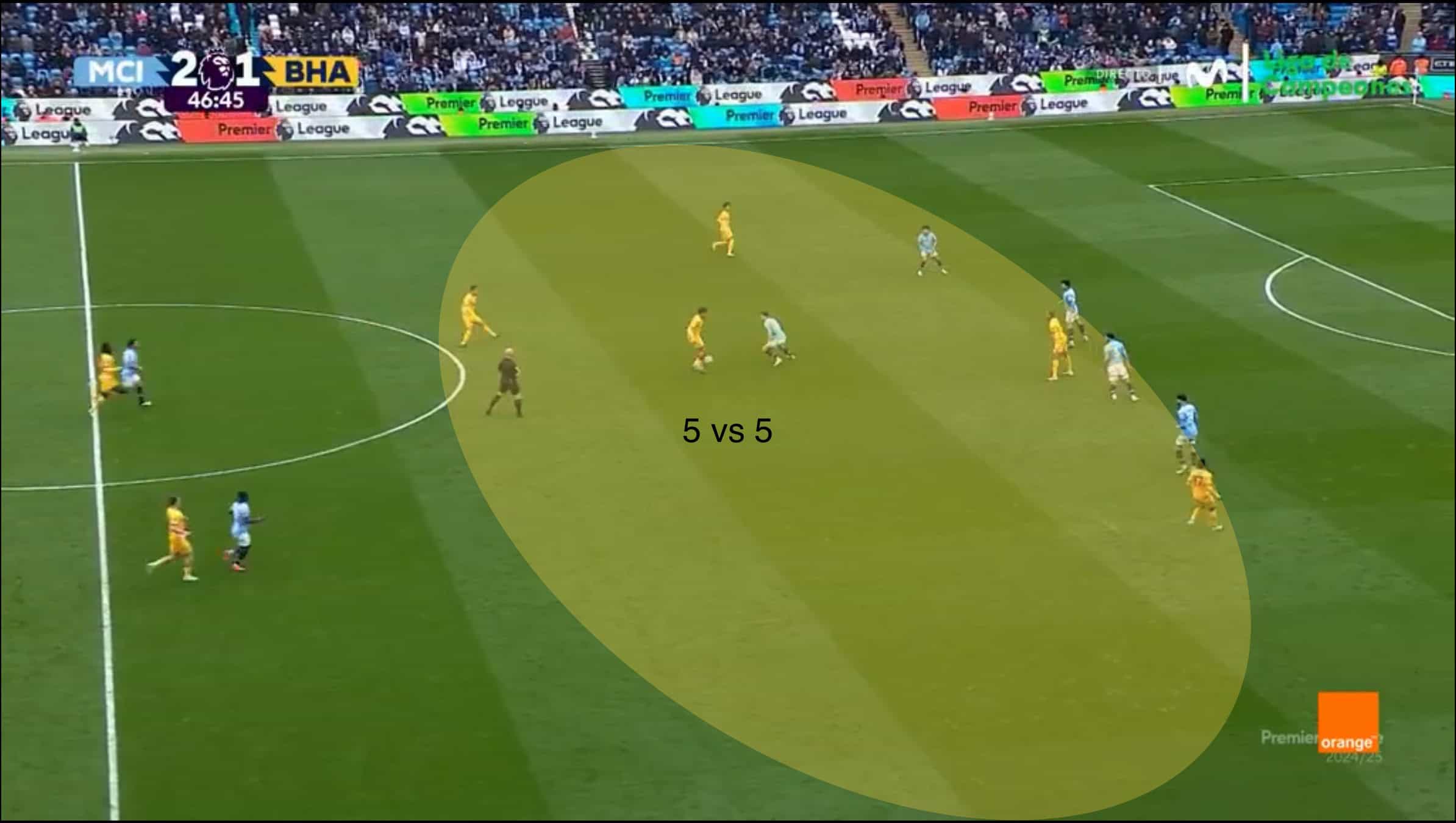
Secondly, suppose the opponent presses with four players, two centre-attackers and two centre-midfielders.
In that case, Hürzeler’s team will have space in the centre between the pressing unit and the defensive line that can be targeted to send the ball.
During the game against City, Verbruggen realised he didn’t have any free passing options nearby or on the flank.
So, he sent the ball directly up front.
Brighton successfully got the ball in an equal numerical situation with a lot of space to exploit because the gap between City’s pressing unit and the defensive line was too wide.
This fake transition creation is also why Brighton under Hürzeler is renowned for its directness and verticality—they’re not just sending the ball up-front randomly; they do that to constantly seek advantageous attacking situations.
Sebastian Hoeneß Tactics At VfB Stuttgart
Another coach, Sebastian Hoeneß of VfB Stuttgart, frequently employs a similar 2-2 build-up.
His approach aligns with the idea of minimising players in the first half to create advantageous situations up front.
Stuttgart’s structure also features two centre-backs and two centre-midfielders, providing flexibility.
The two centre-backs can play narrow or wide, depending on the situation.
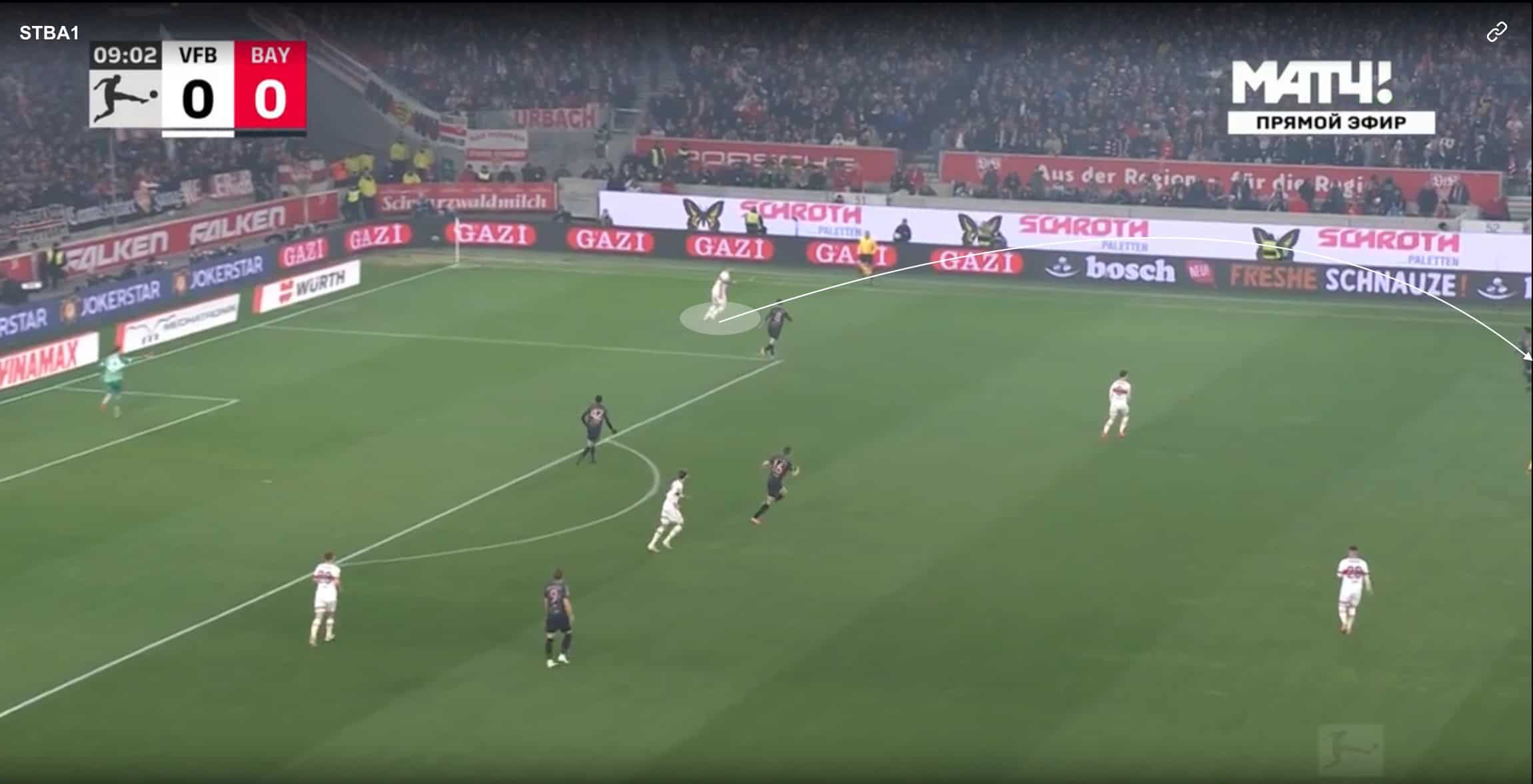
For instance, in the game against Bayern Munich, Finn Jeltsch and Jeff Chabot positioned themselves wide as centre-backs.
This allowed goalkeeper Alexander Nübel to pass the ball directly to the midfield duo of Atakan Karazor and Angelo Stiller.
Karazor received the ball from Nübel and passed it to Chabot, who was already in the wide position.
Chabot then sent the ball directly up front.
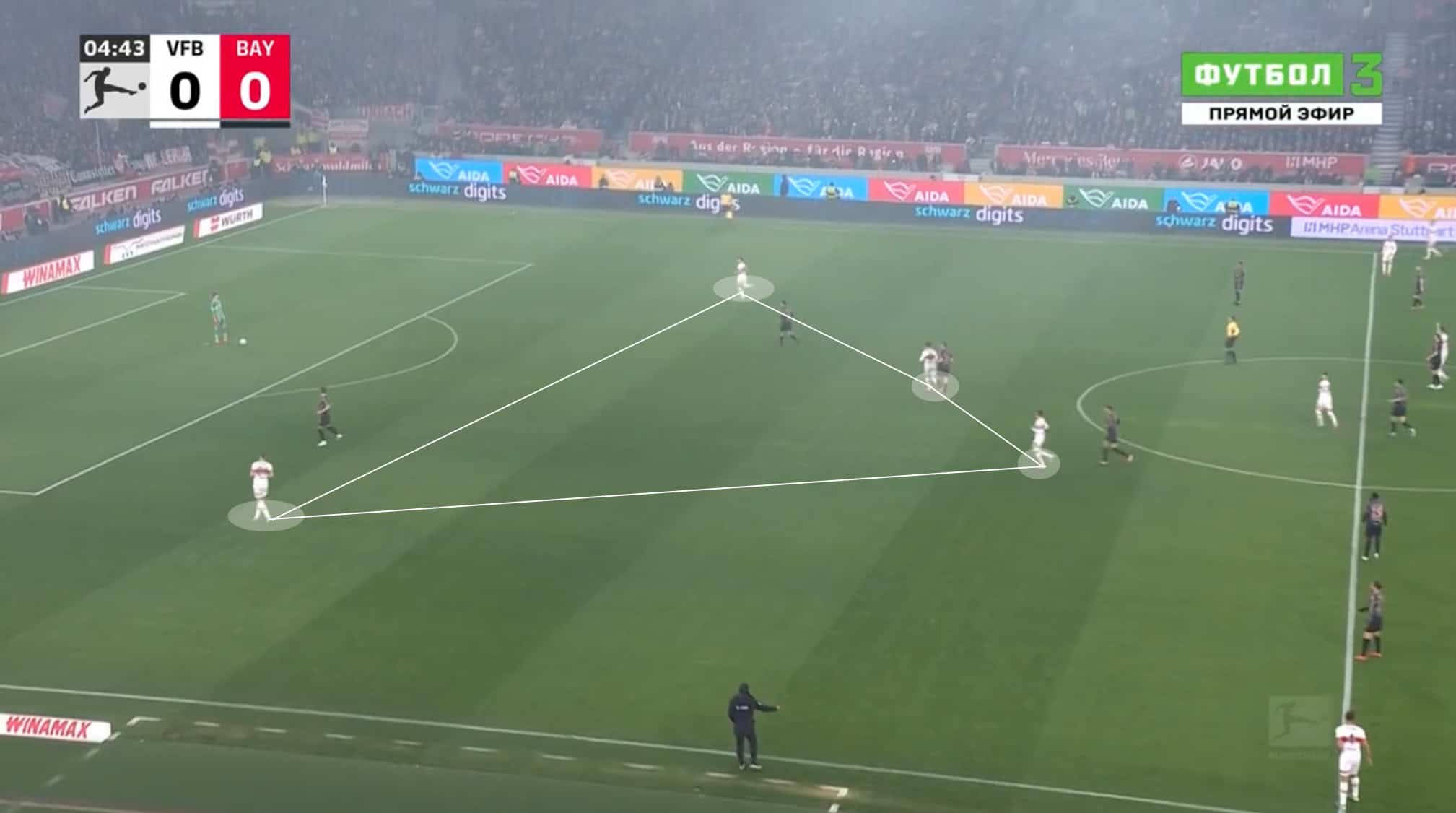
This four-player structure can also be used as a decoy.
If Nübel anticipates that four players in front of him lack space to receive the ball due to opponent pressure, he can simply pass the ball up front.
Since Stuttgart typically has six players up front, they can comfortably win the ball by providing bodies to overload the side where the ball is and win the second ball.
Stuttgart’s attacking units effectively occupy all the corridors of the pitch (flank, center, half-space), allowing Nübel to make diagonal passes to the flank or direct passes to the center.
This can be noticed as one of the differences between Hürzeler and Hoeneß.
Hoeneß often positions his full-backs high to provide width, particularly Maximilian Mittelstädt on the left.
This helps Stuttgart maintain a balanced body distribution and play more directly.
Look at their goal in the match against Bayern München, for example.
It started when Nübel sent a long ball to the wide area after four players in front of him drew Bayern’s press.
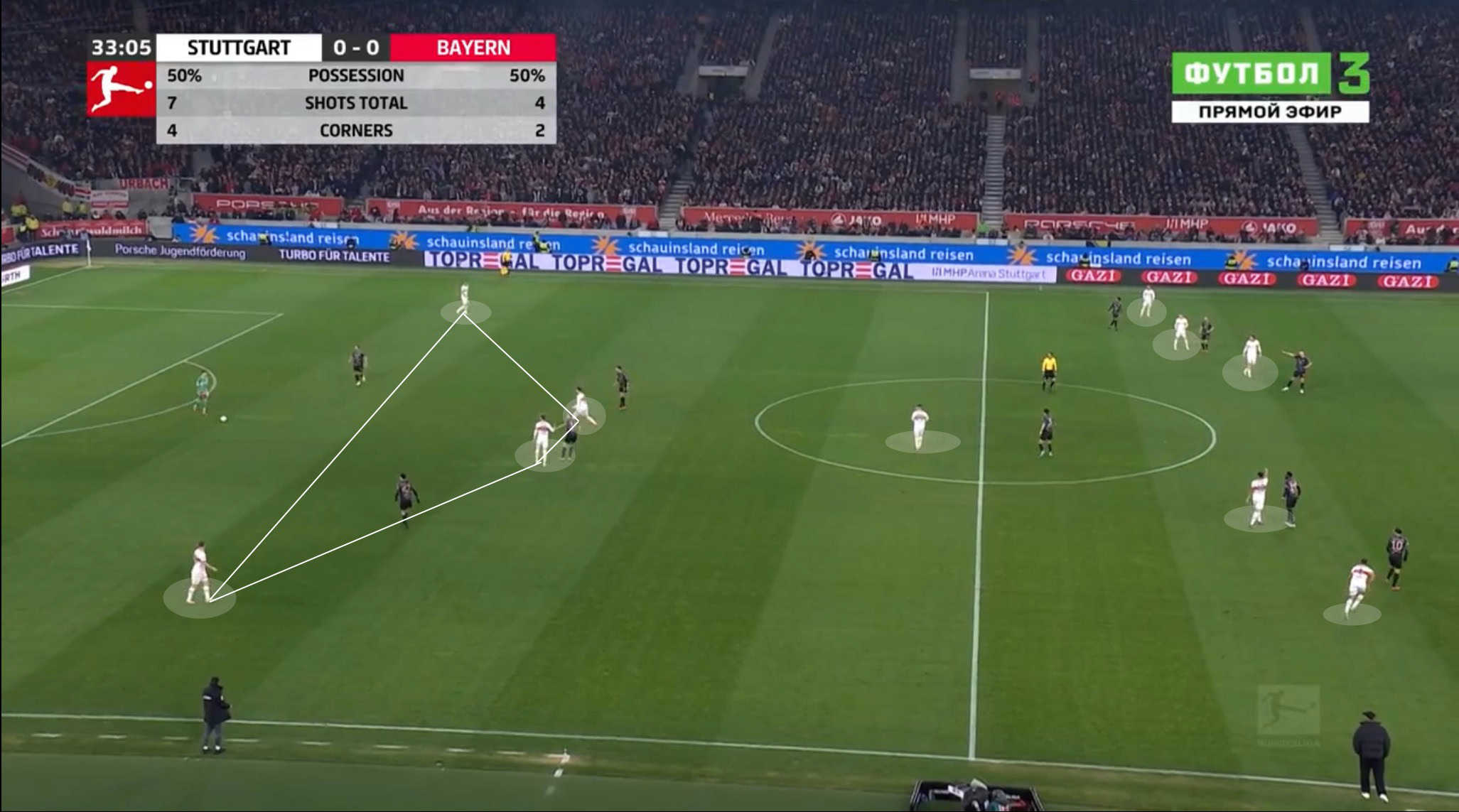
Stuttgart won the second ball and gained possession on the left side of Bayern’s defence.
A few seconds later, they successfully pushed the Bayern defensive line deeper, creating space for Angelo Stiller to shoot in front of the penalty box.
This ultimately led to the goal.
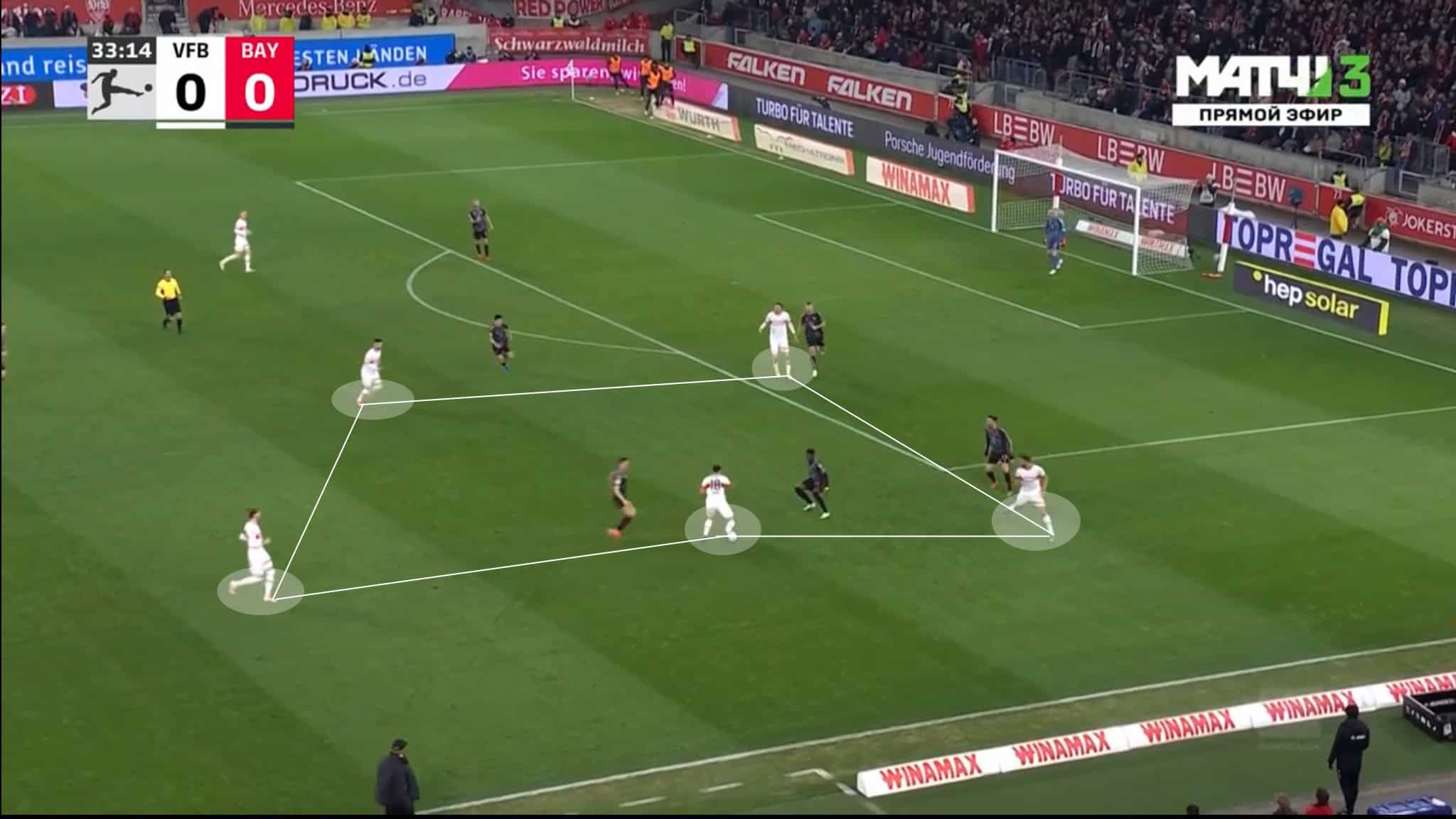
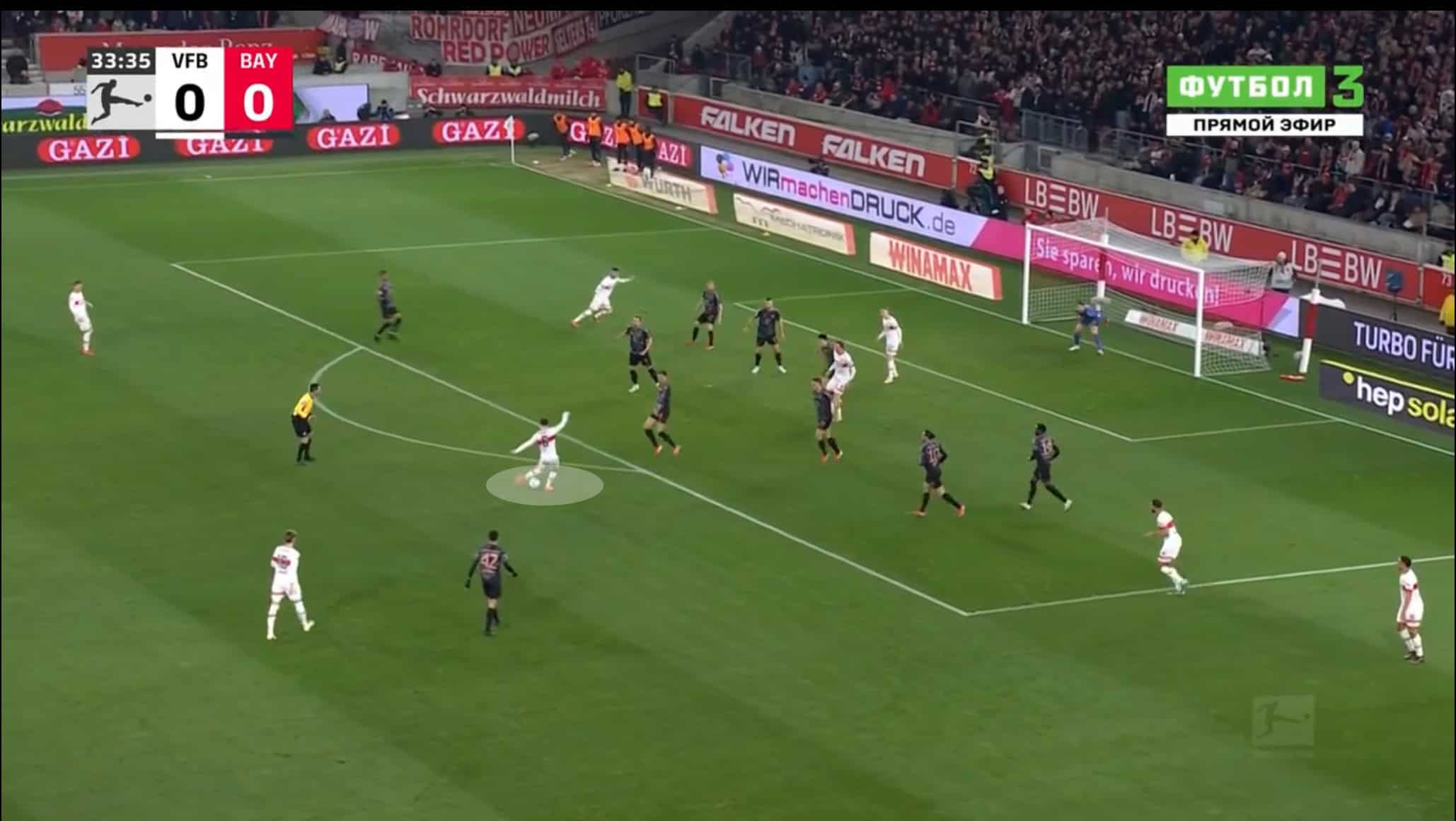
This 2-2 structure in the build-up allows VfB Stuttgart to find many advantageous situations similar to those they encounter during transition moments: they are not outnumbered by the opponents, have ample space to exploit, and face a disorganised defensive line.
The Risk Using A 2-2 Structure
Well, all tactics in football have a risk, including this 2-2 in the build-up.
It seems very obvious that, in this case, the risk is that the team using it can face a transition attack from the opponents if they lose the ball in their zone or fail to secure the ball after going direct.
Yes, in short, if they fail to create the fake transition moment, they can face the opponents' transition attack.
This is dangerous because it means that their rest defence will only contain four players, leaving them open to attack.
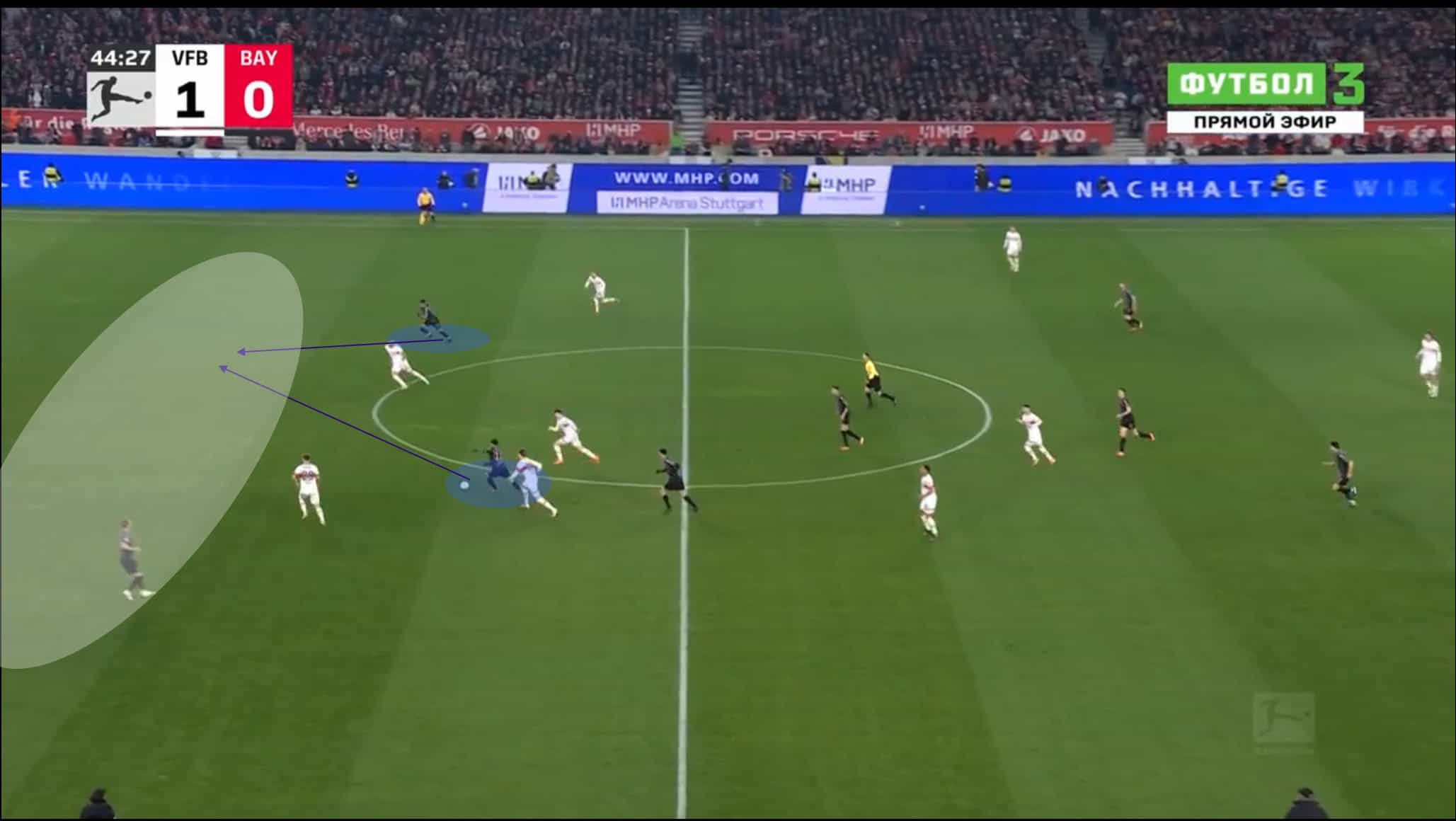
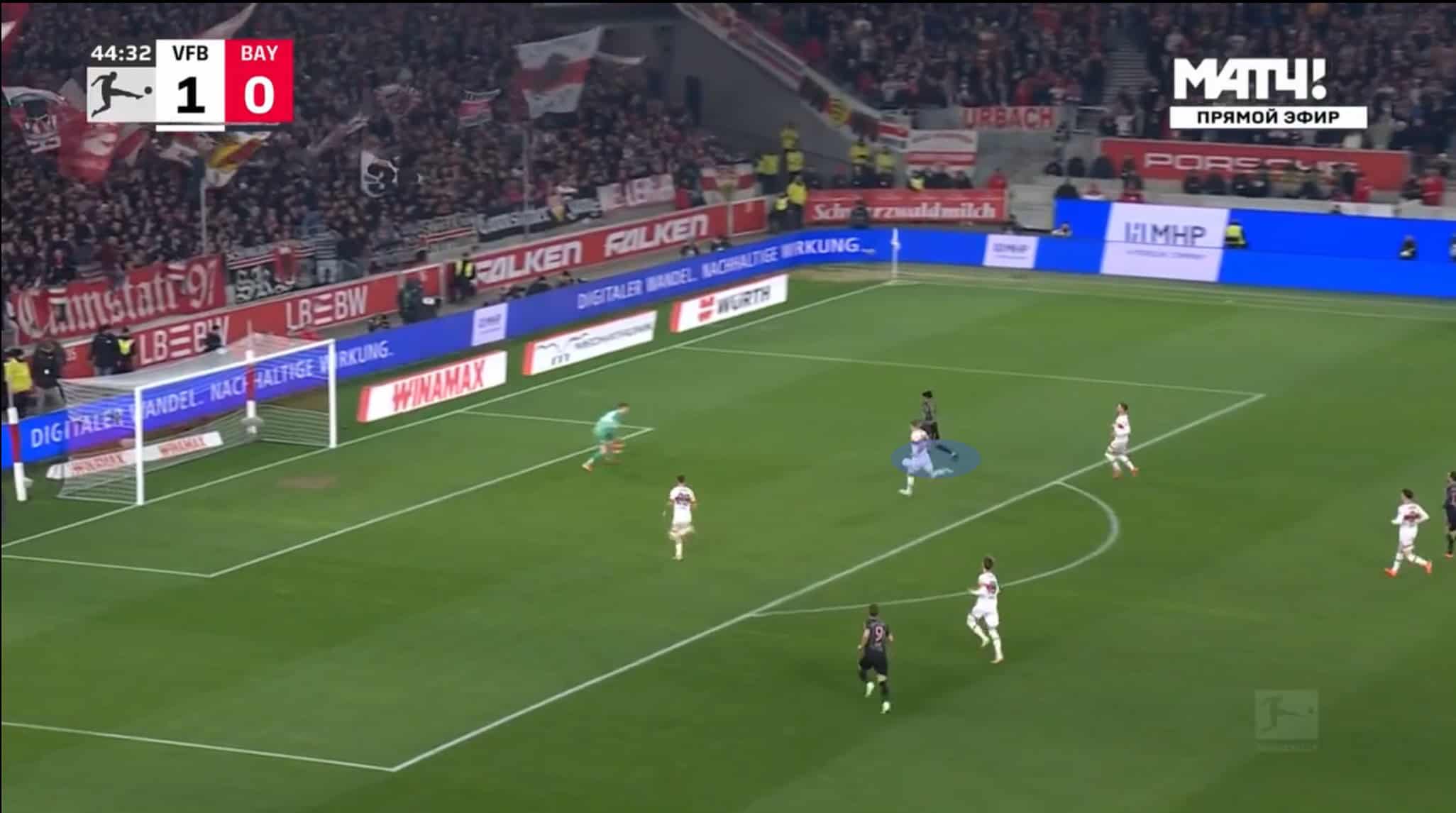
Bayern's first goal against Stuttgart is an example of this.
After Nübel's long ball, Stuttgart's attacking unit failed to win the ball and secure possession.
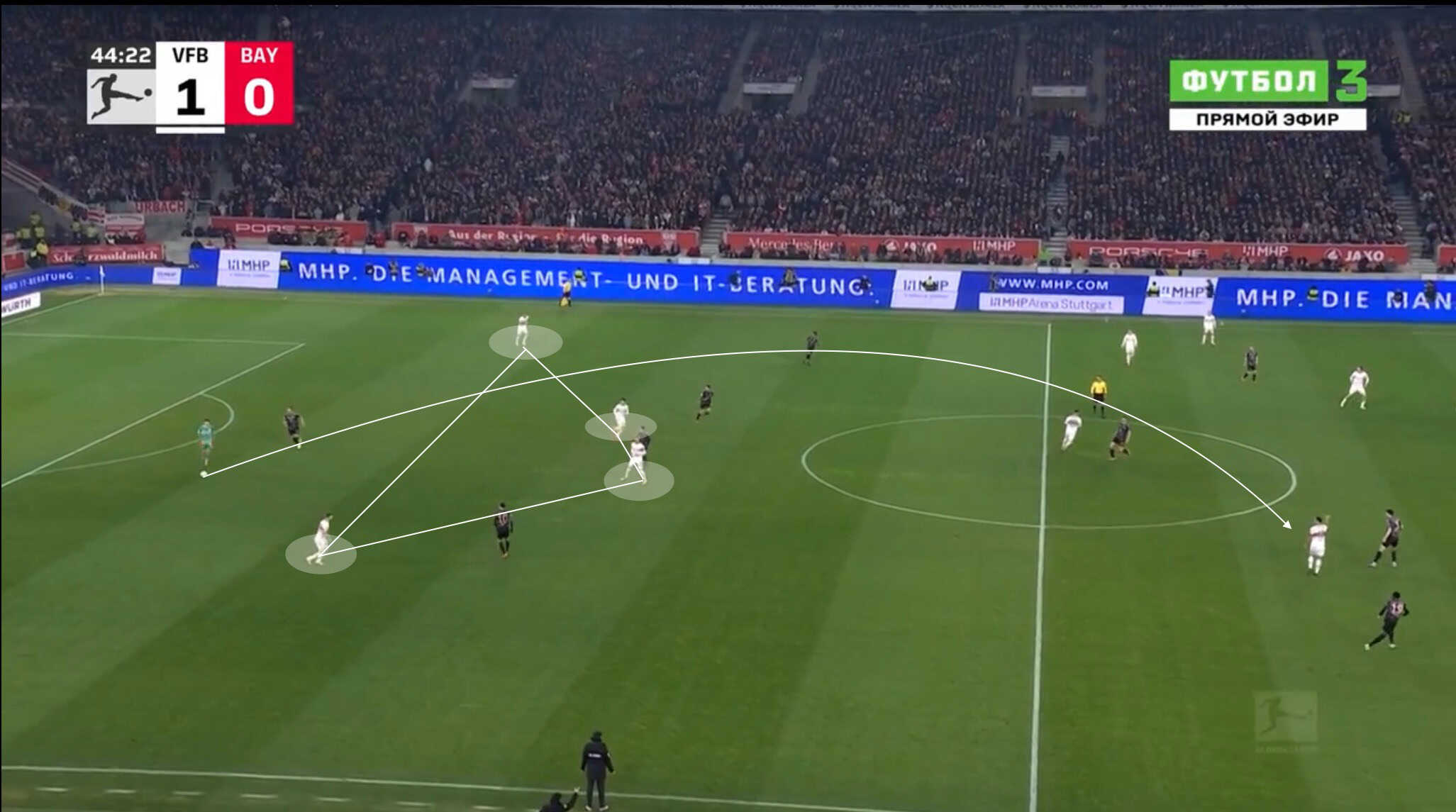
Bayern then unleashed a transition attack, targeting space behind Stuttgart's backline.
Michael Olise took advantage, running into it and then having a one-on-one situation against Nübel, where he successfully scored.
However, a few things can be applied if a team wants to prevent the counterattack when using a 2-2 structure in the build-up.
Firstly, they need to work on winning the second ball effectively.
Secondly, the team's counter-press must work well.