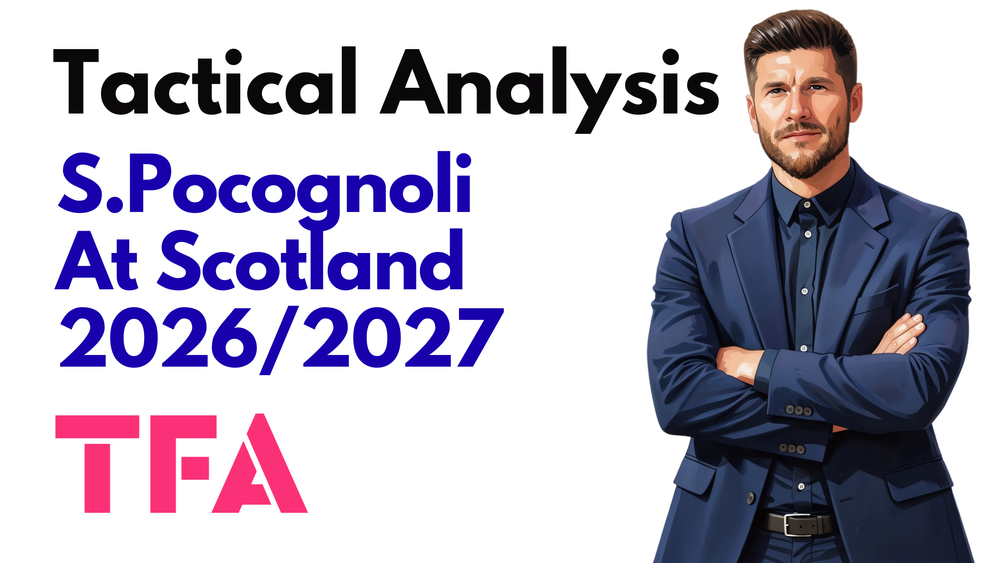
Sébastian Pocognoli Tactics At Scotland 2026: How Will The Belgian Coach Transform Scotland? - Tactical Analysis

Sébastian Pocognoli is leading a new era of Scottish football.
After seven years under Steve Clarke, it's time for someone else to take the reins.
While time for change was needed in the hot seat, it's also an incredibly tough act to follow.
Clarke is arguably the most successful Scotland manager in history.
He qualified for three major tournaments in the form of UEFA EURO 2020 (played in 2021), UEFA EURO 2024 and his final act, the 2026 FIFA World Cup.
He is the man with the most games managed for the country in history (81).
He also led them to several famous wins, beating Spain, Norway and Denmark on the night of World Cup qualification, which saw some of the best goals and drama you'll ever see on a football pitch.
The problem for Clarke was the way in which Scotland performed once they got to those tournaments.
While they were never expected to go deep into them, more was expected. All three tournaments saw group stage exits.
EURO 2020 saw just one goal scored, while 2024 yielded just one point.
The 2026 World Cup saw Scotland achieve just one win, a 1-0 victory over Haiti.
The football was seen to be too conservative by fans and pundits.
Yes, Scotland went 28 years without going to the World Cup, but it didn't feel like they really competed on the pitch.
Pocognoli was a rather unexpected appointment.
The Belgian has been in senior management since 2024, managing Royale Union Saint-Gilloise and AS Monaco to date.
He also has experience in international football with Belgium's youth setup.
This Sébastian Pocognoli tactical analysis looks at how his Scotland side might look, and how he's already tried to change up the status quo with his squad selection.
Sébastian Pocognoli Scotland Squad Selection
There's no doubt that one of the biggest criticisms of Clarke's tenure was that he had his favourites.
He treated the national team like a club side.
There was an extremely tight-knit group of players who were selected regardless of club form.
That had its positives, in that the team knew how to play together.
It was a squad fans connected with.
It also had its negatives, and players who could have made a difference in games were overlooked.
Pocognoli has immediately come in and changed that.
There are seven players who have received a call-up for the very first time: Luis Binks (Brøndby IF), Colby Donovan (Celtic), Luke Graham (Stoke City), Stephen Welsh (Swansea City), Josh McPake (Heart of Midlothian), Robbie Ure (Sevilla) and James Wilson (Hearts again) have all been called up.
Welsh is also the oldest at 26 years 0ld.
Josh Doig (24) and Kieron Bowie (24) of Sassuolo, along with Lennon Miller (20) of Udinese, have also been recalled after missing out on the World Cup squad.
This is a mix of youthful and in-form players, which has been well received by Scotland fans.
It's an immediate and necessary shift from the squads that were put together by Clarke.
These profiles are also key for Pocognoli to play the football he wants to.
Sébastian Pocognoli Attacking Style Of Play
Pocognoli is actually fairly inexperienced as coaches come.
He has only been a manager in senior football since 2024, and he's only managed 107 games.
Yet, in that time, he's built a fairly strong reputation.
His first job was in his home country, at Union Saint-Gilloise.
He won the Belgian Pro League, going unbeaten in the Championship group.
Things didn't go as well at Monaco in 2025/2026.
He finished seventh in Ligue 1 and failed to qualify for the UEFA Champions League (although his team did run eventual winners Paris Saint-Germain close in the knockouts of that competition).
He predominantly uses a three at the back.
This usually is a variation of a 3-4-2-1/3-5-2, like below.
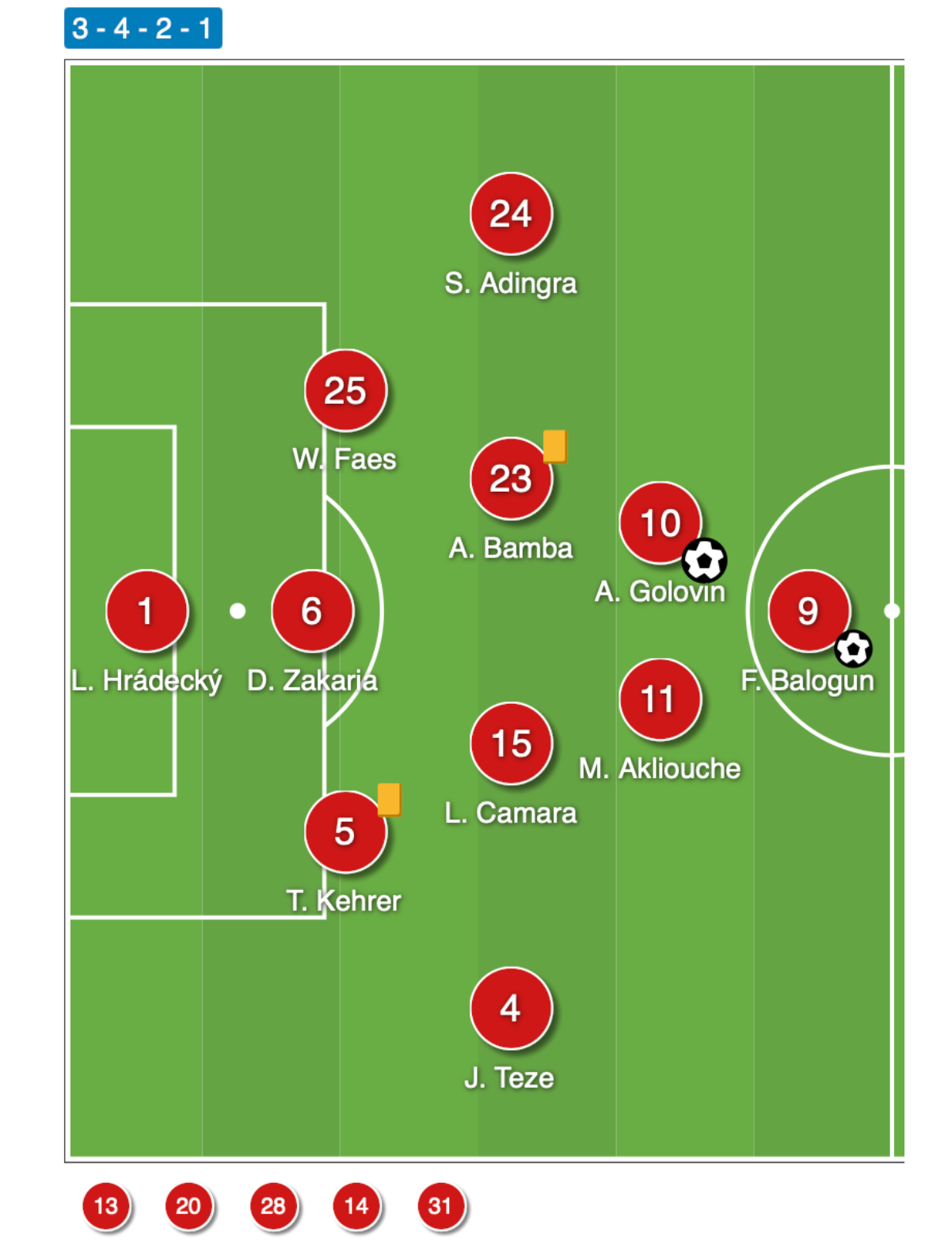
Those two dual attacking midfielders are key to how Pocognoli wants to attack.
Those players, in this case Aleksandr Golovin and Maghnes Akliouche, look to sit in the half-spaces and pick up the ball.
The aim is to force the opposition centre-backs out of their block, and create space in behind.
If they don't do that, the attacking midfielder then, in theory, has more time and space to do something dangerous.
The width then comes from the wing-backs/wingers (you can see in the above lineup that Simon Adingra is on the left; he's an out-and-out winger).
Their job is to own the touchline, make runs that drag defenders out wide and leave space for the No. 10s to operate in.
The double pivot in midfield is key to the build-up.
They have a multifunctional role.
They either act as the conduit, receiving the ball from the defenders and moving it quickly into the No. 10s, or they can drop into the defensive line and allow the central defenders the ability to carry the ball.
Here's an example of how his team attacks.