Steve Clarke Tactics At Scotland 2026: Can The Tartan Army Golden Generation Make History? – Tactical Analysis

Scotland are going to the FIFA World Cup for the first time in 28 years this summer, marking the most successful run by the national team in generations.
France 1998, their last tournament, ended in bitter disappointment, as they finished bottom of the group without a win, losing against Brazil and Morocco, and gaining their solitary point against Norway.
That group is extremely similar to the one they find themselves in this time round, with Haiti for Norway (a team Scotland have played a lot in recent years), the only change.
Under manager Steve Clarke, Scotland have entered a golden generation.
They have qualified for the last two Euros, but haven't managed to win a game in either tournament.
The Tartan Army, as the side's fans are affectionately known, watched their team qualify for this tournament in dramatic style.
With a win needed against much-favoured Denmark at Hampden Park on the final day, Scotland went into added time drawing the game, having led twice (you might remember Scott McTominay's overhead kick).
Up stepped Celtic full-back Kieran Tierney with a long-range effort.
Minutes later, Kenny McLean sent the entire country into pandemonium, scoring from his own half against a helpless Kasper Schmeichel.
World Cup fever is building in Scotland, and there's a quiet expectation ahead of the first game against Haiti on the 14th June.
This tactical analysis breaks down Clarke's squad selection and looks ahead at how he might set up in the group stages.
Scotland World Cup Lineup
Scotland have used their entire 26-man squad allocation for this summer's tournament.
A huge theme of Clarke's tenure has been continuity in the squad, with the same core of players featuring for the former Kilmarnock manager.
This squad is much the same, with a few surprise inclusions.
43-year-old Craig Gordon is most likely the oldest player at this tournament, included in a goalkeeping unit of himself, Angus Gunn and Liam Kelly.
Centre-backs Grant Hanley, Scott McKenna, Jack Hendry and John Souttar have over 150 caps between them, and are joined by Wrexham's Dominic Hyam, who has featured just twice for the national team.
Captain Andy Robertson and Celtic's Kieran Tierney are picked at left-back (and we may see them both play in a back three or back four system, with one in central defence).
Brentford's Aaron Hickey can play on either flank and is a massive bonus for Scotland, having struggled with injuries in recent years.
Nathan Patterson and Anthony Ralston are additional options at right-back.
It is again a similar theme in midfield.
John McGinn is as sure a pick as any, being the top scorer in the squad.
Scott McTominay is, in some ways, the face of this team.
Bournemouth's Ryan Christie is essential to how Scotland press.
McLean has over 50 caps and will add to them in this tournament.
Serie A's Billy Gilmour and Lewis Ferguson are also picked.
Ben Gannon-Doak gives the side the much-needed pace and width, while 19-year-old Findlay Curtis is an exciting youth talent.
Lyndon Dykes, Ché Adams and newly-signed Rangers player Lawrence Shankland have become the mainstays of Scotland's attack under Clarke, while George Hirst is picked after his EFL Championship promotion campaign with Ipswich Town.
6'2" striker Ross Stewart is perhaps the surprise inclusion in the attacking department, having secured just two caps prior to this tournament.
His form for Southampton, whose season came crashing down after Spygate, has been exemplary, scoring 11 goals, including crucial ones against Middlesbrough in the play-offs and Arsenal in the FA Cup.
There were very few, if any, surprise non-inclusions.
The biggest name to miss out was probably Oliver McBurnie, who has led Hull City to promotion to the Premier League, scoring the winning goal in the play-off final.
Tommy Conway was a forced omission through injury, and Kieran Bowie has four goals in his last nine Serie A appearances (including at Juventus and Inter Milan), might feel slightly aggrieved to not be included.
Scotland Tactics Vs Haiti
Scotland's group games and the order they come in present an interesting conundrum for Steve Clarke.
Most will see the opening game as an opportunity to put three points on the board and get a good enough result to at least see them through as one of the best third-place sides.
Haiti are currently 83rd in FIFA's rankings (for context, Scotland are 43rd).
Clarke's side haven't played an opponent with a similar ranking since Northern Ireland at home in March 2024.
They also played Belarus (ranked 100th) twice in qualifying for this tournament.
Those games might show something of a blueprint.
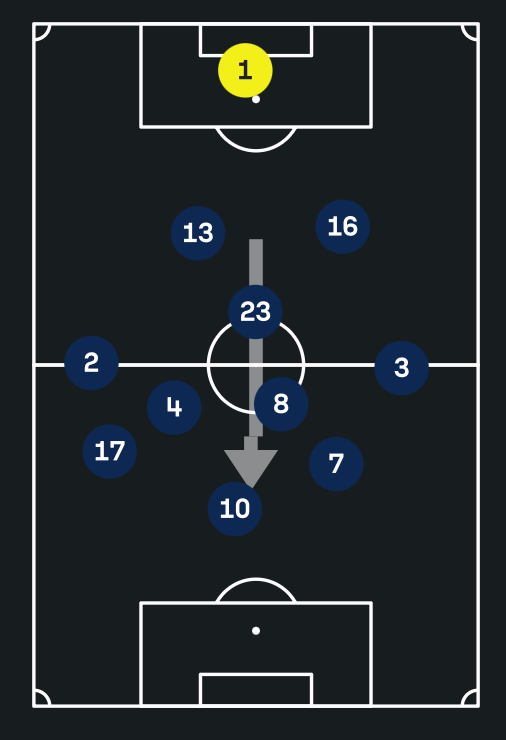
Against Belarus at home, Scotland set up with a back four.
It's a formation that Scotland have used more regularly since the early Clarke days.
One thing that will always be consistent with Scotland, given their skill set, is that the central defenders (#13 and #16) will stay deep.
Neither are good on the ball, nor are they comfortable defending big spaces, nor do they want to be running back towards their own goal.
With those two deep, it allows Scotland's full-backs to push up.
Robertson is one of the main creative outlets; pushing him higher up is key to breaking down low blocks.
Adams will likely be the starting striker again (#10).
He is Scotland's most advanced player, but he is essentially a tool to hold the ball up, while the midfielders run forward.
That's why Scotland's striker pool consists of him, Dykes, Stewart and Shankland.
While the latter two fit more of the mould of goalscorer, they all have some level of ability to hold the ball up.
McGinn, Christie and especially McTominay are all excellent at getting into the box.
It's no surprise that McGinn and McTominay are the two highest scorers in the squad.
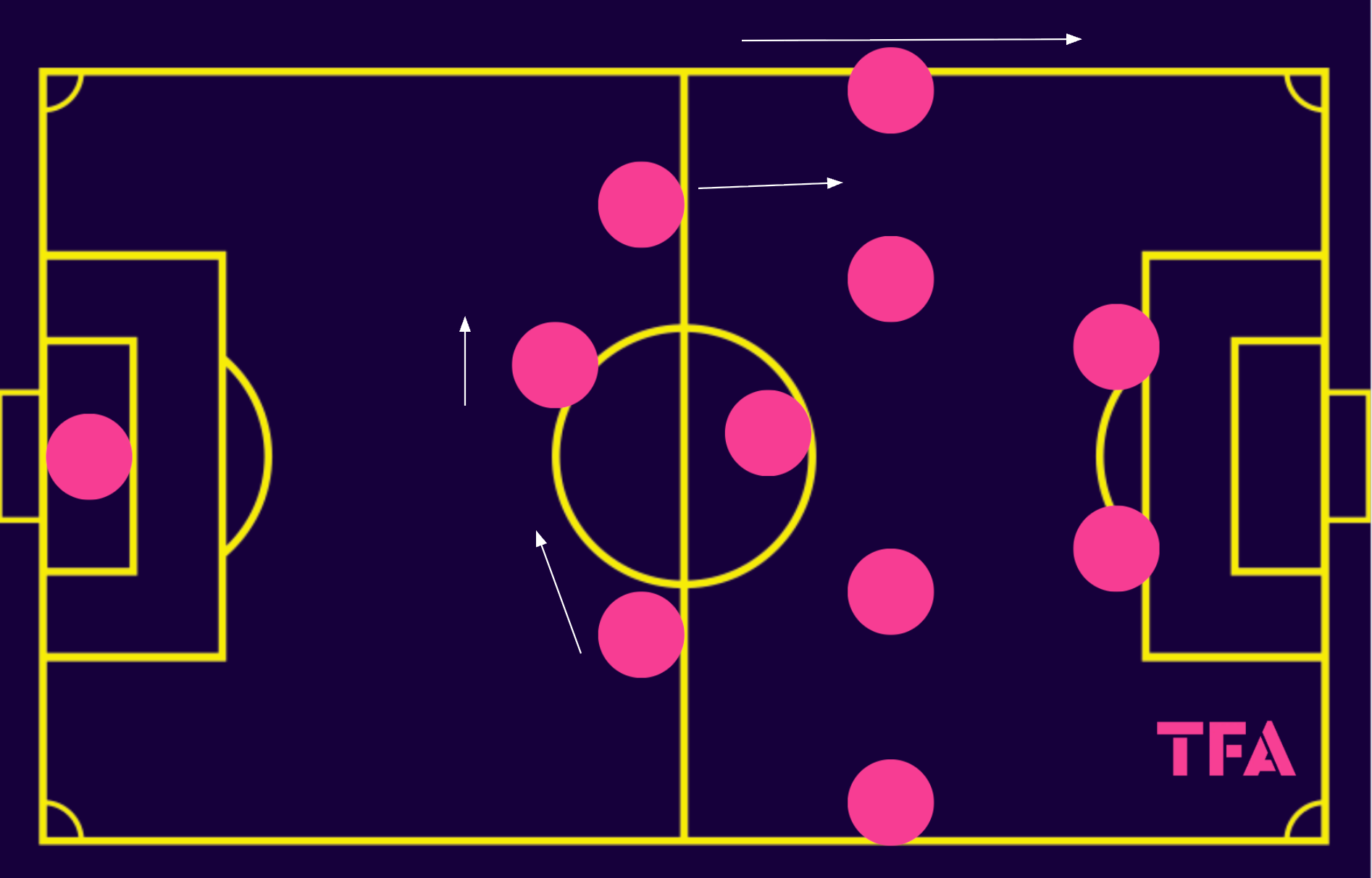
The image below demonstrates how Scotland will likely shape up for much of the match versus Haiti.
Scotland Tactics Vs Brazil & Morocco
In some ways, while Brazil and Morocco are exponentially better football teams, Scotland might be in a more comfortable state of being in the other two group games.
Clarke has tactical flexibility in his wheelhouse.
His early Scotland teams were synonymous with a back-three system.
This allowed them to solve the conundrum of two of their best players being left-backs into the same team.
Tierney would start as the left centre-back, while Robertson would start as the wing-back.
Those two would be the ultimate double act going forward, one would go while one stayed back, or, when needs be, both would fly down the wing, over and underlapping one another.
This gave the team an attacking threat whilst having defensive solidity.
The other two central defenders would be very much in the hold their position and get the ball clear mould.
That might look something similar to what we see below in practice, where the left centre-back goes forward with the left wing-back, while the other two centre-backs shift across.