Carlo Ancelotti Tactics At Brazil 2026: The World Cup Return Of Jogo Bonito? – Tactical Analysis
Carlo Ancelotti blends relationist overloads and quick vertical attacks with a disciplined 4-4-2 block. This analysis explains how Brazil can restore attacking freedom without sacrificing World Cup defensive control.

How Does Carlo Ancelotti Set Up Brazil?
Carlo Ancelotti's appointment marked a historic moment for Brazilian football, with the Italian becoming only the fourth non-Brazilian manager to lead the national team.
His arrival comes at a time when many supporters believe Brazil have gradually lost part of their footballing identity as more players develop and spend the majority of their careers in Europe.
Beyond results, there has been a growing debate over whether the Seleção still embodies the creativity, flair and spontaneity traditionally associated with Brazilian football.
Ancelotti has been tasked with restoring those qualities while maintaining the tactical discipline required to compete at the highest level.
Having announced his 26-man squad for the 2026 FIFA World Cup, the former Real Madrid manager appears determined to strike that balance.
Early signs suggest a team that encourages attacking freedom and technical expression in possession, while remaining organised and compact out of possession.
This tactical analysis examines Carlo Ancelotti Brazil tactics and how "Don Carlo" is attempting to bring the samba flavour back to Brazil without sacrificing defensive structure.
Brazil Formation & Key Players
Ancelotti's Brazil formation has primarily experimented with two formations since taking charge: the 4-3-3 and the 4-2-3-1.
While both systems have been utilised, the 4-2-3-1 has emerged as his preferred structure and is the shape that Brazil have used most frequently during his early tenure.
Among the players selected for the squad, Casemiro has the most experience playing under Ancelotti.
The midfielder has made 10 appearances under the Italian manager, giving him valuable insight into the tactical principles and demands Ancelotti expects of the team.
He is followed by Bruno Guimarães and Vinícius Júnior.
Brazil captain Marquinhos is another key figure already familiar with Ancelotti's methods.
The central defender has featured seven times under the Italian this season and is expected to be one of the leaders of the side both on and off the pitch.
His experience, organisational qualities and ability to play out from the back make him a crucial component of Brazil's defensive structure.
Perhaps the most surprising decision in the squad selection was the inclusion of Neymar.
Despite his status as one of Brazil's most influential players of the modern era, his selection raised eyebrows given his recent lack of involvement and fitness concerns.
Meanwhile, João Pedro was omitted from the squad despite being considered by many as a strong candidate for selection, making his exclusion one of the more notable talking points surrounding Ancelotti's first squad.
Following Brazil's 6-2 victory over Panama on the first of June, the outline of Ancelotti's first-choice starting XI appears largely settled.
The only remaining uncertainties concern players involved in the UEFA Champions League Final, with Marquinhos and Gabriel expected to join the squad later due to their club commitments.
Once they arrive, Ancelotti is likely to have the majority of his preferred starters available as he continues to shape Brazil ahead of the upcoming fixtures.
Carlo Ancelotti Brazil Tactics In Possession
Brazil's build-up structure under Ancelotti often begins with a 2+2 shape.
The two centre-backs position themselves wide during the first phase of possession, creating larger passing lanes and stretching the opposition's first line of pressure.
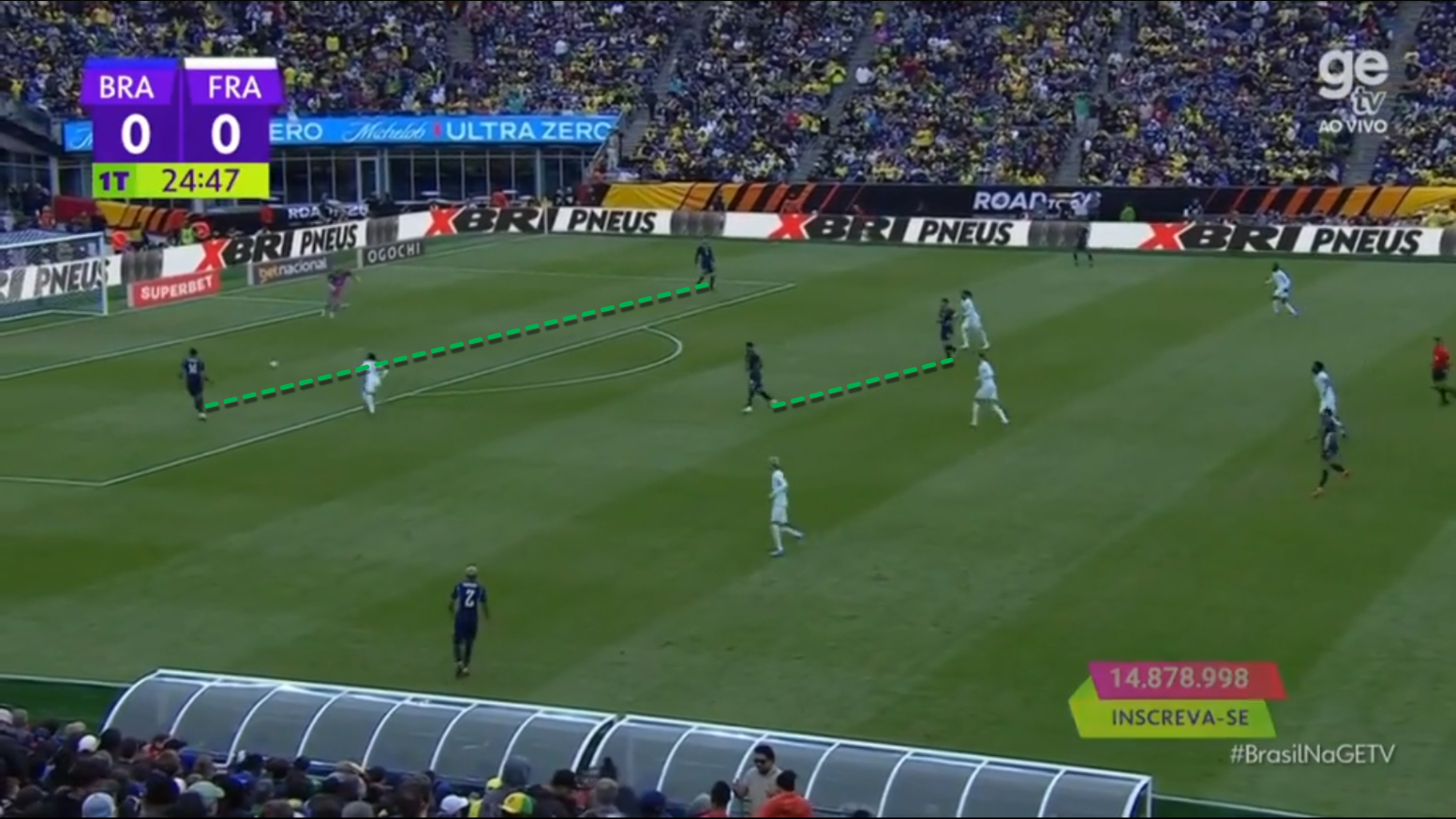
This structure allows Brazil's highly aggressive full-backs to advance higher up the pitch and occupy more advanced zones.
The defenders' positioning also creates better angles for progression and makes it more difficult for opponents to apply an effective press.
There are also several elements within Brazil's positional behaviour that resemble concepts associated with relationism.
Rather than maintaining a rigid distribution across the entire pitch, Brazil frequently seek to create a field tilt by concentrating players on one side of the field, as seen in Figure 2.
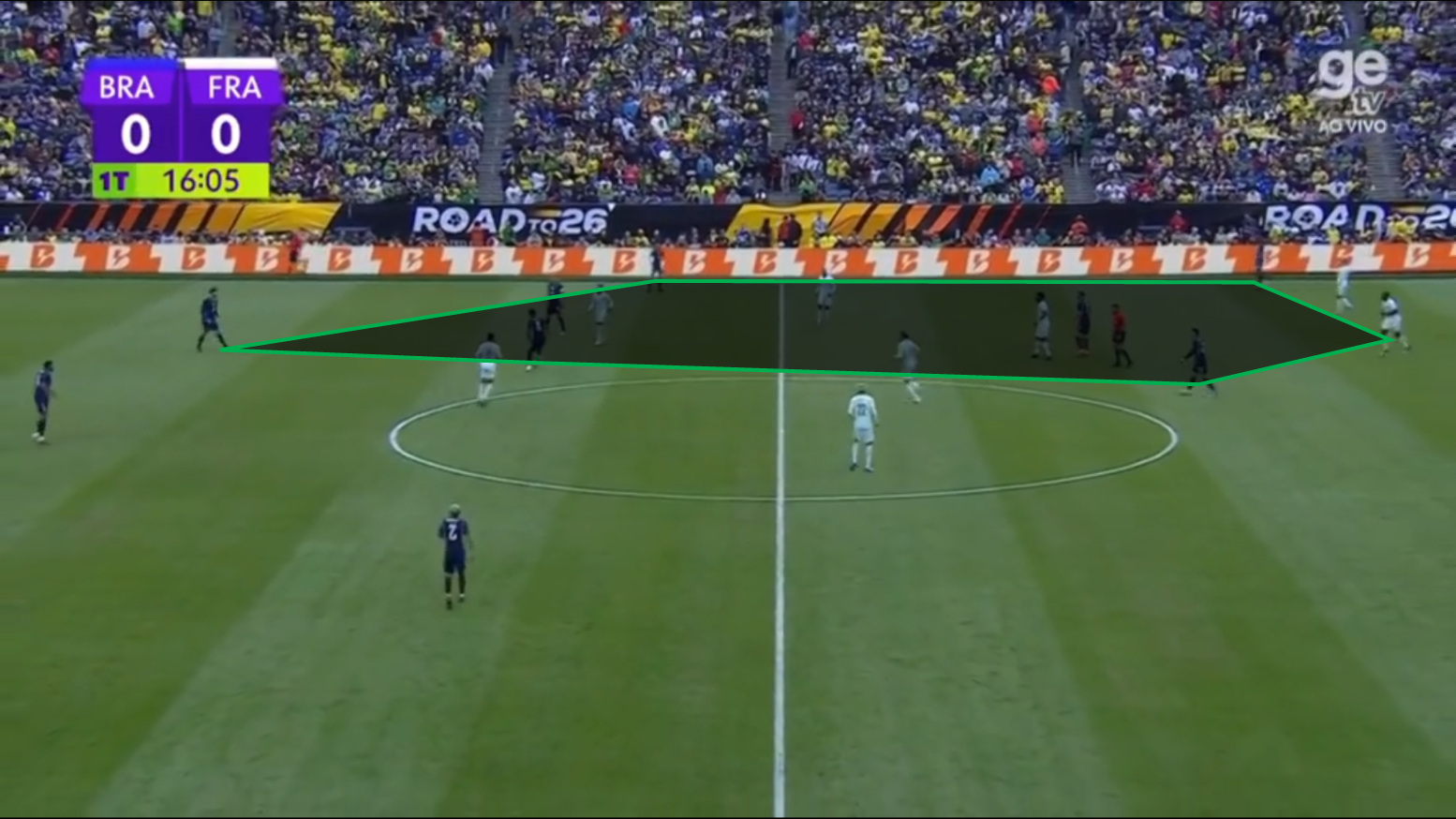
This deliberate overload attracts opposition players towards the ball side and creates local numerical superiority.
Once the opposition shifts across, Brazil can either combine through the congestion or exploit the newly created spaces elsewhere.
The emphasis is less on occupying predetermined zones and more on creating advantageous relationships between players in the immediate area surrounding the ball.
Against organised pressing structures, Brazil have shown an ability to progress possession through quick one-touch combinations.
These rapid exchanges are particularly effective against horizontal pressing movements, where opponents attempt to shift collectively from side to side.
By moving the ball at speed and minimising touches, Brazil can break the rhythm of the press and access players positioned beyond the first wave of pressure.
This allows them to advance through central areas rather than being forced into predictable long passes or wide clearances.
Another recurring feature is the use of the "Escadinha" concept, in which players naturally form diagonal passing networks in possession, as seen in Figure 3.
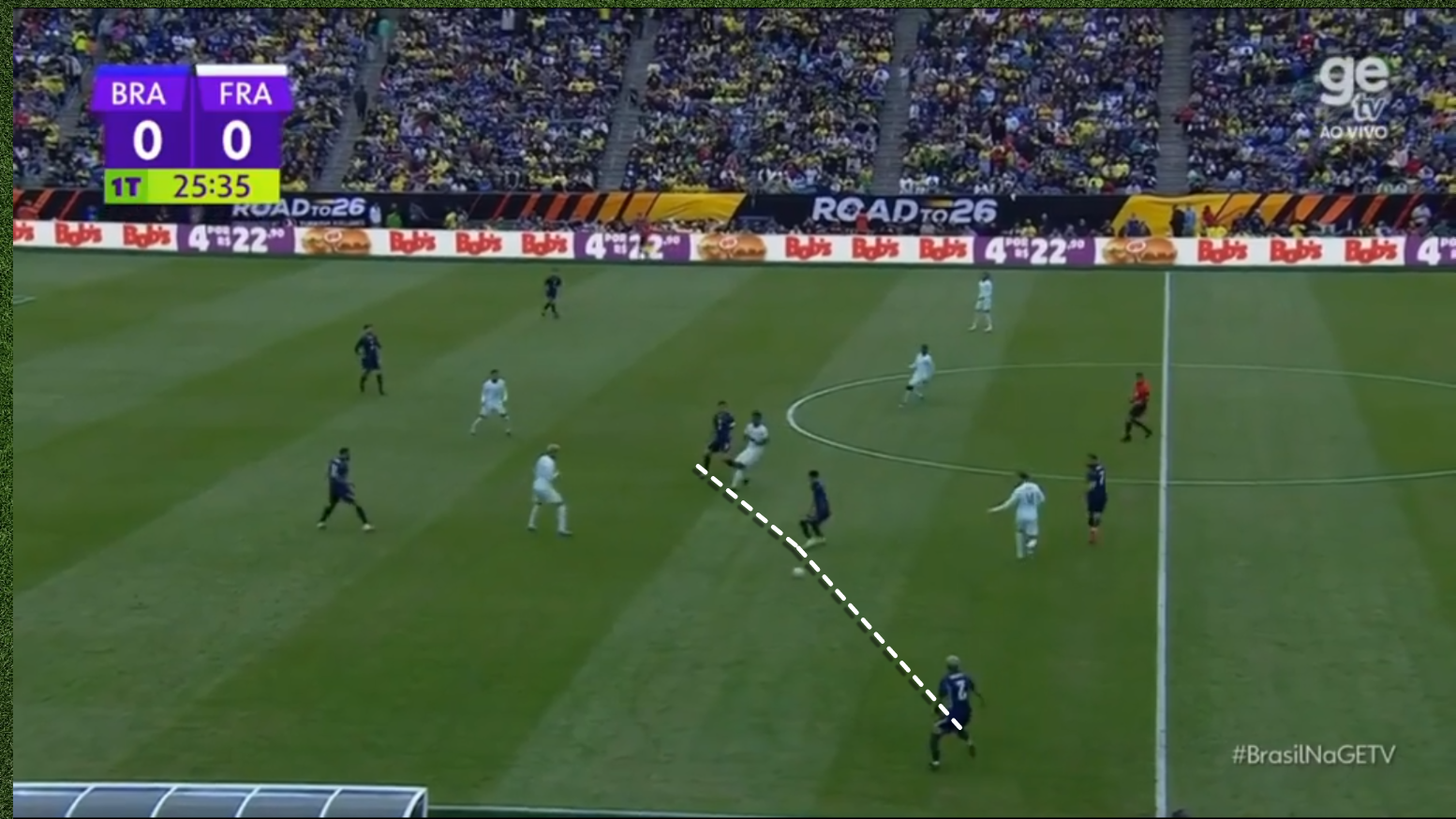
These diagonals create multiple passing angles and facilitate third-man combinations.
When one player attracts pressure, a nearby teammate can act as the intermediary before releasing the ball to a third player moving into space.
The result is a fluid attacking structure that enables Brazil to bypass defensive lines while maintaining control of possession.
These diagonal relationships also improve connectivity between units and ensure that players remain close enough to support one another as they progress.
A defining characteristic of Ancelotti's Brazil is their commitment to instant verticalisation once space becomes available.
Rather than circulating possession for prolonged periods, the team look to attack forward immediately after regaining the ball or breaking an opposition line.
The objective is to exploit moments of defensive imbalance before the opponent can reorganise.
This directness complements the technical quality of Brazil's attacking players, allowing them to receive the ball facing goal and attack open spaces with pace and creativity.
Carlo Ancelotti Brazil Tactics Out Of Possession
Out of possession, Brazil typically organise themselves in a compact 4-4-2 defensive structure.
The shape provides good coverage across the pitch while ensuring that central spaces remain protected.
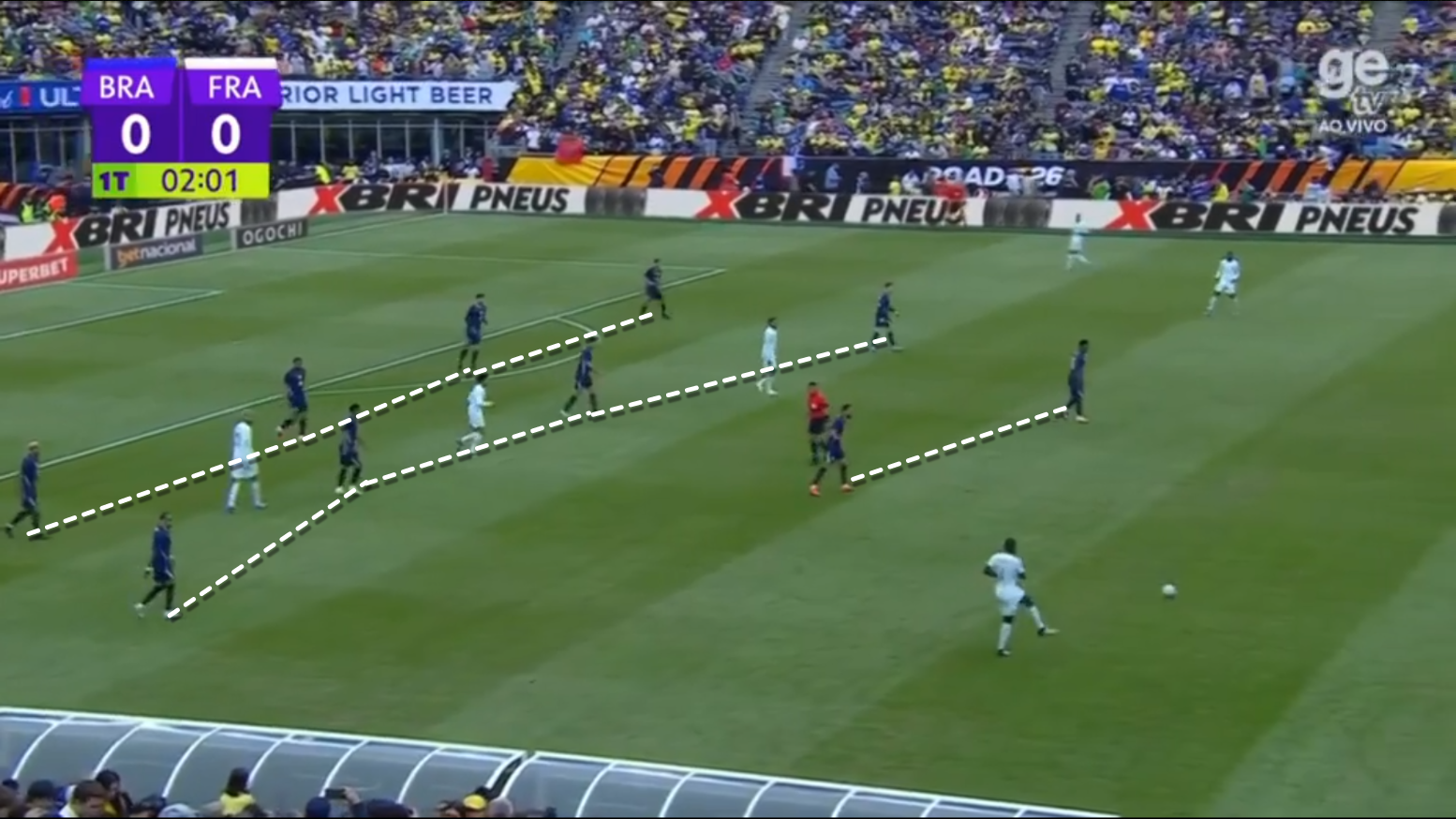
The two banks of four maintain close spacing, allowing the team to stay connected and limiting gaps opponents can exploit between the lines.