Andoni Iraola Tactics At Liverpool 2026/2027: The Return Of Heavy Metal Football To LFC? – Tactical Analysis
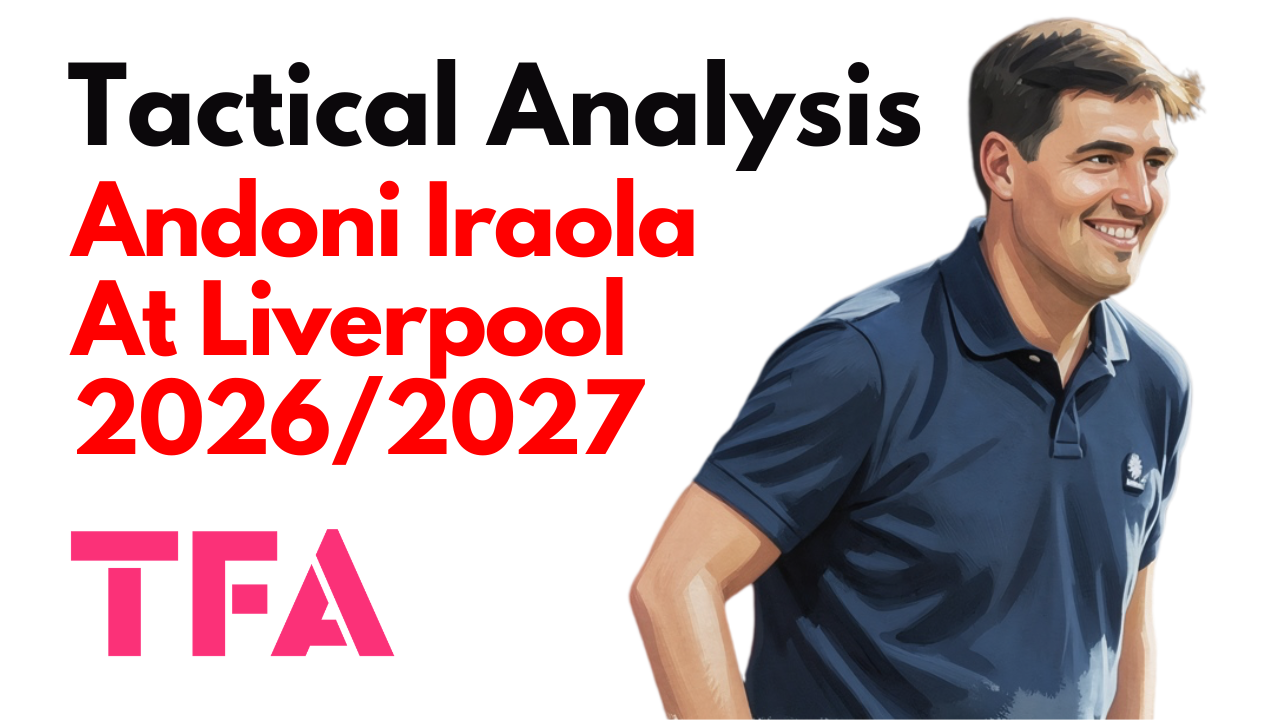
Following Arne Slot's departure, Liverpool have recruited Andoni Iraola from AFC Bournemouth to become the new Liverpool manager.

Who Is Andoni Iraola?
Following Arne Slot's departure, Liverpool have recruited Andoni Iraola from AFC Bournemouth to become the new Liverpool manager.
A change in manager seemed imminent for the Reds after the way their 2025/2026 campaign unfolded, with an overwhelming number of losses and unsatisfactory quality of football in Slot’s second season.
Under Iraola tactics, Bournemouth finished sixth in Premier League, earning a UEFA Europa League spot, just three points shy of Liverpool.
It was an impressive season given the number of key departures they had, including Antoine Semenyo during the winter transfer window.
Throughout the 2025/2026 EPL season, Bournemouth collected some positive results, beating Arsenal, Liverpool, and Tottenham Hotspur, while earning draws against Manchester City, Chelsea, and Manchester United.
They also finished their season with an 18-game unbeaten run in the Premier League.
The Spaniard’s record with his former club will surely ignite hope for Liverpool fans.
Through this tactical analysis, we examine AFC Bournemouth style of play under Andoni Iraola tactics to determine how Liverpool may operate under his reign.
AFC Bournemouth Style Of Play Under Iraola
Defensive Phase
A large part of Iraola’s identity is how his team plays in the defensive phase.
Bournemouth were usually set up in a 4-4-2 and pressed accordingly.
However, the shape saw constant changes depending on the opposition players’ movement.
The front two (striker and attacking midfielder) quickly changed into a compact front three when one of the central midfielders followed the opponents’ deepest midfielder.
In these situations, the opponents were forced to go backwards and attempt to play around the press.
With players from the second line of pressure moving around to follow their direct opponents, they adapted by executing takeovers, which is how they managed to consistently maintain a man-marking setup.
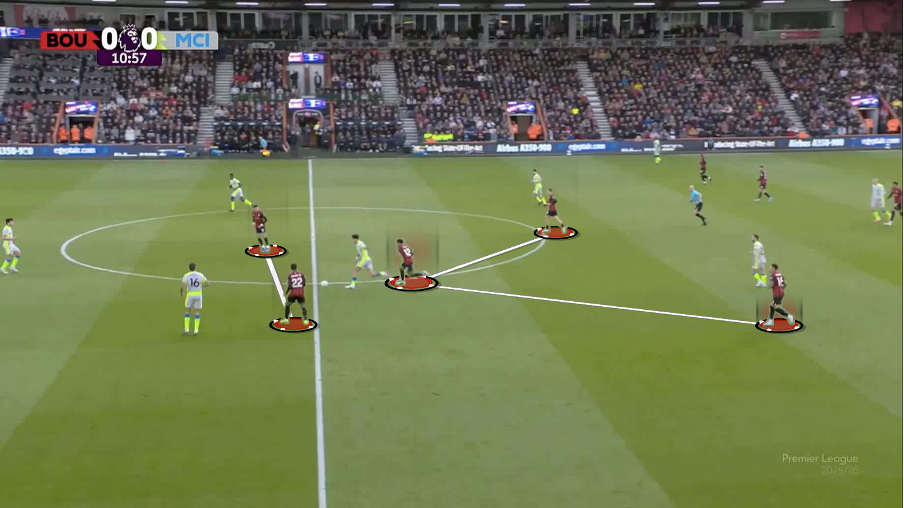
Man City’s full-back inverts to add a number in midfield above.
To tackle this, one central midfielder steps up to track him.
These adjustments sometimes altered their shape into a 4-4-2 diamond, formed either by both wingers squeezing inside with the other centre-back at the base, or by a centre-back stepping into midfield to track the opposition striker.
The Cherries played with high intensity and aggression off the ball, which resembles Jürgen Klopp’s time at Anfield to some extent.
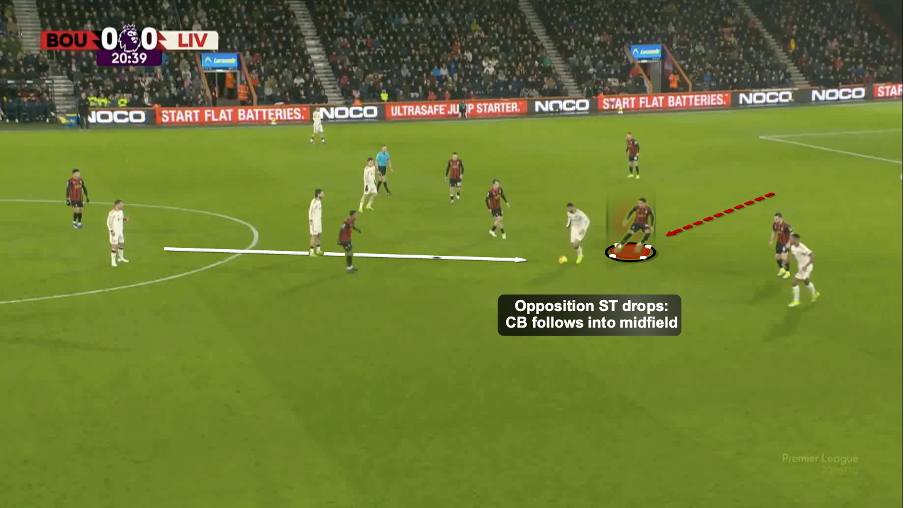
Above, the opposing striker drops to receive a vertical pass, and the centre-back follows his man into midfield with the aim of either forcing him back or winning possession to start a counterattack.
With most defensive actions built around aggression, especially with the centre-backs, it involved a risk of the opponent bypassing pressure to exploit the space in-behind.
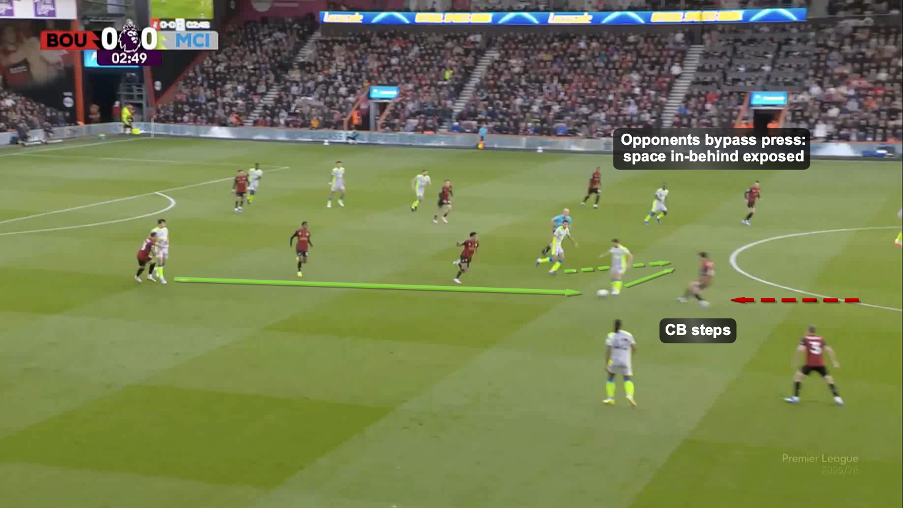
This happened in the game against Man City.
Marcos Senesi steps up to put pressure on Bernardo Silva; however, the Portuguese midfielder flicks it to bypass the centre-back.
Fortunately for Iraola’s side, the opponents ended up misplacing the final pass.
This points to the potential space that technically superior opponents can gain access to.
If the team presses high, the last line is forced to step; otherwise, it leaves behind space between the lines.
Bournemouth secured 11 clean sheets across the league campaign, which points to the efficiency with which they executed their defensive actions.
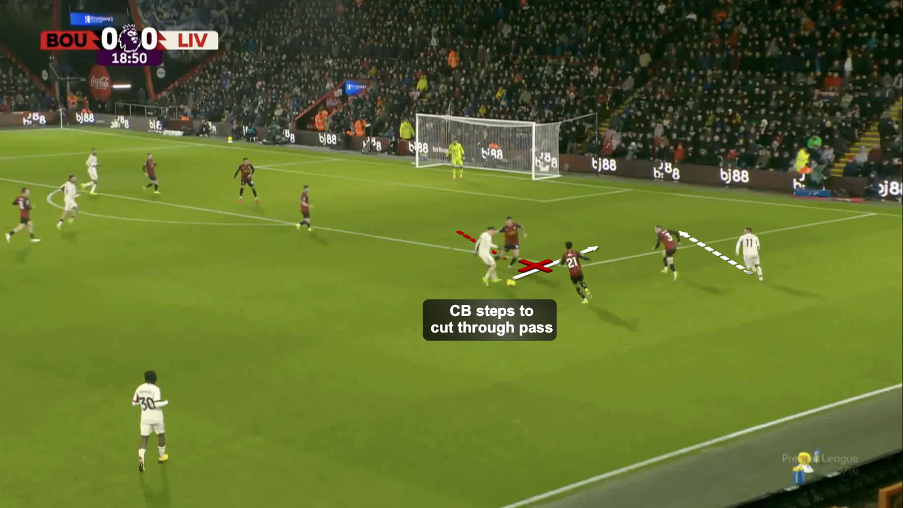
Being an aggressive centre-back also entailed stepping in to cover for the wide teammates.
The opponents attempt to play a one-two and exploit the passing lane between the full-back and centre-back.
Senesi steps aggressively to cut the pass in-behind.
Making these adjustments becomes more comfortable if the backline works in synchronisation; this is always a challenge against attack-heavy opposition.
The Cherries’ backline did well to cover for one another in defensive moments.
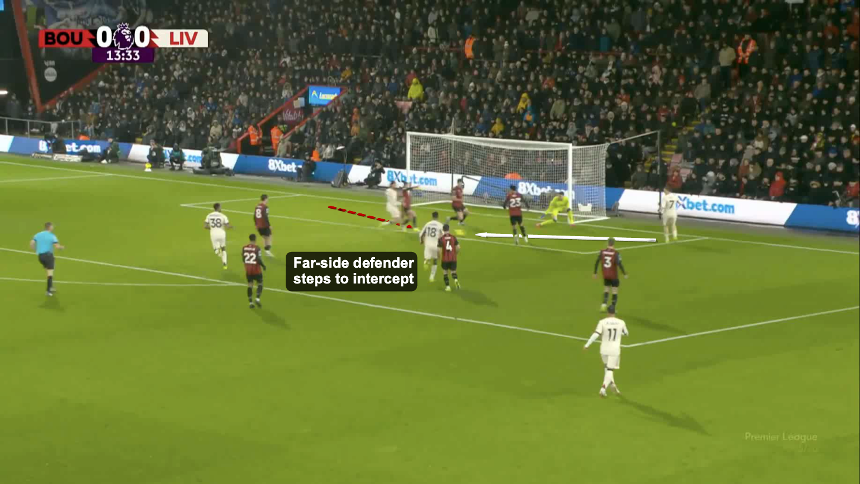
Liverpool penetrate deep into Bournemouth’s box and play a cutback to the edge of the goal area.
It beats both centre-backs; however, the right-back anticipates well, providing cover as he makes the interception in the nick of time.
When pressing high in the attacking half, Iraola’s Bournemouth forced the opposition to one side to then squeeze them in the wide area.
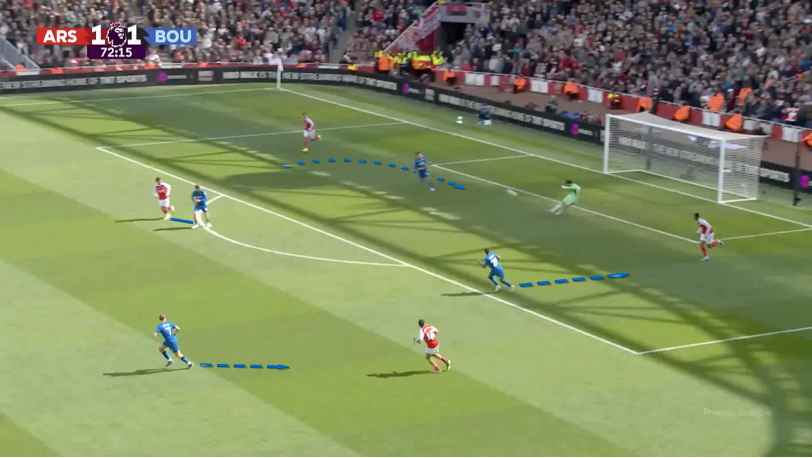
Here, Arsenal have a static start; the striker curves his press.
This takes the Gunners’ right centre-back out of the game; meanwhile, the attacking midfielder stays within pressing distance of the left centre-back.
Similarly, the other Cherries players stay close to the midfield options.
This situation forces the goalkeeper to go long.
On occasions where the opposition played the ball out wide, Bournemouth squeezed them in the wide channel, using the touchline as an additional defender.
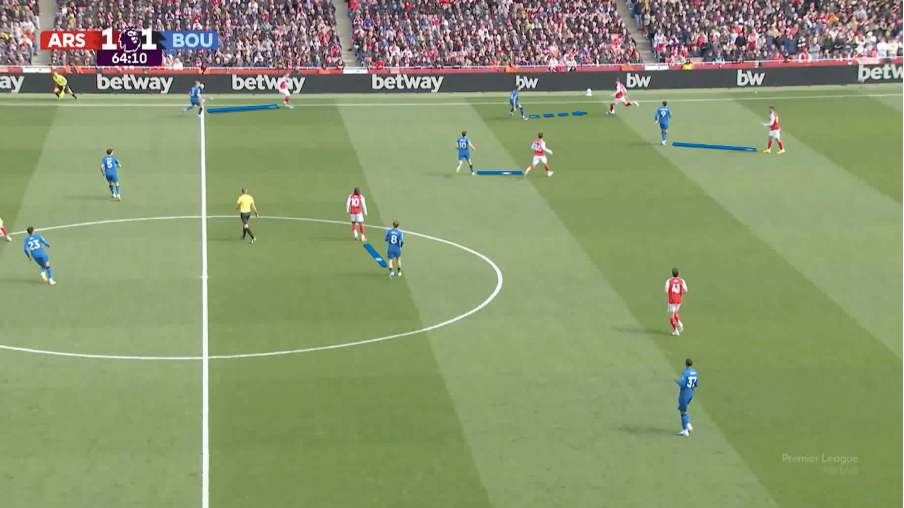
It started with the striker cutting the pitch in half, staying close to the ball-side centre-back.
This prevented the opponent from playing it back infield.
The winger pressed the opposing full-back, and the full-back pressed the opposing winger.
Meanwhile, the inside passing options in midfield were tightly marked by Bournemouth’s midfielders.
The case was similar when Bournemouth got dispossessed.
They immediately counterpressed to win the ball back.
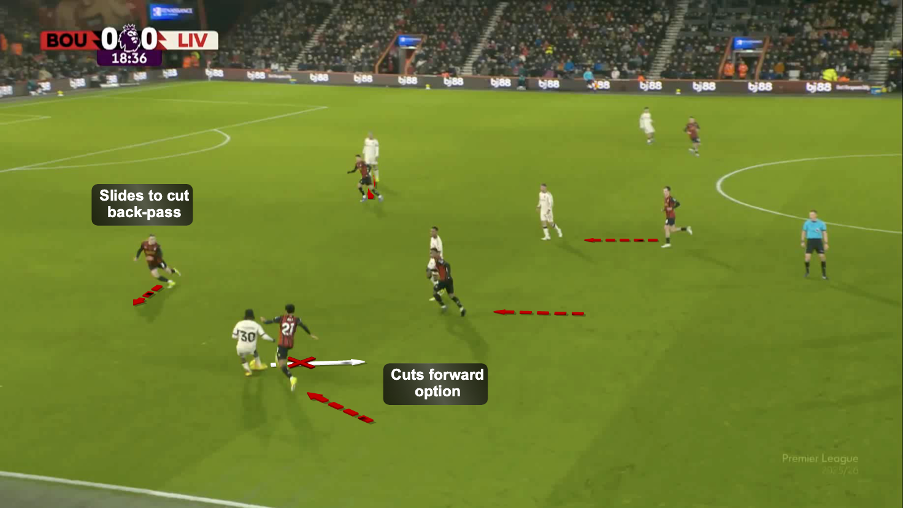
Right after losing possession, Bournemouth counterpress to suffocate the opposition ball-carrier, attempting to cut forward, inside, and backward passing options.
They made 51.5 ball recoveries per game, and their opponents had just 9.9 passes per defensive action (PPDA), which was the lowest number in the league.
Their rest-defence shape was also a contributor to how many regains they made.
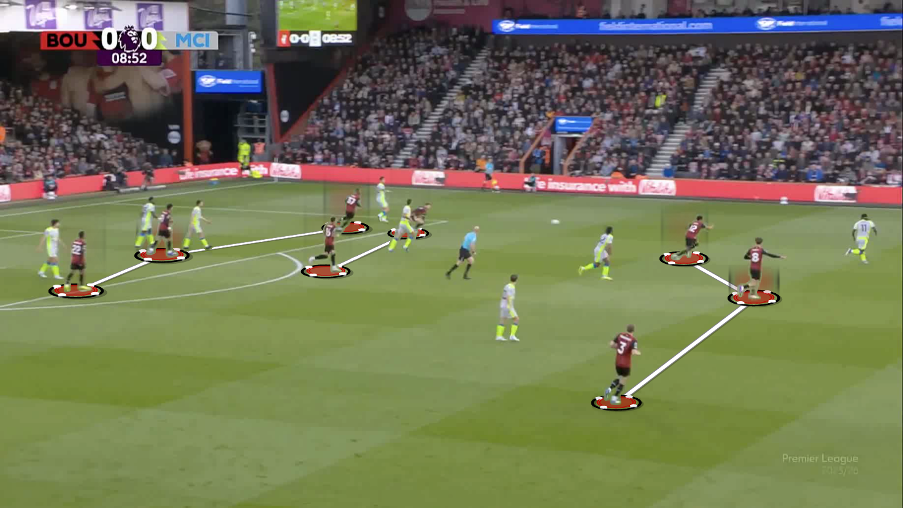
The Cherries attacked with five players; upon losing the ball, the defensive five came into play.
How they were positioned made all the difference.
Although Bournemouth have been more intensity- and aggression-driven than structured, a 3-2-3-2 is evident here.
With a compact defence, they were more likely to win the ball back in the opposition half or successfully slow the attack down, to say the least.
Attacking Phase: Build-Up & Progression
Although Bournemouth have not been a possession-based side under Iraola, they have adapted to the situation time and again.
Setting up in a 4-2-3-1, the natural way for them to build up was with a double pivot.
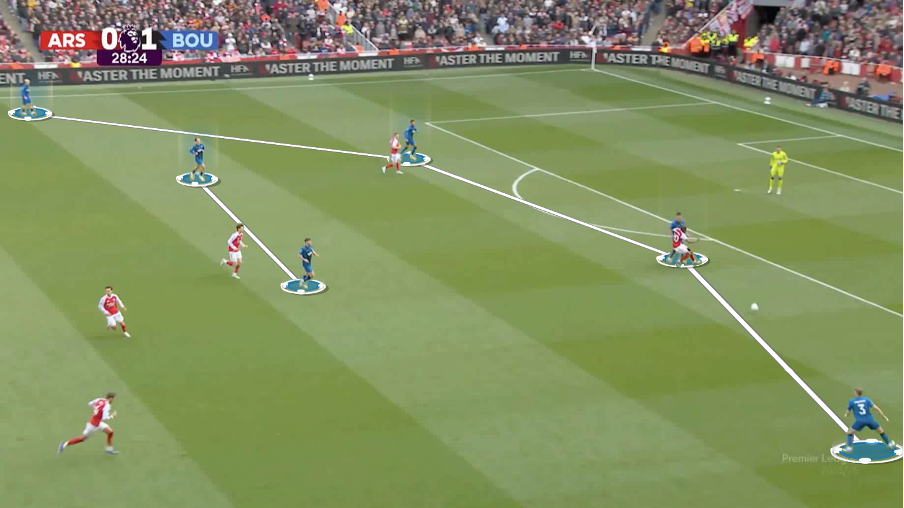
Bournemouth build-up with a double pivot.
However, they were seen switching it up whenever required.
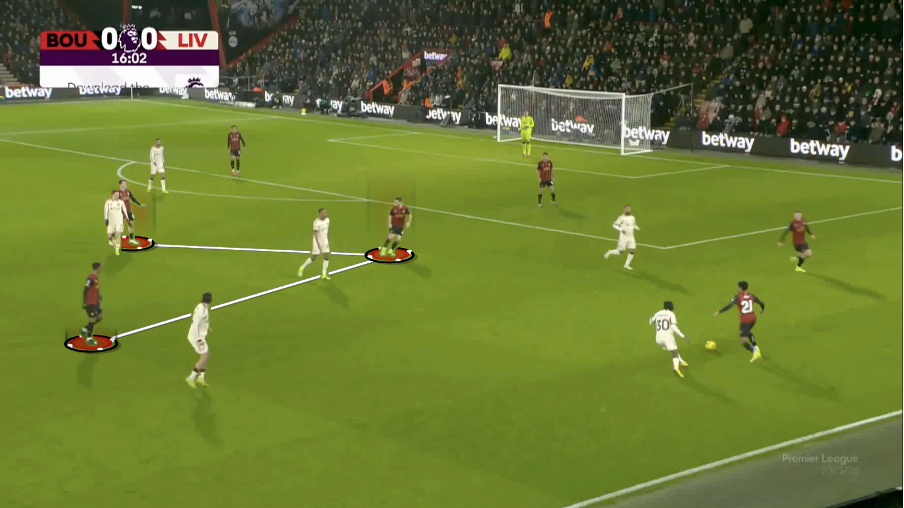
Here, the Cherries have their midfield three on top of their back four.
A single pivot structure can be seen.
They managed an average ball possession of 50%, paired up with 13.8 shots per game, out of which 4.7 were on target.
They also generated an xG of 1.67 per game.