Rudi Garcia Tactics At Belgium 2026: Can Adaptability Drive A Strong World Cup Run? – Tactical Analysis

Belgium, who were at the top of the FIFA World Rankings from late 2018 until early 2023, just after the 2022 FIFA World Cup, hold the ninth spot heading into the 2026 edition.
They kick their tournament off against Egypt on Monday, but they faced Croatia and Tunisia in preparation for the World Cup, beating them 2-0 and 5-0, respectively.
Head coach Rudi Garcia used different formations in both games: a 3-4-2-1 against Croatia and a 4-2-3-1 against Tunisia.
In this Belgium tactical analysis, we discuss how the Red Devils could operate in either of those two shapes in the FIFA 2026 World Cup.
Belgium 3-4-2-1 Tactics
Belgium Defensive Phase & Positive Transition
In their 3-4-2-1 system, Belgium defend in a 5-4-1 shape.
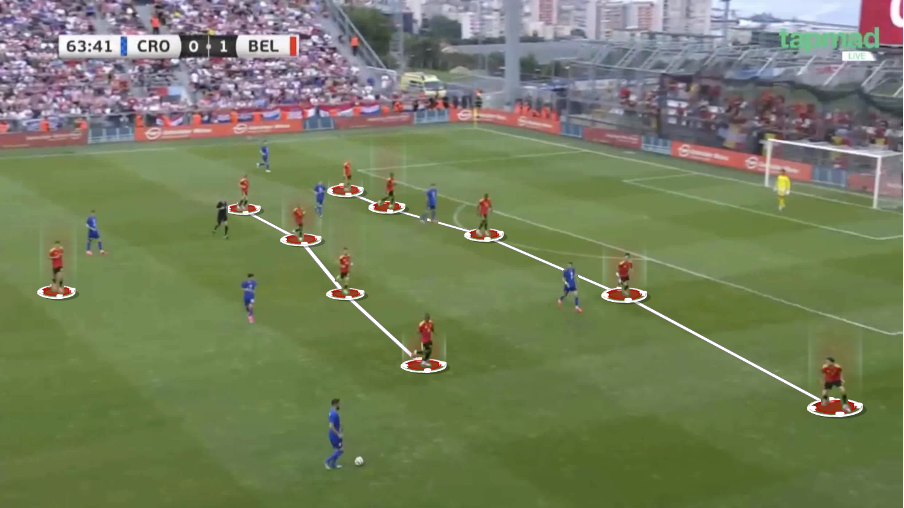
The wing-backs drop to make a back five, while the attacking midfielders, Kevin De Bruyne and Jérémy Doku, join the midfield.
Garcia’s side also frequently engaged in forcing the opposition to one side with their press.
This was initiated with the striker cutting the pitch in two halves by curving his press below.
Meanwhile, the far-side winger stepped up, and the ball-side winger stayed deep to invite the pass forward.
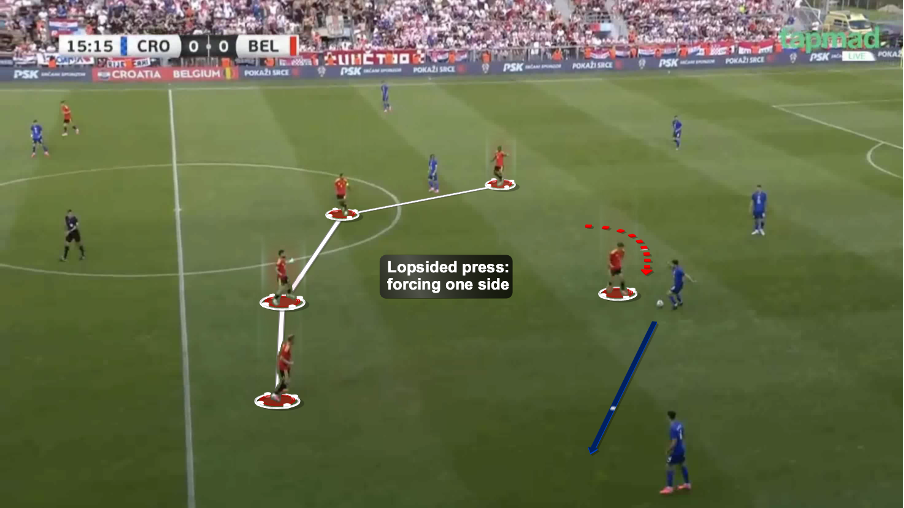
This lopsided pressing shape resulted in the opponent's full-back receiving the ball under pressure.
They played decently with this approach and ended up making 40 recoveries in this game.
This lopsided pressing shape sometimes led Belgium to defend in a slightly different shape.
When applying pressure in the middle third or higher, they sometimes morphed into a 5-3-2 shape.
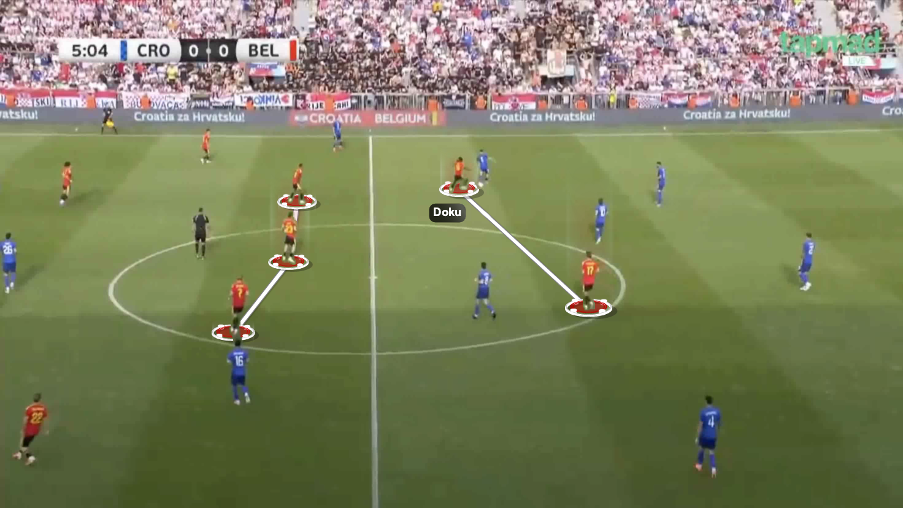
It was usually Doku stepping up to join the striker in the press.
When pressing in this shape, they were required to keep their lines horizontally compact.
However, this at times opened up the half-spaces, since the midfield was supposed to stay narrow.
To deal with this issue, the centre-backs jumped and closed down in the half-spaces.
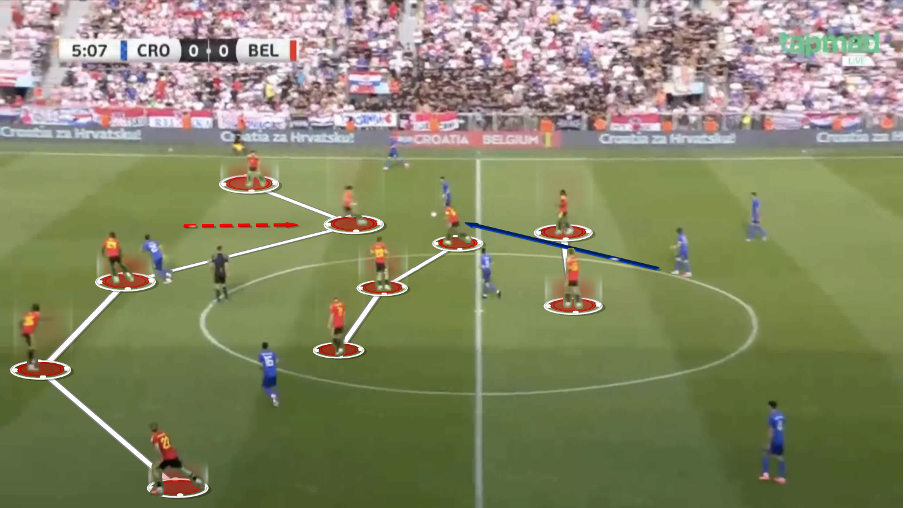
This action ends in Belgium winning possession after Arthur Theate jumps from left centre-back.
When pressing high in the attacking third, Belgium attempted to cut off all short options, forcing Croatia to play long.
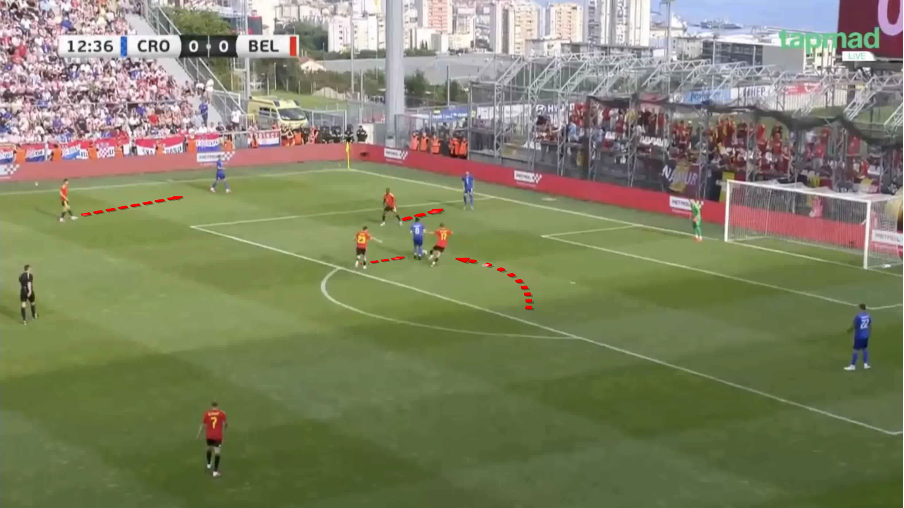
The ball-carrier is pressed by two Belgians: the striker, who cuts the passing lane to the goalkeeper, and a central midfielder, who keeps him from receiving on the half-turn.
The left-winger stays close to the ball-side centre-back in case he receives.
Meanwhile, the left wing-back closes down the ball-side full-back.
Croatia enjoyed the majority of ball possession during this game.
However, it did not massively disrupt Belgium’s plan, as they possess outlets for transition.