
Thomas Tuchel Tactics At England 2026: Inside The Three Lions' World Cup Playbook – Set-Piece Analysis

England’s opening match at the 2026 FIFA World Cup takes place against Croatia, which is arguably their toughest fixture in the group.
Set plays could play a crucial role for England at the World Cup, particularly in tight games.
“We also have specialists with us for all different kinds of scenarios, for when we are leading games and chasing them.
We always said that we wanted to be a strong set-piece team; we have specialists for that,” said England boss Thomas Tuchel in the news conference following England's squad announcement.
Harry Kane revealed that England have been working hard on their routines with Anthony Barry and set-play analyst Paul Quilter, who joined Tuchel’s England staff, having worked with both Quilter and Barry at Chelsea.
“We want to build a book of set plays,” Kane explained.
“So we can go into the tournament, where there is not a lot of time to practice; you want to have an NFL-like playbook, in a way, where you look at the opposition and see if they are zonal or man-marking, and we can pick what we want to do.”
In this England tactical analysis, we will discuss England's tactics in attacking corners against different defending systems.
England Tactics Vs Man Marking
Starting with their strategy against man-marking, we can see an example in Figure 1 below against Uruguay.
England's main structure for attacking corners is to place six players inside the box; two stand on the edge of the box, prepared for the rebound, while a player remains back in case of an opposing counterattack.
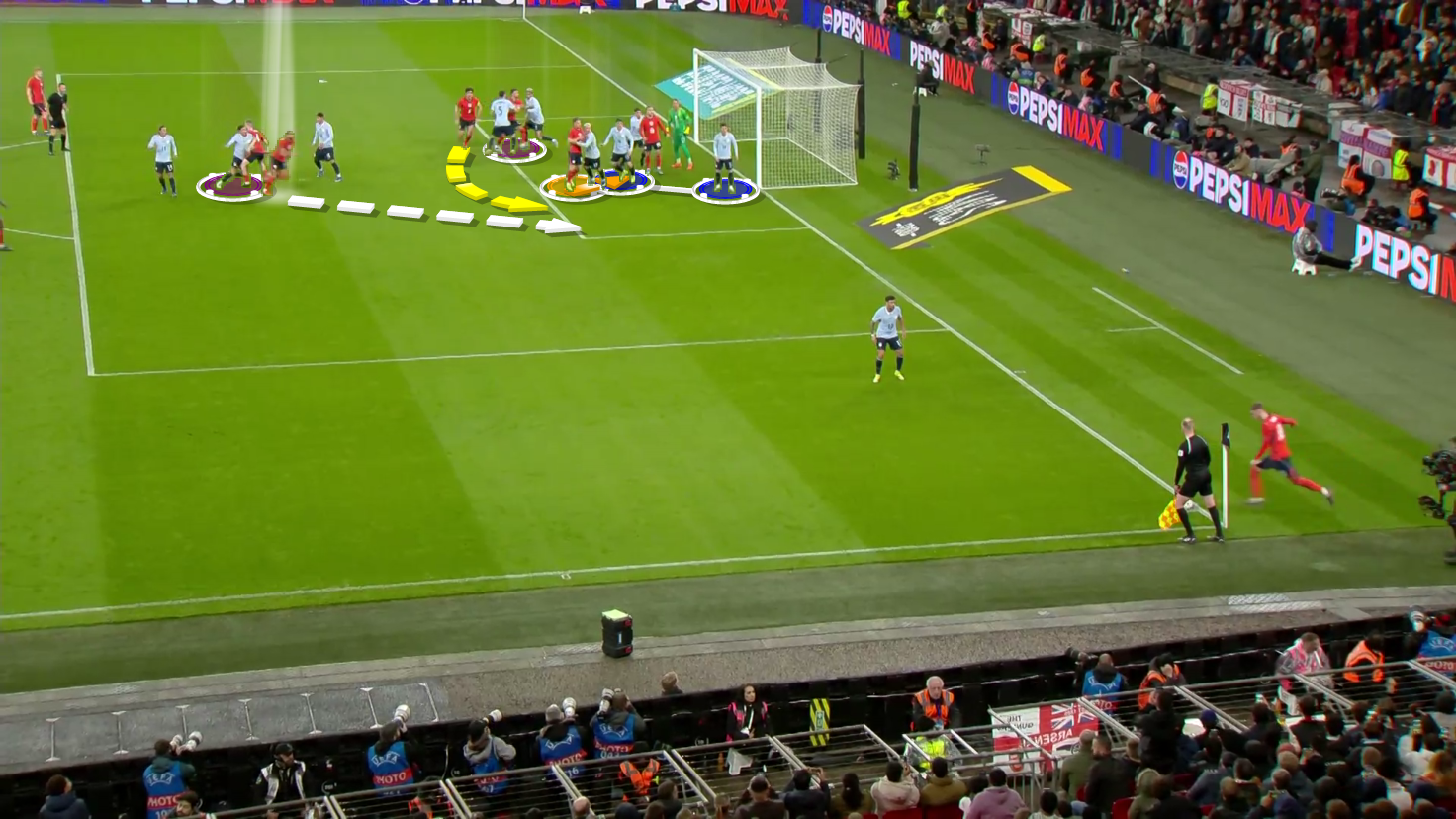
Uruguay defend with two zonal defenders (blue), a player for short corners (purple), a player for the rebound (beige); the remaining six are man markers.
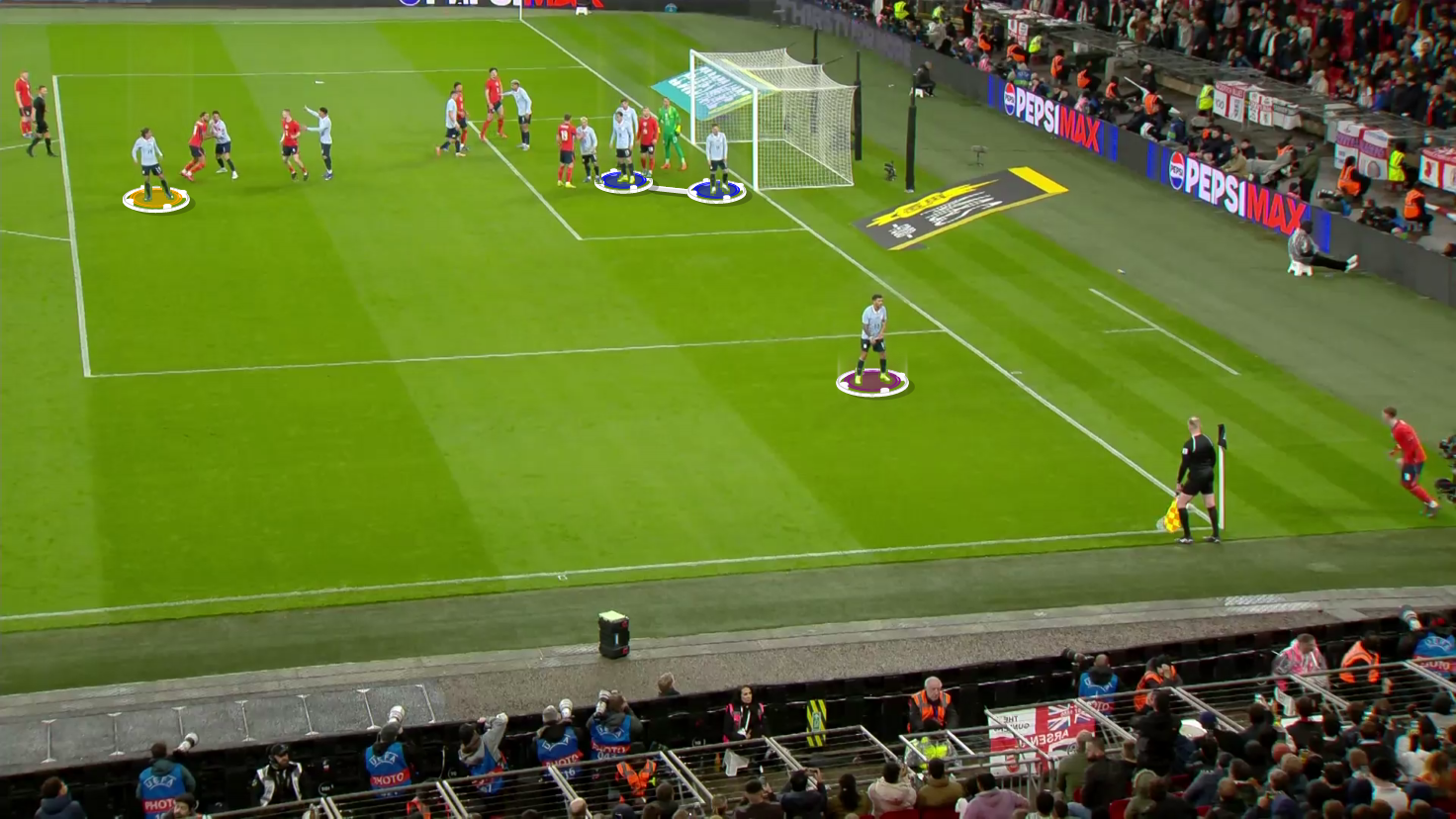
In this example, England target the near post with two players (yellow and white): one attacks the ball horizontally, while the other attacks it vertically.
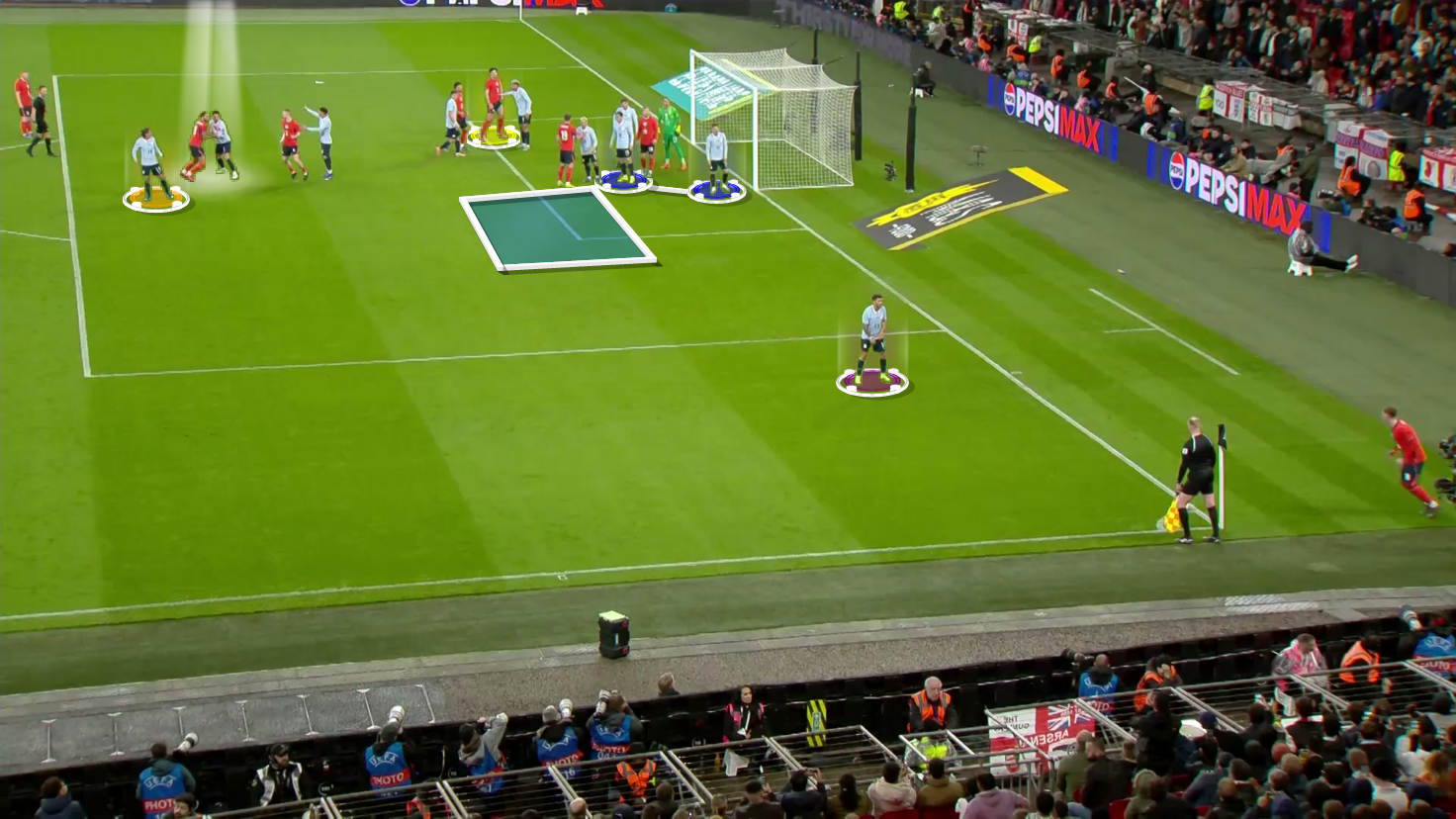
The big question they try to answer is: how can they free their two targeted players from their markers?
The answer is shown below in Figure 3, where two other players (purple) block the man markers of the targeted players, providing a screen.
The starting positions of these blockers are so important because they stand in the path of their targeted teammates, allowing them to effectively hinder the man markers while also making it seem as though the man markers are the ones who run at them to avoid fouls.
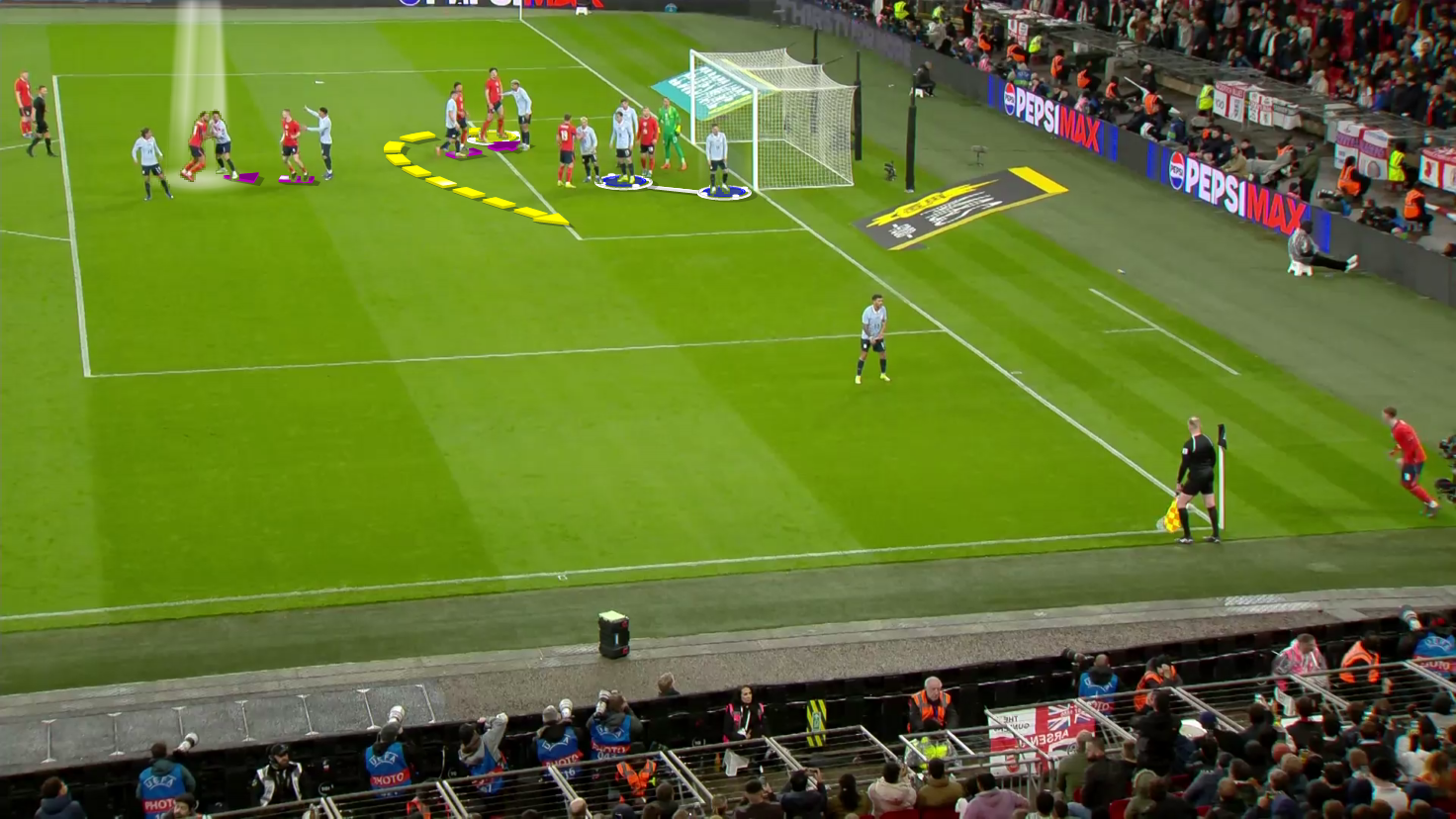
The orange player blocks the second zonal defender, who suddenly comes from his blind side to prevent him from going to the targeted area.
To be a brilliant team in set plays, you should be obsessed with all the details.
Hence, the player in black stands in front of the goalkeeper to prevent him from going out to claim the ball and to ensure that his man-marker breaks the offside line after the first touch.
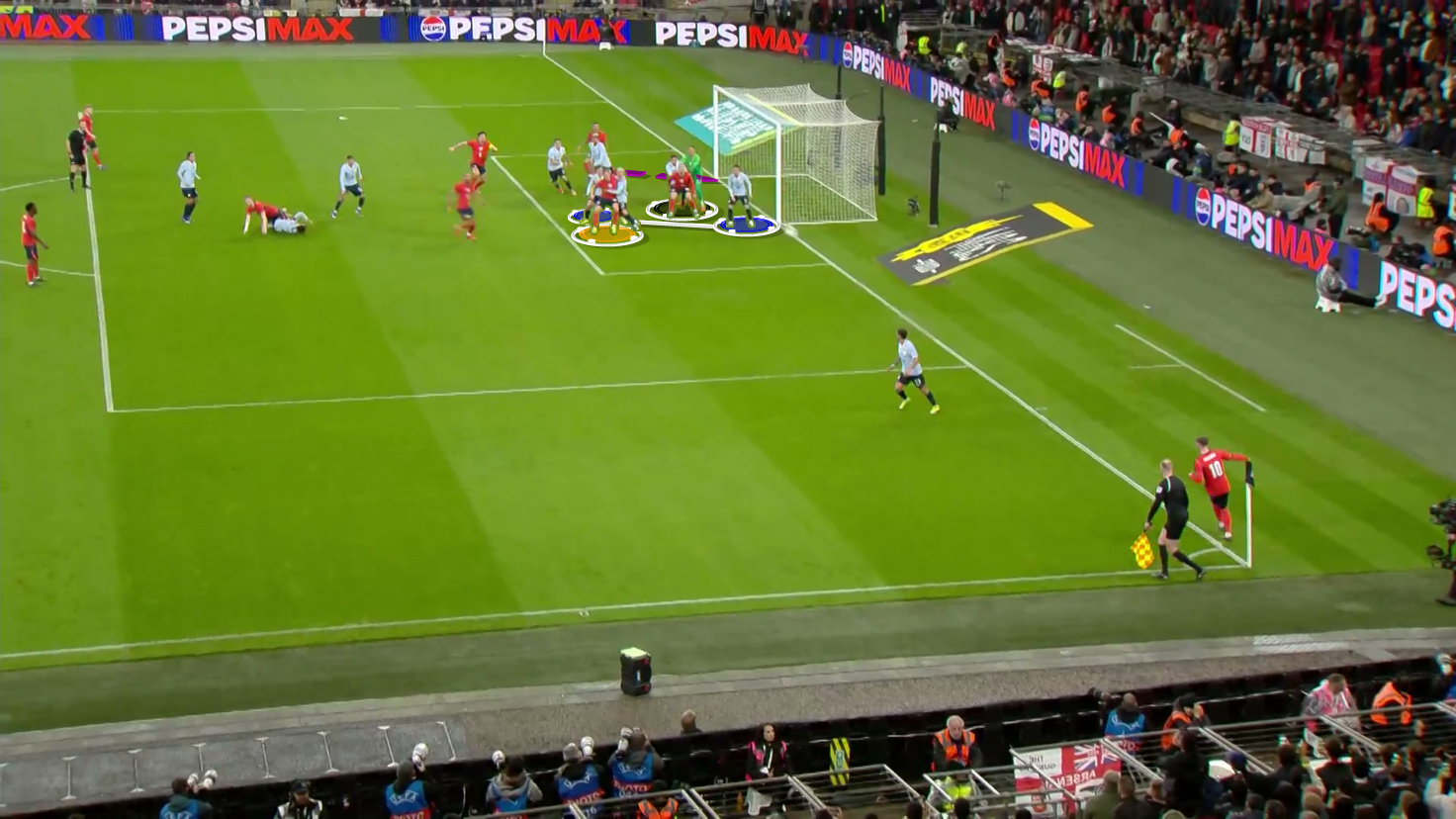
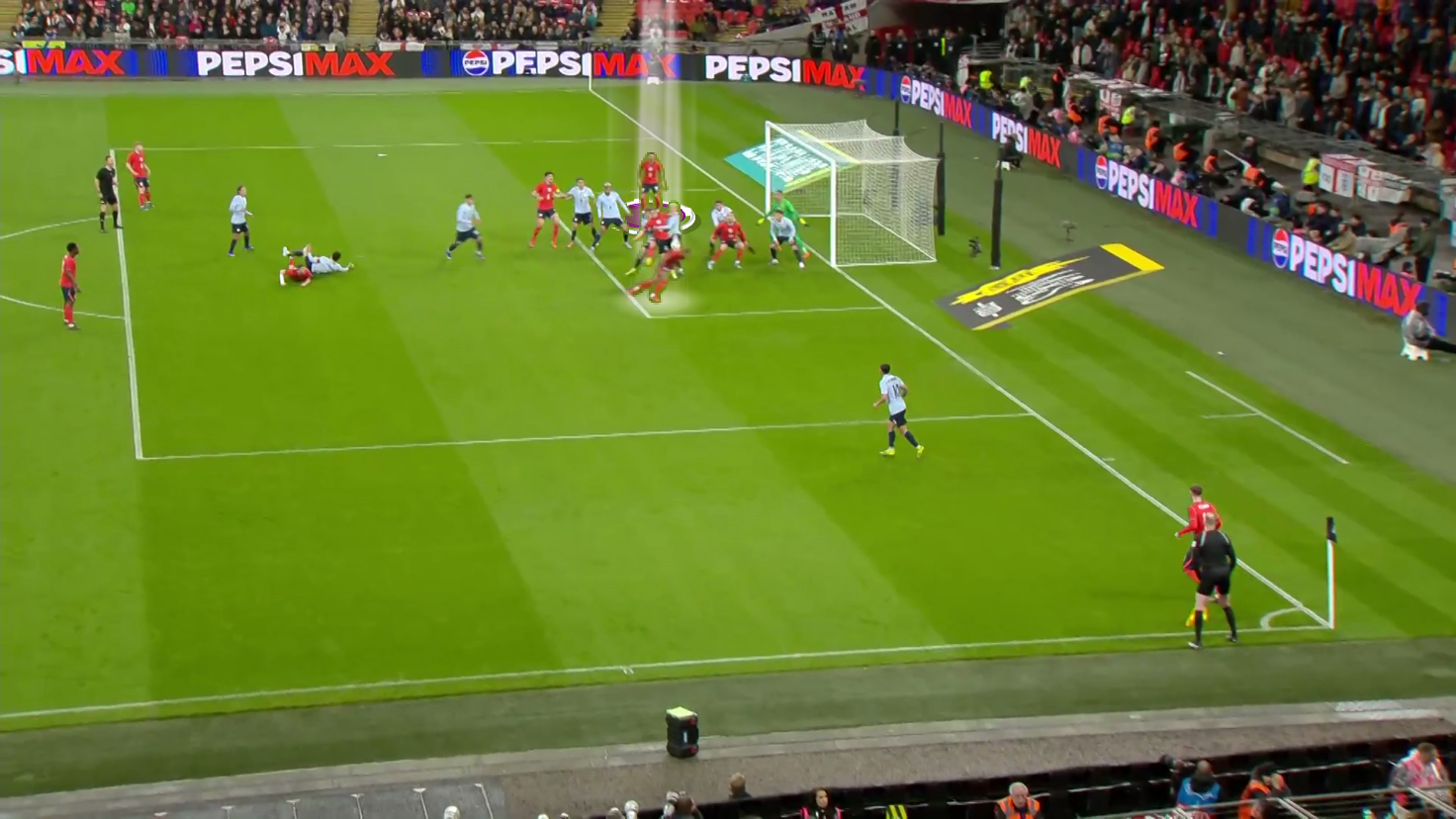
In Figure 6 below, the targeted player gets the ball and flicks it to the far post, where the purple player waits to put it into the net.
This purple player was the one who performed the screen to free the targeted player who came from the far post in the previous example.
After that, he had an important job to frame the goal and follow the ball at the far post, and he had already scored the goal.
To make sure that this player is onside even if the first zonal defender pushes up and leaves the post, the player in black we talked about stood behind the two zonal defenders.
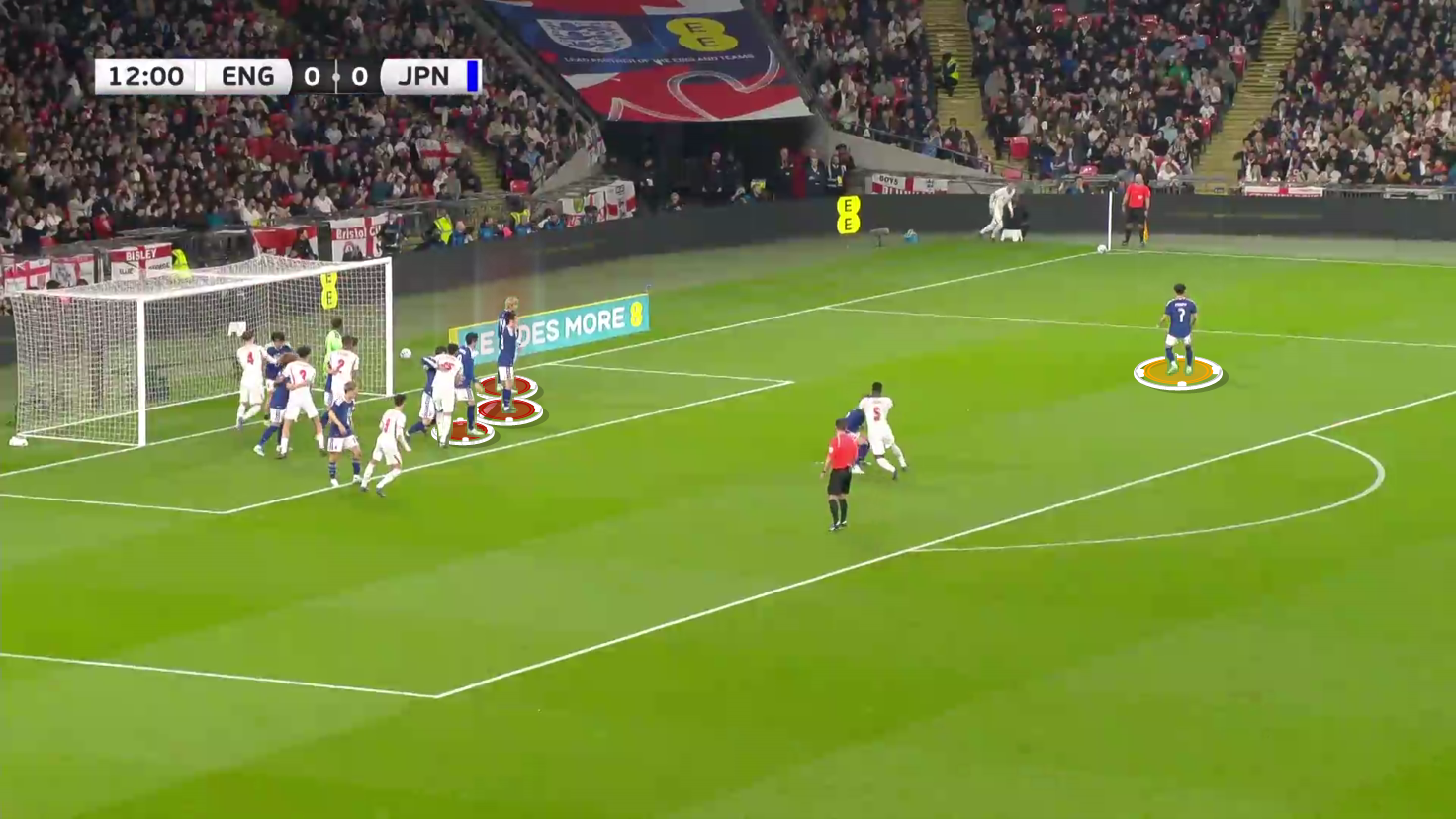
Against Japan, they implemented a similar idea to target the far post with simple variations.
In Figure 7 below, Japan defend with three zonal defenders (red), a short-option defender (beige), and the remaining six are man-markers.
The first variation, below, appears when Marc Guéhi depends on himself to overcome the man markers.
At the same time, the purple player just drags a man marker with him, making the area around Guéhi bigger and then runs back to the edge of the box, evacuating the targeted area.
Guéhi makes a small feint to the near post and then pushes his man markers to separate from him, going to the far post.
The orange player does the same job of blocking the zonal defender, so he blocks the last zonal defender.
The player who stands on the goal line will go to block the goalkeeper.
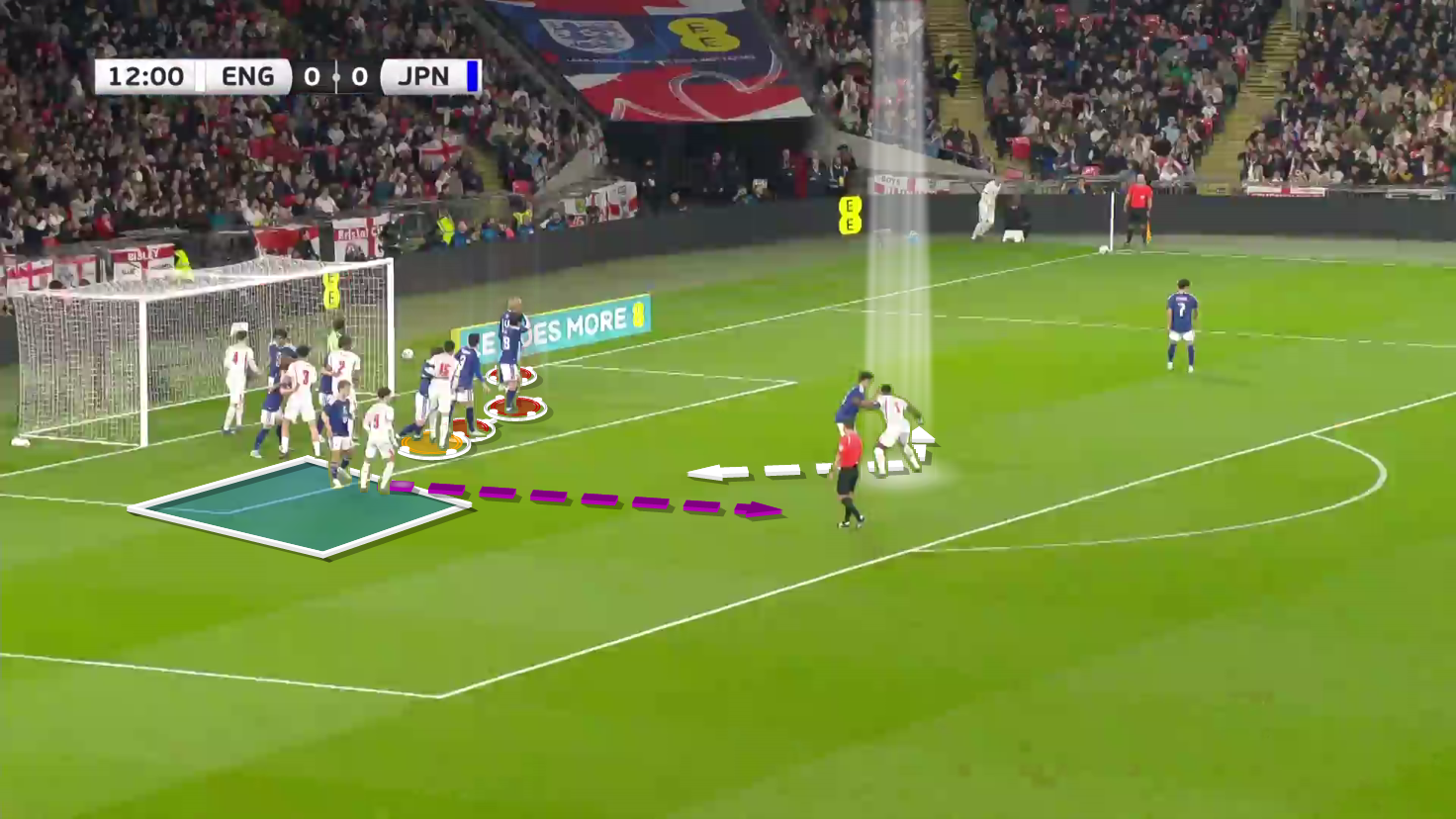
Figure 9 shows that the man marker has a big orientation problem because he fights Guéhi alone near the penalty spot, so he needs to make a decision after the feint:
1- Track the ball in the air, giving his back to Guéhi.
2- Track Guéhi giving his back to the goal, and this is what he did.
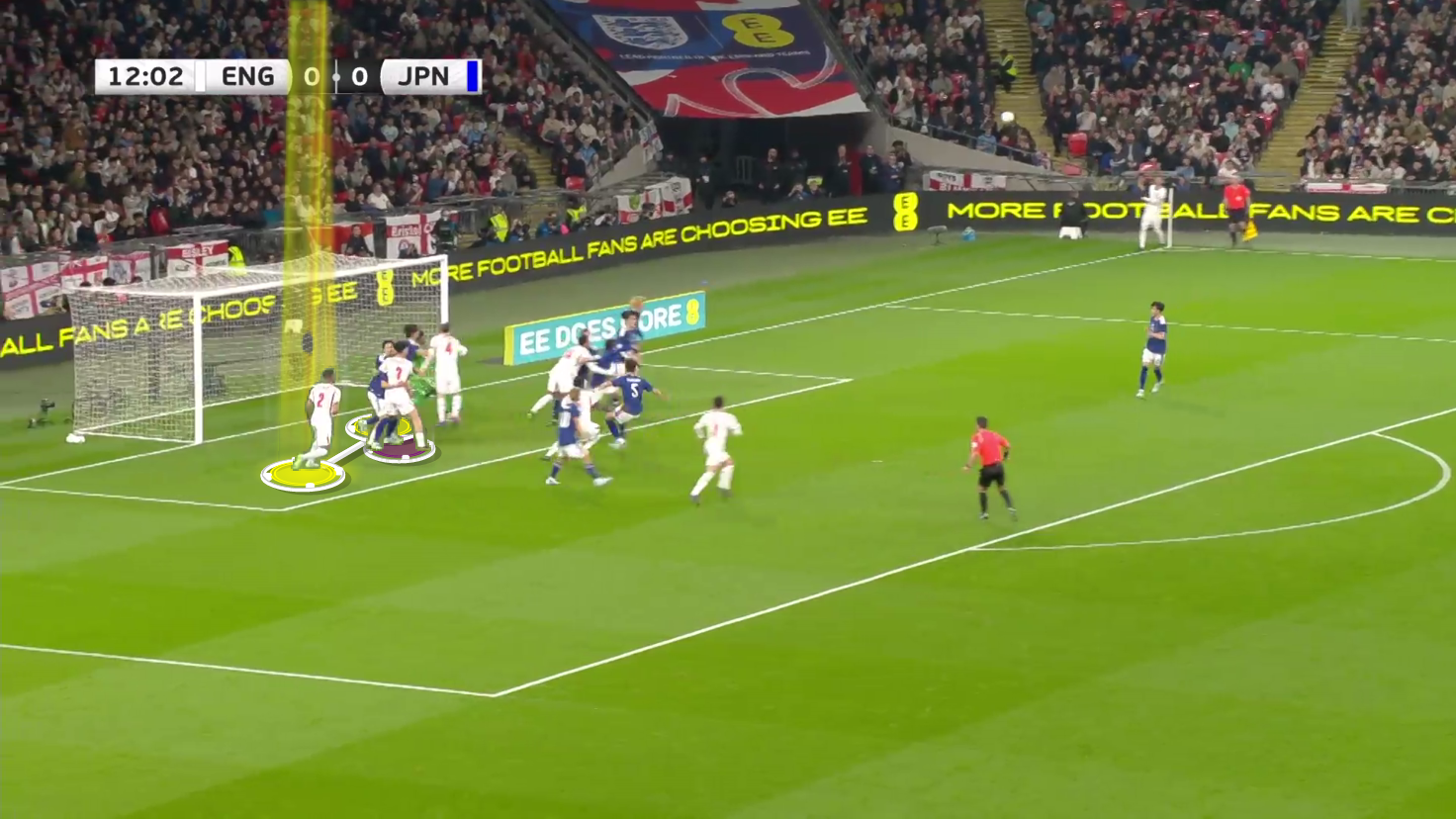
Both of these decisions give Guéhi a little bit of separation, who can sprint to the far post.
At the same time, the other targeted player (yellow) runs backwards to the targeted area while his purple teammate blocks his man marker.
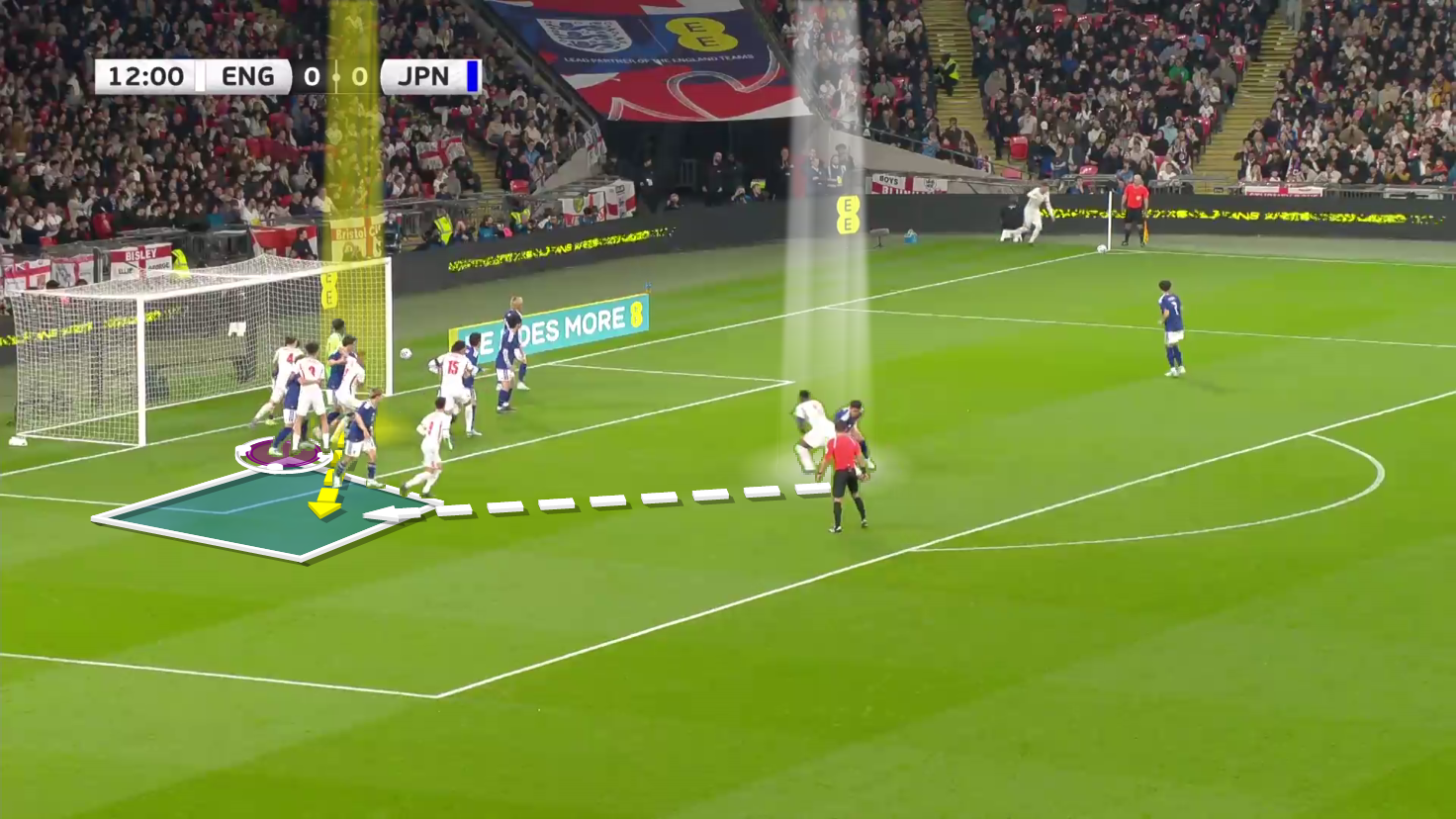
The screen is shown in Figure 10 below, where the yellow targeted player is separated from his man marker, who has another orientation problem: whether to watch the incoming ball or run backwards, losing contact with the ball.
England Tactics Vs Zonal Marking
Tuchel's side also has great ideas against zonal marking while keeping the key principles, as shown in the next example against Serbia in the World Cup qualifiers.
As in Figure 11 below, Serbia defend with six zonal defenders (red), a player ready to go short (yellow), a player for the rebound (blue) and two man markers (white).
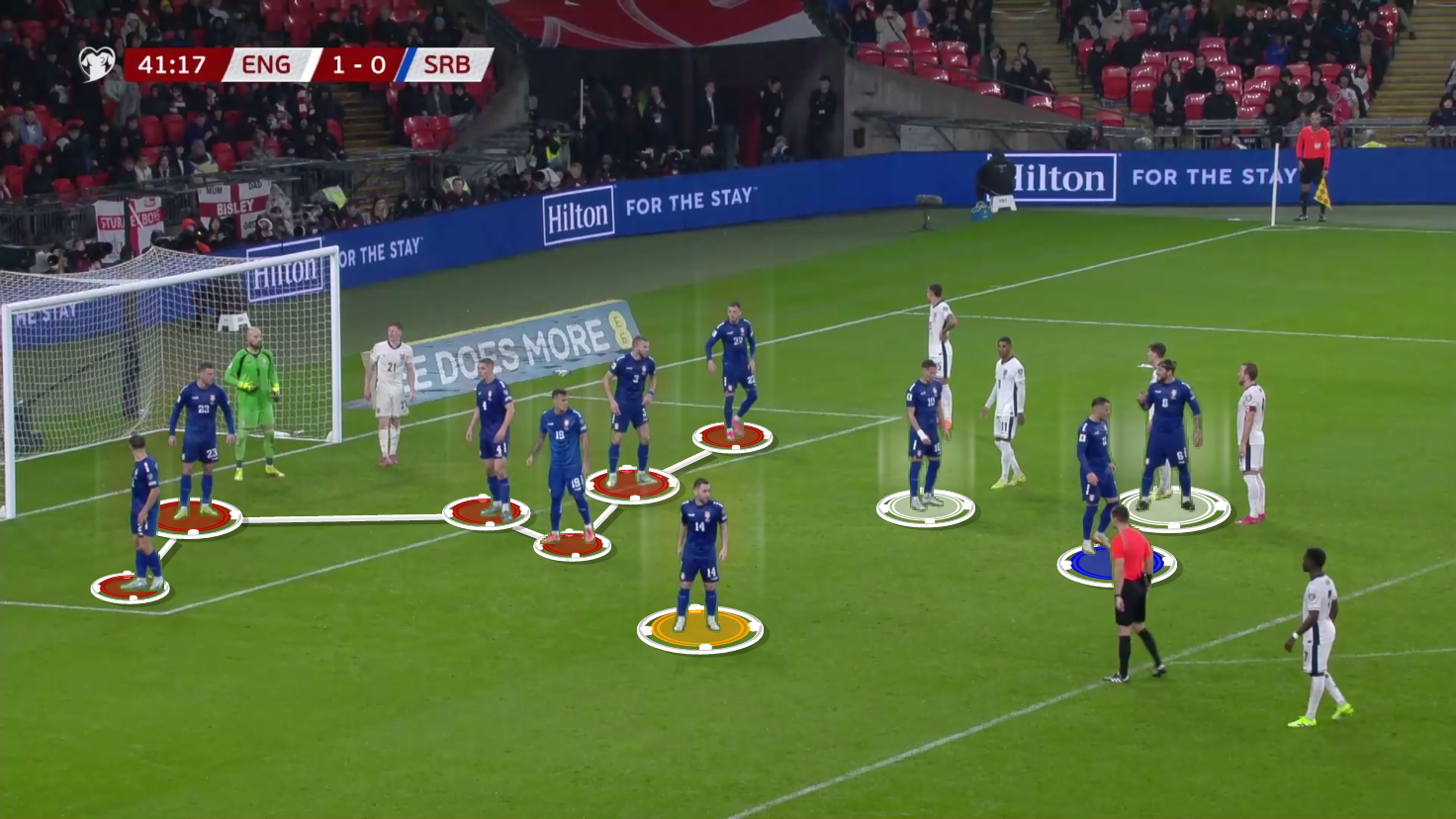
Having more zonal defenders naturally leads to fewer man-markers, which gives England more free players.
This makes it easy for Morgan Rogers (orange) to perform his blocking role, so he comes from the last zonal defender's blind side to block him and push him inside to free the far post (the targeted area).
The timing of movement is also crucial, and you can see that he moves as Declan Rice raises his hand and starts to move, which makes the zonal defender more concerned about the incoming cross than Rogers' blind-side run.
The yellow targeted player, Ezri Konsa, attacks the ball freely this time and more diagonally to gain momentum before entering the targeted area.
The white targeted player (Kane) gets around his teammate in purple (John Stones), who performs the screen easier this time because he is unmarked.