
![Switzerland Vs Colombia [0–0 (Penalties: 4–3)] – FIFA World Cup 2026: A Stalemate Between Dark Horses – Tactical Analysis](https://cdn.mymidnight.blog/77f959f119f4fb2321e9ce801e2f5163/size/w1000/2026/07/Switzerland-Vs-Colombia-World-Cup-2026-2.png)
Switzerland Vs Colombia [0–0 (Penalties: 4–3)] – FIFA World Cup 2026: A Stalemate Between Dark Horses – Tactical Analysis
Switzerland and Colombia met in Vancouver on Tuesday night for a clash between two darkhorses to win the 2026 FIFA World Cup. Switzerland breezed through in first place, topping Group B ahead of Canada, before dominating Algeria to progress to the Round of 16.

Switzerland Vs Colombia World Cup 2026 Match Overview
Switzerland and Colombia met in Vancouver on Tuesday night for a clash between two darkhorses to win the 2026 FIFA World Cup.
Switzerland breezed through in first place, topping Group B ahead of Canada, before dominating Algeria to progress to the Round of 16.
To highlight how good Switzerland have been over the last few years, Murat Yakin’s side has not lost a competitive match since November of 2024.
Colombia have enjoyed a similarly dominant run in this World Cup.
They beat Uzbekistan and DR Congo pretty handily and then were by far the better side in their 0-0 draw with Portugal to win Group K.
They then breezed past Ghana 1-0, creating loads of chances and limiting Ghana to only one shot from inside the penalty area.
With two teams playing at such a high level both in and out of possession, this match turned into a stalemate and eventually had to be decided by penalties, as chances were at a premium.
This World Cup tactical analysis examines how both teams struggled in possession to create high-quality chances and how they also defended brilliantly, resulting in a scoreless draw over 120 minutes.
Switzerland Vs Colombia Lineups & Formations
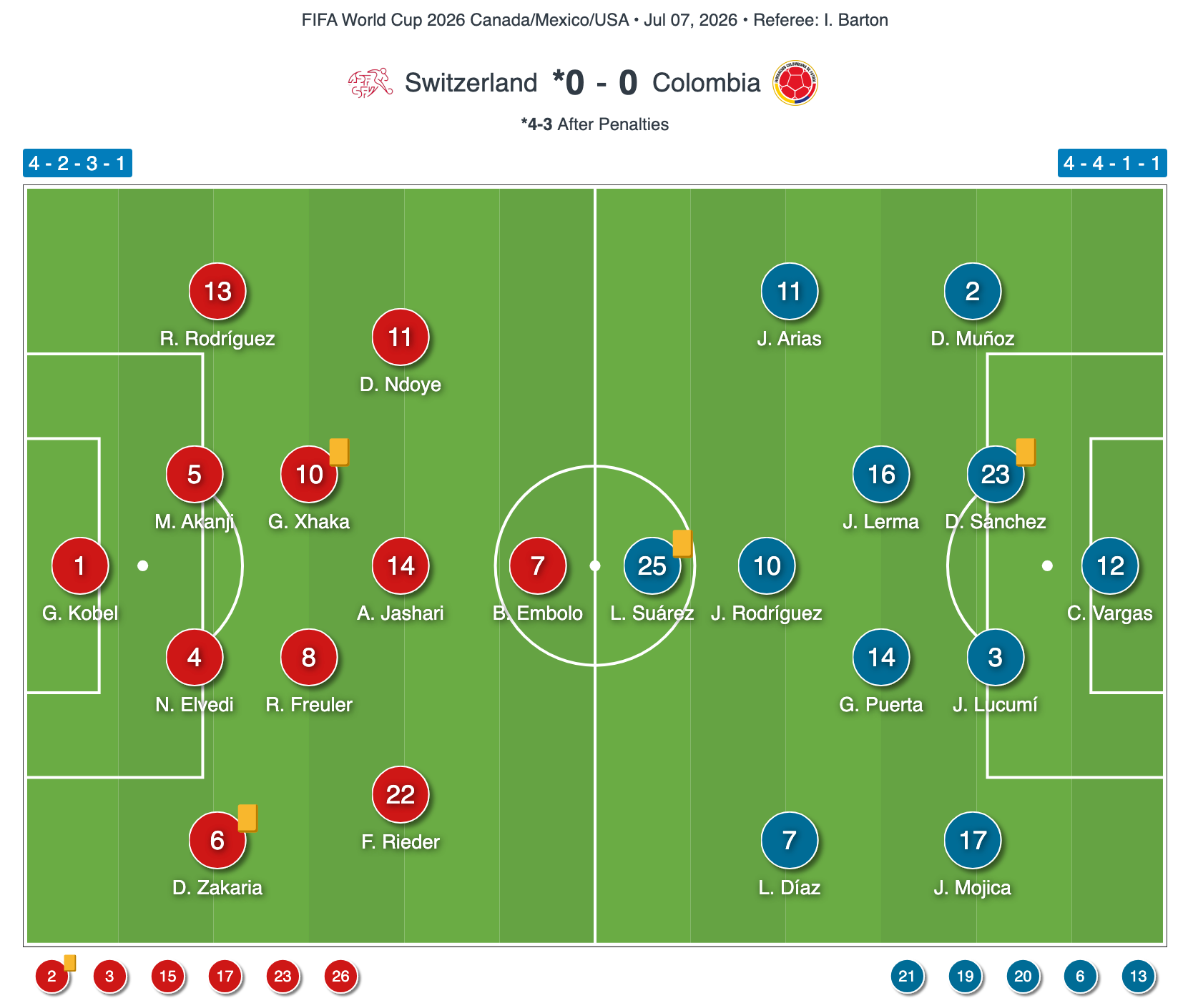
Switzerland Lineup Vs Colombia
Murat Yakin lined his team up in a 4-3-3 formation.
Gregor Kobel started in the net behind the centre-back pairing of Nico Elvedi and Manuel Akanji.
Ricardo Rodríguez started at left-back, while Denis Zakaria started at right-back.
Remo Freuler, Granit Xhaka, and Ardon Jashari started as the three midfielders.
Dan Ndoye started at left wing, with Breel Embolo at striker, and Fabian Rieder at right wing.
Murat Yakin made six substitutions in the match.
In the 46th minute, Djibril Sow came on for Jashari.
In the 71st minute, Miro Muheim came on for Rodríguez.
In the 87th minute, Cedric Itten came on for Embolo, and Silvan Widmer came on for Zakaria.
In the 92nd minute, Rubén Vargas came on for Ndoye.
The final substitution came in the 103rd minute, when Zeki Amdouni replaced Rieder.
Colombia Lineup Vs Switzerland
Néstor Lorenzo also lined his team up in a 4-3-3 formation.
Camilo Vargas started in the net behind the centre-back pairing of Jhon Lucumí and Davinson Sánchez.
Johan Mojica started at left back, while Daniel Muñoz started at right back.
Gustavo Puerta, Jefferson Lerma, and Jhon Arias started as the three midfielders.
Luis Díaz started at left wing, Luis Suárez at striker, and James Rodríguez at right wing.
Néstor Lorenzo made five substitutions in the match.
In the 66th minute, Juan Quintero came on for Rodríguez, and Jaminton Campaz came on for Arias.
In the 82nd minute, Cucho came on for Suárez, and Richard Ríos came on for Lerma.
The final substitution came in the 119th minute, when Yerry Mina replaced Lucumí.
Switzerland Struggles In Possession
Switzerland may have had more possession in the match, but they didn’t do anything with it.
It was a struggle for the Swiss throughout the 120 minutes, finishing the match with only seven shots, 0.39 expected goals, and 18 touches in Colombia’s penalty area.
The main struggle was a couple of different things.
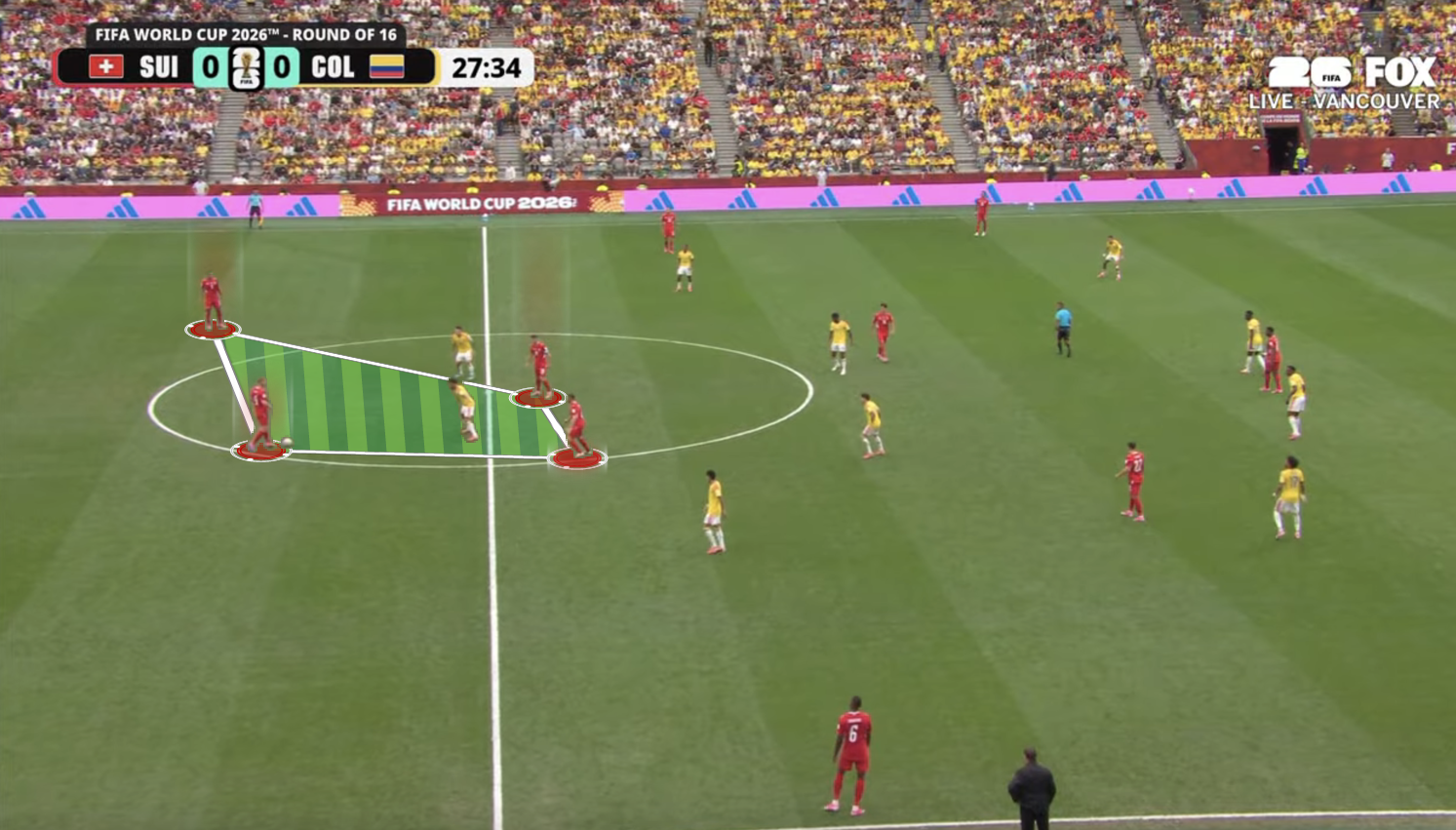
First up was the box they were trying to create in the midfield with Xhaka, Frueler, Akanji, and Elvedi.
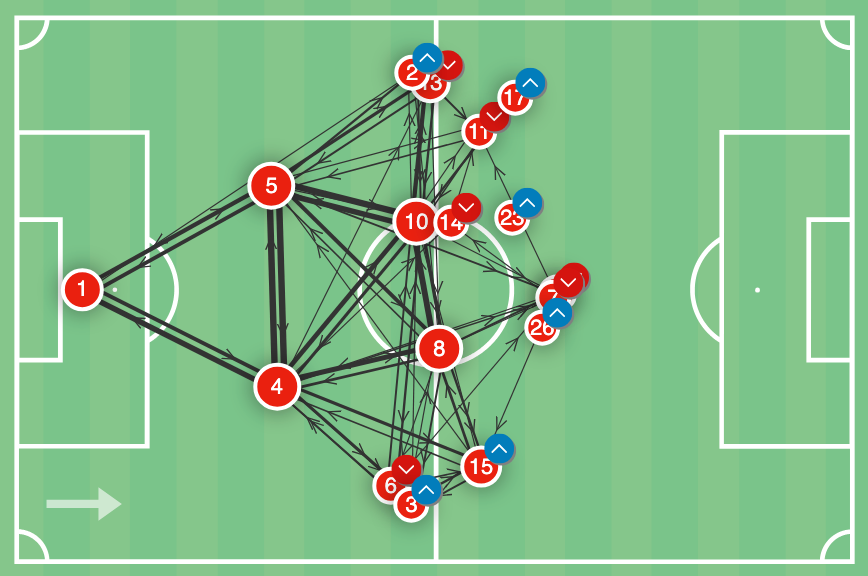
You can see from Switzerland’s pass map that most of their passes were between those four guys.
Switzerland Pass Map Vs Colombia
They were trying to maintain control of the match and ask questions of Colombia’s front two in their 4-4-2.
Because Jashari inverted into more of a ‘10’ role and Rieder also moved inward to occupy the right half-space, it made it hard for Colombia’s two midfielders to jump in on Xhaka and Fruler.
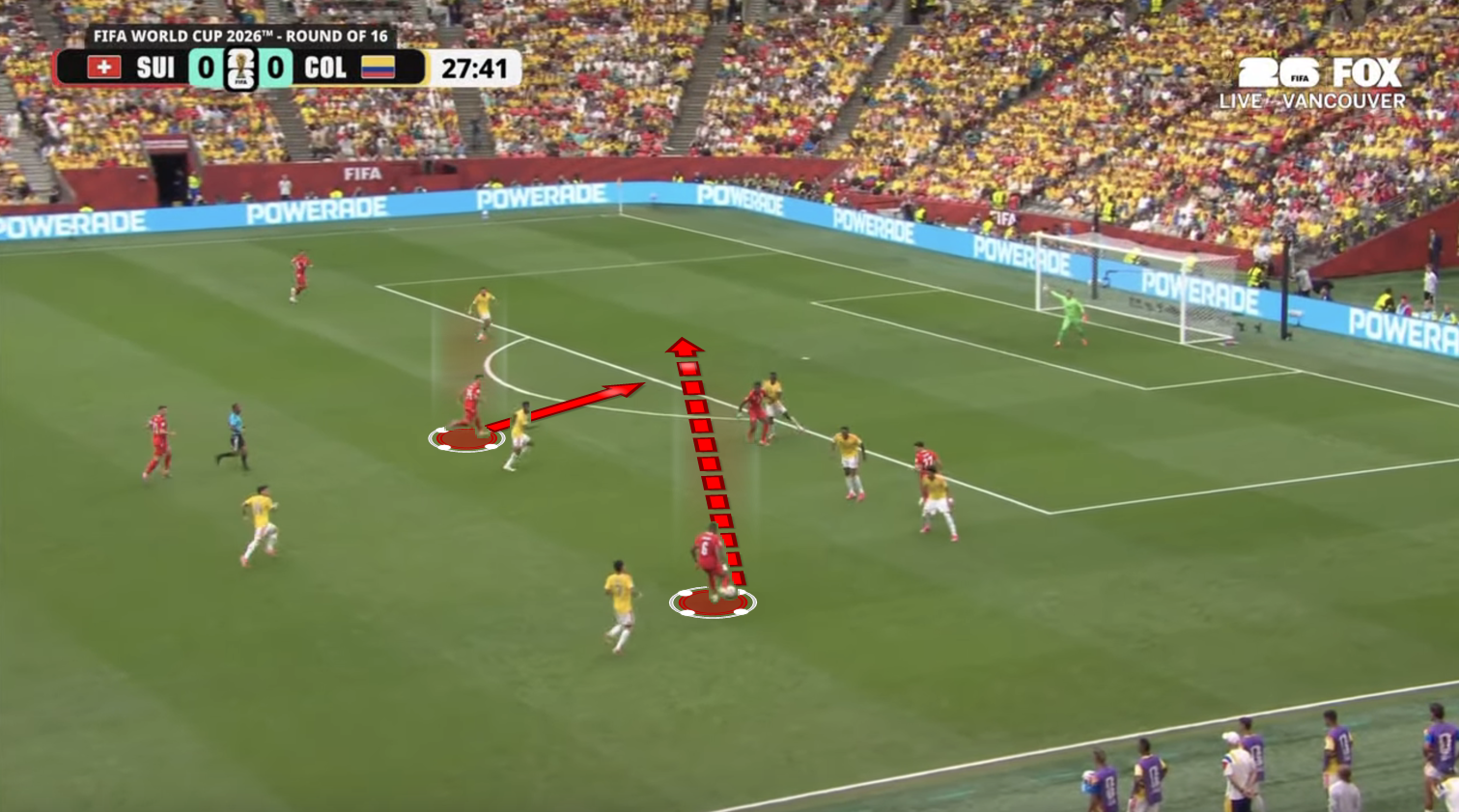
Because Colombia was defending in such a narrow 4-4-2, Switzerland pushed their full-backs a little higher up the pitch to be their main creators of chances.
Here, the ball goes wide to Zakaria, who takes advantage of the space Colombia is giving him with Díaz staying high up the pitch.
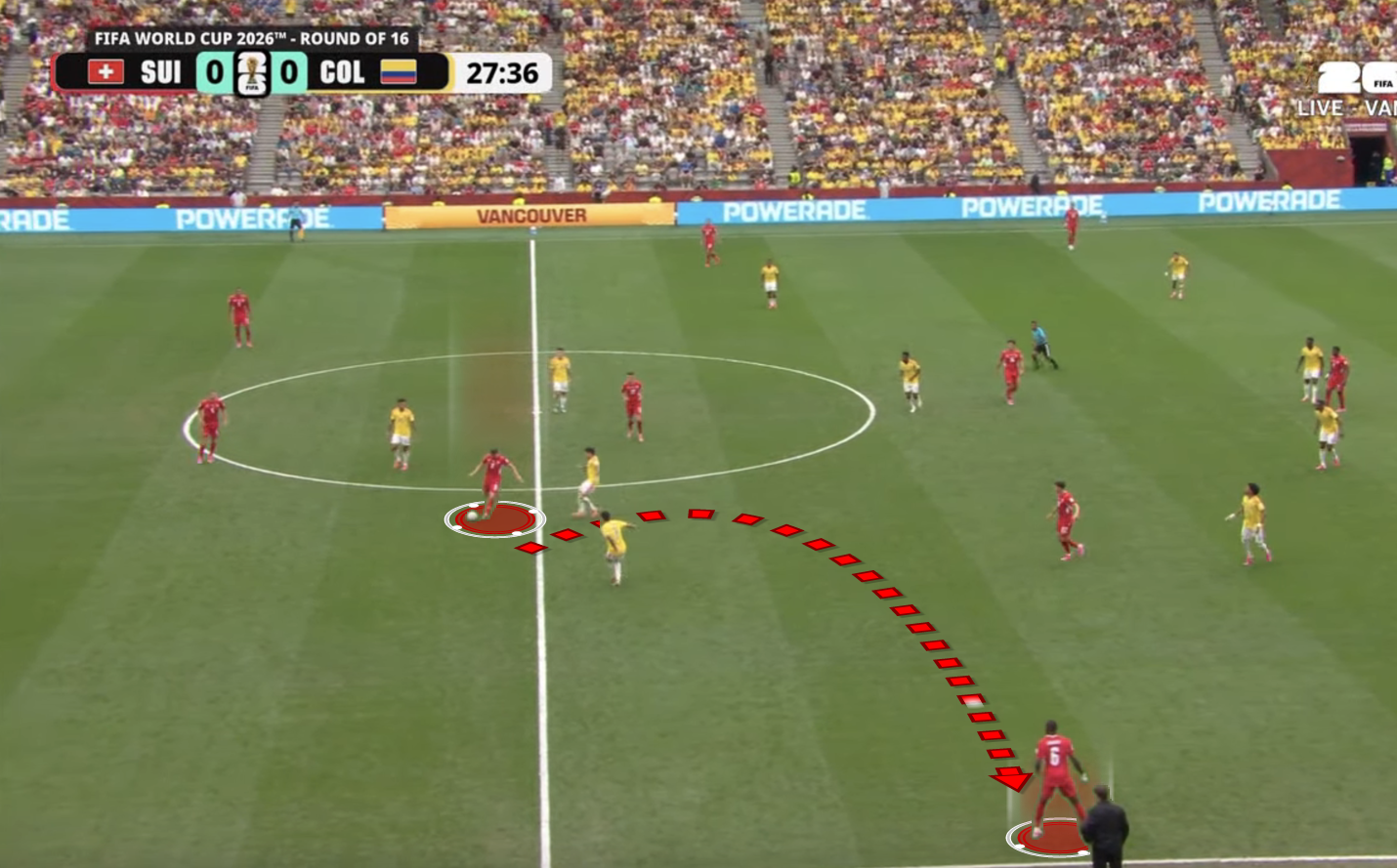
He plays a pass centrally to Jashari, but it is barely out of his reach, which could have been Switzerland’s best chance.
This also leads into the second part of Switzerland’s struggles in the match: crosses.
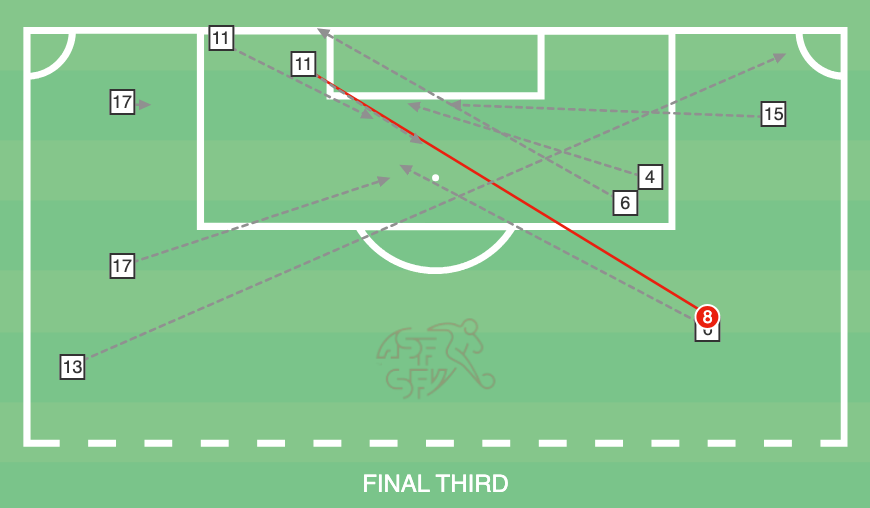
Because Colombia was playing such a narrow 4-4-2, they allowed Switzerland to play through the wide areas, so a lot of their chances had to come from crosses.
Switzerland attempted 10 crosses during the match, but were accurate on only one.
Switzerland Crosses Vs Colombia




![Scotland Vs Switzerland [0-3] UEFA Nations League 2026/2027: How Aggressive Pressing Backfired & Murat Yakin Took Advantage - Tactical Analysis](https://cdn.mymidnight.blog/77f959f119f4fb2321e9ce801e2f5163/size/w600/2026/10/Scotland-Vs-Switzerland-20262027---Tactical-Analysis.png)