
USA Vs Belgium [1–4] – FIFA World Cup 2026: Rudi Garcia Tactics Punish Mauricio Pochettino High Press – Tactical Analysis

Belgium produced a commanding display to defeat the USA 4-1 and book their place in the 2026 FIFA World Cup quarter-finals.
Charles De Ketelaere starred with two goals, while substitutes Hans Vanaken and Romelu Lukaku also found the net.
Malik Tillman's strike proved to be nothing more than a consolation as Belgium consistently created superior chances and punished the United States' defensive and build-up errors.
In this World Cup tactical analysis, we examine how both sides approached the game in possession and out of possession, before breaking down the mechanisms Belgium used to manipulate the USMNT defensive structure and create decisive advantages throughout the match.
USA Vs Belgium Lineups & Formations
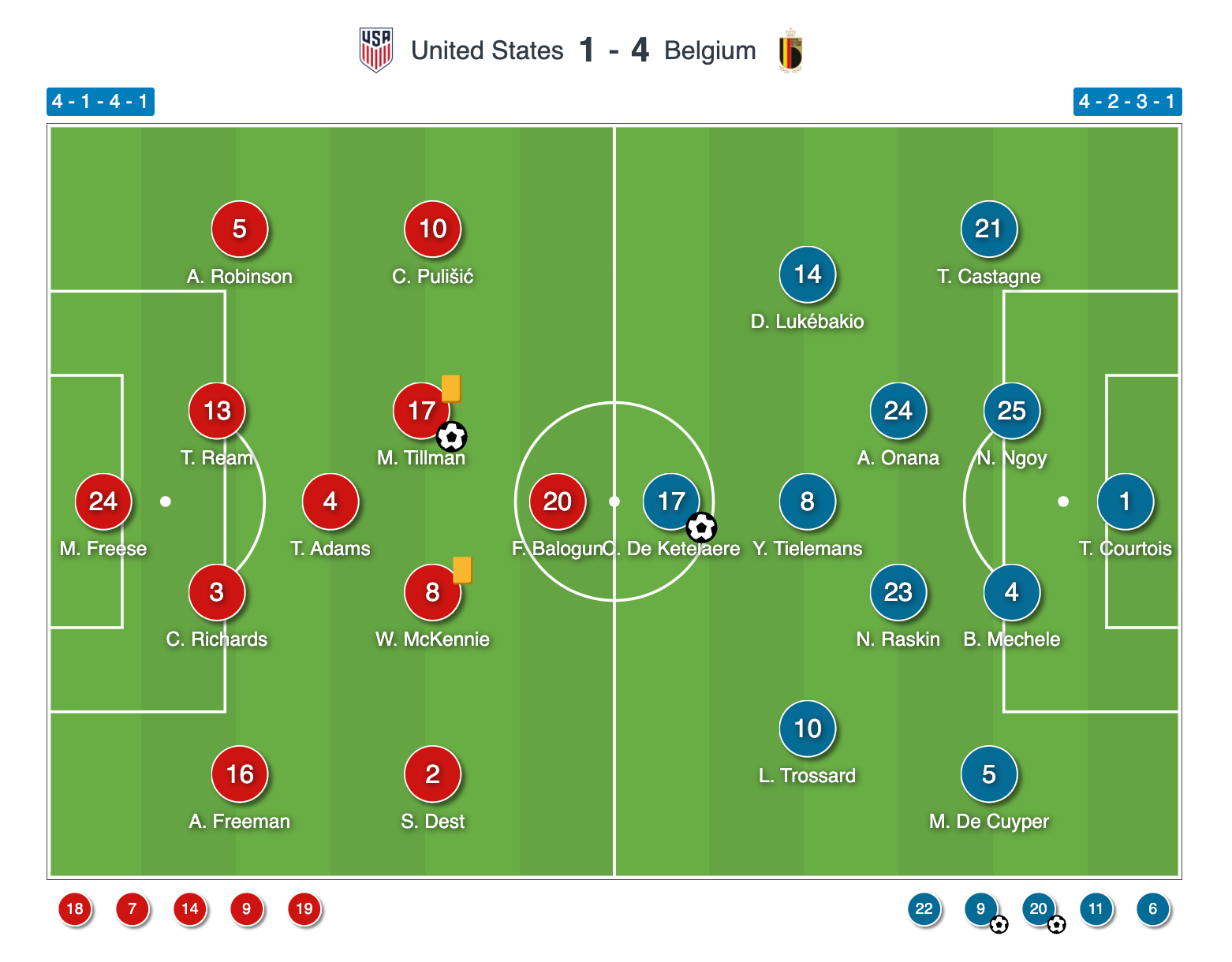
USA Lineup Vs Belgium
Mauricio Pochettino tactics retained the 4-1-4-1 system that had served them well against Bosnia & Herzegovina in the previous round.
Matt Freese started in goal for the hosts in Seattle, behind a back four of Alex Freeman, Chris Richards, Tim Ream and Antonee Robinson from right to left.
Tyler Adams anchored the midfield behind Weston McKennie and Malik Tillman, who operated as the advanced central midfielders.
Christian Pulisic started on the left wing, with Sergiño Dest operating from the right, while Folarin Balogun led the line as the lone striker.
Belgium Lineup Vs USA
Belgium lined up in their familiar 4-2-3-1 formation but made four changes to the side that defeated Senegal in the Round of 32.
Arthur Theate, Kevin De Bruyne, Jérémy Doku and Vanaken dropped out of the starting XI, with Nathan Ngoy (right centre-back), Amadou Onana (right central midfield), Nicolas Raskin (left central midfield) and Dodi Lukébakio (right wing) coming into the side.
Thibaut Courtois retained his place in goal, with Timothy Castagne lining up at right-back.
Brandon Mechele partnered the promising Lille centre-back Ngoy in the heart of defence, while Brighton & Hove Albion's Maxim De Cuyper played at left-back, behind Leandro Trossard on the left wing.
Youri Tielemans played in the '10' role behind De Ketelaere up front.
Belgium Tactics In Possession
Belgium consistently built from the back using a three-plus-two structure, with the goalkeeper actively involved as an additional outfield player during the first phase of possession.
This numerical superiority helped Belgium circulate the ball under pressure, attract the American press and create better passing angles into midfield.
The 3-plus-2 structure enabled Belgium to push both full-backs into advanced, wider positions.
By stretching the pitch horizontally, they forced the United States to defend across a greater width, opening passing lanes into central areas while also creating opportunities to switch play quickly from one flank to the other.
Belgium also looked to overload the space between the United States' second and third defensive lines.
Their midfielders and attacking players regularly occupied these pockets, making it difficult for the American midfield to apply pressure without leaving gaps behind them.
This allowed Belgium to receive on the turn and progress attacks into dangerous areas.
USA Tactics In Possession
The United States, in contrast, frequently created ball side overloads, particularly on the left flank and through central areas, as seen in Figure 1.
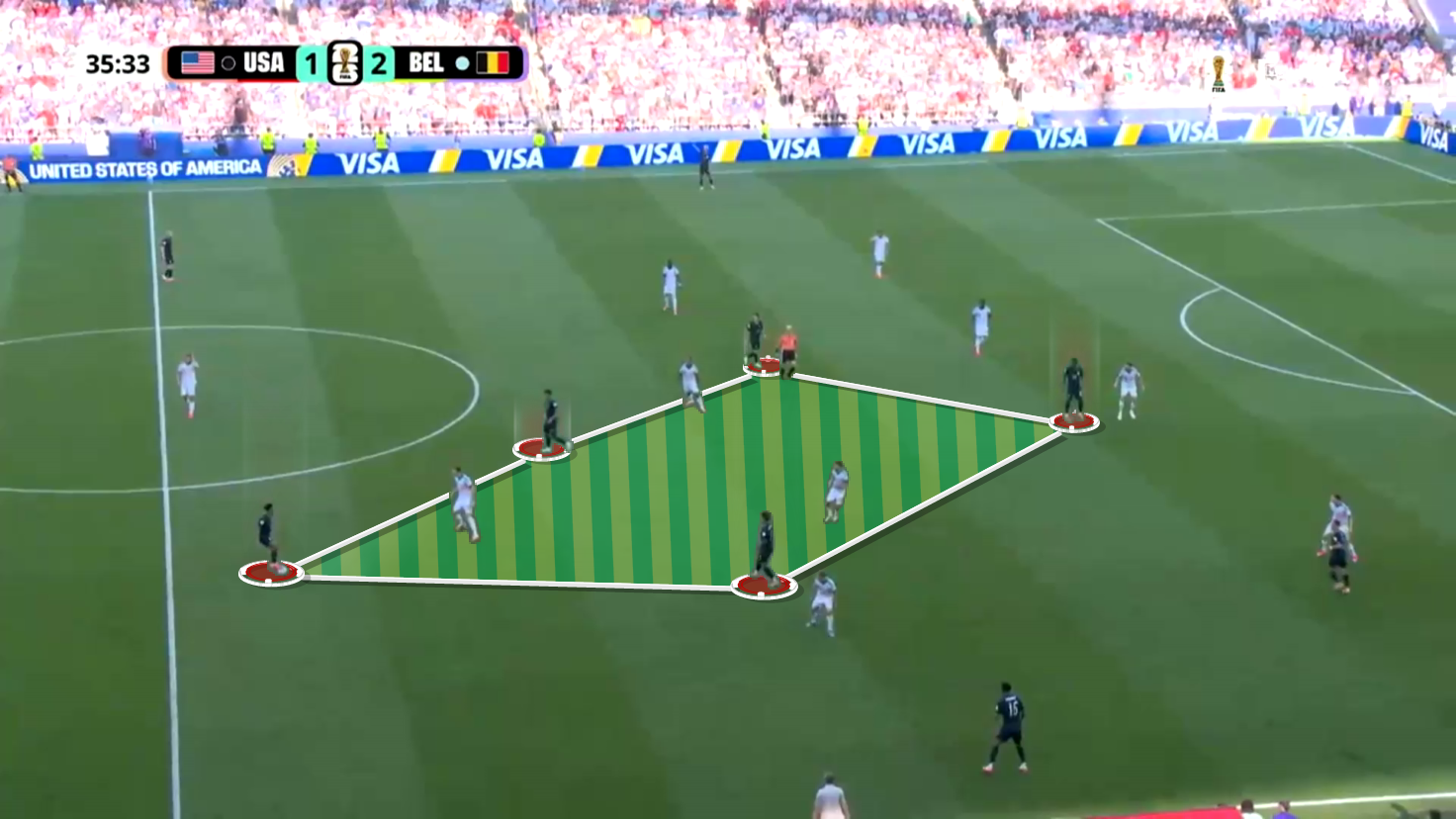
By committing several players close to the ball, they attempted to combine quickly in tight spaces and manipulate Belgium's defensive shape before looking to exploit the far side or penetrate through the middle.
There was constant positional rotation between Antonee Robinson, Pulisic, Balogun and McKennie as seen in Figure 2.
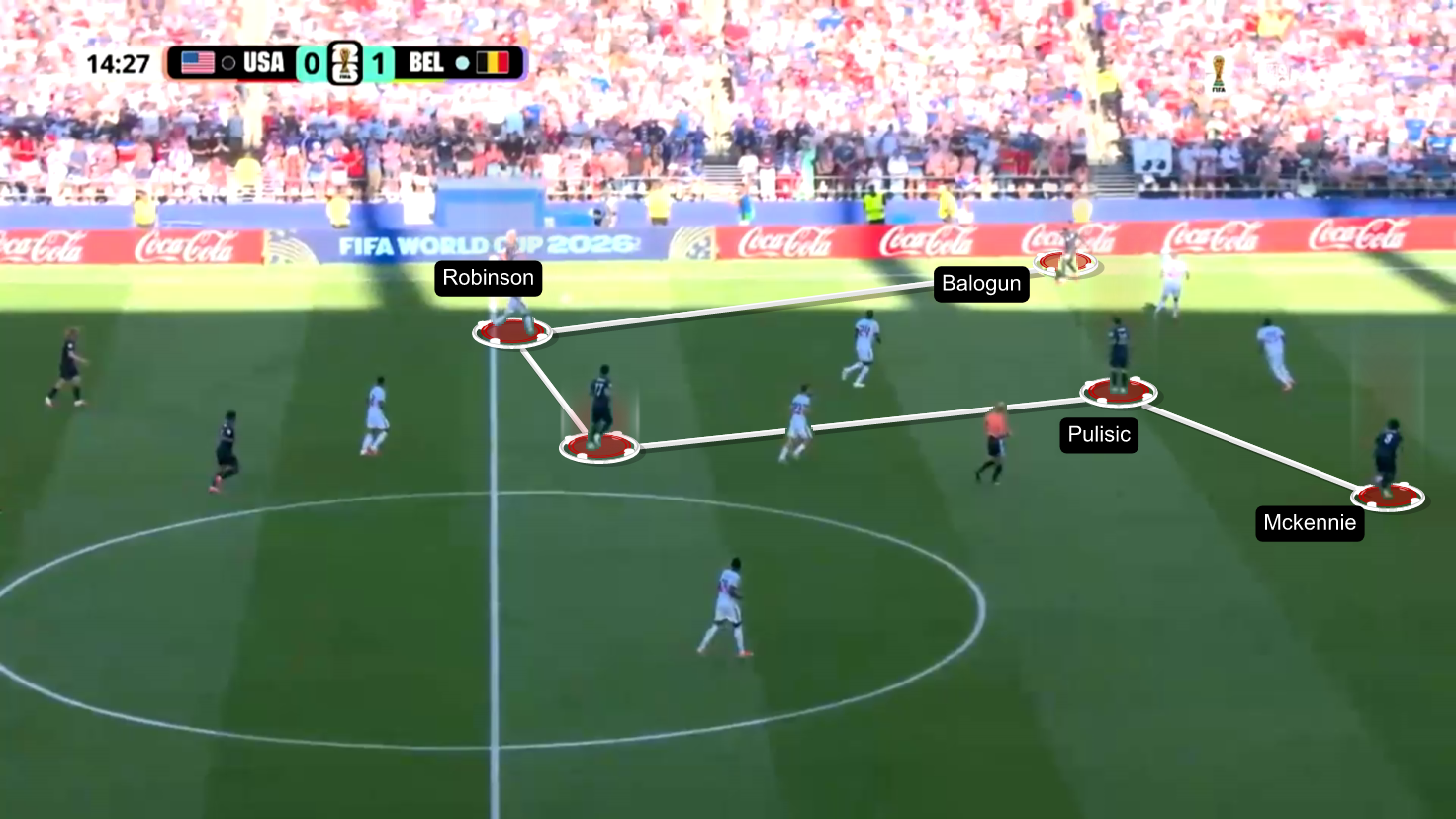
These rotations disrupted Belgium's defensive references, with players regularly exchanging positions to create uncertainty over marking responsibilities and generate space for teammates.
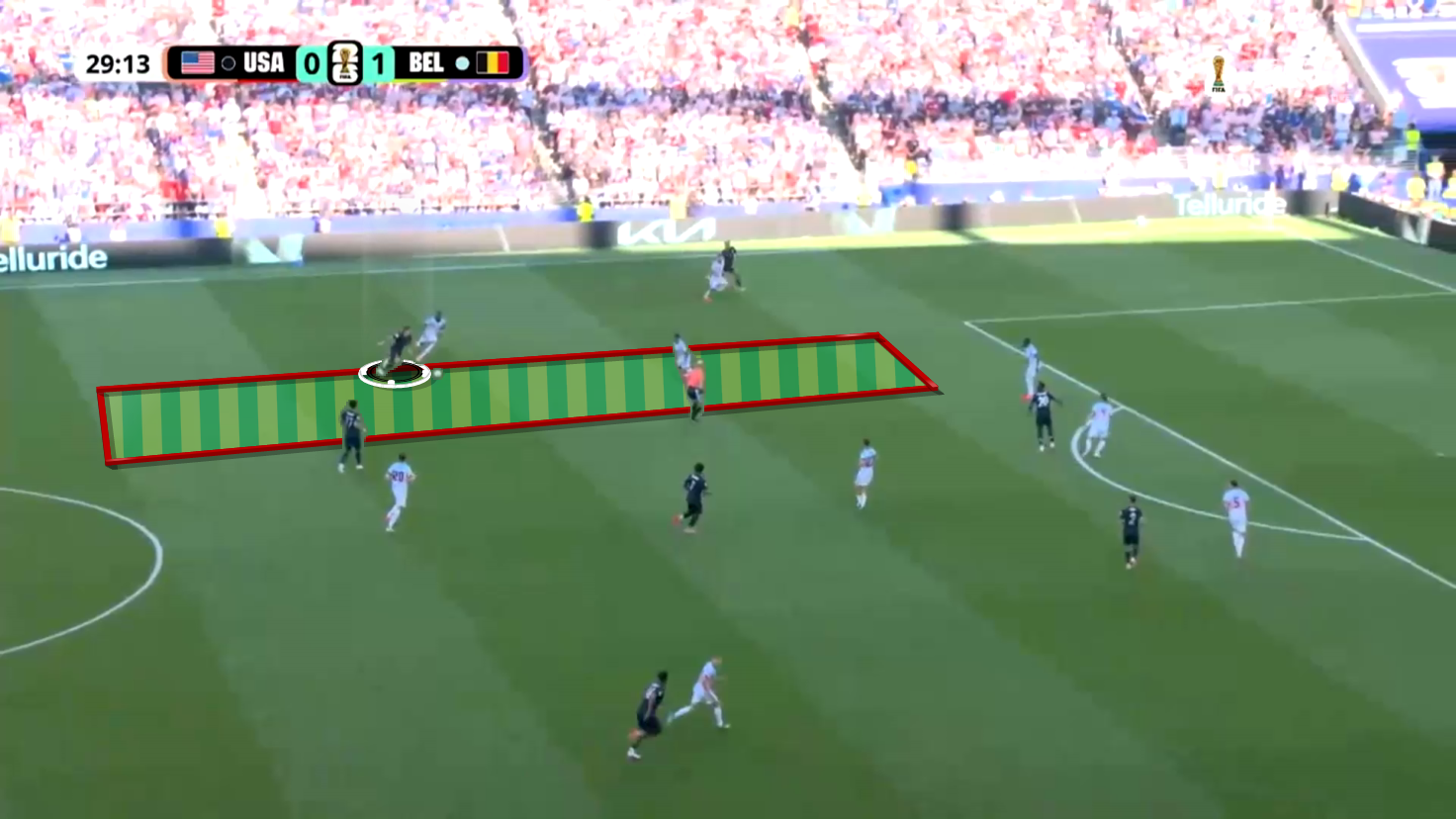
Pulisic was particularly effective when receiving possession in the half-space.
His body orientation allowed him to turn quickly and face Belgium's defensive line, from where he could drive forward, combine with teammates or create goalscoring opportunities through incisive passes and carries, as seen in Figure 3.
On the right side, Sergiño Dest maintained the width by holding an advanced wide position, while McKennie attacked the space in behind Belgium's defensive line with well-timed forward runs.
This complementary movement stretched the defence both horizontally and vertically, creating crossing opportunities and opening central channels for the United States to exploit.
USA Tactics Out Of Possession
The United States applied an aggressive high press with five players positioned high up the pitch.
Rather than pressing recklessly, the forwards used their cover shadows intelligently to block central passing lanes and force Belgium into wider areas, as seen in Figure 4.
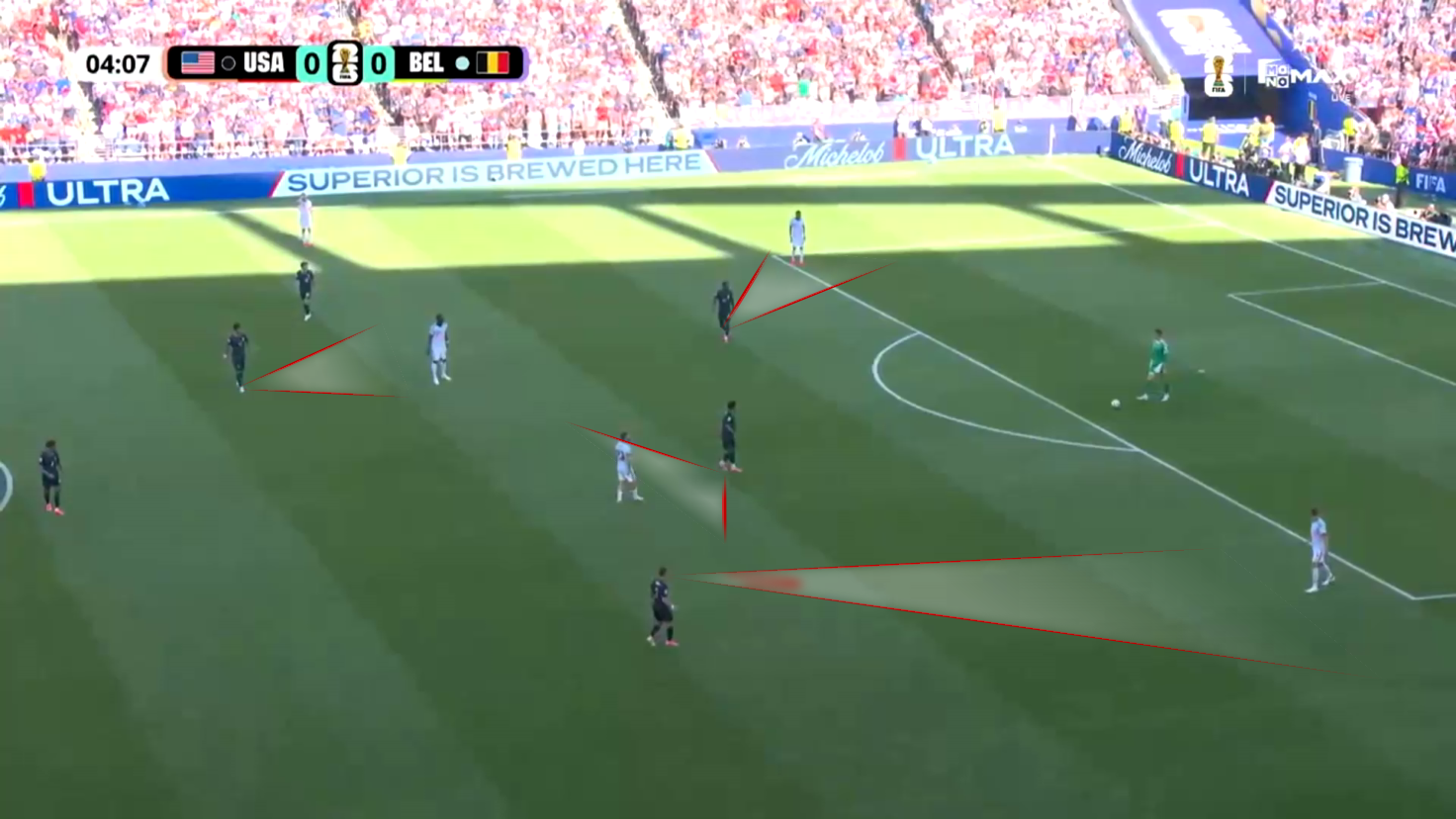
This limited Belgium's options during the initial build-up and increased the likelihood of regaining possession in advanced areas.
Whenever Belgium managed to play through the first line of pressure, the United States quickly retreated into a compact 4-4-2 mid-block.
Instead of continuing to press aggressively, they prioritised defensive organisation, reducing the space between the lines and forcing Belgium to circulate possession in less dangerous areas.
Out of possession, the United States remained extremely narrow.
Their compact defensive shape denied Belgium access to central zones and made it difficult for opposition midfielders to receive between the lines.
The trade-off was that Belgium were often afforded more space in wide areas, although the United States backed themselves to defend crosses and recover across the pitch.
Belgium Tactics Out Of Possession
Belgium defended in a disciplined 4-4-2 shape whenever they were without the ball.
The front two screened central passing lanes into midfield, while the midfield four remained compact behind them.
This structure ensured Belgium maintained numerical stability through the centre and prevented the United States from progressing easily through central combinations.
Rather than pressing high from the outset, Belgium adopted a more patient defensive approach.
They were content to allow the United States to build from the back and progress into midfield before engaging.
By delaying their press, Belgium reduced the amount of space available behind their defensive line and encouraged the United States to play into more congested central areas.
Belgium's pressing was based on an out-to-in approach.
They directed the United States towards the touchline before pressing aggressively from the outside towards the centre.
This pressing orientation reduced the available passing angles, isolated the ball carrier and increased the chances of forcing turnovers in wide areas where the touchline acted as an additional defender.
How Did Belgium Manipulate The USA Press?
Belgium used Lukébakio and De Ketelaere to pin the United States' backline, preventing the centre-backs from stepping out and creating space between midfield and defence.
Thibaut Courtois repeatedly exploited this with clipped passes towards De Ketelaere, whose role was to win the first contact and lay the ball off for supporting runners, allowing Belgium to bypass the American press.
Belgium's second goal showcased this perfectly.
They lured the United States into pressing, increasing the gap between the midfield and defensive lines before Courtois found De Ketelaere with a chipped pass, as seen in Figure 5.
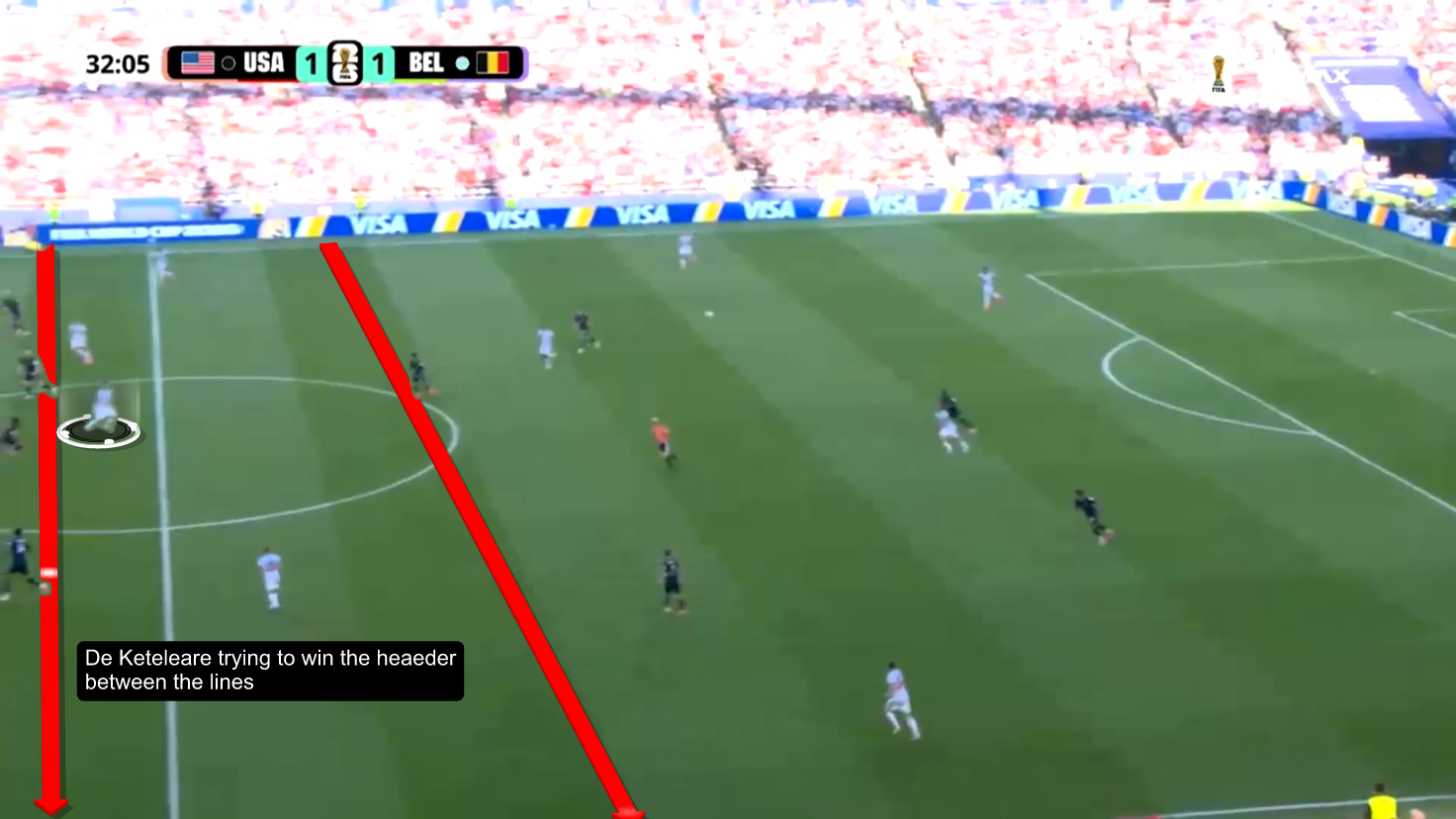
His knockdown enabled Belgium to progress quickly and launch the attack that led to the goal.
Belgium also capitalised on the United States' narrow mid-block by switching play into wide areas and creating overloads against the full-backs as seen in Figure 6.
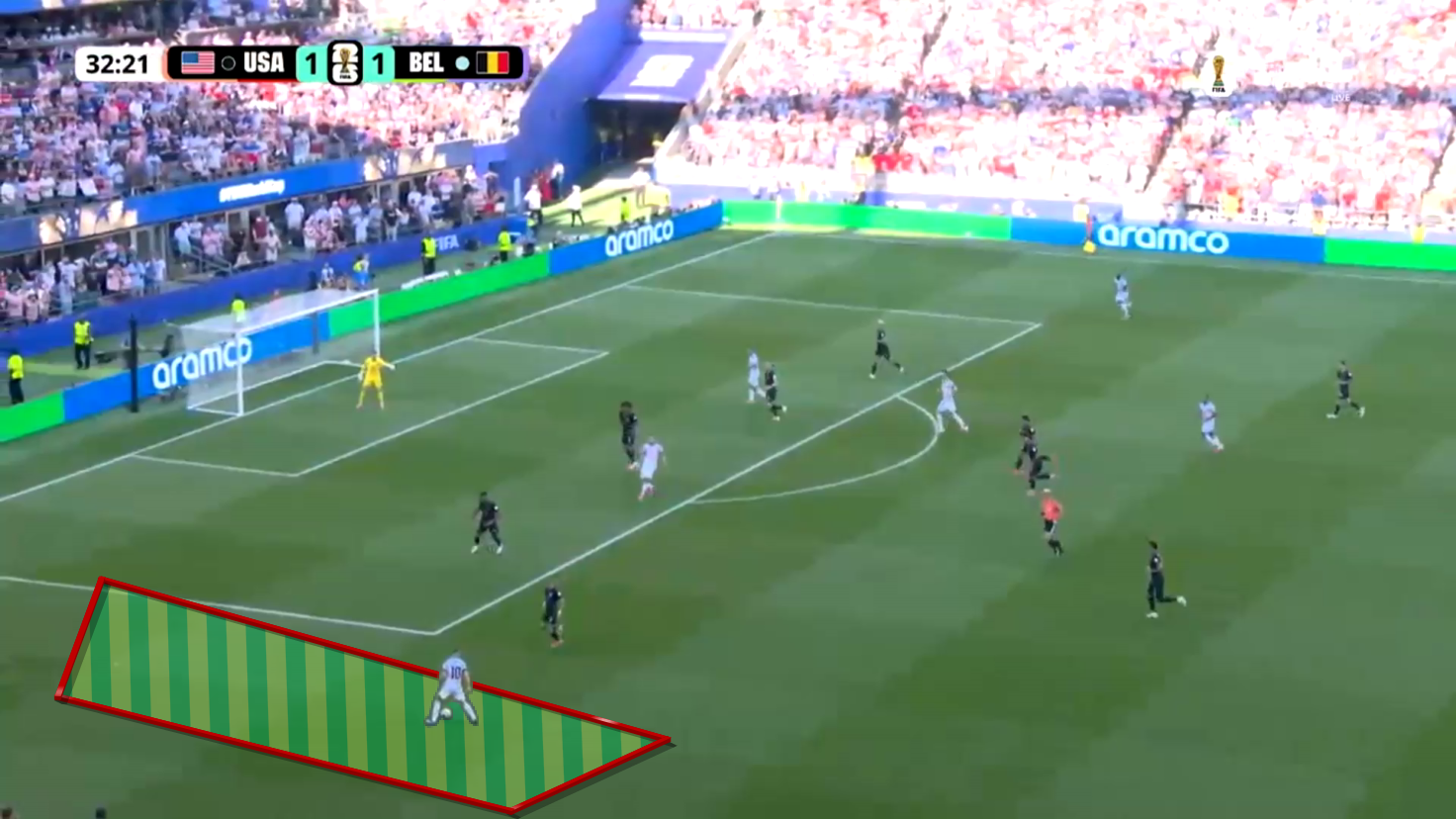
Early, accurate crosses from the flanks proved decisive, with both goals coming from deliveries into the penalty area.
USA Individual Errors
Belgium's first well-constructed goal highlighted their intelligent movement inside the penalty area, along with individual errors from the USMNT defenders.
Raskin reacted quickest to a loose ball after the USA failed to clear their lines.
At the same time, De Ketelaere intelligently drifted into the space between Richards and Ream, displaying excellent striker's instincts.
Both American centre-backs became fixated on the ball, allowing De Ketelaere to exploit the gap and gain a crucial positional advantage, as seen in Figure 7.
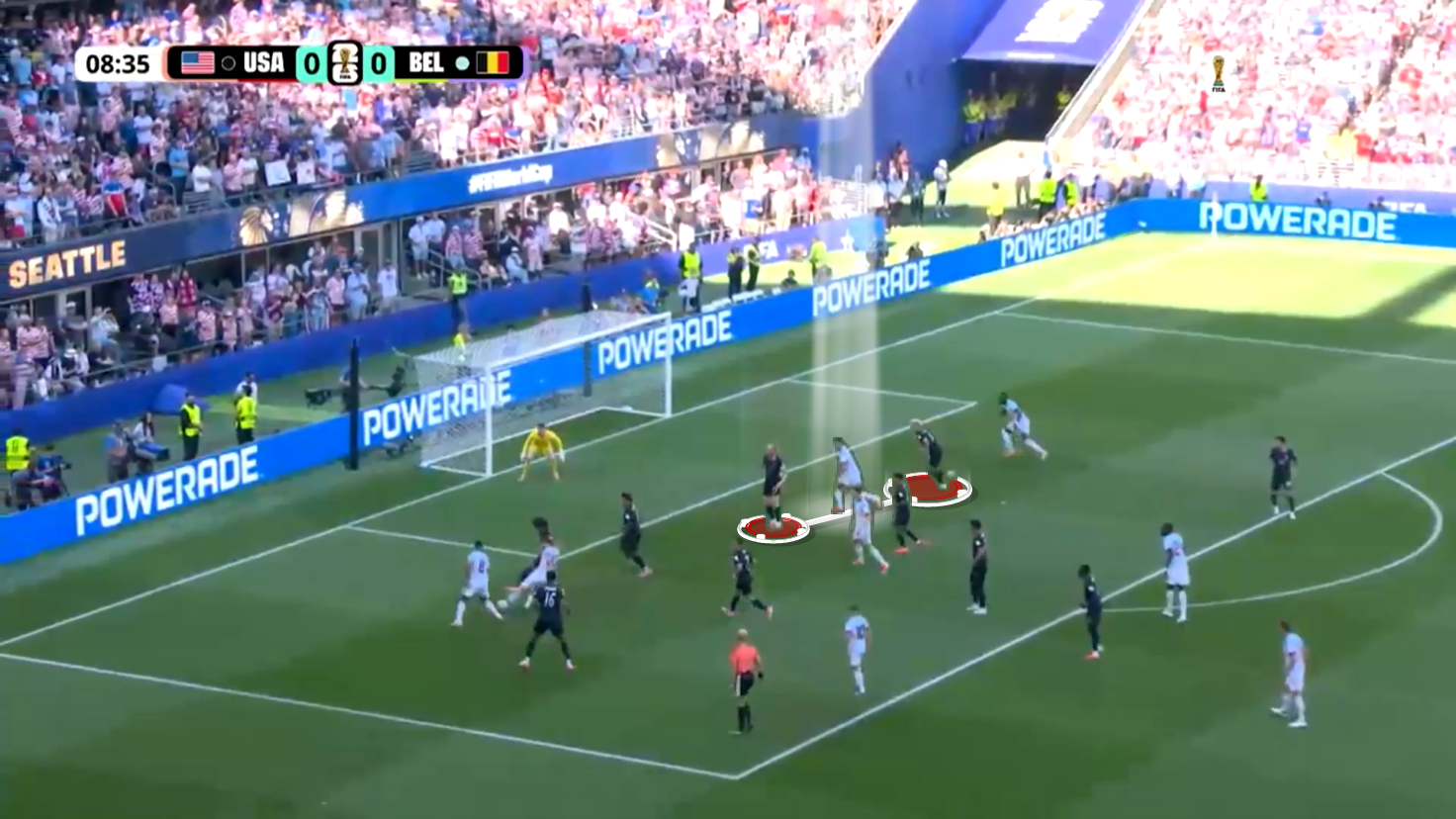
Belgium's coordinated movement and impeccable timing exposed a lapse in defensive awareness, turning a seemingly harmless situation into a clear-cut scoring opportunity.
Belgium's third goal came from a costly error by USMNT goalkeeper Matt Freese.
Attempting to act as a sweeper keeper, Freese rushed well outside his penalty area but failed to make clean contact with his clearance.
De Ketelaere reacted quickest, dispossessing him before Vanaken calmly guided the loose ball into an unguarded net from long range.
Belgium's fourth goal once again stemmed from the United States struggling under pressure.
Freeman failed to recognise the immediate danger and hesitated in possession despite the relentless press from Vanaken.
His attempted clearance ricocheted into the path of Richards, who found himself surrounded by Belgium players with no safe passing option.
Forced into a difficult situation, Richards was dispossessed, allowing Romelu Lukaku to seize possession and finish comfortably past Freese.
The goal underlined Belgium's aggressive pressing and their ability to punish hesitation in the build-up.
Conclusion
Pochettino adopted a high-risk, high-reward approach that had delivered results earlier in the tournament.