
Marco Rose Tactics At Bournemouth 2026/2027: Will Red Bull Football Work In The Premier League? – Tactical Analysis
Marco Rose is, in a way, the poster boy for Red Bull football. He is from the city of Leipzig, where their flagship team plays. He began his coaching career with one season at Lokomotiv Leipzig, before joining Red Bull Salzburg's under-16's side as head coach.

Who Is Marco Rose?
Marco Rose is, in a way, the poster boy for Red Bull football.
He is from the city of Leipzig, where their flagship team plays.
He began his coaching career with one season at Lokomotiv Leipzig, before joining Red Bull Salzburg's under-16's side as head coach.
From there, he graduated through the system, winning the UEFA Youth League as manager of their under-18s side in 2017, with a team that included Patson Daka, Xaver Schlager and Hannes Wolf.
He then managed the first team from 2017 to 2019, guiding the careers of now Premier League stars Erling Haaland and Dominik Szoboszlai, never losing a home game in Austria.
Rose, as so many before and after him, made the transition to the German Bundesliga and has had spells in charge of Borussia Mönchengladbach, Borussia Dortmund, and, most recently, back in the Red Bull system at hometown club RB Leipzig.
He now finds himself in unfamiliar surroundings, on the south coast of England at AFC Bournemouth.
He succeeds Liverpool-bound Andoni Iraola, the most successful coach in the Cherries' history, having secured them UEFA Europa League football for next season for the first time.
This is Rose's first foray outside of Bundesliga (Austrian and German) football, with a club in its golden era, competing beyond their means (the Vitality Stadium holds just over 11,000 seats).
He's tasked with not just continuing the work of Iraola, but to improve on it and solidify Bournemouth as a team that competes in European competitions on a regular basis.
This Marco Rose tactical analysis looks at Marco Rose's approach to the game, both on and off the ball, and how suited that is to Bournemouth's current squad.
Marco Rose Pressing
Pressing is synonymous with Red Bull football.
Their strong ties to German football and 'Gegenpressing' are known throughout the game.
Rose is no different in that regard.
Rose is more flexible in terms of his starting formation than other coaches from the Red Bull school of thought.
His Leipzig team of 2024/2025 (his last job in football) predominantly played the typical 4-2-2-2/4-4-2 shape you'd expect to see from those RB teams.
However, he wasn't afraid to switch to a back three or back five at times throughout the season.
His out-of-possession ideology is focused on creating congestion in central areas.
The 4-2-2-2/4-4-2 would look something like this on paper, with a typical lineup from Rose's RB Leipzig tenure featured in Figure 1.
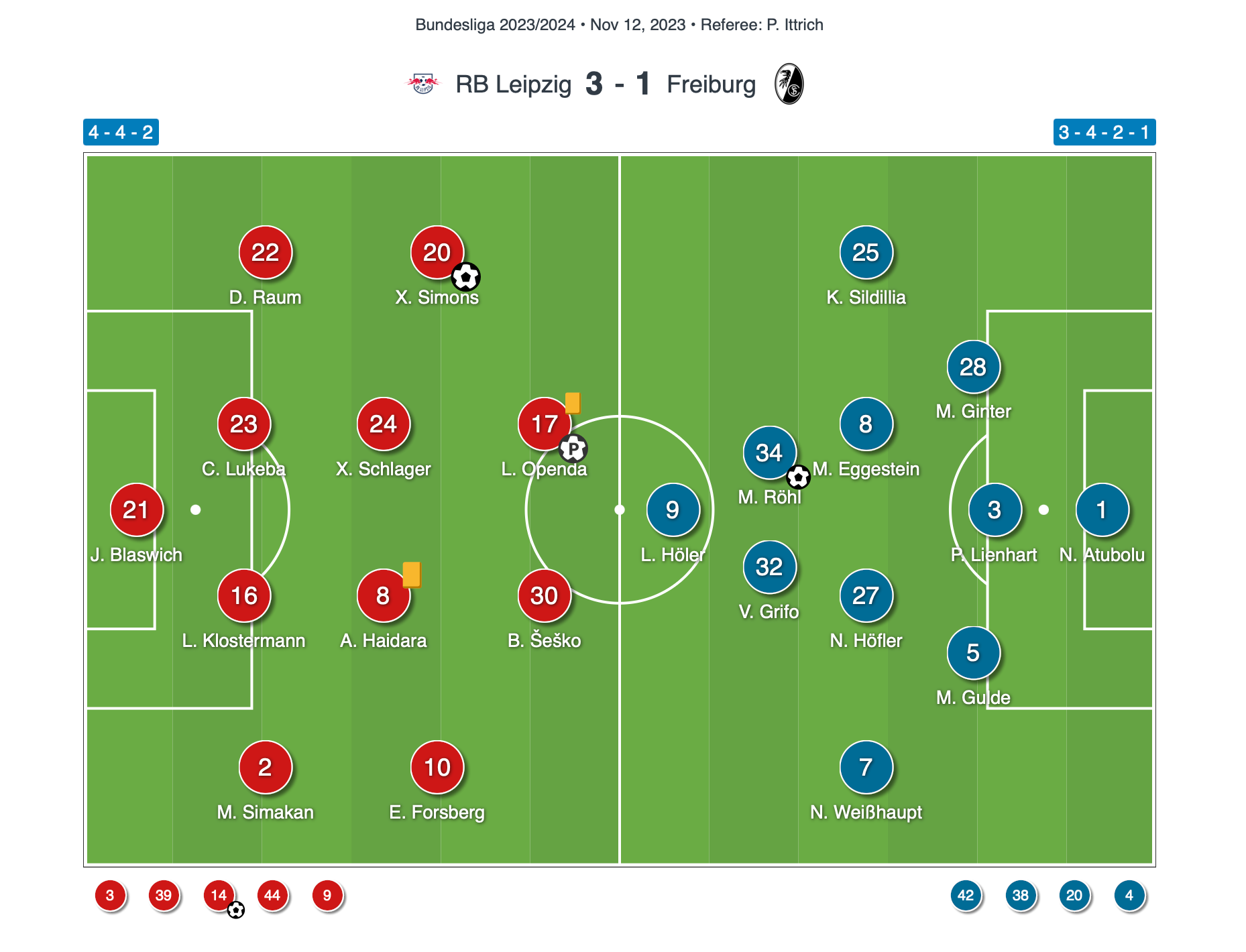
As you may notice, the wide players in this team are Xavi Simons and Emil Forsberg, who are more No. 10's than they are wide midfielders.
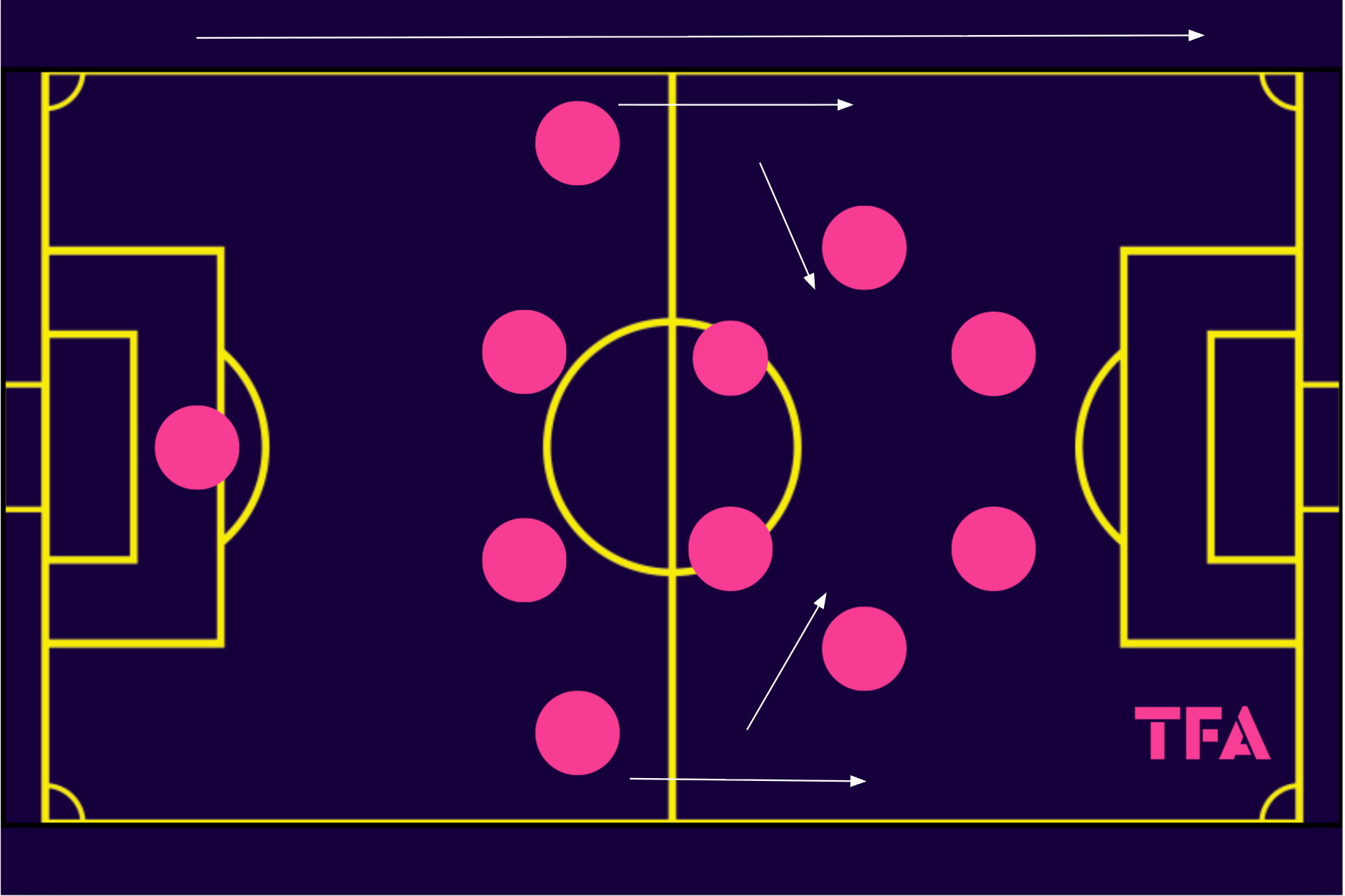
Out of possession, the two of them would tuck inside and create a situation where Leipzig have eight players down the middle of the pitch, leaving the two full-backs as the only width in the team.
In action, it could look something like we see in Figure 3 below.
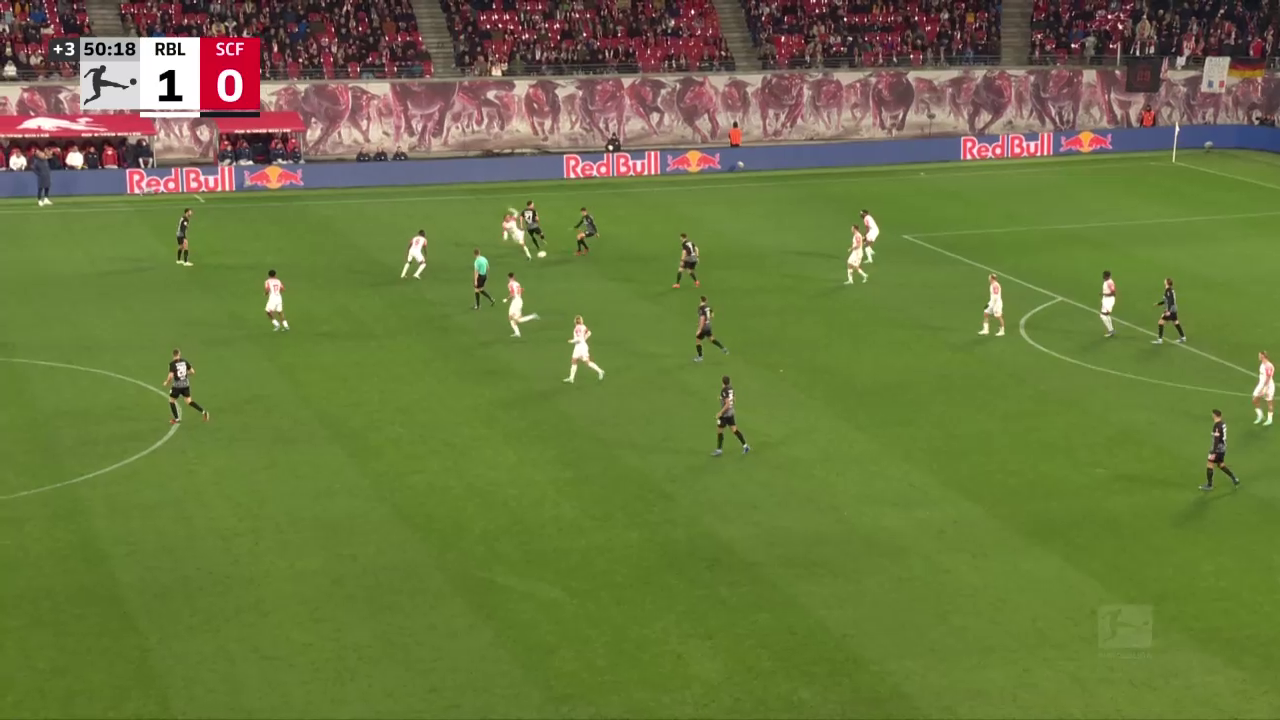
Every single player in the Leipzig team is within the width of the 18-yard box.
The distance between the players is short, meaning that any heavy touch or mistake from the opposition is able to be pounced on; it also makes the distance that players need to move to press and cover space shorter.
Hybrid pressing, championed by Iraola in recent years, is combination of space and man-to-man pressing.
Rose has tended to lean more toward the space-oriented press.
In opposition build-up, he likes his attackers to mark the spaces in between the opposition so that they are able to press at least two options if the ball is played to either of them.
The primary goal for his teams in opposition build-up is to force the goalkeeper into playing it into a marked defender and to make a mistake, or to force the goalkeeper to go long.
When the opposition does get through the first line of press, Rose looks to shut off central areas.
He wants the opposition team to funnel the ball out wide, then he wants his team to hunt in packs around the receiver and force the turnover.
When the press at Leipzig was good, it was great.
During his time in eastern Germany, his side faced the fewest shots (260), the fewest shots on target (85) and the fewest touches in the opposition box (510).
However, there was a downfall.
His Leipzig team often struggled to maintain intensity, and when that dropped off, the defensive structure was poor.
There were often gaps in behind full backs who had pushed off to take advantage.