Xabi Alonso Tactics At Chelsea 2026/2027: A New Era At Stamford Bridge – Tactical Analysis
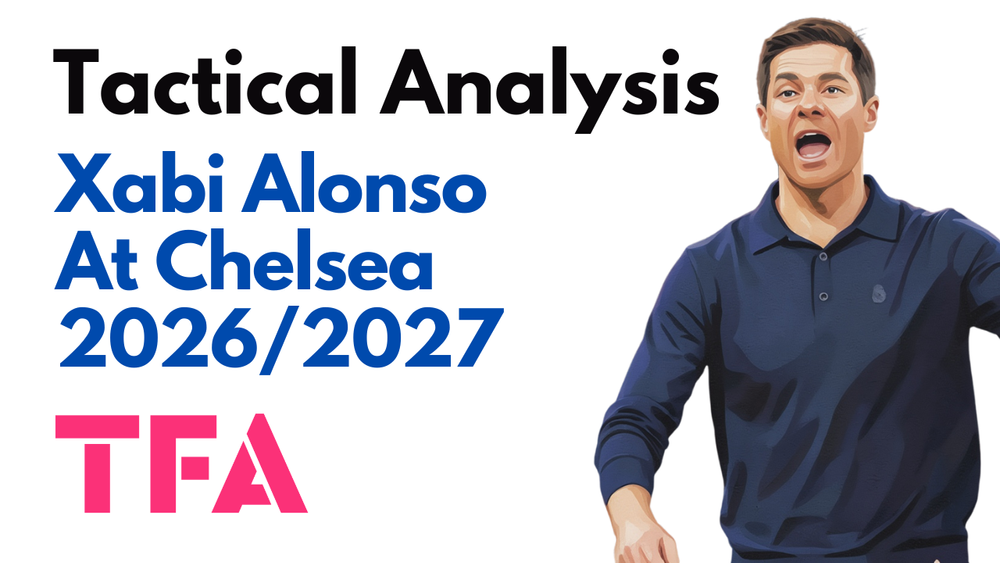
Xabi Alonso has been appointed as the new manager of Chelsea on a four-year contract beginning in July 2026, following another turbulent season marked by managerial instability and inconsistent performances.

Who Is Xabi Alonso?
Xabi Alonso has been appointed as the new manager of Chelsea on a four-year contract beginning in July 2026, following another turbulent season marked by managerial instability and inconsistent performances.
Following the official announcement, Alonso stated:
"Chelsea is one of the biggest clubs in world football and it fills me with immense pride to become manager of this great club."
Alonso was most recently head coach at Real Madrid, where he spent the first half of the 2025/2026 season in charge.
Before that, he spent several successful years at Bayer Leverkusen in Germany, where he became Bundesliga champion in the 2023/2024 season.
In this tactical analysis, we will look at how Alonso tactics may set up at Chelsea by analysing both what he implemented at Real Madrid and what Chelsea are currently doing under their existing structure.
Xabi Alonso In-Possession Tactics
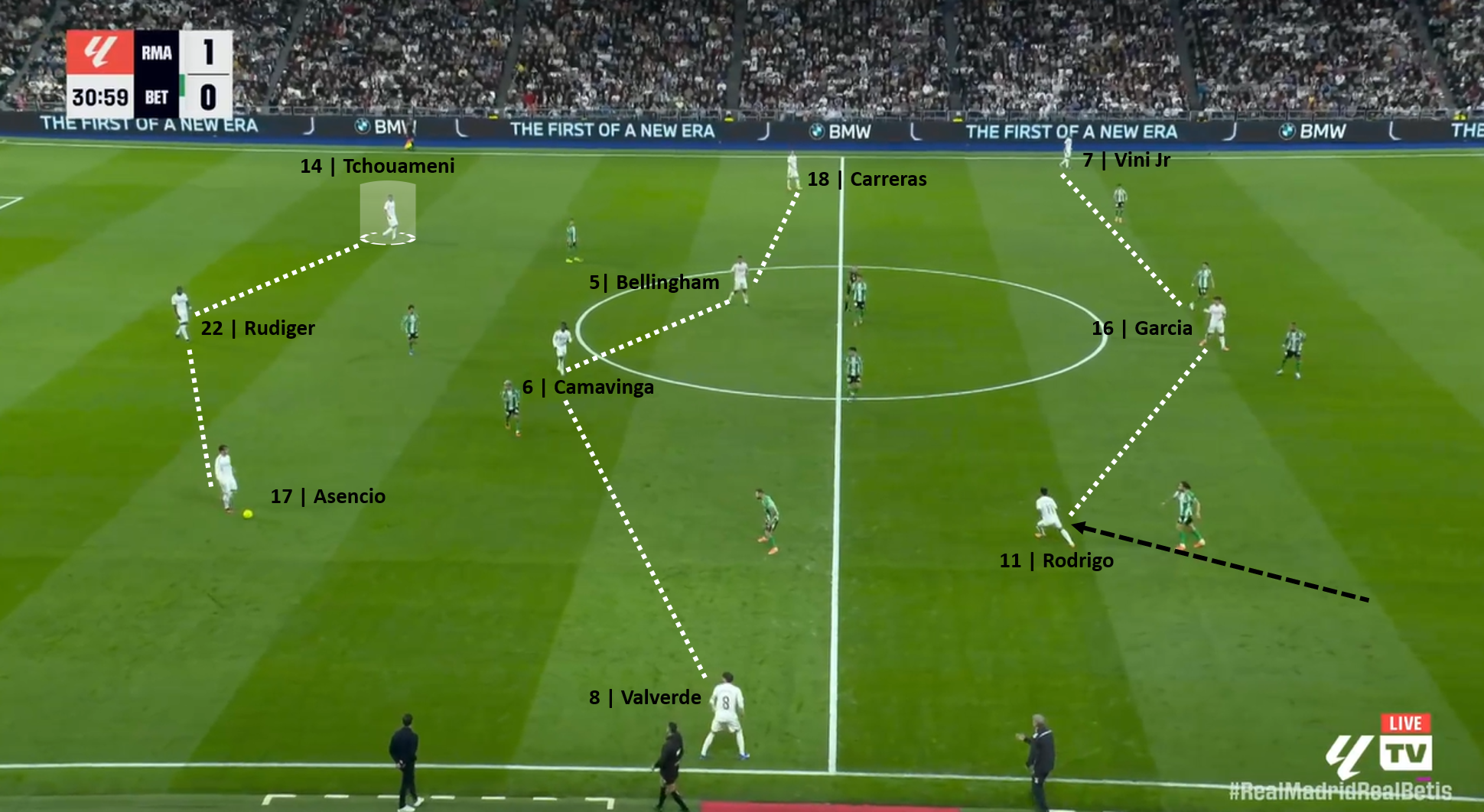
During the build-up phase, Alonso prefers to position several players centrally, often creating square structures in midfield to establish numerical superiority in the middle of the pitch.
At the same time, the full-backs remain wider to occupy the side channels and provide width.
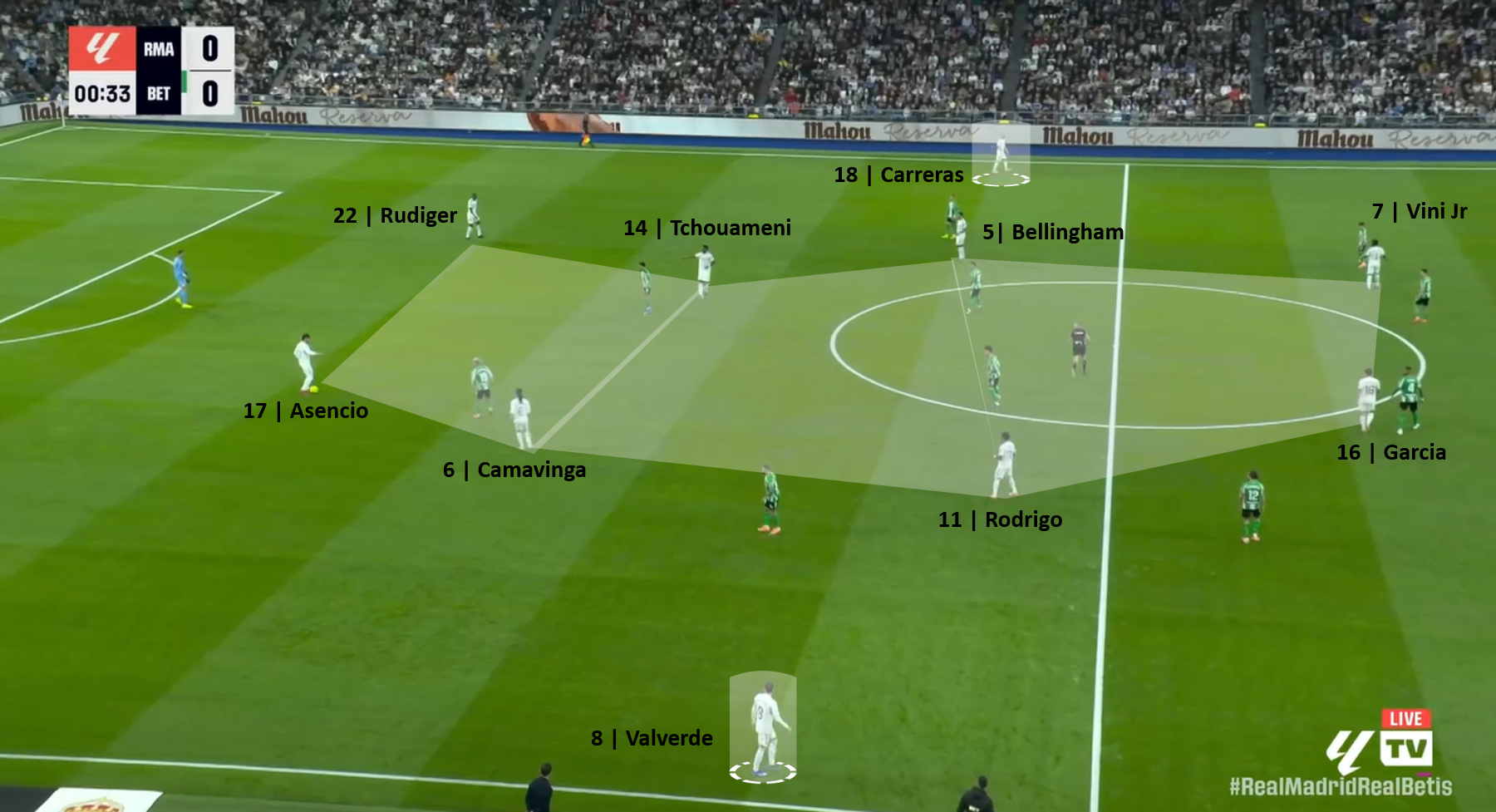
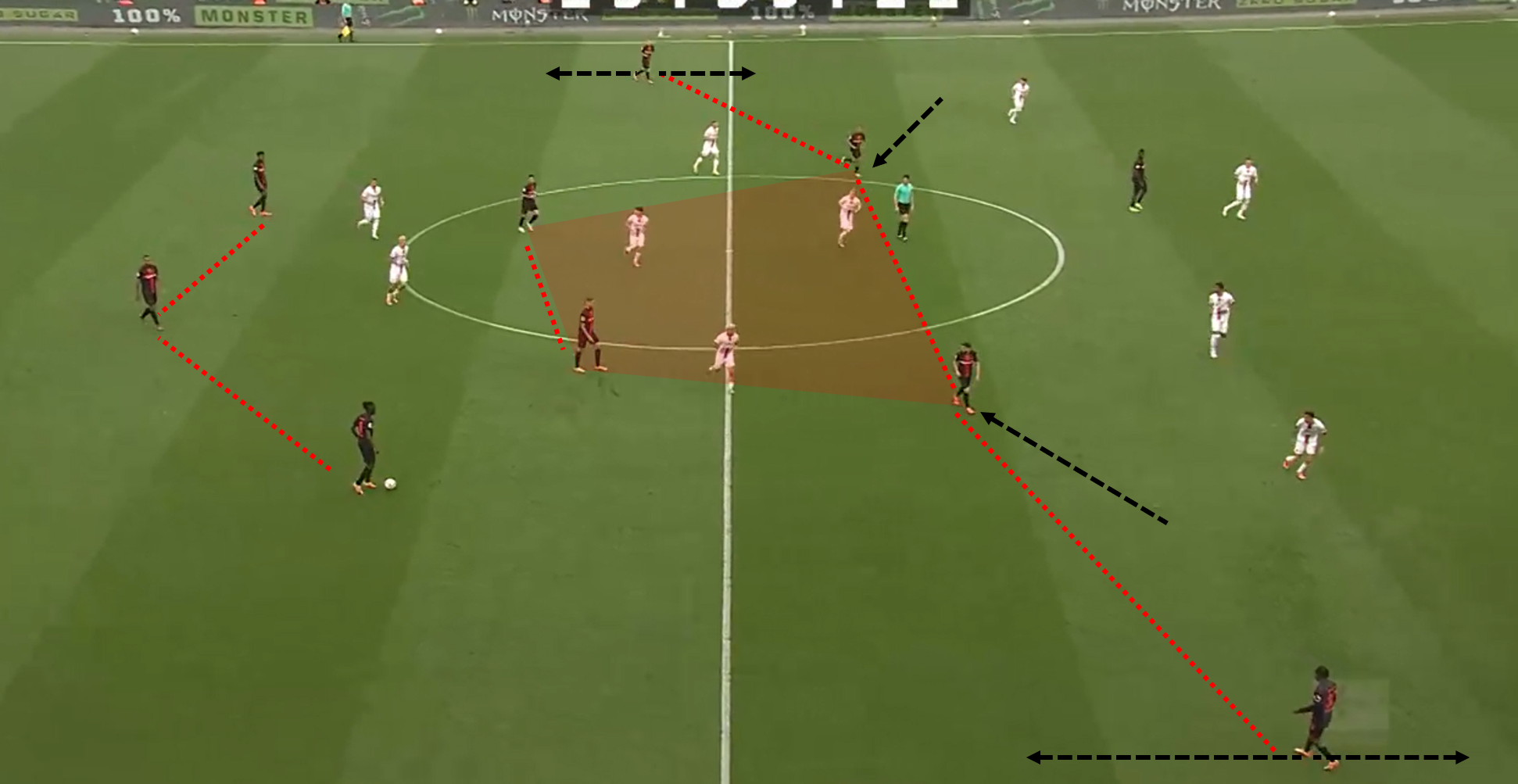
At Leverkusen, Alonso had primarily used a back-three structure.
In the next image, we can again identify the square shape in central midfield, similar to the structure shown previously at Real Madrid.
The main difference between the two systems lies in the occupation of the first and last line.
At Leverkusen, Alonso used an additional centre-back and, therefore, one fewer attacker in advanced positions.
At Real Madrid, he sacrificed one defender to include an extra forward higher up the pitch.
Despite these structural differences, the core principles remained consistent.
Another important similarity is the use of width, at Leverkusen, with the wing-backs and at Real Madrid with the full-backs.
However, in Real Madrid tactics, he showed more tactical flexibility.
Even when starting with a back four on paper, Alonso often adapted the structure during the build-up phase by dropping Aurélien Tchouaméni alongside the centre-backs to create a back three.