Mauricio Pochettino Tactics At Manchester United 2026/2027: Can He Rescue The Red Devils From Their Downward Spiral? - Tactical Analysis
What will Mauricio Pochettino bring to Manchester United? This tactical analysis examines lessons from Tottenham, PSG, Chelsea and the USA, his evolved pressing and build-up ideas, and which United players could benefit most.

Better late than never for Mauricio Pochettino?
Manchester United sit 18th in the Premier League, inside the relegation zone, after a dismal run of just one win in 10 games this season.
That form cost Michael Carrick his job, and the board moved quickly to replace him, acting even while he was still under contract.
Their choice is Pochettino, who arrives after two years in charge of the United States national team.
The appointment of the former Tottenham Hotspur, PSG and Chelsea head coach has divided opinion, but his brief is to stop United's slide before it spirals any further.
Pochettino made his name with intense, aggressive football shaped by the influence of Marcelo Bielsa.
Now he takes over a squad that ranks among the league's lowest for running metrics.
However, his experience (both the highs and the lows) gives real insight into what United can expect.
This Mauricio Pochettino to Manchester United tactical analysis details his recent spells with the USA and Chelsea while drawing key lessons from his tenures at PSG and Tottenham.
The piece explores how those ideas will translate to Manchester United, predicts the biggest winners and losers in the squad, and outlines what to expect moving forward.
Mauricio Pochettino's Tottenham: The Young Core & Original Blueprint
When Pochettino arrived at Tottenham Hotspur in 2014, the squad he inherited was not yet a project.
Harry Kane was 21 and still unproven, while Dele Alli arrived from MK Dons in 2015 as a teenager; within two seasons, he was scoring 18 league goals.
Christian Eriksen, Kyle Walker, Danny Rose, Toby Alderweireld and Jan Vertonghen made up the rest of a group that peaked together.
The point that often gets lost is that Pochettino did not just put up with youth.
A Bielsa-inspired pressing model needs players whose bodies can absorb repeated sprints and whose habits are still open to change.
For United, this is the most important part of his CV.
Kobbie Mainoo, Leny Yoro, Patrick Dorgu, Amad Diallo, Senne Lammens and Benjamin Šeško are all young enough to be rewired in a way that a squad of settled 30-year-olds could not be.
The build-up was based on a "salida lavolpiana", where a midfielder drops between the centre-backs.
Eric Dier, or later Victor Wanyama, would drop between Alderweireld and Vertonghen; the centre-backs would split towards the edges of the box, and both would push to the height of the midfield line or higher.
As shown in the 2015 Audi Cup against Real Madrid, Alderweireld and Vertonghen initially split wide as a back two during the build-up phase.
However, in this particular scenario, Spurs form a situational back three, with Kevin Wimmer tucking inside from left back to provide additional support in the first line.
Ahead of them, Mousa Dembélé positions himself to receive between the lines and allow progression, as Real Madrid press in a pair.
Walker advances higher up the pitch to provide width and an option further forward.
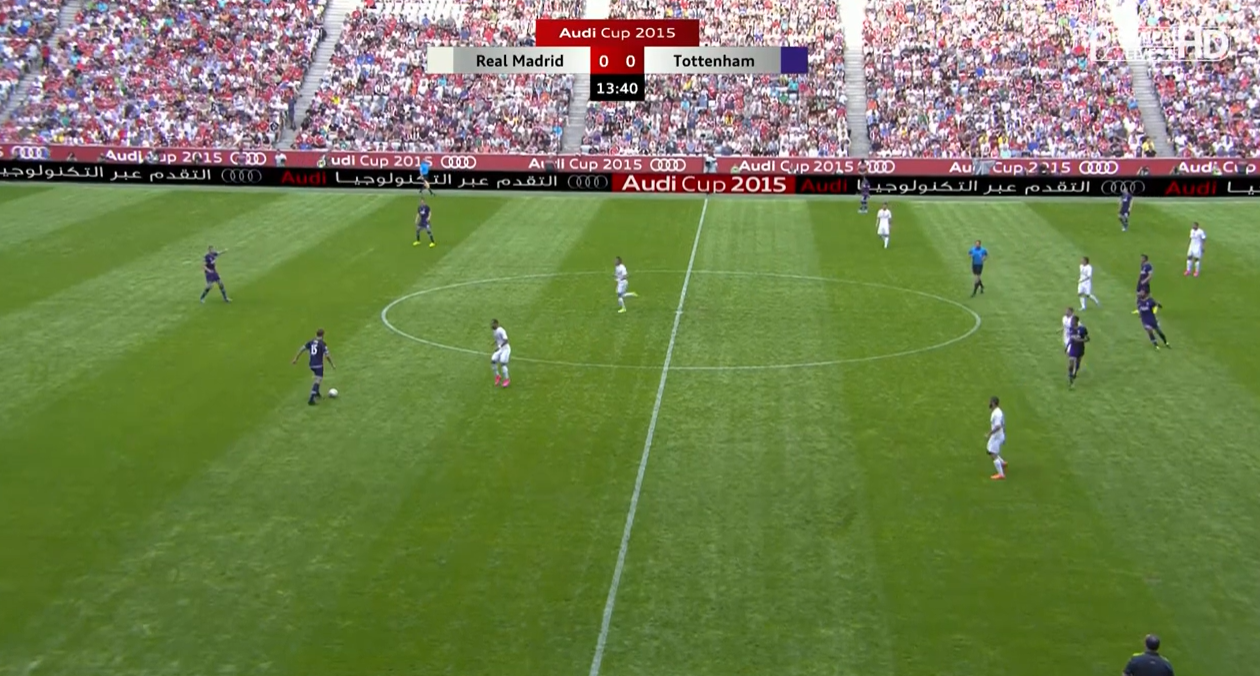
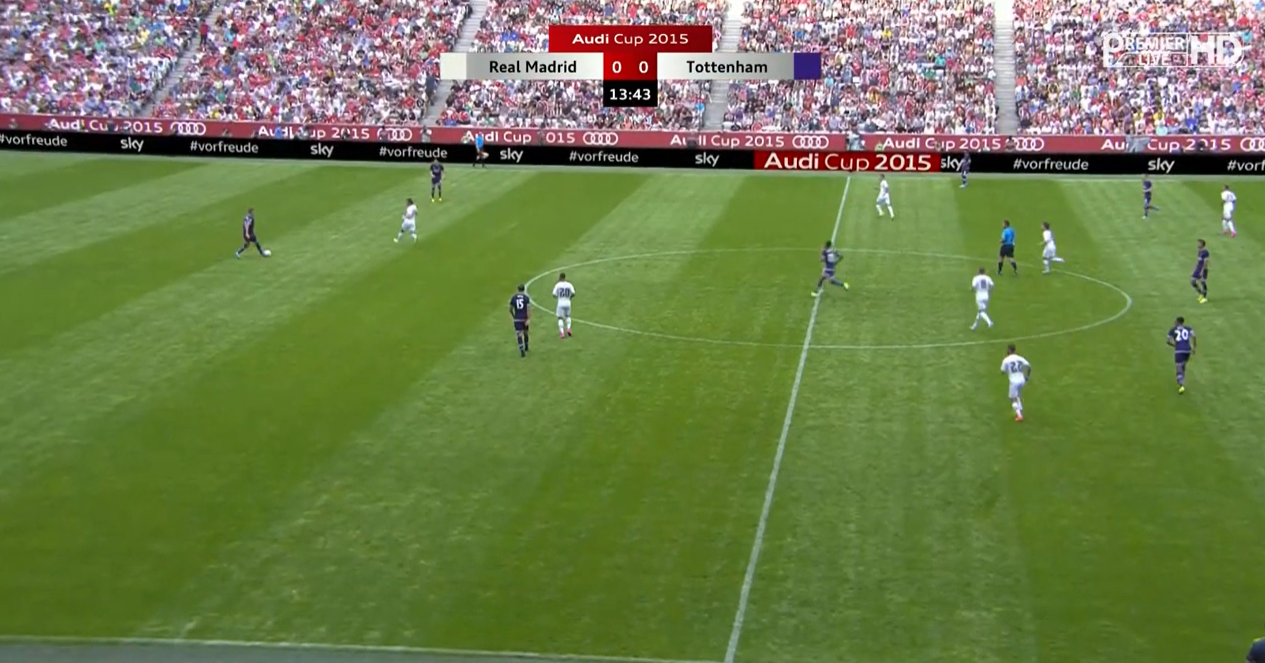
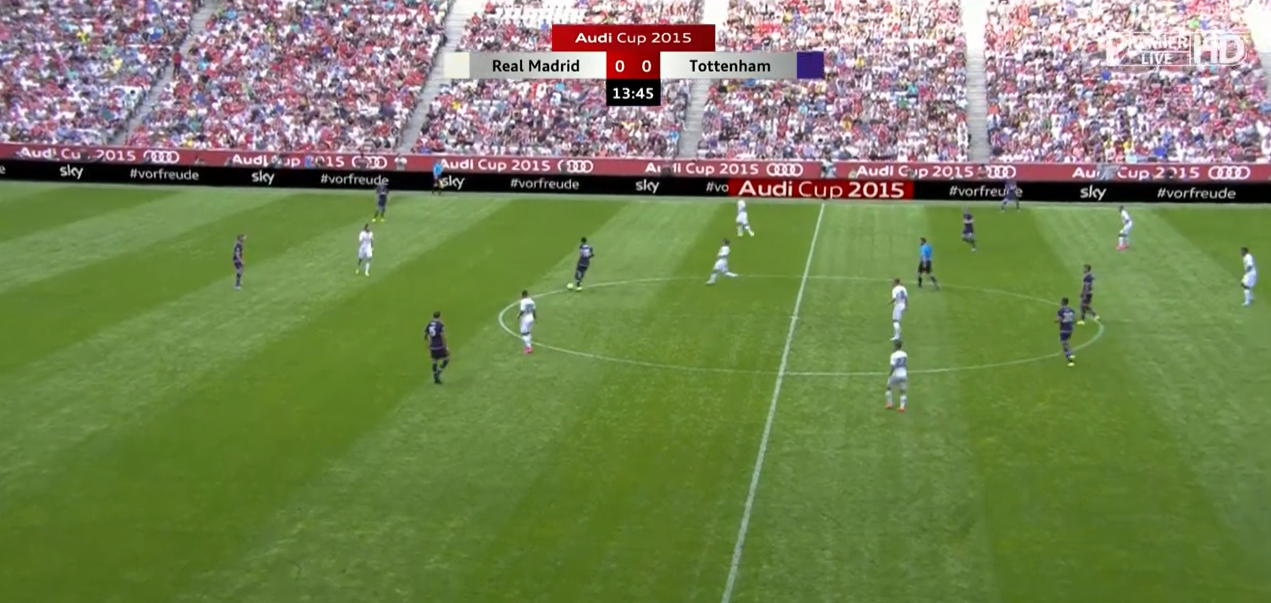
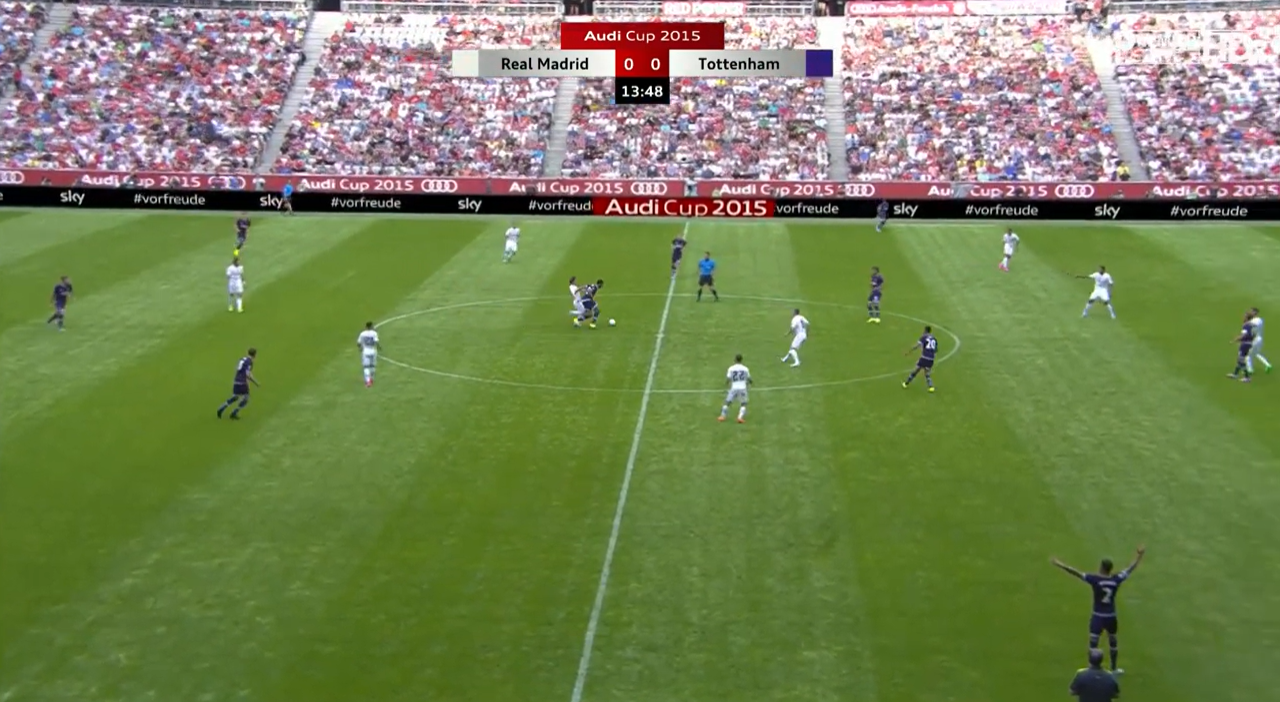
They created a back three in possession without changing personnel, pushing the opposition's first line into an awkward choice: press three players with two, or sit off and let Spurs walk the ball into midfield.
The quiet genius of that side was Mousa Dembélé.
He was the press breaker who received under pressure, on the half-turn, and carried the ball through the second line on his own.
Further forward, Eriksen drifted into the left half-space to receive between the lines, as Son Heung-min or Erik Lamela moved inside, and Harry Kane dropped short into the No. 10 area.
That dragged a centre-back with him and opened the channel for Alli's late runs.
As shown against Arsenal, Son holds a wider position to occupy the right-sided centre-back, pinning him away from central areas.
This movement creates space for Dele Alli to burst into the gap and run onto Harry Kane's pass.