Switzerland Vs Scotland [4-0] UEFA Nations League 2026/2027: Are Sébastien Pocognoli Tactics Leaving Scotland Vulnerable? - Tactical Analysis
Switzerland punished a wasteful Scotland side in St. Gallen. This tactical analysis examines how the Swiss beat Pocognoli’s press, exploited open spaces and converted their chances while Scotland’s defensive structure repeatedly broke down.

Switzerland and Scotland faced off in St. Gallen on Monday evening, in what was a crucial game for Sébastien Pocognoli's side.
Scotland had the chance of sneaking into the promotion qualification spot, needing to better Slovenia's result in North Macedonia.
They were helped by the fact that, although this was their toughest match on paper, away at a side ranked 12th in the world by FIFA and who took finalists Argentina to extra time in a FIFA World Cup quarter-final in the summer, the Swiss had already topped the group, so had no real incentive to win the game other than professional pride.
Murat Yakin's side had secured promotion to the top tier of UEFA Nations League football for next season with a fairly comfortable 0-0 draw away at second-placed Slovenia.
Scotland, on the other hand, won at home against North Macedonia (the only team they have beaten this Nations League campaign), 2-1, dominating chances but unable to score enough to match.
Ultimately, for the Tartan Army, this game did not matter, result-wise.
Slovenia won 3-0 in North Macedonia.
However, with just two wins in his first six games, the pressure is already mounting on Pocognoli.
This tactical analysis looks at how a wasteful Scotland side was punished in Switzerland.
Switzerland Vs Scotland Lineups & Formations
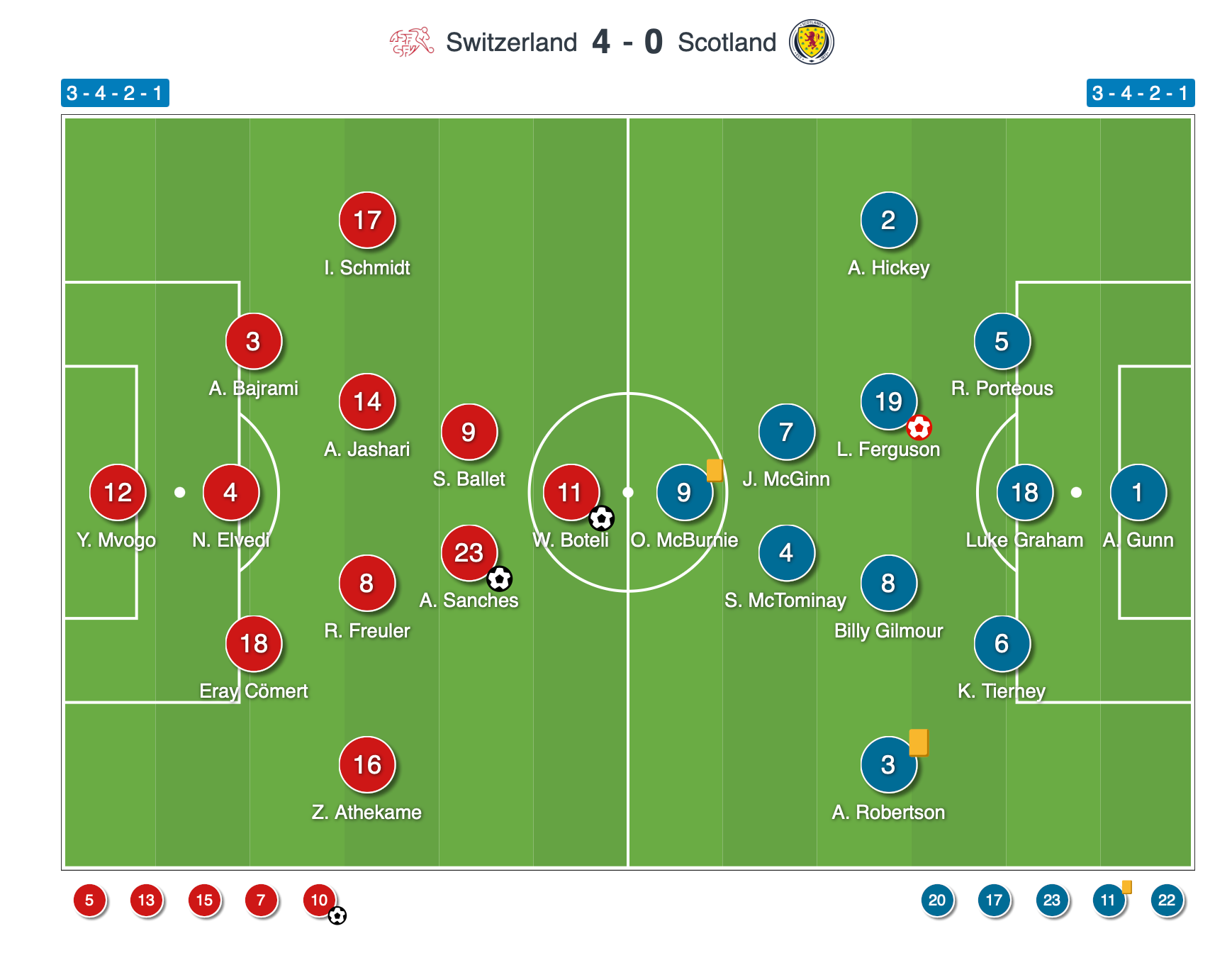
Switzerland Lineup Vs Scotland
Yakin, with the ability to rotate given their top-of-the-group position, made seven changes from the side that played on Friday night.
He also switched systems, from a 4-2-3-1 against Slovenia to the back three we saw against Scotland.
Yvon Mvogo replaced Gregor Kobel in goal, in front of a back three of Eray Cömert, Nico Elvedi and Adrian Bajrami.
Zachary Athekame kept his place in the side, pushing up from right back to right wing, as did Isaac Schmidt on the opposite side.
Remo Freuler and Ardon Jashari formed a double pivot in the midfield.
The entire front unit was rotated, with Alvyn Sanches and Samuel Ballet coming in to play behind the striker, while Sion's Winsley Boteli replaced Breel Embolo in that role.
The Swiss made all five substitutions during the game, with Djibril Sow, Zeki Amdouni, Ricardo Rodriguez, Breel Embolo and Roggerio Nyakossi coming on during the tie.
Scotland Lineup Vs Switzerland
Pocognoli made just two changes and stuck with the system he has been trying to implement since joining the Scotland setup: his 3-4-1-2/3-4-2-1.
Angus Gunn in goal and the back three of Ryan Porteous, Luke Graham and Kieran Tierney remained as the defensive unit.
Ben Gannon-Doak was replaced by Aaron Hickey at right-wing back, with captain Andy Robertson on the left-hand side.
The Serie A duo of Bologna's Lewis Ferguson and Napoli's Billy Gilmour started in the double pivot, with John McGinn slightly ahead of them.
Oli McBurnie replaced Ché Adams, with Scott McTominay forming a fluid front two alongside him.
Scotland also made all five changes during the game, with Nathan Patterson, Gannon-Doak, Ryan Christie, Kieron Bowie, and Kristi Montgomery all featuring.
First Half: An Even Game
While the final score might not have reflected it, the first half was even.
Switzerland, as expected, dominated possession (58% to 42%) and the passing numbers.
That's in both teams' natures: Switzerland want to possess the ball and move it quickly in tight spaces to pull opposition defenders out of place.
Scotland don't need the ball; they're happy to sit in a little and start to break from deep, using their striker as a focal point to move the ball up the pitch.
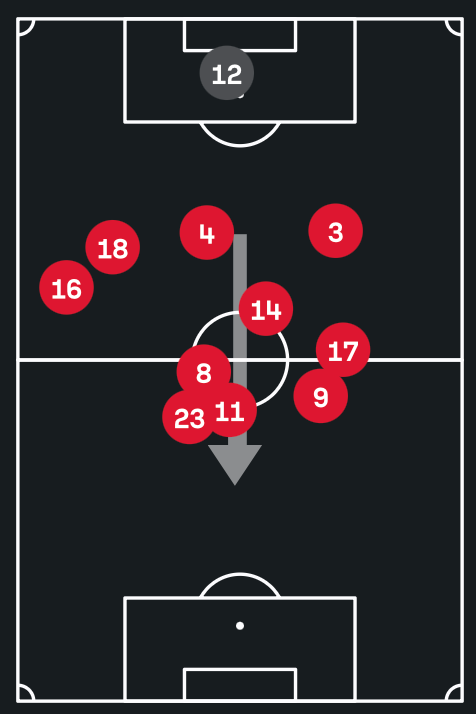
Switzerland Average Position Map (Via SofaScore)
Scotland Average Position Map (via SofaScore)
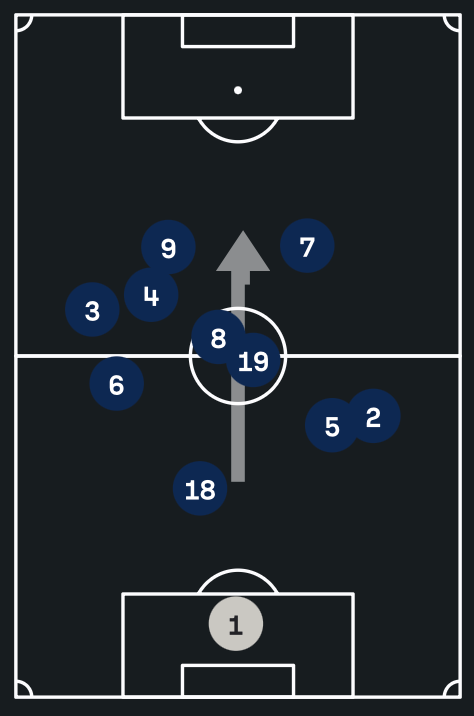
We can see this characterised in the average position maps of the two teams above.
Switzerland's attacking unit is close to one another, looking to play quick one- or two-touch combinations to pull defenders out and get in behind.
Scotland's shows McTominay and Robertson close to McBurnie, looking to get the ball from long balls knocked down to them.
In terms of chance creation and getting into the box, it was extremely even.
Switzerland created 0.37 expected goals from eight shots, with just one being on target.
Scotland created 0.26 expected goals from six shots, with just one hitting the target.
Both teams were even in terms of getting into the opposition box, with the same number of touches inside it (nine).
The first half (and game) swung on a moment of bad luck.
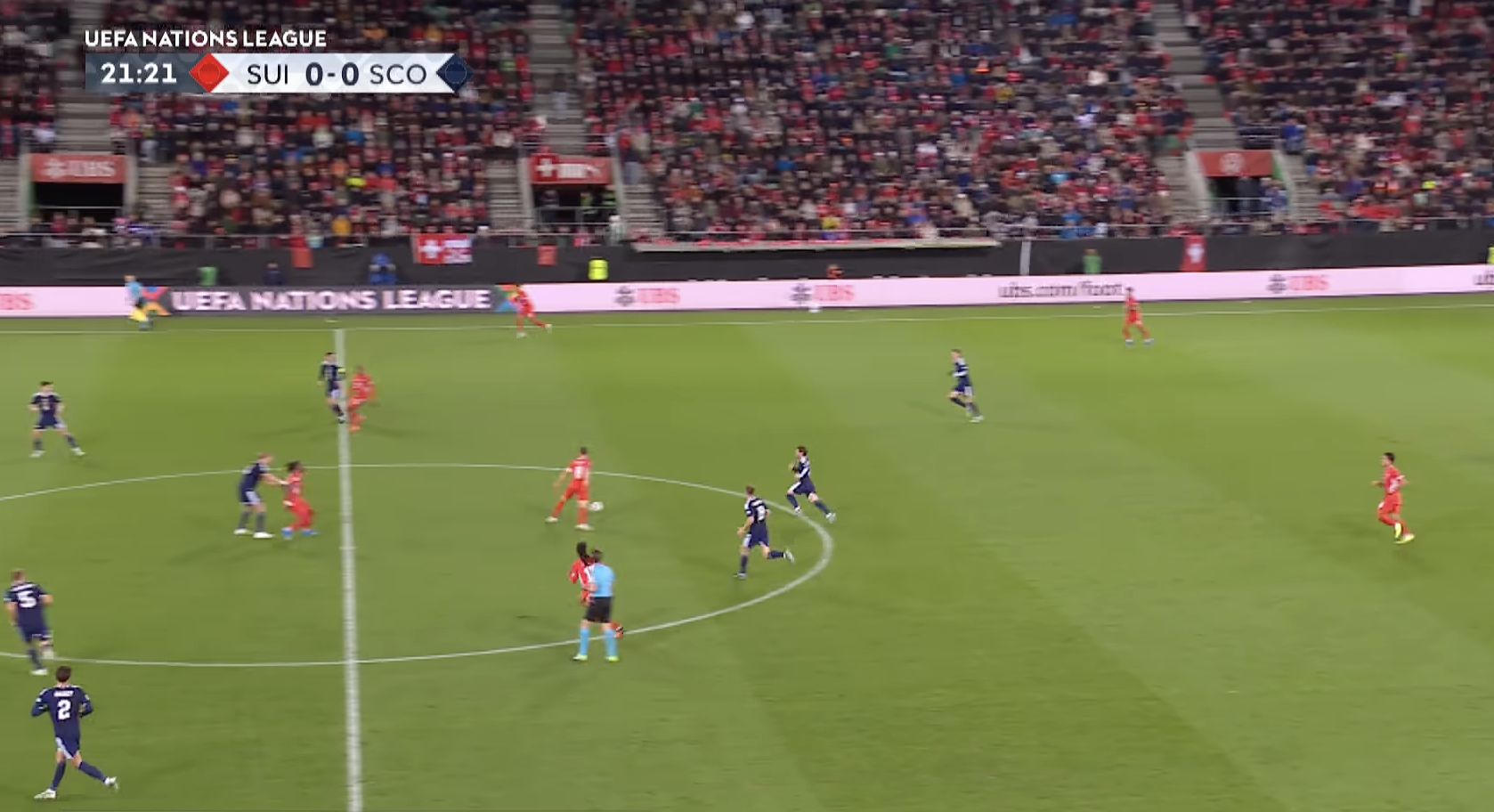
Switzerland's goalkeeper plays a simple ball over the top to evade Scotland's press, putting it into the feet of Freuler, who has space and options in midfield.
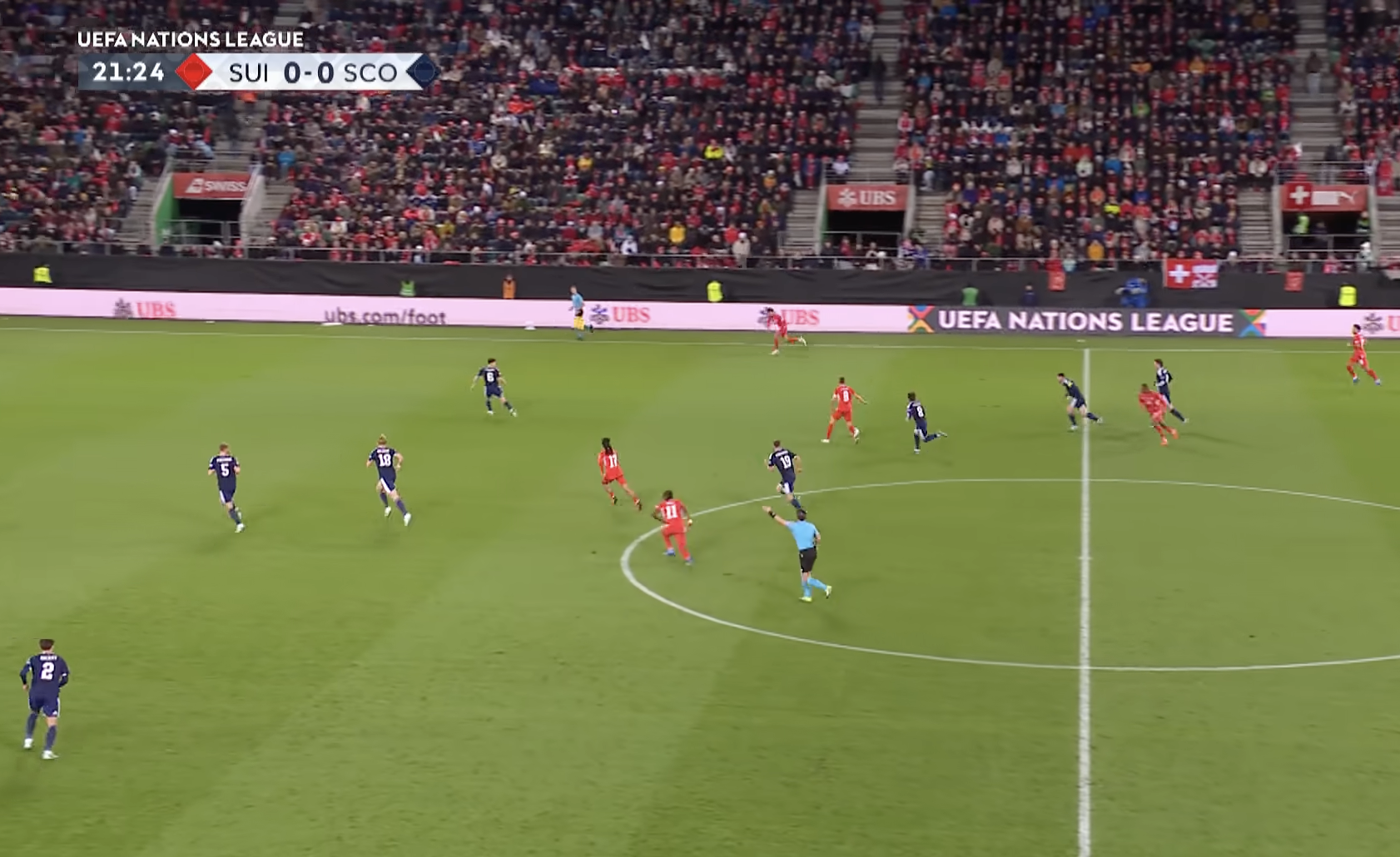
After a nice one-two, he has moved into even more space with a player free on the wing.
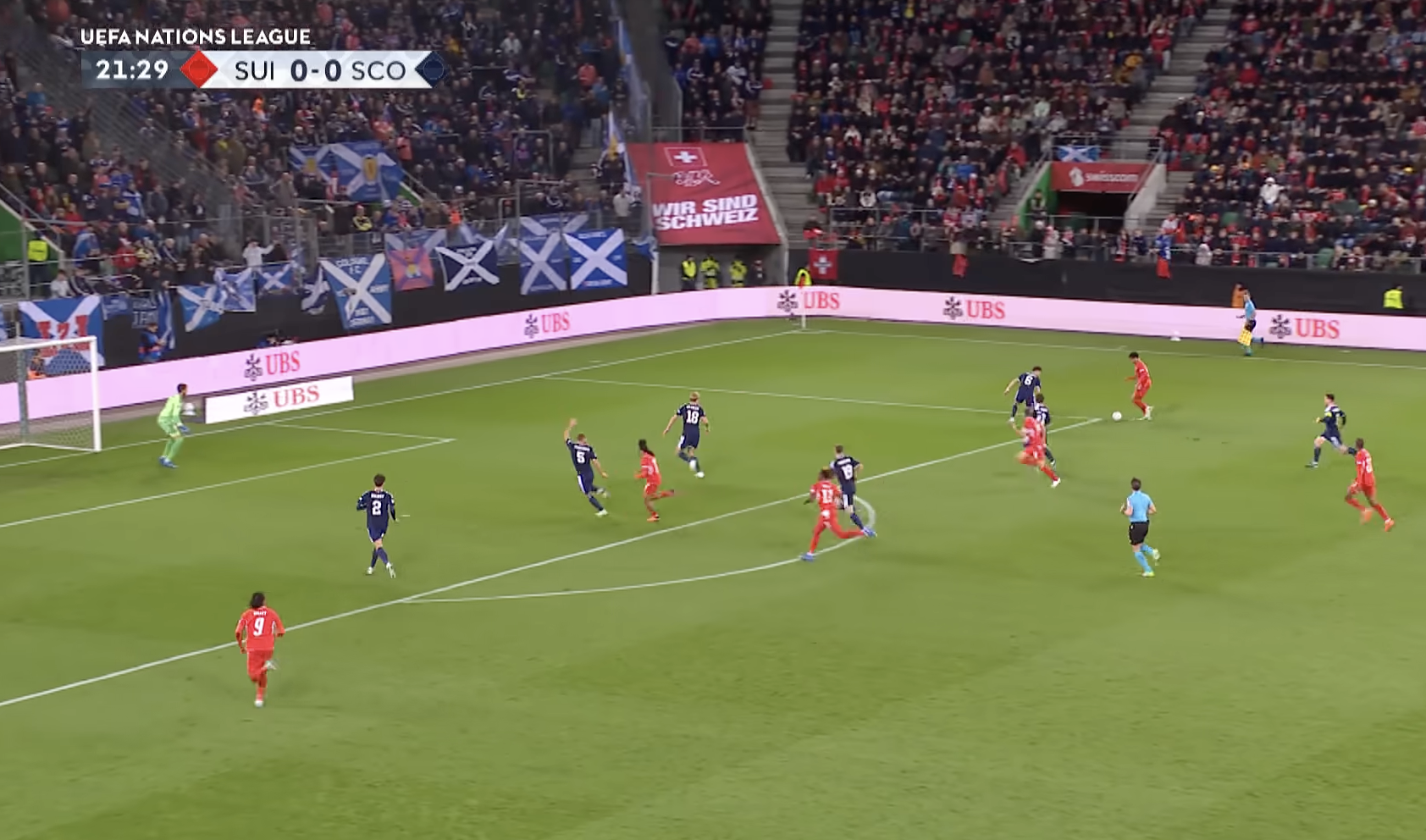
He gets set towards the box and plays a fairly average ball into the box.
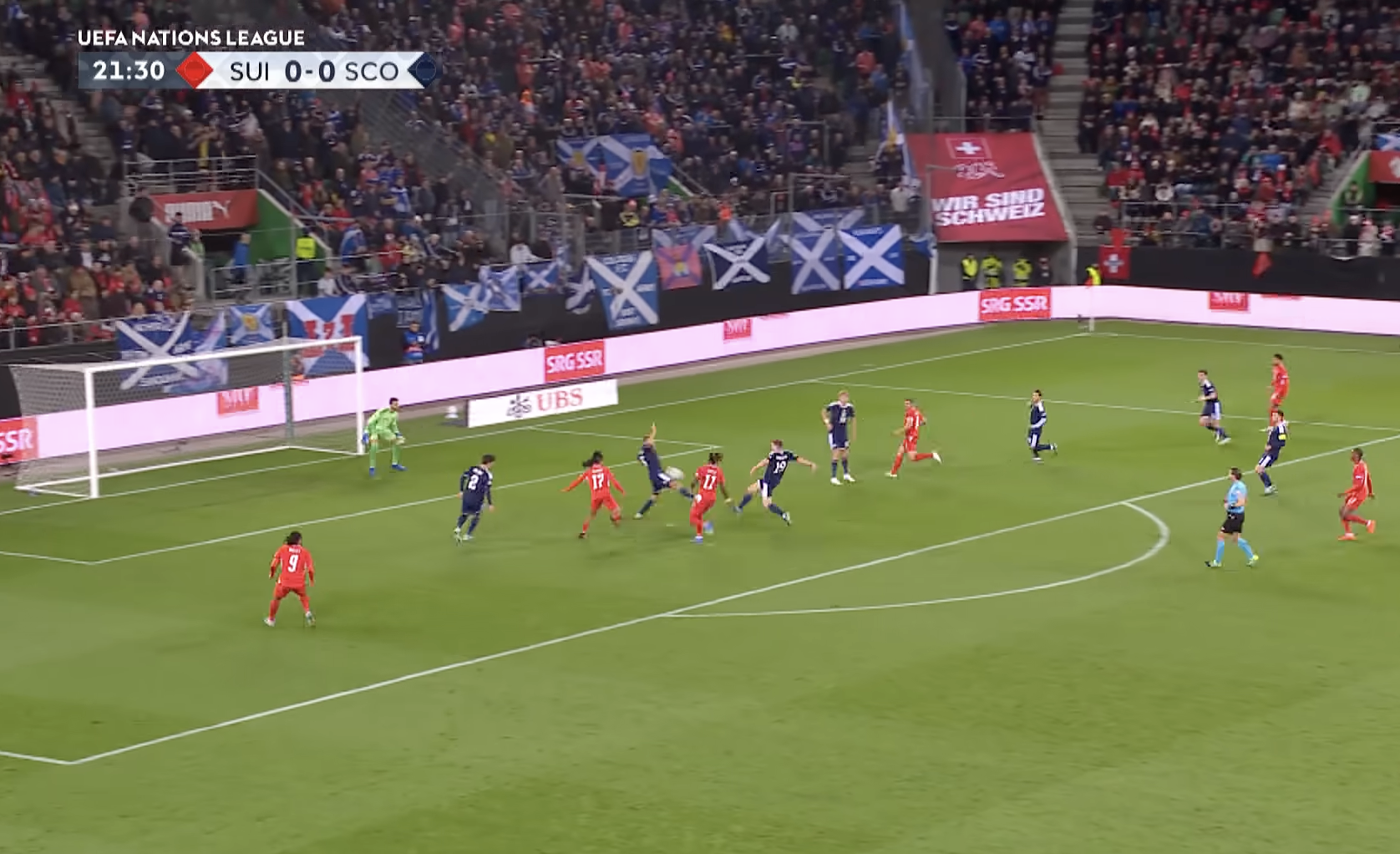
Ferguson sticks out a leg and finishes into his own goal from about 12 yards out.
Pocognoli might point at being unlucky here, but it's too easy a goal for Switzerland to score.
Structurally, Scotland's press gets beaten too easily, and then it's poor decision-making from Ferguson, who doesn't really attempt anything other than stick a leg out.
This one decision changes the direction of the game.
Second Half Analysis
The second half saw much more attacking football and ultimately came down to one team taking their chances and the other being wasteful.
Switzerland created 2.2 expected goals from 10 shots, putting seven of them on target.
Five of those were also deemed by Opta as being 'Big Chances'.
Scotland, on the other hand, created 1.19 expected goals from seven shots, putting zero on target, despite having more touches in the opposition box than their opponent.
In fairness to Pocognoli and his side, the game state shifted very quickly early in the second half.
What was inexcusable, though, was the defending that changed the game.