
Craig Bellamy Tactics At Wales 2026: Transforming The Dragons’ Identity – Tactical Analysis
- •

Even though they failed to qualify for the FIFA World Cup, losing to Bosnia and Herzegovina on penalties in the playoff semi-finals, Wales are currently undergoing an exciting tactical revolution under Craig Bellamy.
It’s the 46-year-old Welshman’s first-ever managerial job outside of the academy level, and he is already showing his tactical acumen.
For many years, Wales were primarily a low-block, counterattacking side that would constantly punch above its weight.
This worked to a degree, considering they qualified for the 2020 Euros and 2022 World Cup.
However, after a qualifying playoff exit to Poland in their bid to reach the 2024 Euros, the Welsh FA decided it was time to move on from their previous manager, Rob Page.
Bellamy played for several big clubs during his professional career, including West Ham, Newcastle, Manchester City, and Liverpool.
When he retired, he joined the Cardiff City academy as a coach, but a few years later, he joined his old teammate Vincent Kompany when Kompany got his first managerial job at Anderlecht.
Bellamy then followed Kompany to Burnley and spent two seasons there as his assistant.
On July 9th, 2024, Wales made the announcement that Craig Bellamy would be the one to lead the Dragons.
Even though he’s still relatively inexperienced as a manager, Bellamy has completely revolutionised the Welsh national team, and their progression will be one to watch over the years.
In this Wales tactical analysis, we take a look at Bellamy’s build-up tactics and some tactical components he is using in the final third to improve Wales’ underlying numbers.
Craig Bellamy Build-Up Tactics
The reality is that compared to most teams across Europe, the Welsh National team lacks depth and elite talent at certain positions.
Per Transfermarkt, Wales have a total squad value of €197.95m, which ranks 20th in Europe.
It has to be mentioned how difficult it is to implement complex tactical systems at the national team level, especially for a team like Wales.
You have so little time, not only in training but also with the players, to watch film and implement systems.
There are also players coming in from all levels of football, so trying to get them to gel and build cohesion can be really difficult.
This is why, at the international level, tactics are often less defined, and managers tend to leave a lot up to the players.
Wales have plenty of players with Premier League experience, including Harry Wilson, Joe Rodon, Ethan Ampadu, Neco Williams, and Brennan Johnson, to name a few.
However, most of their players are in the EFL Championship, so it’s a difficult task for someone like Bellamy to implement his tactical system in such a short time.
Wales typically set up in a 4-1 base with Ampadu as the single pivot.
From here, they use multiple forwards dropping into the half spaces to try to pull defenders out of position.
In this example, Bosnia and Herzegovina are going straight man-to-man, and David Brooks is dropping all the way from his striker position to try to help in the build-up.
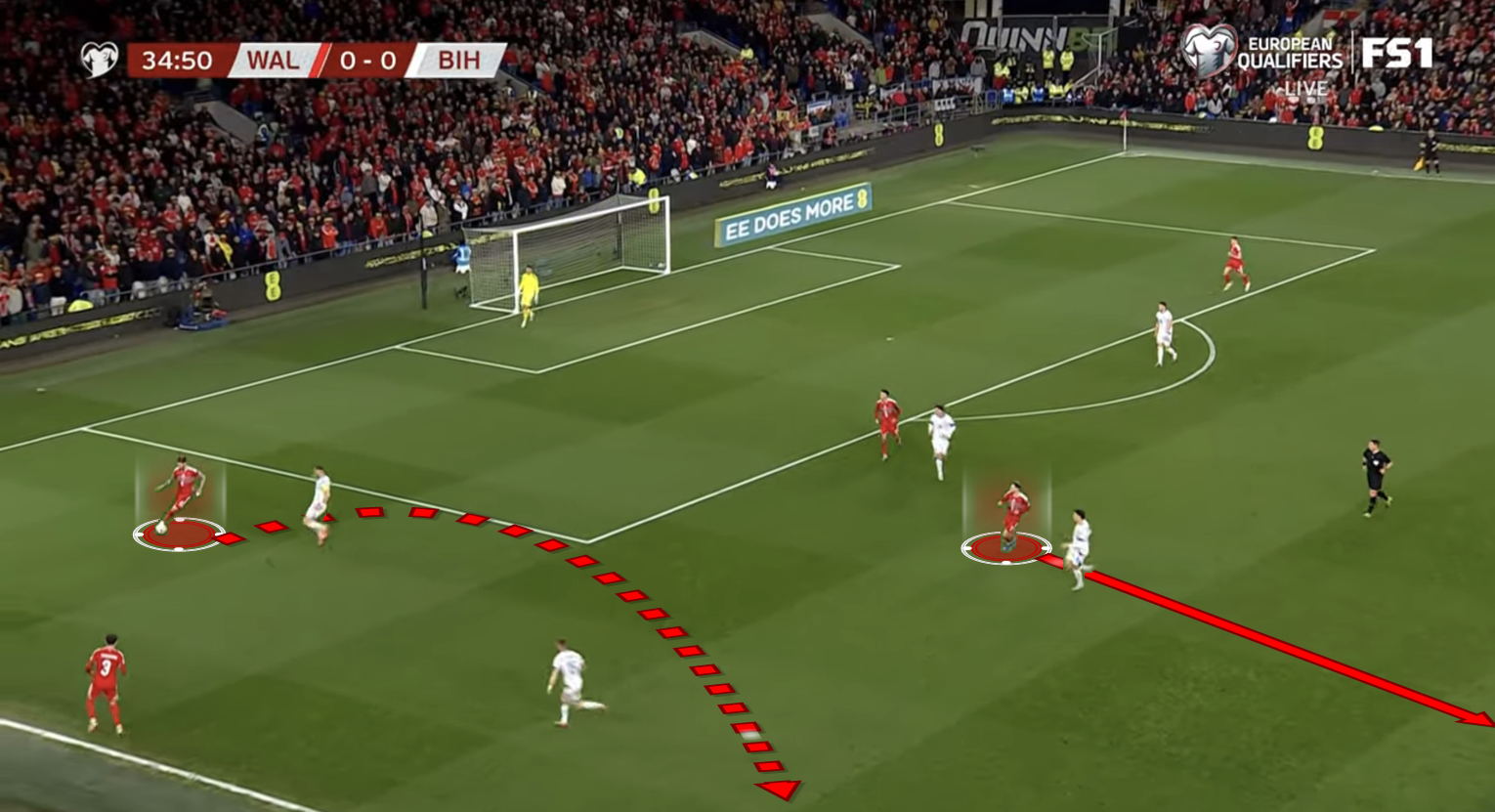
Once Wales are able to play the ball out wide and flick it on, there are acres of space for Brooks to run into, and Wales almost created a massive chance from a cross.
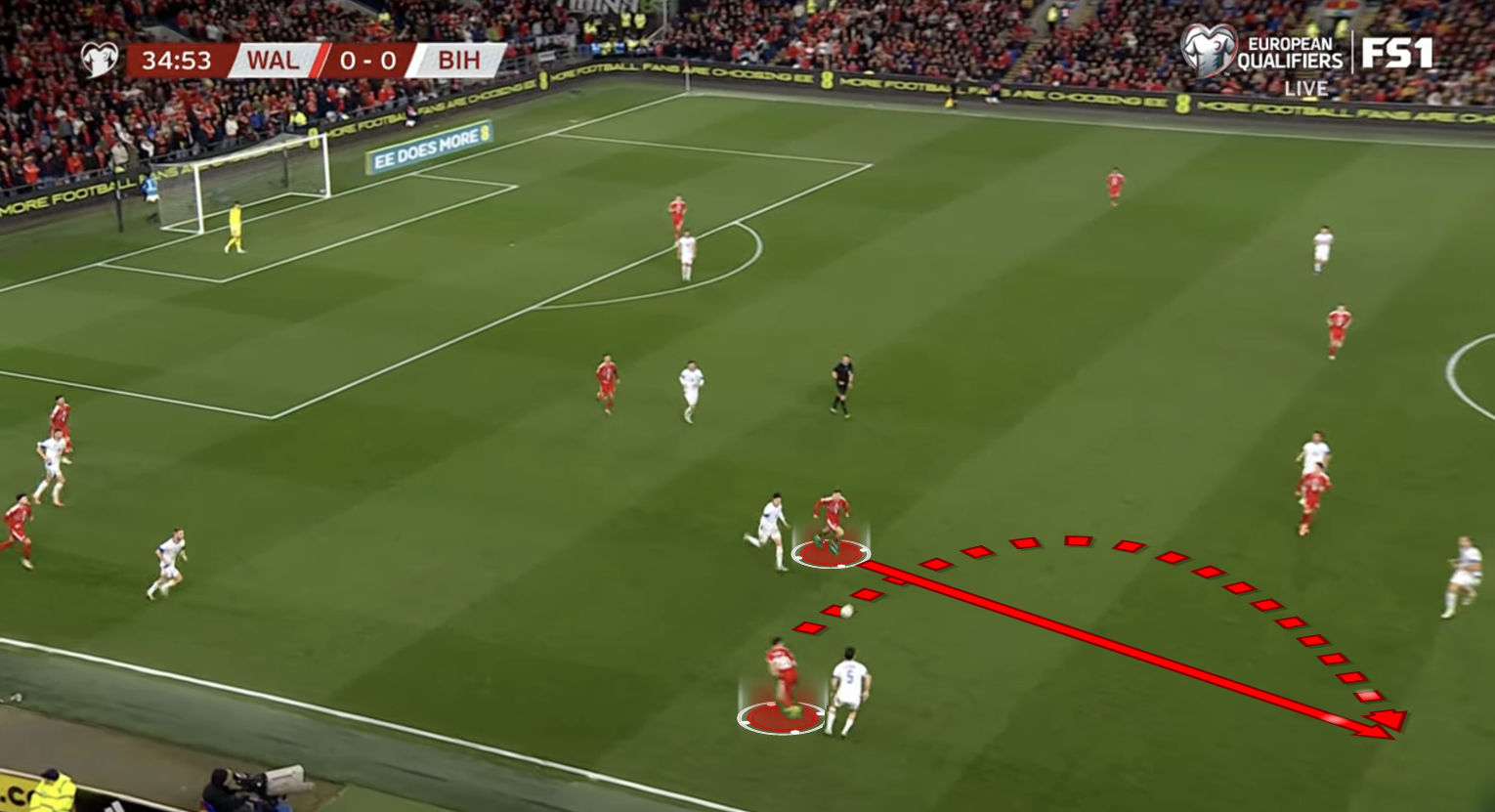
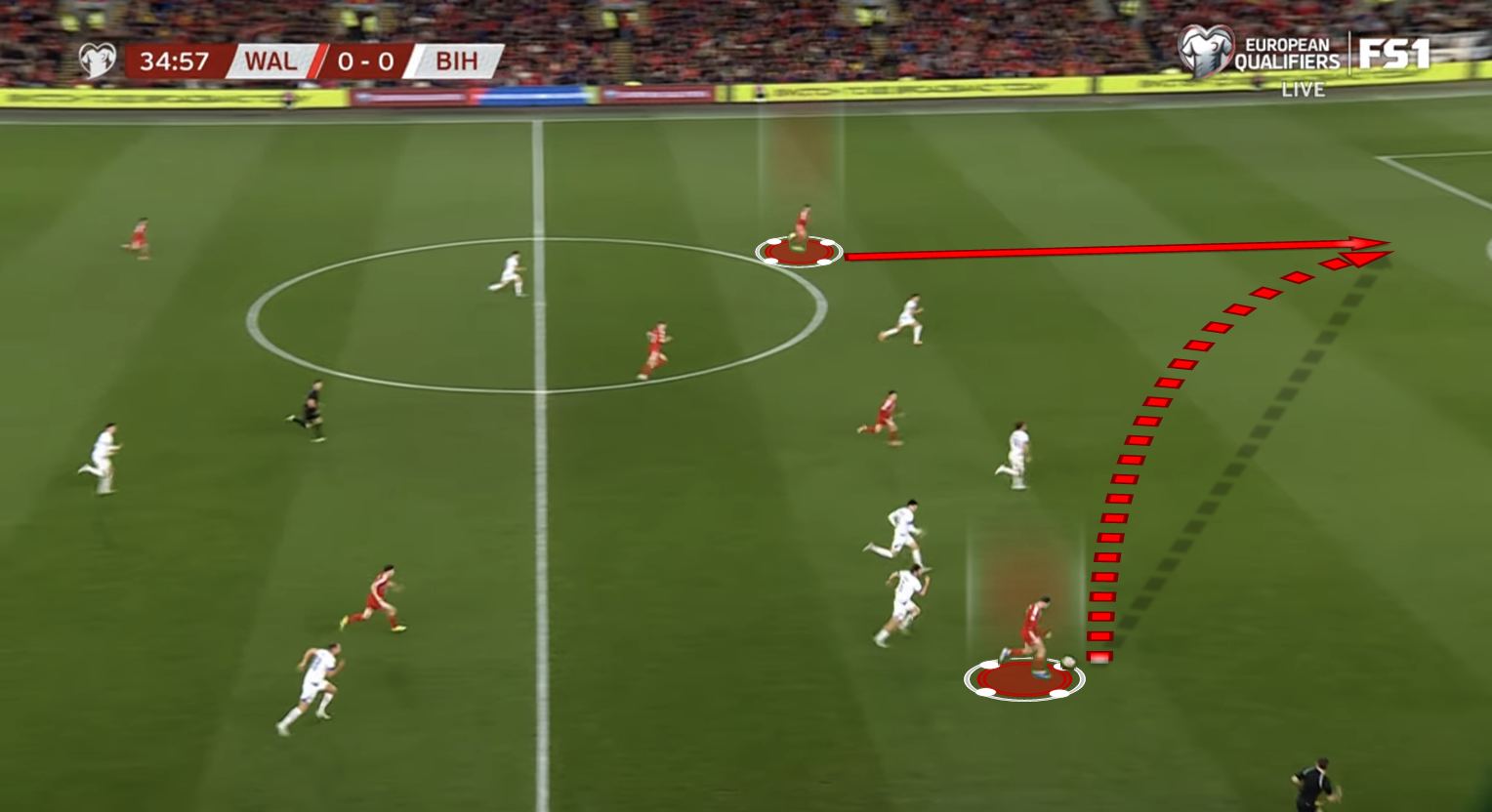
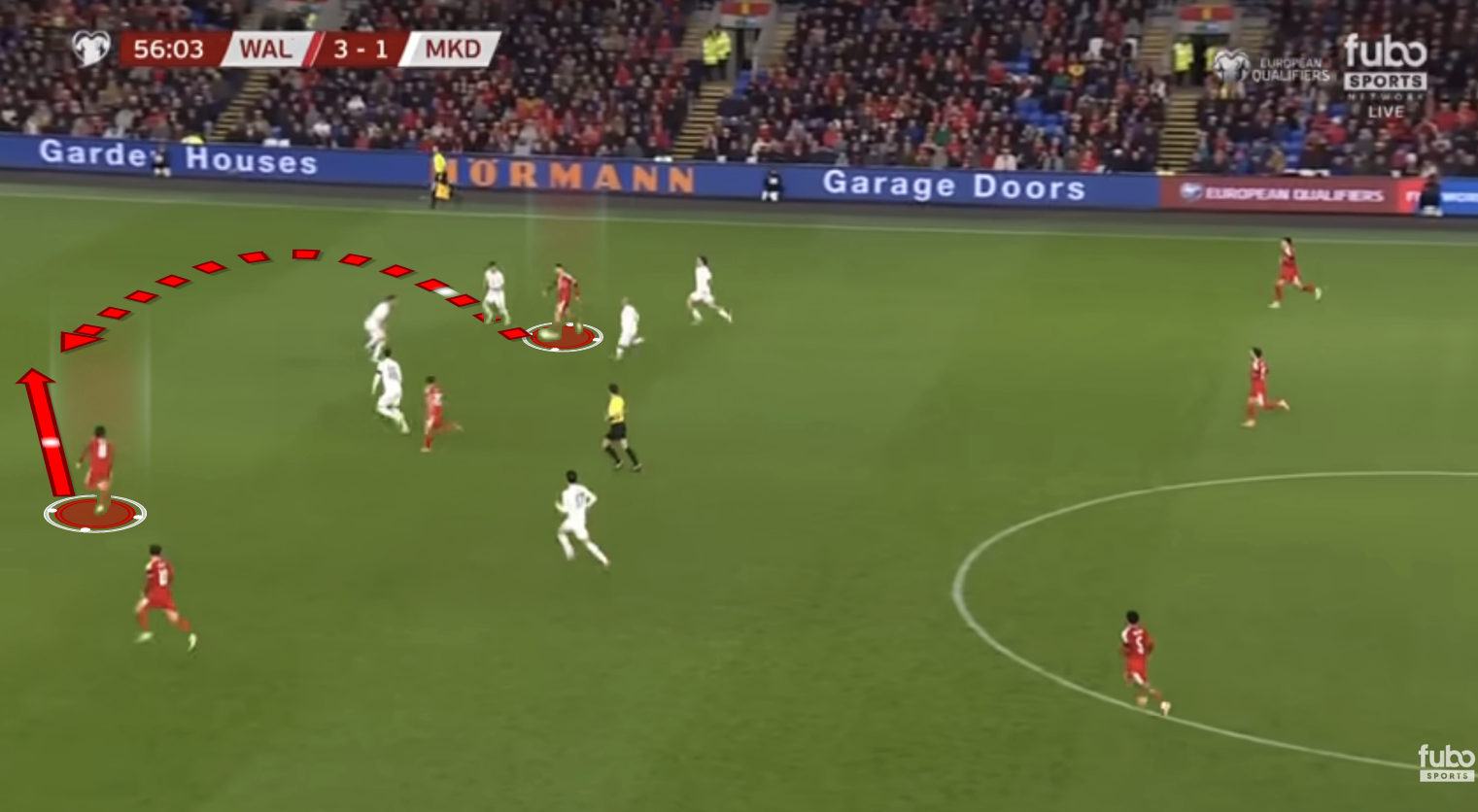
One thing their build-up also does is that, since they tend to drop multiple forwards in deep once they are able to play through the press, they almost create a transition moment.
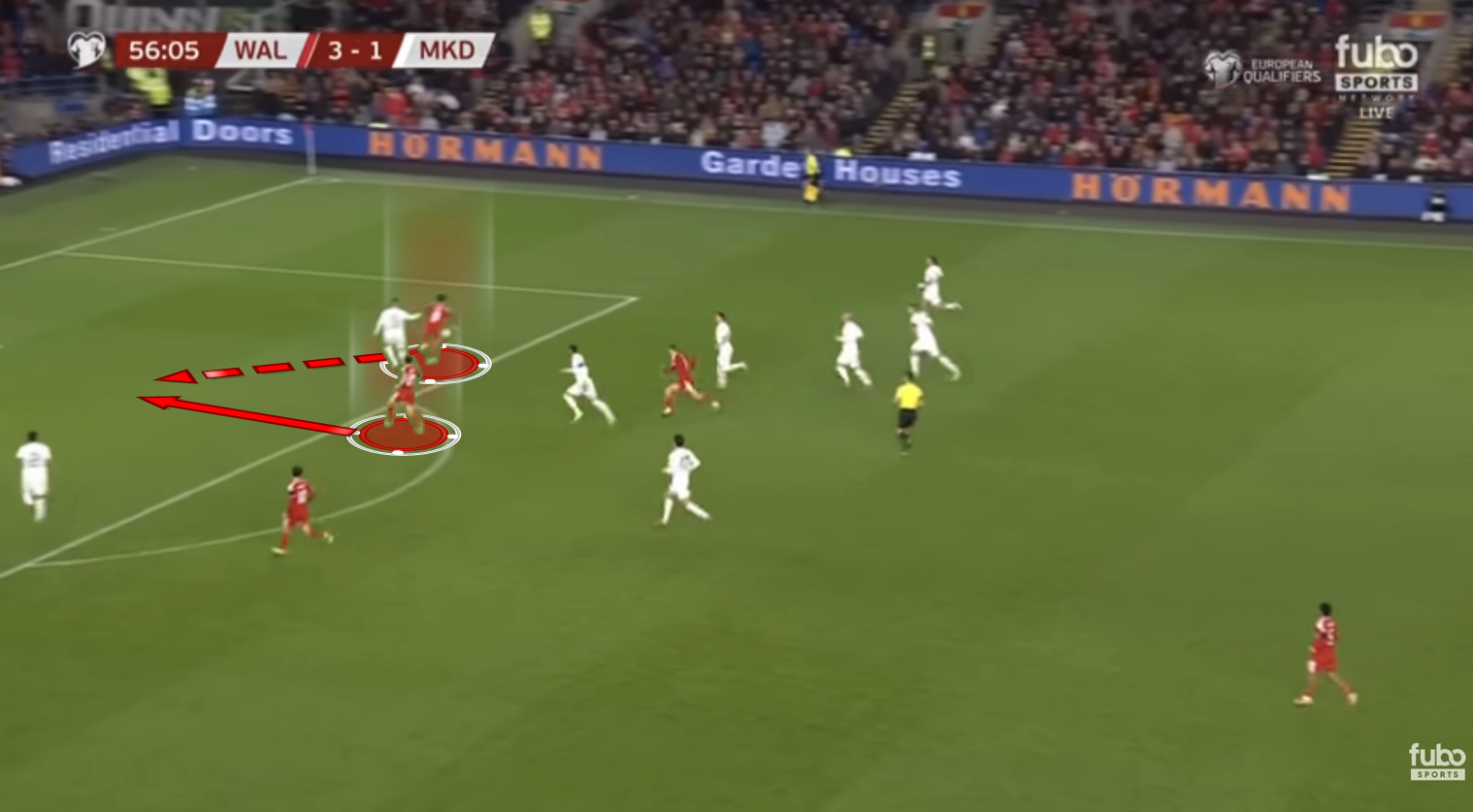
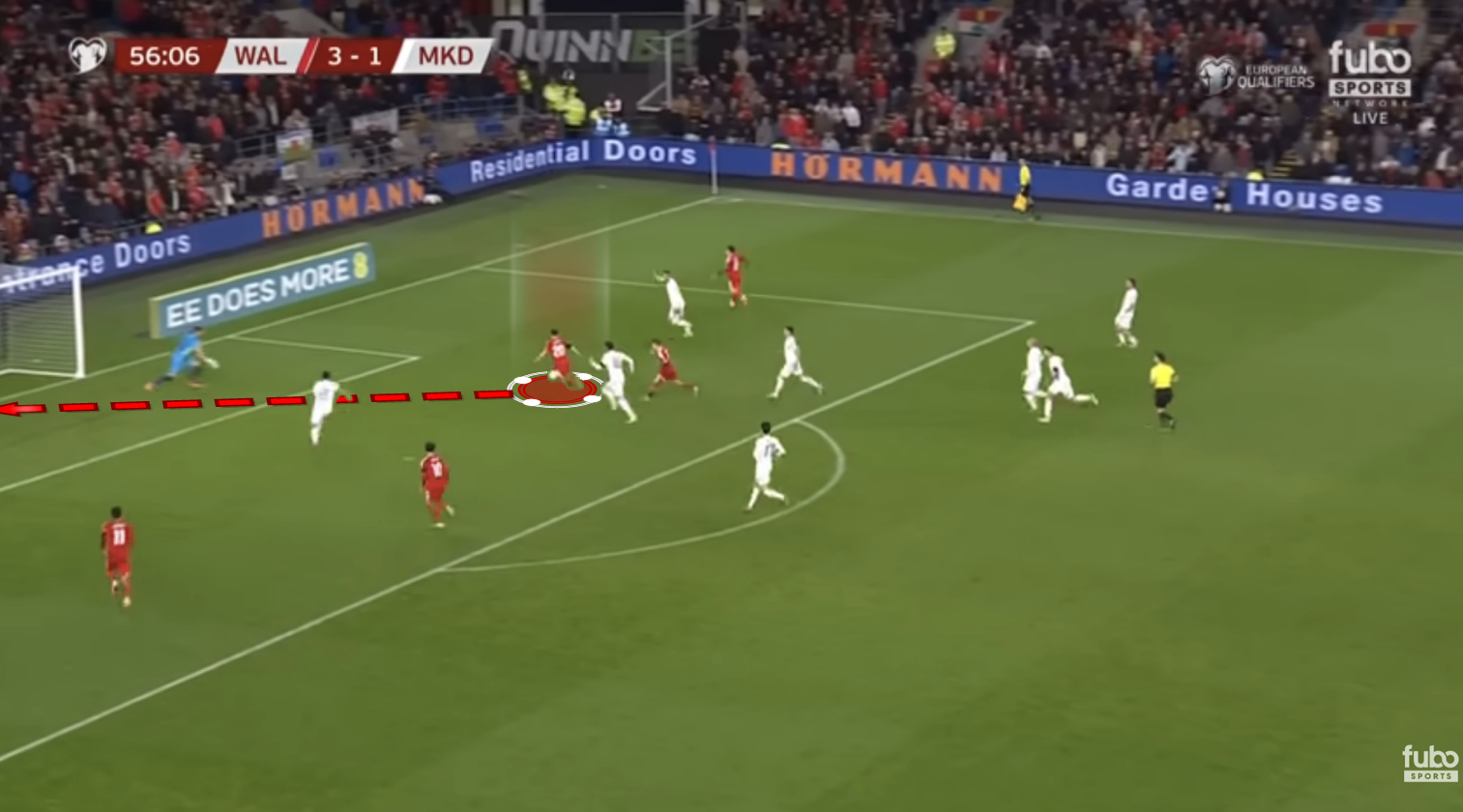
Here, against North Macedonia, they played through the press and got the ball out wide to Brooks.
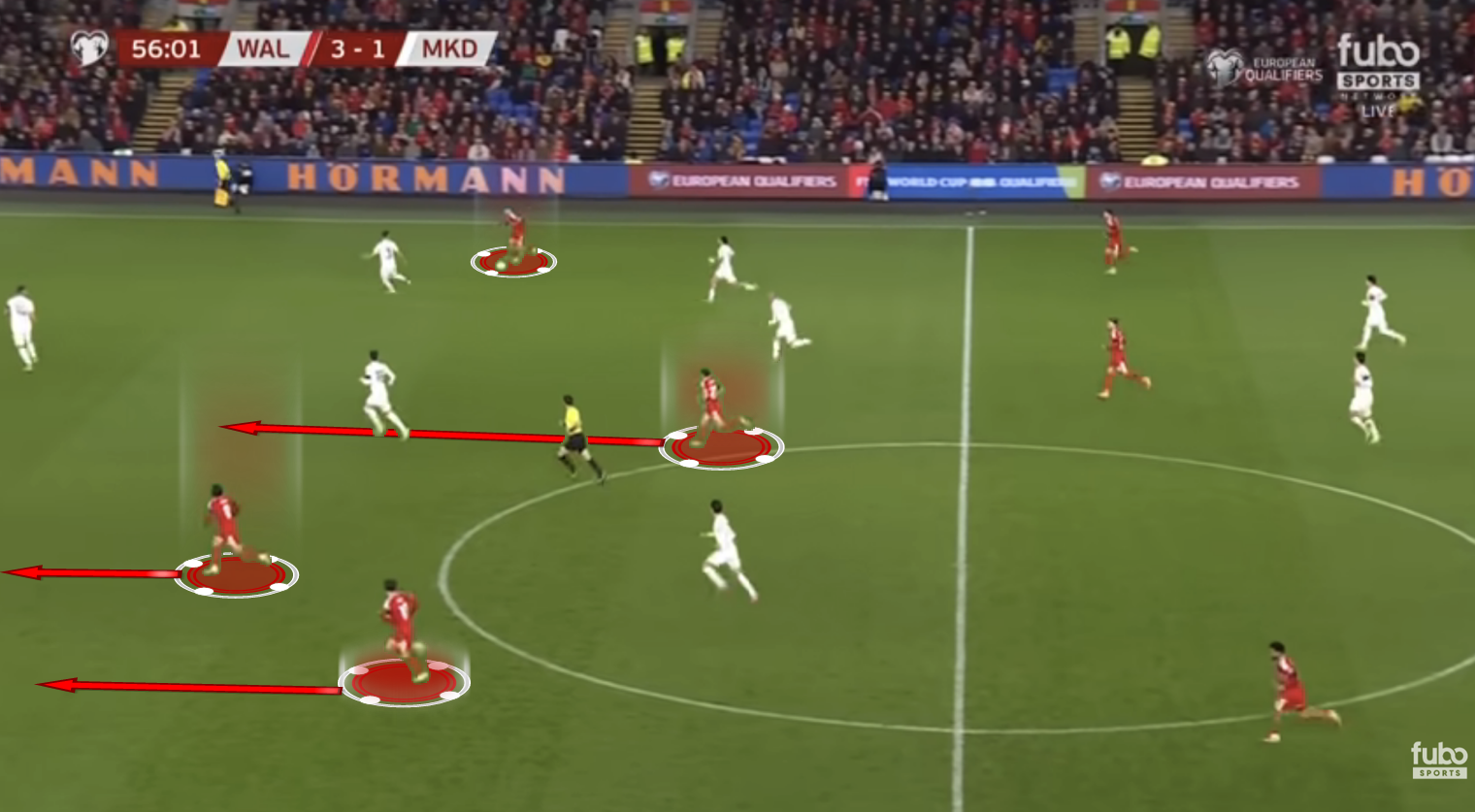
Because all their forwards were in deep positions as they ran towards the box, they were unmarked.
Eventually, that became a problem for North Macedonia, as Daniel James was able to get into the box freely and score.
It’s this type of exciting build-up that has allowed Wales to dominate lower-tier competition.
The problem is that doing this against top-level teams hasn’t really worked, considering they’ve lost once to England and twice to Belgium.
With that being said, under Bellamy, Wales had control of every single qualifying match.
In their nine World Cup qualifying matches, Wales averaged 68.2% possession, and there wasn't a match in which they held less than 50% of the ball.
When you compare that to their time under Rob Page during Euro qualifying, they were only averaging 44% possession, which is a massive change and one that has been for the better.
Craig Bellamy Final Third Tactics
Once Wales enter the final third, they are quite good at moving the ball and creating space.
Here you can see their 4-1 base with Ampadu, as they allow him space.
Once Brooks drops deep to receive the ball, he makes a one-touch pass to Ampadu.
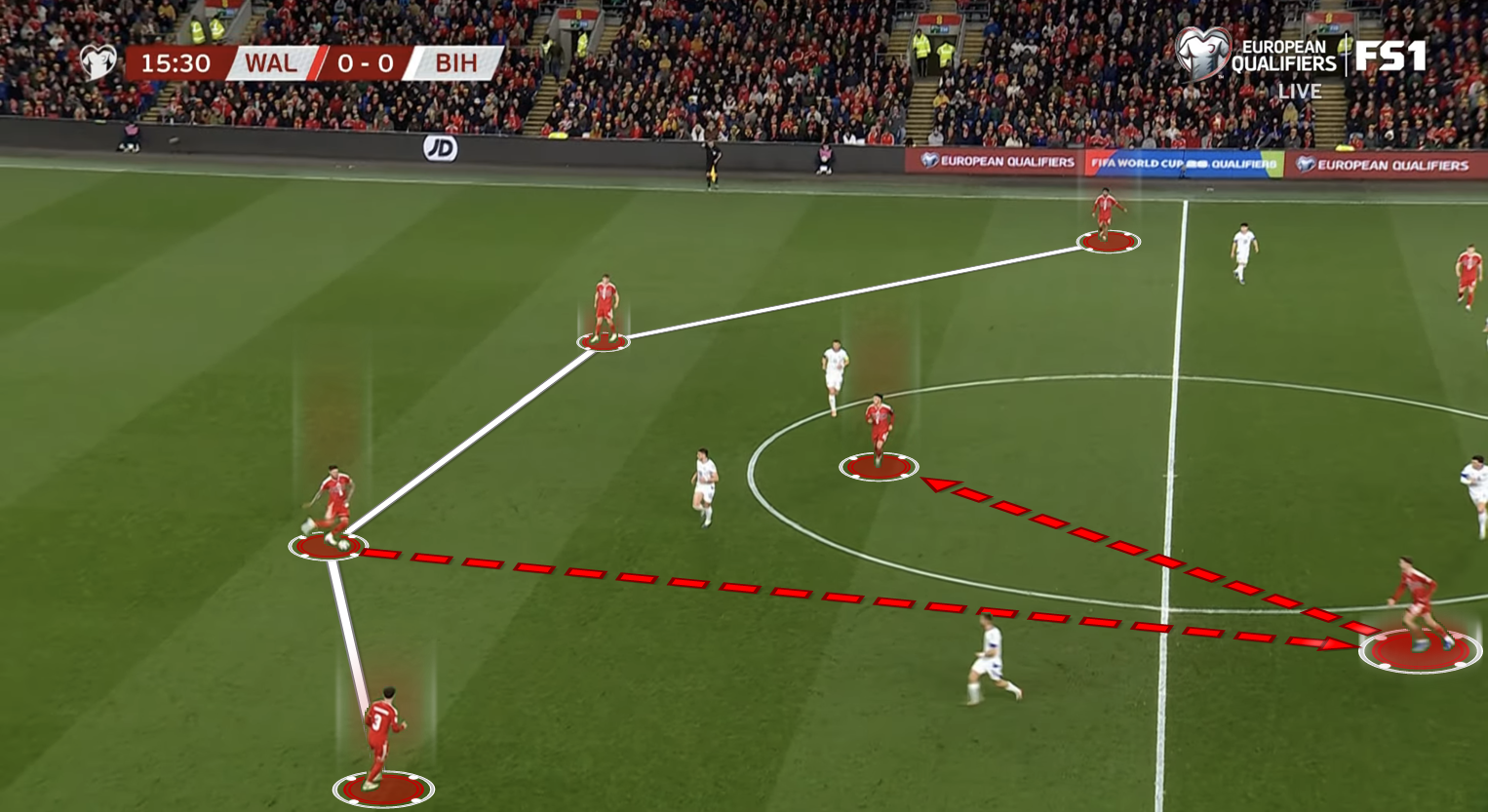
Because there is so much space centrally, Ampadu can carry the ball into it, draw one of the centre-backs forward, and play a pass into Jordan James, who runs into the space created.
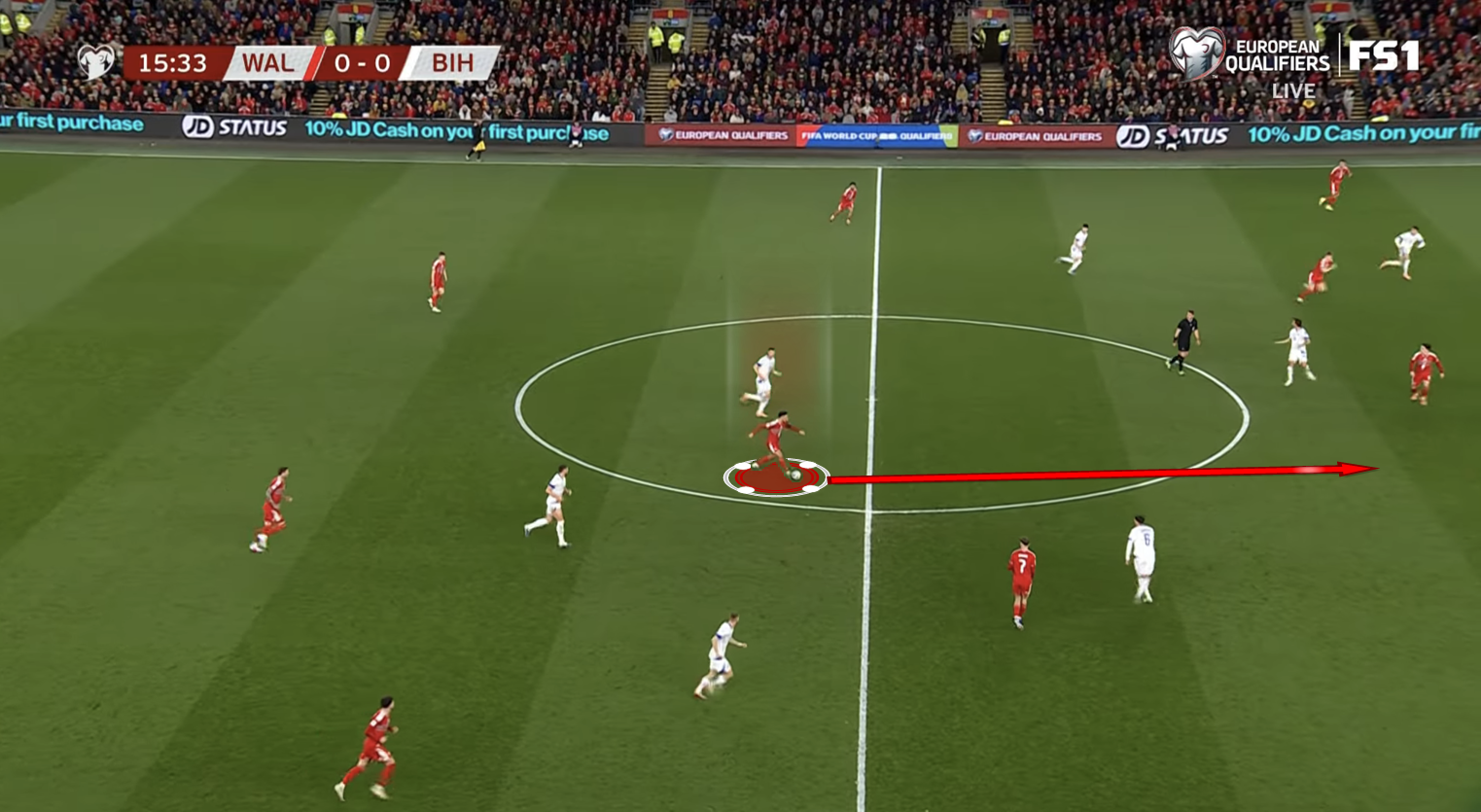
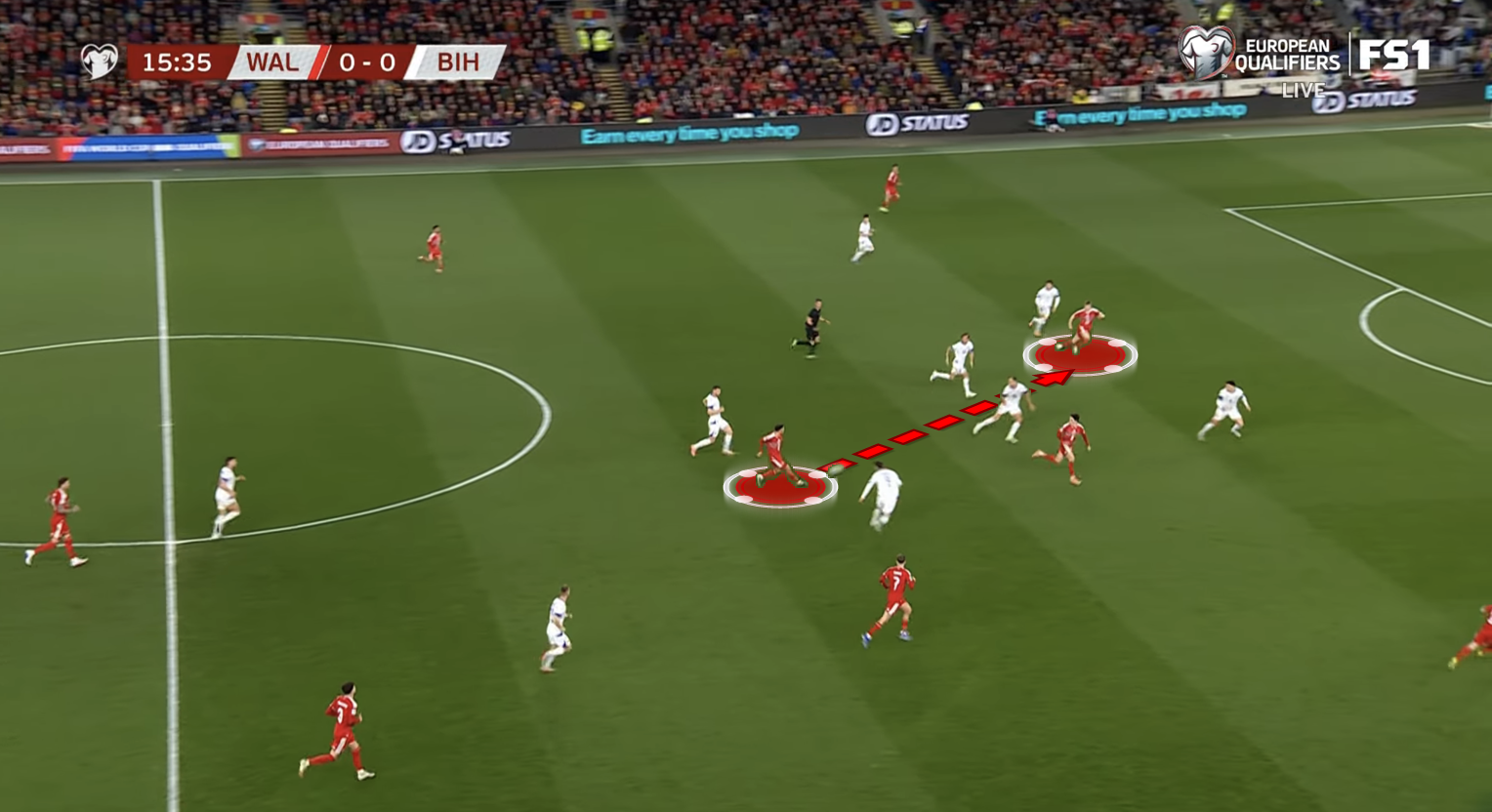
It’s this type of quick passing and Brooks's movement as the false nine that were causing Bosnia and Herzegovina so many problems when they were pushed back into their final third.
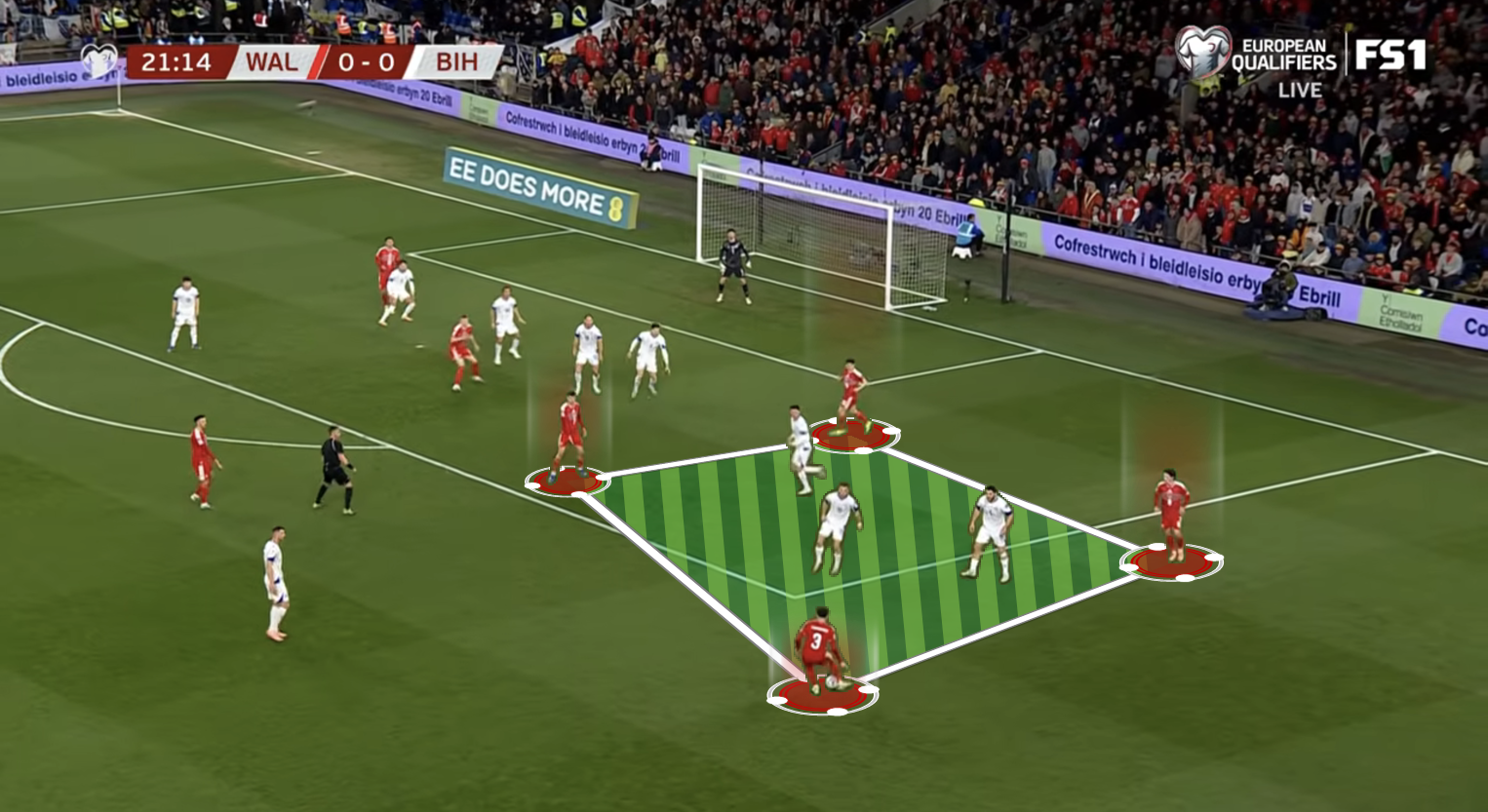
Bellamy is also a really big fan of wide overloads, and he uses them really effectively.
In the past, Wales used to be a team that would get the ball into wide areas and fire in cross after cross to Kieffer Moore.
Now, they are creating these four- and five-man overloads out wide and using them to their advantage to create space.
One other tactic that he seems to use quite often is creating space in behind for the wingers and then having the forwards make late runs into the box.
They did this a few times against England in a friendly recently, but it looks almost like a 2-2-6 build-up.
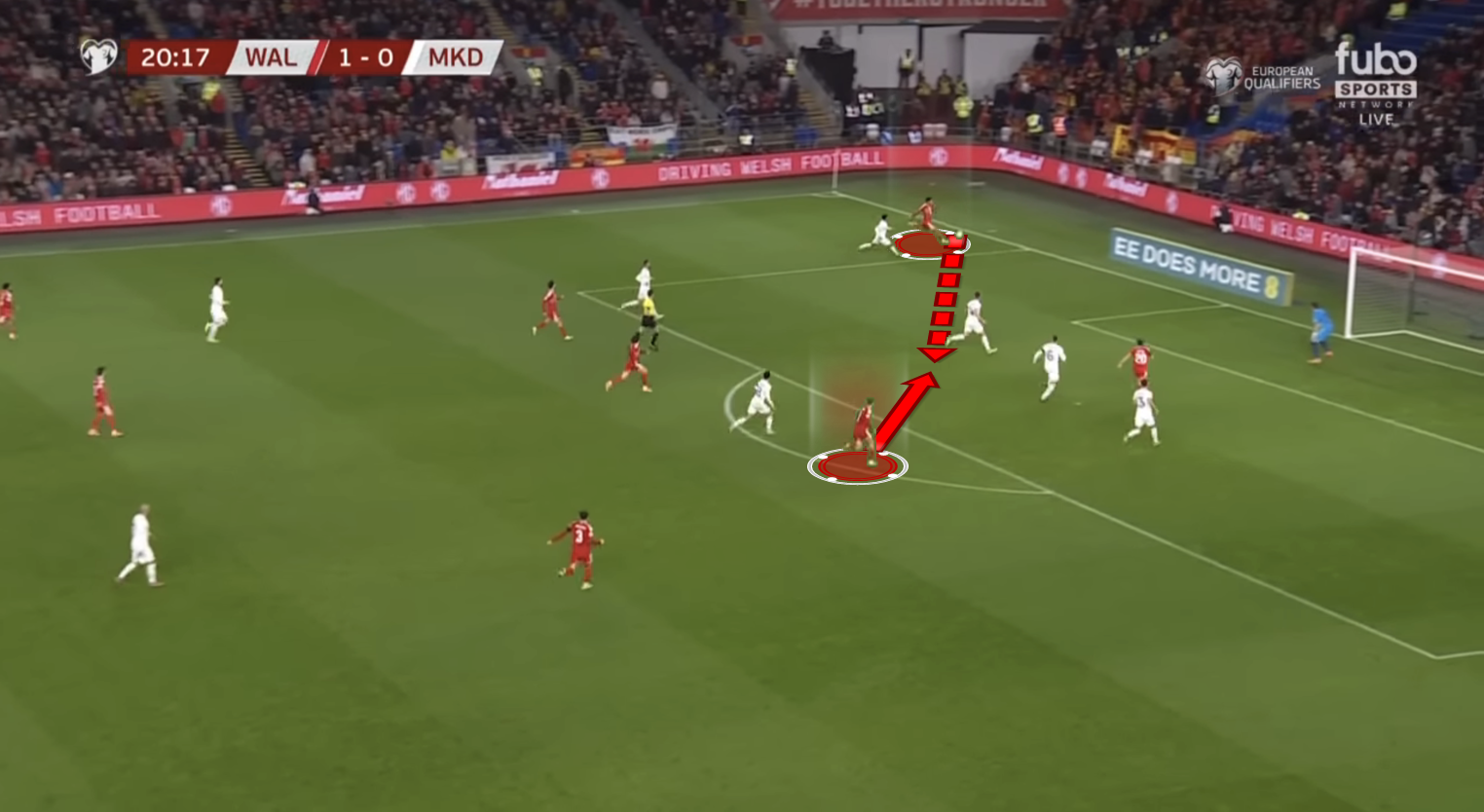
Because all the forwards are a step off the last line of defence, it’s forcing North Macedonia’s centre-backs to step up.
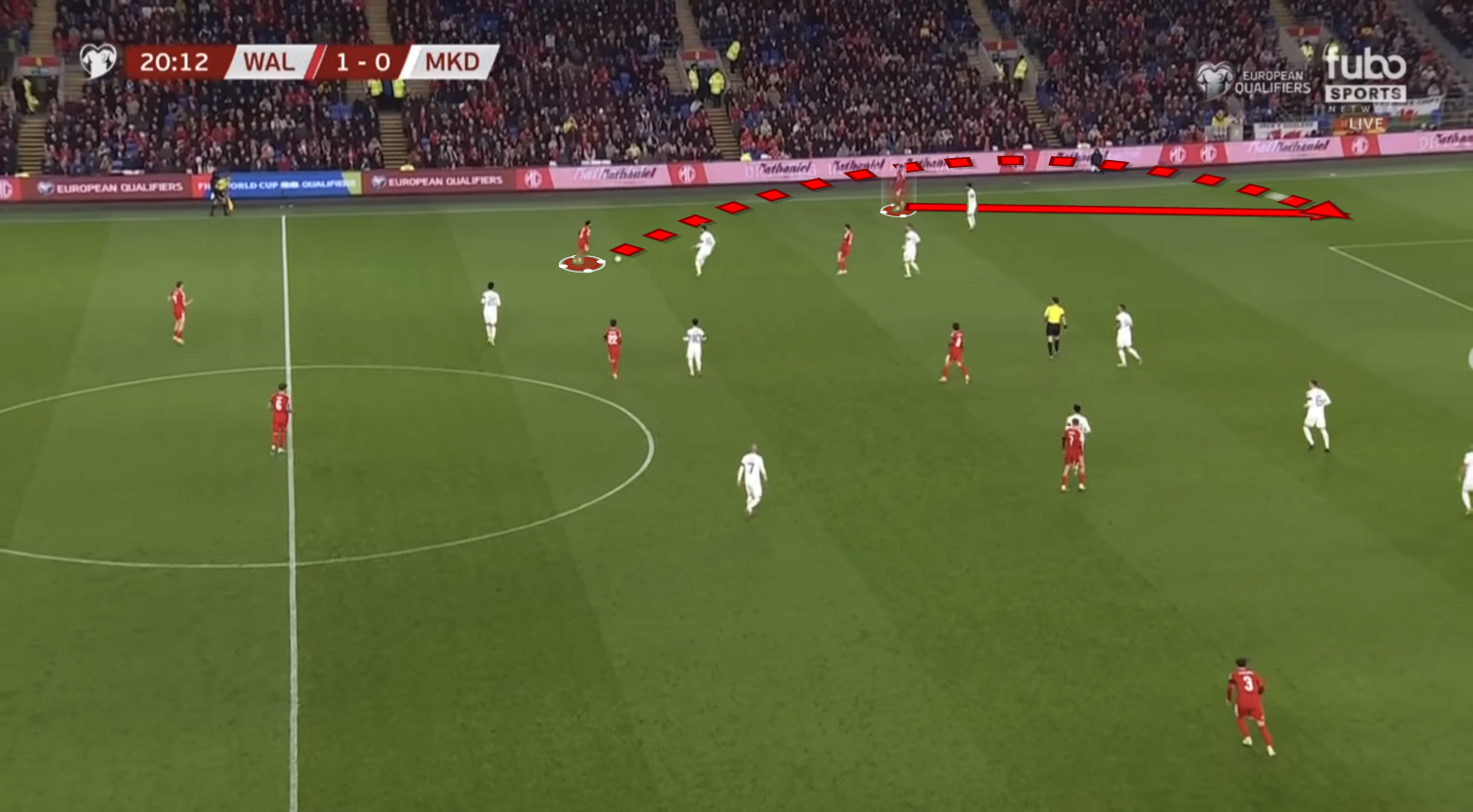
Then, once Johnson is able to beat his man in behind once he’s ready to cross the ball, Wales have three guys making late runs into the box for a cut back when Brooks gets on the end of it for a goal.
The formation in the final third does change from time to time, as you can see here against Belgium, where they are building up in a 2-3-5.
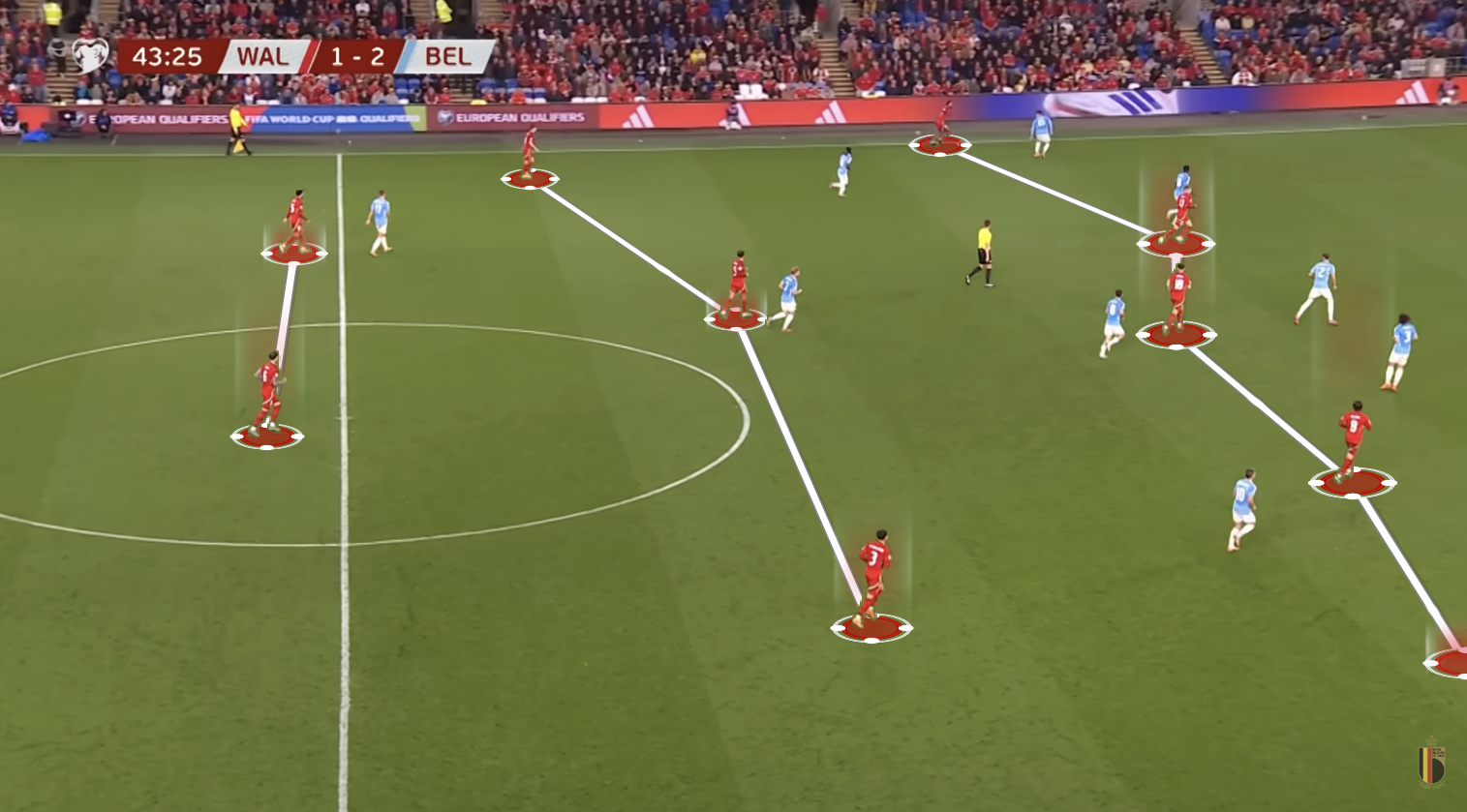
In any case, the goal is to overload the last line of defence while also pulling defenders out of position to create space for their forwards to run into.
I would say the changes that Bellamy has made are all for the better when it comes to the underlying numbers.
Wales’ expected goals per 90 minutes went from 1.33 under Page to 1.87 under Bellamy.
In addition to that, their expected goal differential per 90 minutes went from +0.13 under Page to +0.90 under Bellamy.
Conclusion
It’s quite unfortunate that Wales did not qualify for the World Cup because what Bellamy has done with them tactically is really exciting, and they would have been an enjoyable contender to watch in North America.
With that being said, they will be a team to watch out for in Europe in the future if Wales can hold onto Bellamy as their manager for the next cycle.
The way he’s been able to completely flip Wales tactical identity and make it work by holding more possession, improving results, and drastically increasing their underlying numbers has been nothing short of incredible.
After this tactical display throughout qualifying, I have a feeling some bigger clubs are going to be calling him.
If he stays in charge of Wales for potentially the Euros, Wales will be a team to look out for in 2028.
Of course, the well-known talent on the squad by that point will be in their 30s, which, unless some younger talent shines through, may be the last hope for a while of Wales showing out at major international competition.
In any case, Bellamy has introduced some exciting tactical ideas with the Welsh National Team, and they will be a team to look out for in the future.
![Bayern Munich Vs Real Madrid [4-3] – Champions League 2025/2026: Why Vincent Kompany Tactics Progressed – Tactical Analysis](https://cdn.mymidnight.blog/77f959f119f4fb2321e9ce801e2f5163/size/w600/2026/04/FC-Bayern-Vs-Real-Madrid-20252026.png)


![Arsenal Vs Sporting CP [0–0] – Champions League 2025/2026: Conservative Mikel Arteta Tactics Advance – Tactical Analysis](https://cdn.mymidnight.blog/77f959f119f4fb2321e9ce801e2f5163/size/w600/2026/04/Arsenal-Vs-Sporting-CP-20252026.png)
![Atlético Madrid Vs Barcelona [1–2] – Champions League 2025/2026: When Pragmatism Beats Control – Tactical Analysis](https://cdn.mymidnight.blog/77f959f119f4fb2321e9ce801e2f5163/size/w600/2026/04/Atle--tico-Madrid--Vs-Barcelona-20252026.png)

![Liverpool Vs PSG [0–2] – Champions League 2025/2026: PSG Counter-Attacking Efficiency & Midfield Control – Tactical Analysis](https://cdn.mymidnight.blog/77f959f119f4fb2321e9ce801e2f5163/size/w600/2026/04/Liverpool--Vs-PSG-20252026.png)

![Manchester United Vs Leeds United [1–2] – Premier League 2025/2026: Where Did Michael Carrick Tactics Fail? – Tactical Analysis](https://cdn.mymidnight.blog/77f959f119f4fb2321e9ce801e2f5163/size/w600/2026/04/Man-United-Vs-Leeds-United-20252026--1-.png)







![Como Vs Inter Milan [3–4] – Serie A 2025/2026: Cesc Fàbregas' Attacking Masterclass Meets Defensive Frailty – Tactical Analysis](https://cdn.mymidnight.blog/77f959f119f4fb2321e9ce801e2f5163/size/w600/2026/04/Como-Vs--Inter-Milan-20252026.png)

Discussion