How To Coach Breaking Opposition Lines Like Pep Guardiola - Tactical Theory

When advancing possession in football, the team mustn't pass the ball without a clear purpose.
The popularity of 'tiki-taka' in recent years has given many people the impression that having high possession and passing statistics automatically denotes a top team, when this is often not the case.
Possession is pointless unless it serves a purpose.
Pep Guardiola, the coach who inadvertently popularised the term 'tiki-taka', has publicly expressed his resentment for it, as it encourages pointless passing when Guardiola advocates the opposite.
In this tactical theory article, we will examine breaking opposition lines, one of the most progressive tactics for advancing possession.
What Are Lines In Football?
Lines can be a somewhat abstract concept for those who don't follow football.
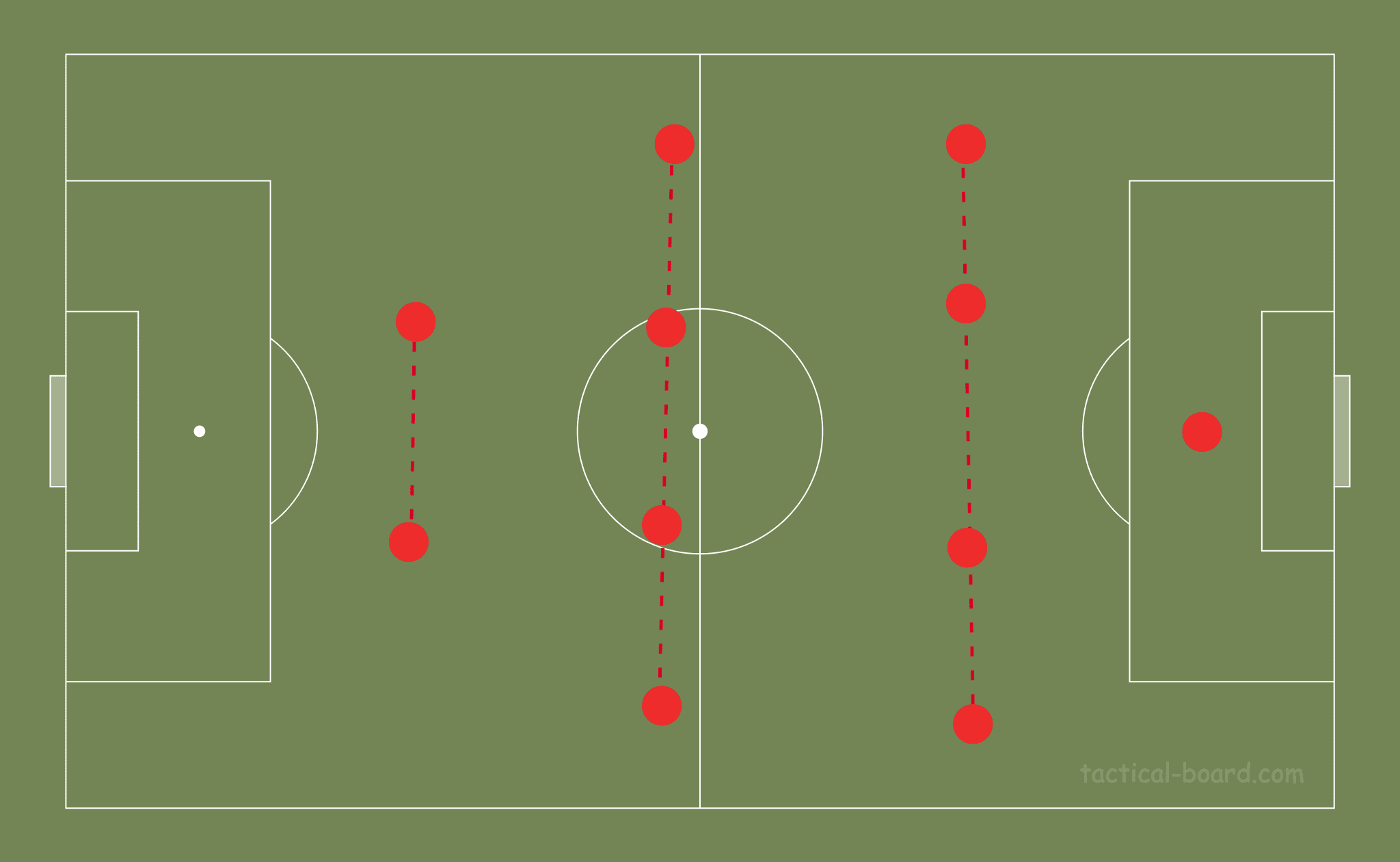
To put it simply, they are imaginary lines connecting players horizontally.
In the example below, we can see how a typical 4-4-2 formation creates three lines.
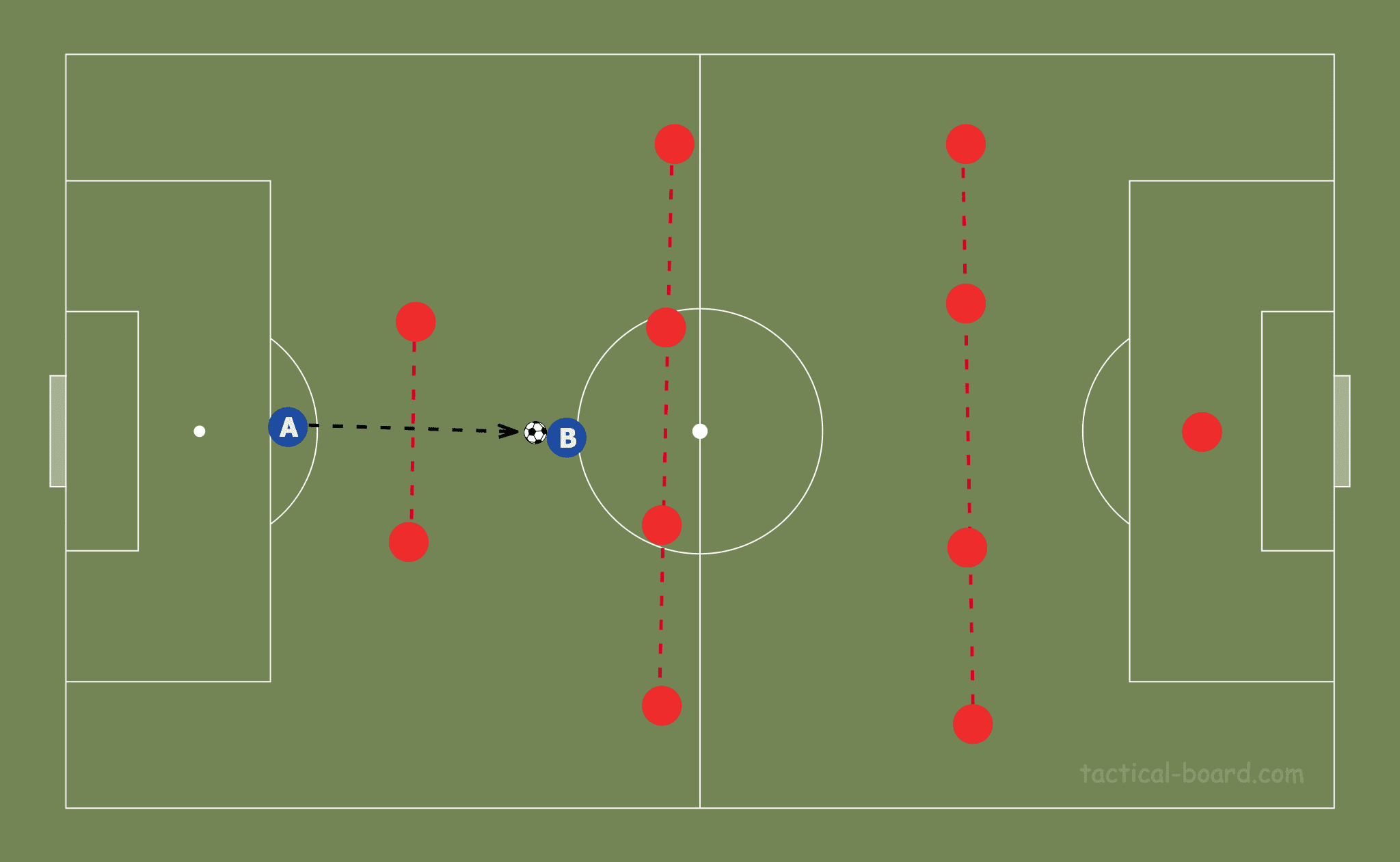
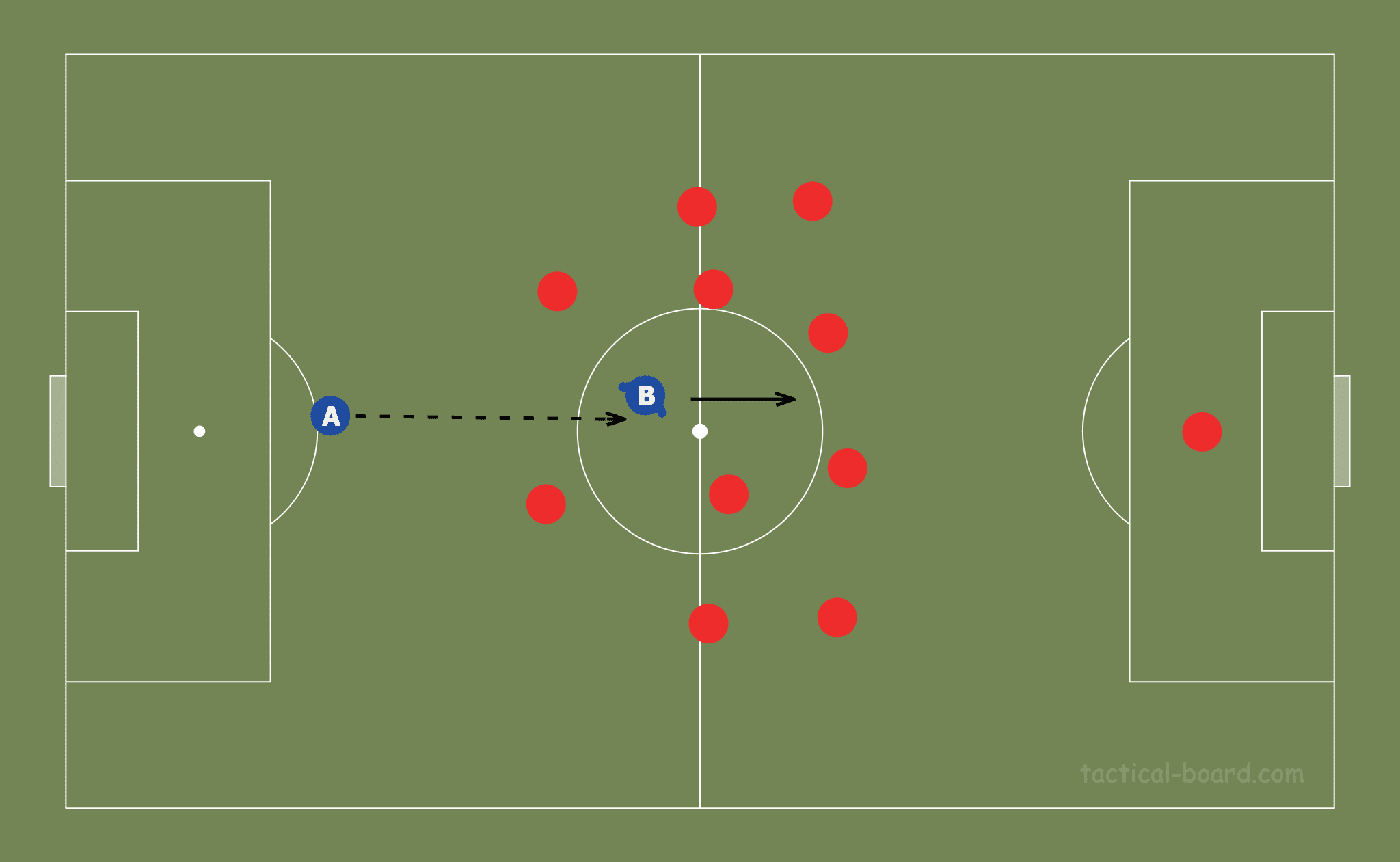
To break a line is to advance the ball between two opposing players through the line created between them.
As shown in the example below, the blue team has broken a line as player A passes the ball through the opponent's line to player B.
Opposition Compactness
There are two types of compactness that I'll discuss in this analysis: vertical compactness and horizontal compactness.
Horizontal compactness is the space between players in each line, while vertical compactness is the space between the lines themselves.
The image below shows an example of horizontal compactness (black) and vertical compactness (white).
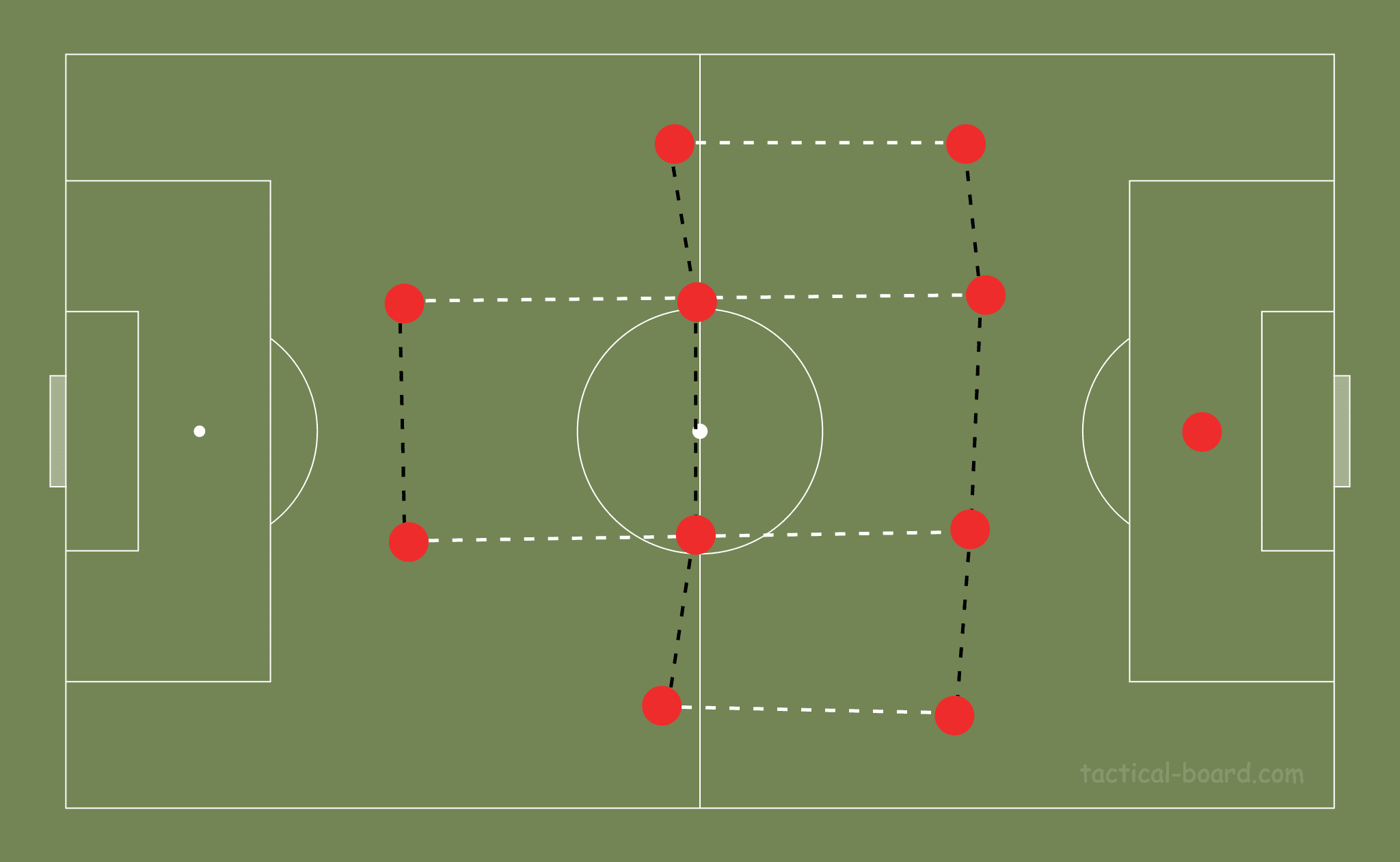
Horizontal compactness is relevant as the more horizontally compact an opposition line is, the harder it is to play through it.
Vertical compactness is relevant as it affects the amount of space between the lines; the more vertically compact the opposition, the harder it is to find space between lines.
Another factor that affects vertical compactness is the number of lines there are in an opposition block.
The more lines there are, the more vertically compact the team is.
The image below illustrates the vertical and horizontal compactness of a 4-diamond-2 formation.
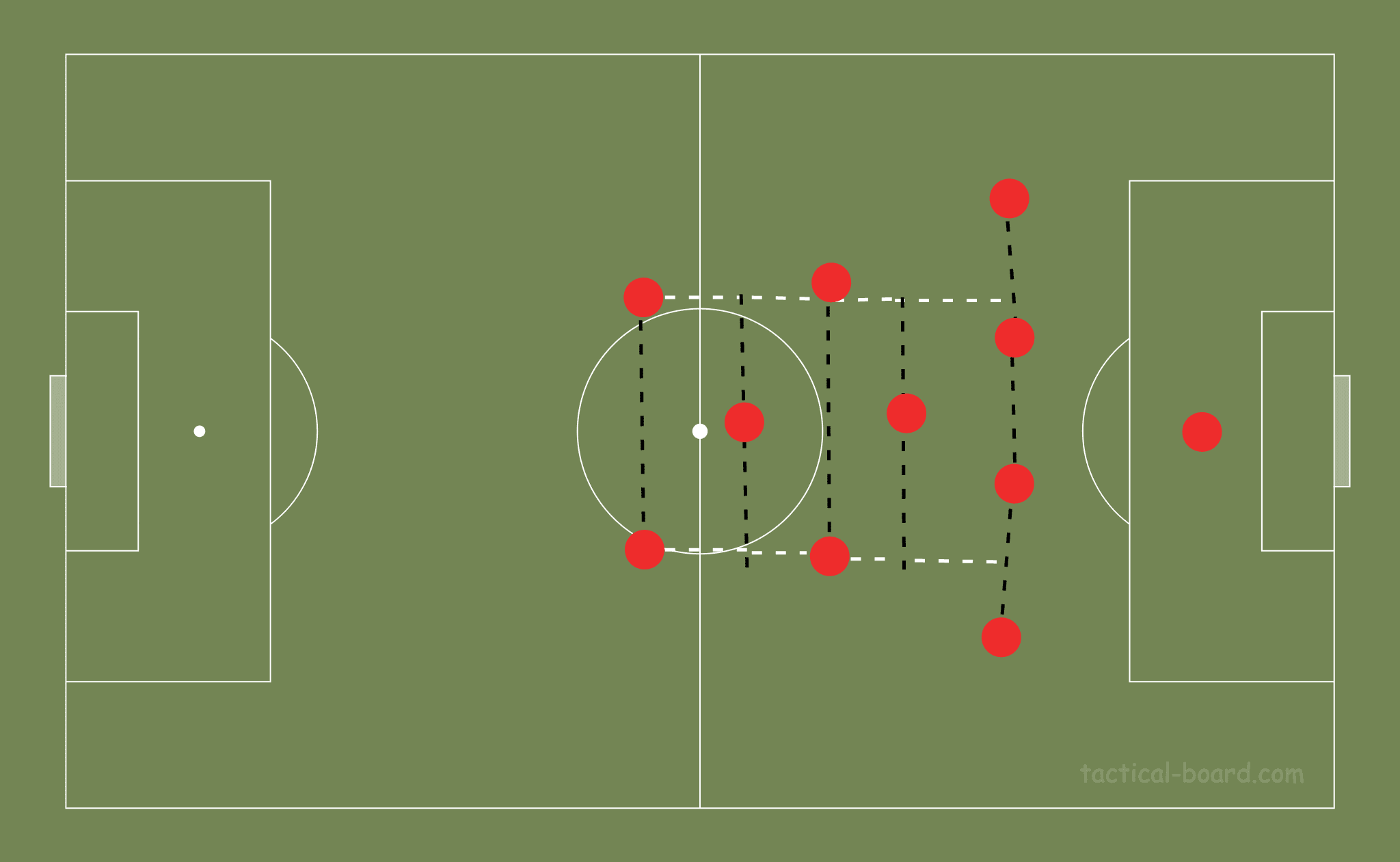
The shape above is both vertically and horizontally compact, with additional players in midfield.
However, the more lines there are in a defensive shape, the narrower the shape becomes, leading me to the next section.
Undoing Compactness
To increase the efficiency of playing through lines, we can attempt to undo compactness in players' movements.
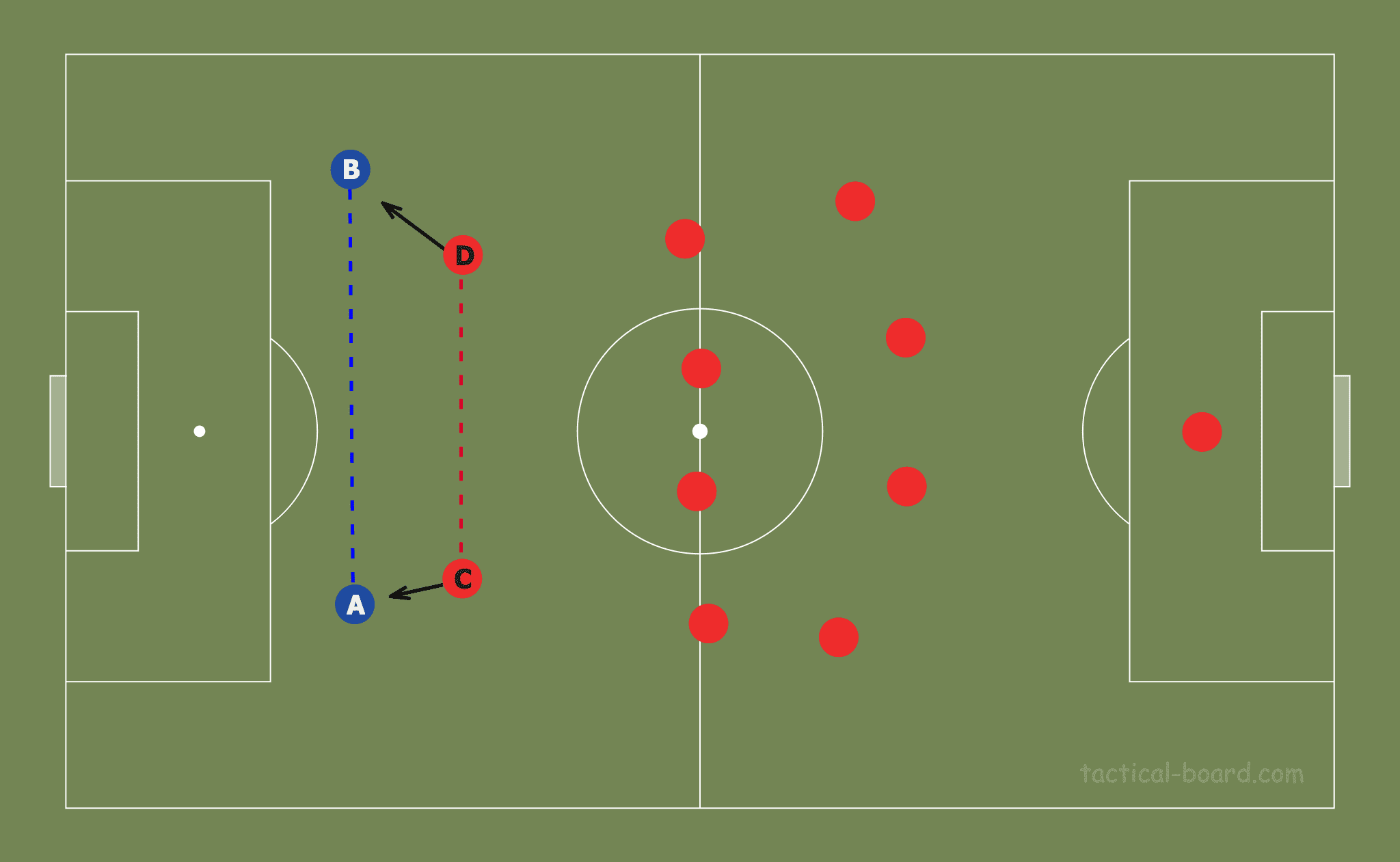
In the example below, Blue players A and B are narrow, allowing Red players C and D to maintain horizontal compactness.
This leaves the space to play through the line very narrow, while decreasing the chance of successfully playing through.
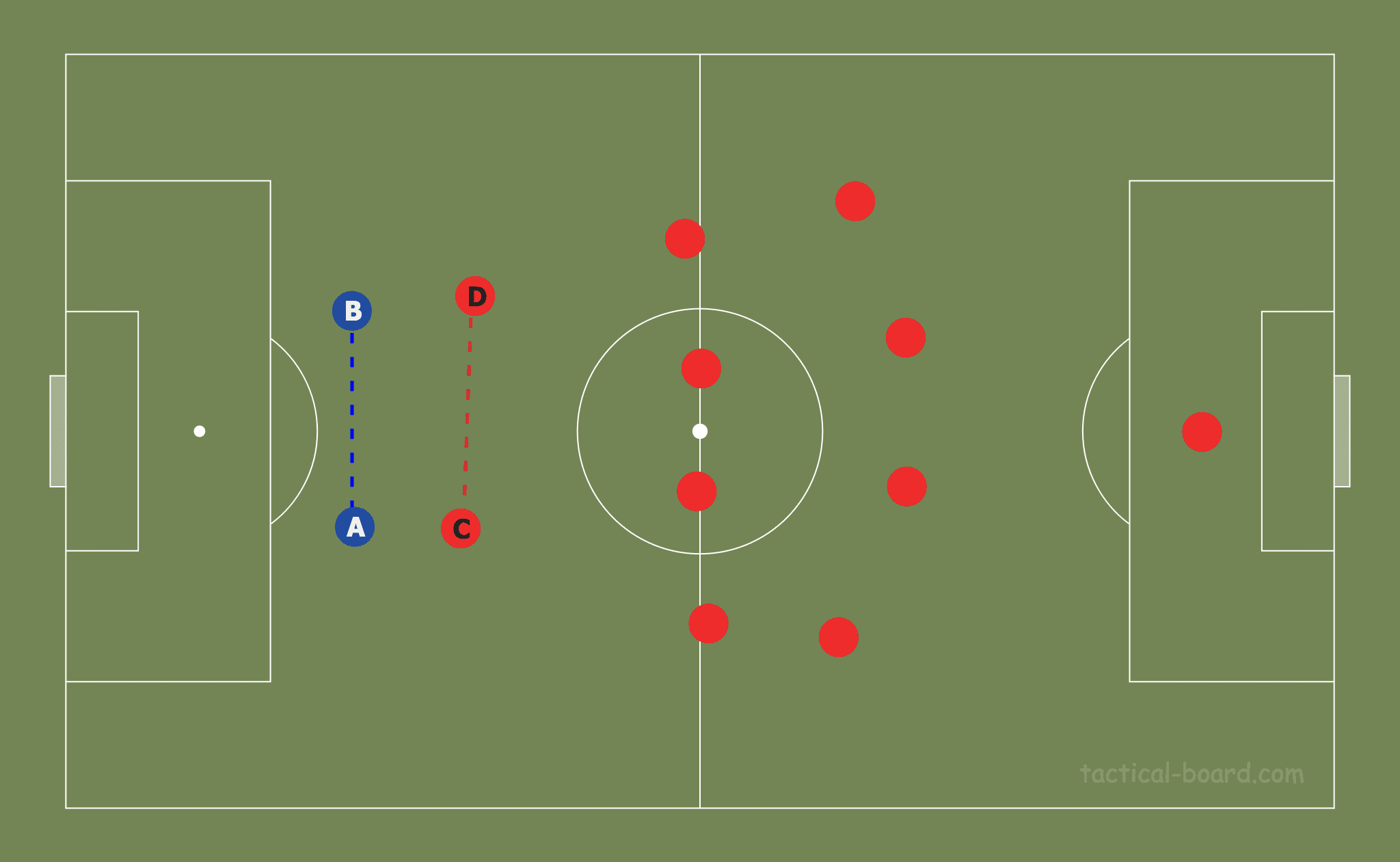
To counter horizontal compactness, we can utilise width to stretch the opponent's lines and create larger gaps through which to play.
In the example below, Blue players A and B are positioned wider, forcing Red B and C to decrease their horizontal compactness to play more easily.
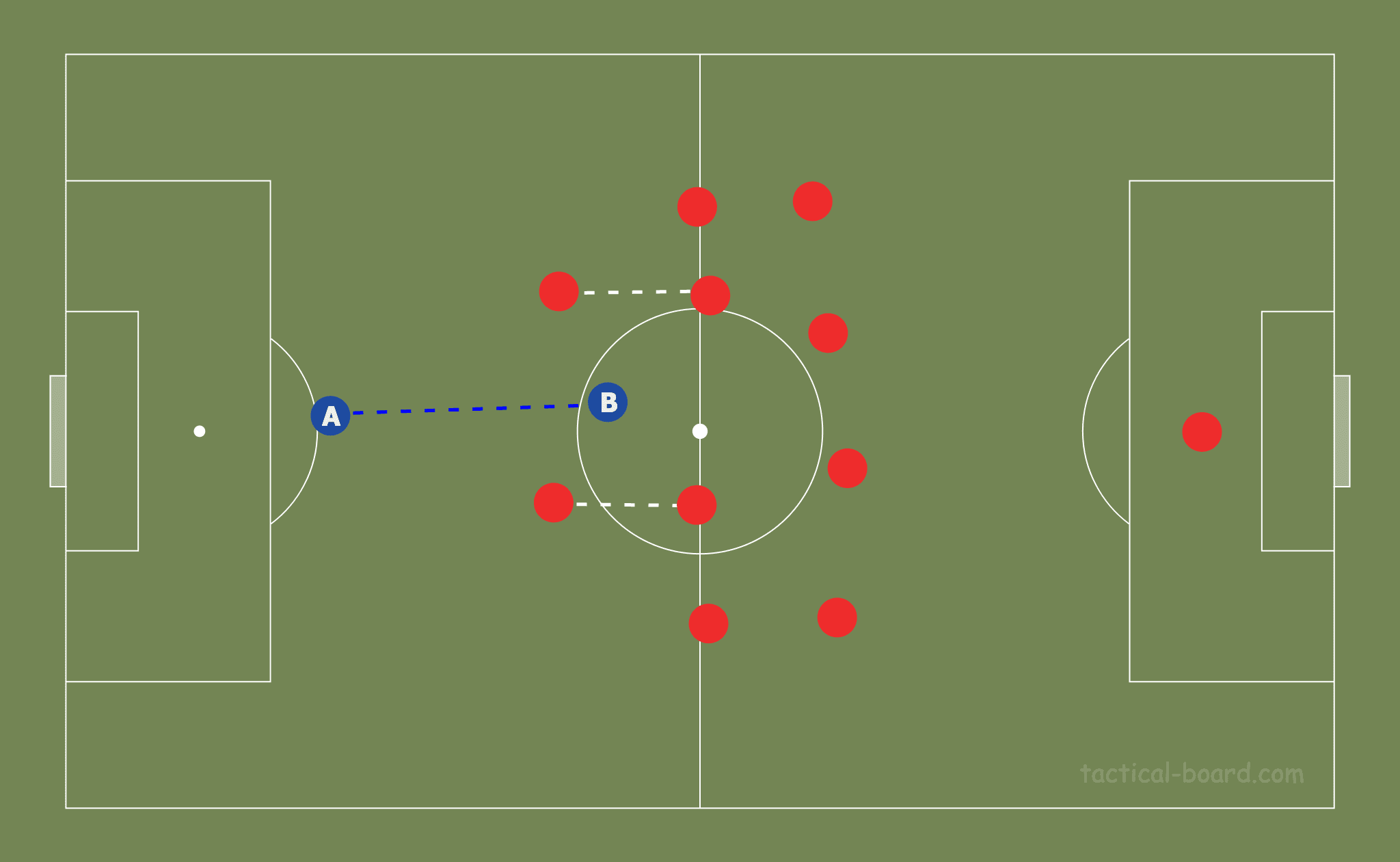
The way we can manipulate opposition vertical compactness is by utilising depth.
In the following example, we can see how Blue players A and B are positioned with limited depth, allowing the Red team to maintain vertical compactness and decrease the space between their lines.
Using depth to counter vertical compactness is particularly effective against teams that employ an aggressive man-marking system, as it is easy to manipulate their positioning with effective movements.
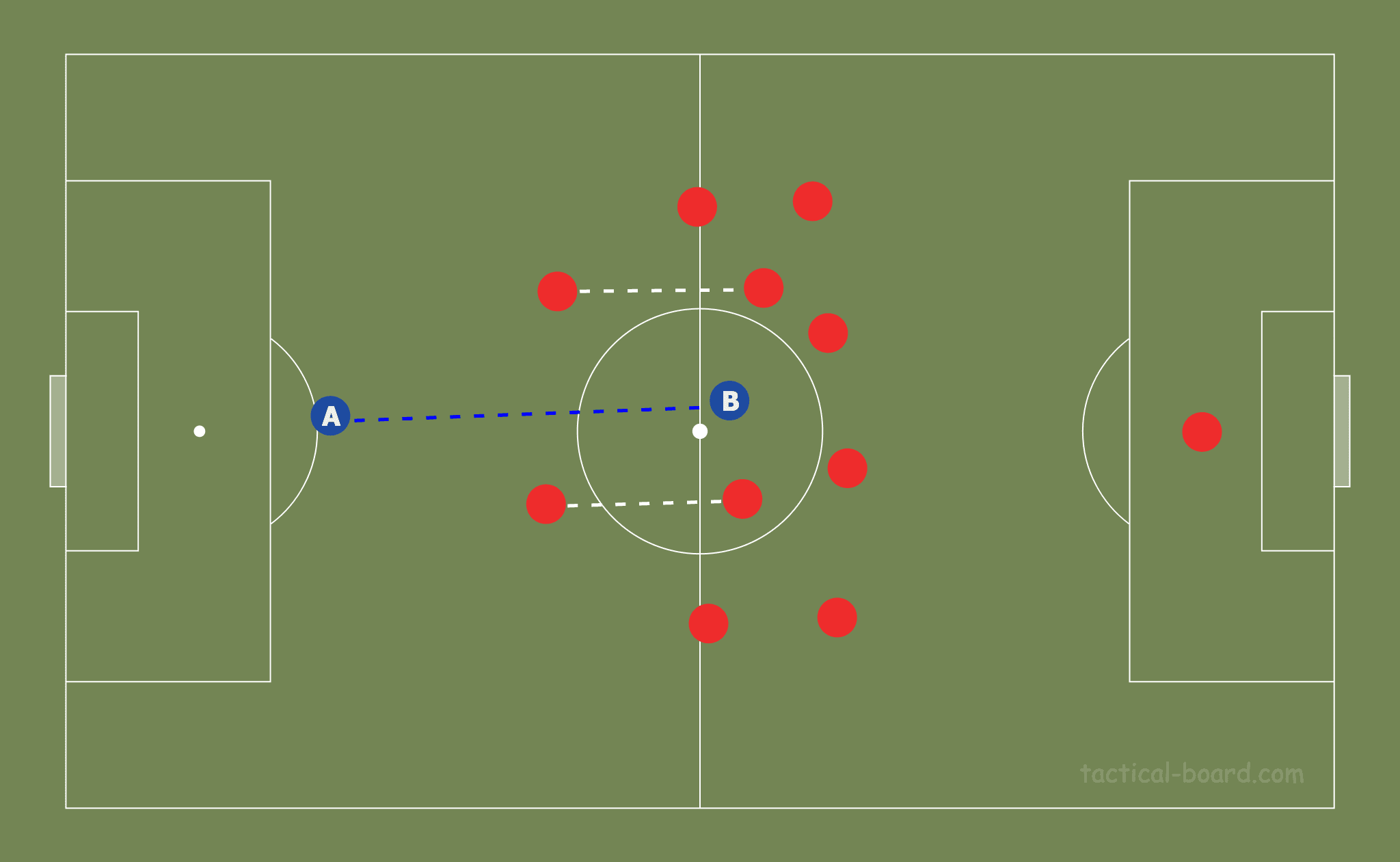
In the following example, the Blue team utilised depth to decrease the opponent's vertical compactness.
Player B is much deeper, dragging the opposition players with him and creating more space between the lines.
Important Technical Points When Breaking Lines
Although this is a tactical theory piece, the technical aspects of breaking the lines are critical.
The technical points we'll look at are the weight of the pass and the quality of the touch.
The weight of the pass is important.
A pass that is too slow is likely to be intercepted, while a pass with too much pace is hard for the receiving player to control.
The importance of control when receiving a pass in between the lines cannot be overstated.
When a player between opposition lines receives a pass, he has inadvertently been placed in a pressing trap with opposition players surrounding him on all sides.
If a bad touch is taken, the player will immediately be swamped by multiple opponents looking to dispossess him.
Not only is the quality of the touch of high importance, but the direction of the touch is critical in successfully breaking opposition lines.
Passing between opposition lines is pointless if the player is forced to play the ball backwards again immediately.
The whole point of breaking lines is to advance possession in a progressive manner.
This is why the direction of the receiving player's first touch and, therefore, body position as the pass is played are imperative.
In the image below, we can see an example of a player facing the ball directly.
This forces him to play backwards, defeating the point of breaking lines.
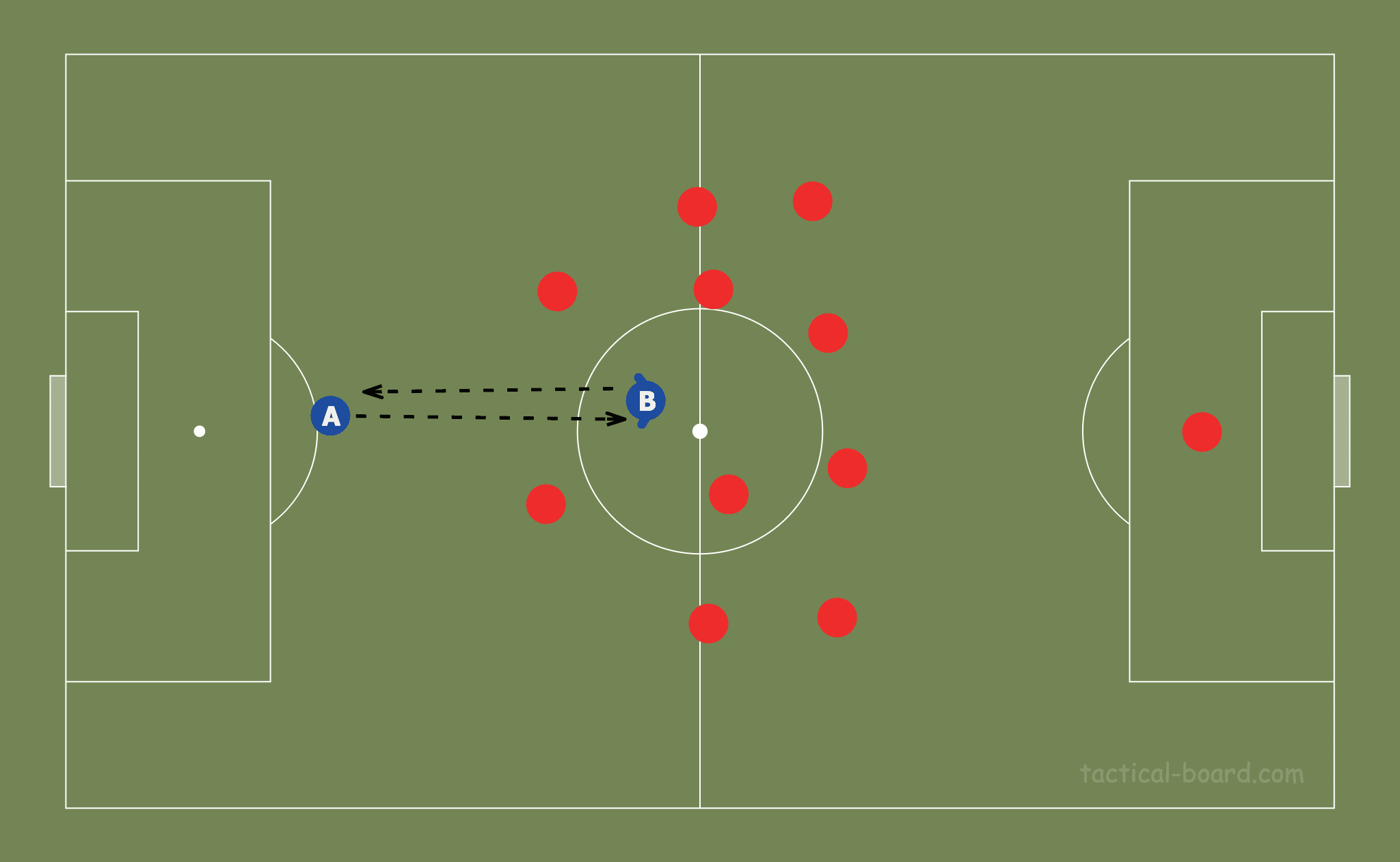
Below, we can see an example of good body positioning by Blue player B, who, this time, faces the pass at a slight angle, allowing him to receive on his further foot and face towards the opposition goal.
Rondo For Breaking Lines
As there are multiple facets to breaking lines effectively, it's essential that players are properly taught about the importance of positioning and are coached accordingly.
Coaching aspects with multiple dimensions can be beneficial in incorporating unopposed, semi-opposed, and opposed drills to integrate concepts gradually.
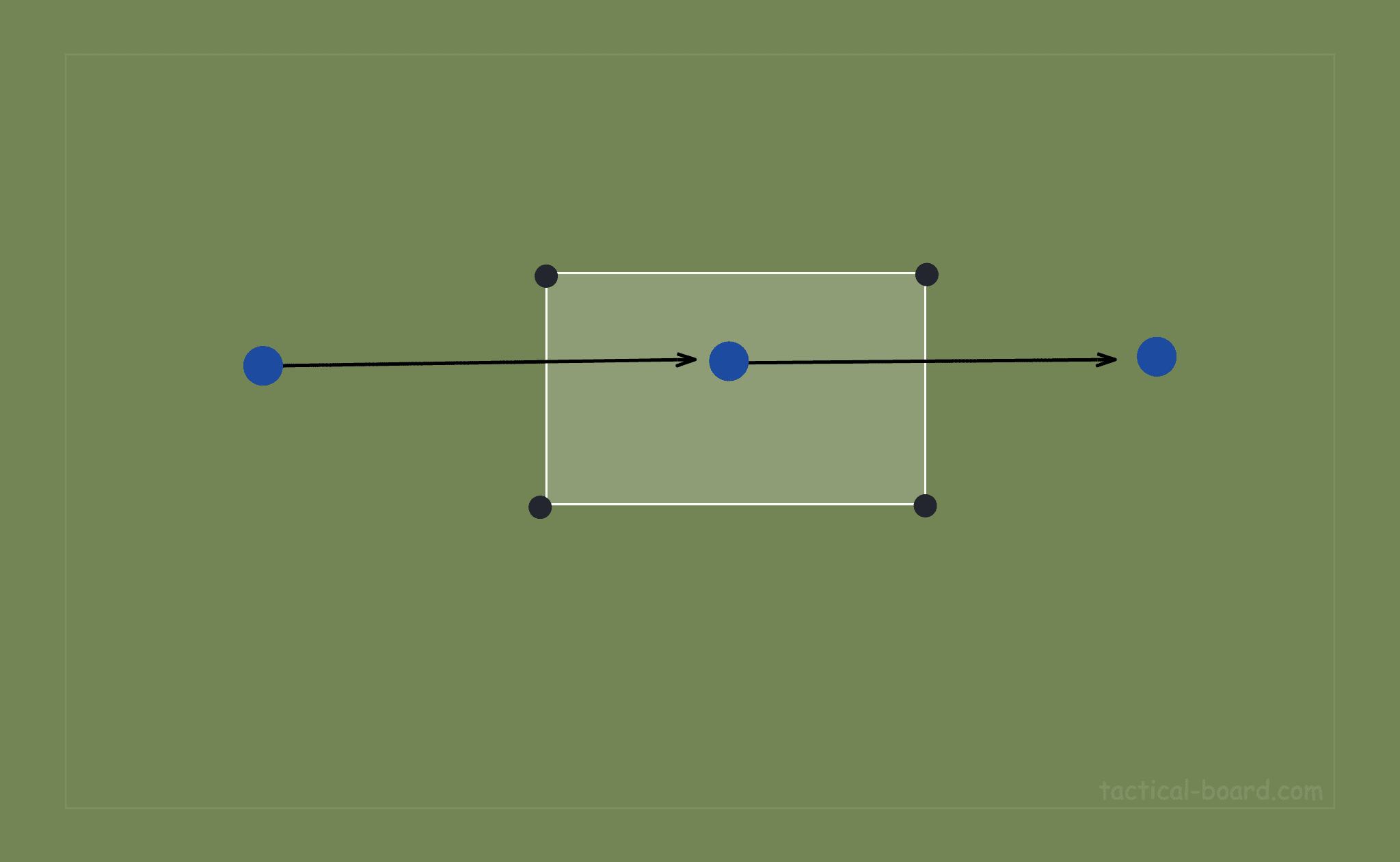
The first rondo is an unopposed drill where players receive the ball between lines created by cones, turn, and pass to another player, and the drill repeats.
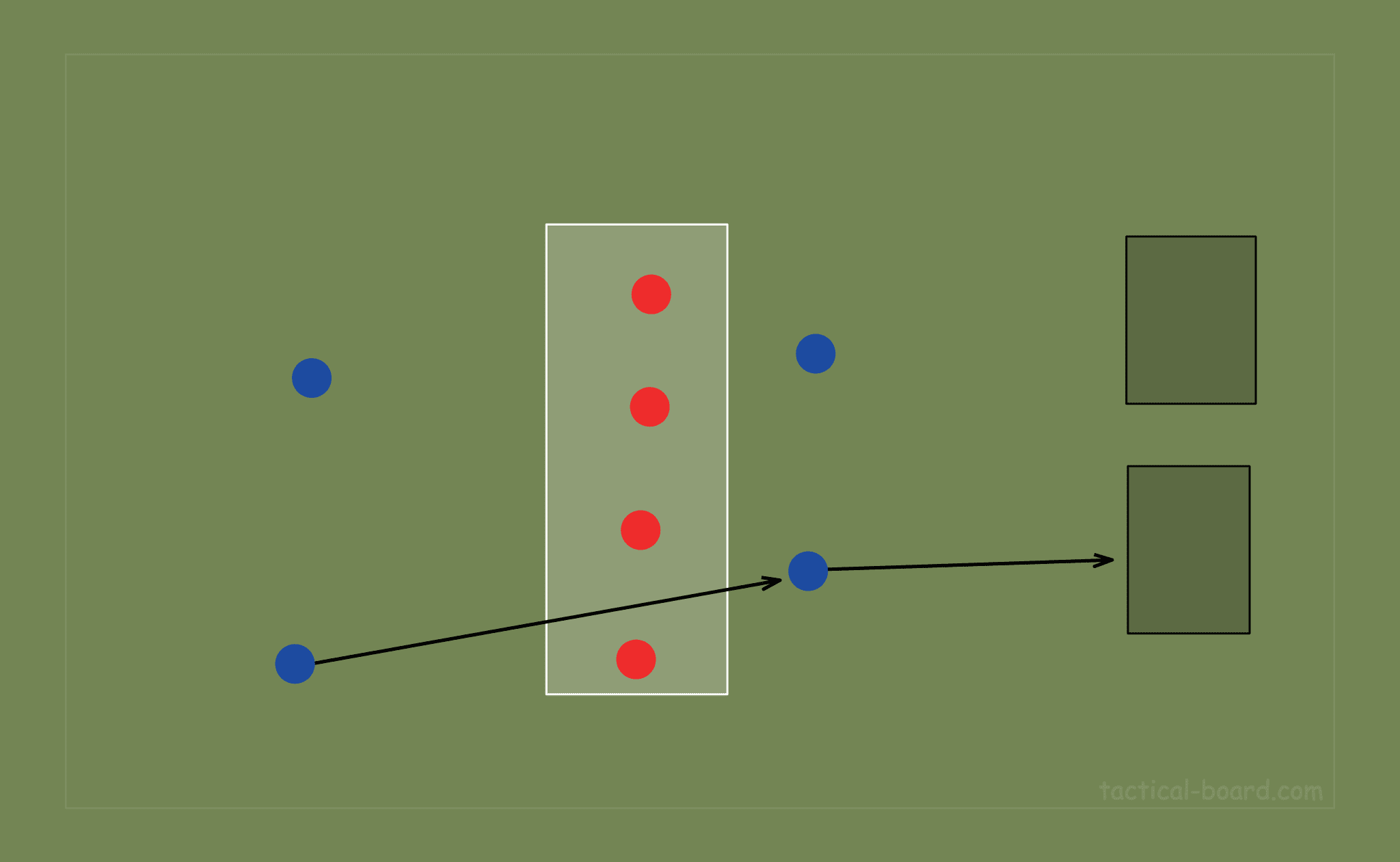
The semi-opposed drill below is an example of a small-sided game where players are encouraged to position themselves between the lines and make small movements to make themselves available.
The Blue players on one side are tasked with playing through the line to players on the other side of the line.
The Red team scores by intercepting passes and cannot leave their area marked as white.
The Blue team scores by scoring small goals, and coaches can limit the players to two touches to encourage them to take touches towards the goals.
The third drill is fully opposed and allows the defensive players to press.


![Scotland Vs Switzerland [0-3] UEFA Nations League 2026/2027: How Aggressive Pressing Backfired & Murat Yakin Took Advantage - Tactical Analysis](https://cdn.mymidnight.blog/77f959f119f4fb2321e9ce801e2f5163/size/w600/2026/10/Scotland-Vs-Switzerland-20262027---Tactical-Analysis.png)