
![Borussia Dortmund Vs Werder Bremen [2-2] Bundesliga 2026/2027: How Daniel Thioune Tactics Earned A Late Comeback With 29% Possession - Tactical Analysis](https://cdn.mymidnight.blog/77f959f119f4fb2321e9ce801e2f5163/size/w1000/2026/10/Borussia-Dortmund-vs-Werder-Bremen---Tactical-Analysis.png)
Borussia Dortmund Vs Werder Bremen [2-2] Bundesliga 2026/2027: How Daniel Thioune Tactics Earned A Late Comeback With 29% Possession - Tactical Analysis

Bundesliga leaders Borussia Dortmund dropped points for the first time this season on Friday, as Werder Bremen fought back from two goals down late on to earn a hard-fought point at Signal Iduna Park.
The first goal for either side came in the 80th minute, when left wing-back Daniel Svensson put Niko Kovač’s side ahead.
Nico Schlotterbeck’s 85th-minute header doubled the home side’s lead, before Werder Bremen quickly hit back via a well-hit Ludovit Reis strike.
Ex-Dortmund striker Niclas Füllkrug then lost his marker and headed home in stoppage time to complete an eventful final 15 minutes of action.
Werder Bremen had taken just three shots before the 80th minute, generating 0.67 xG.
They went on to shoot more than twice as many times in the final 15 minutes of the match, generating the same amount of xG in that period as they had in the rest of the contest.
They ended the match with a total of 29.32% possession, providing yet another reminder that it’s not about how much of the ball you have; it’s about how you use it when you do have it, and they did so very effectively in the end.
This Borussia Dortmund vs Werder Bremen tactical analysis examines how Daniel Thioune’s side managed to turn things around in the dying moments of Friday’s game, with the help of video and data analysis.
Borussia Dortmund Vs Werder Bremen Lineups & Formations
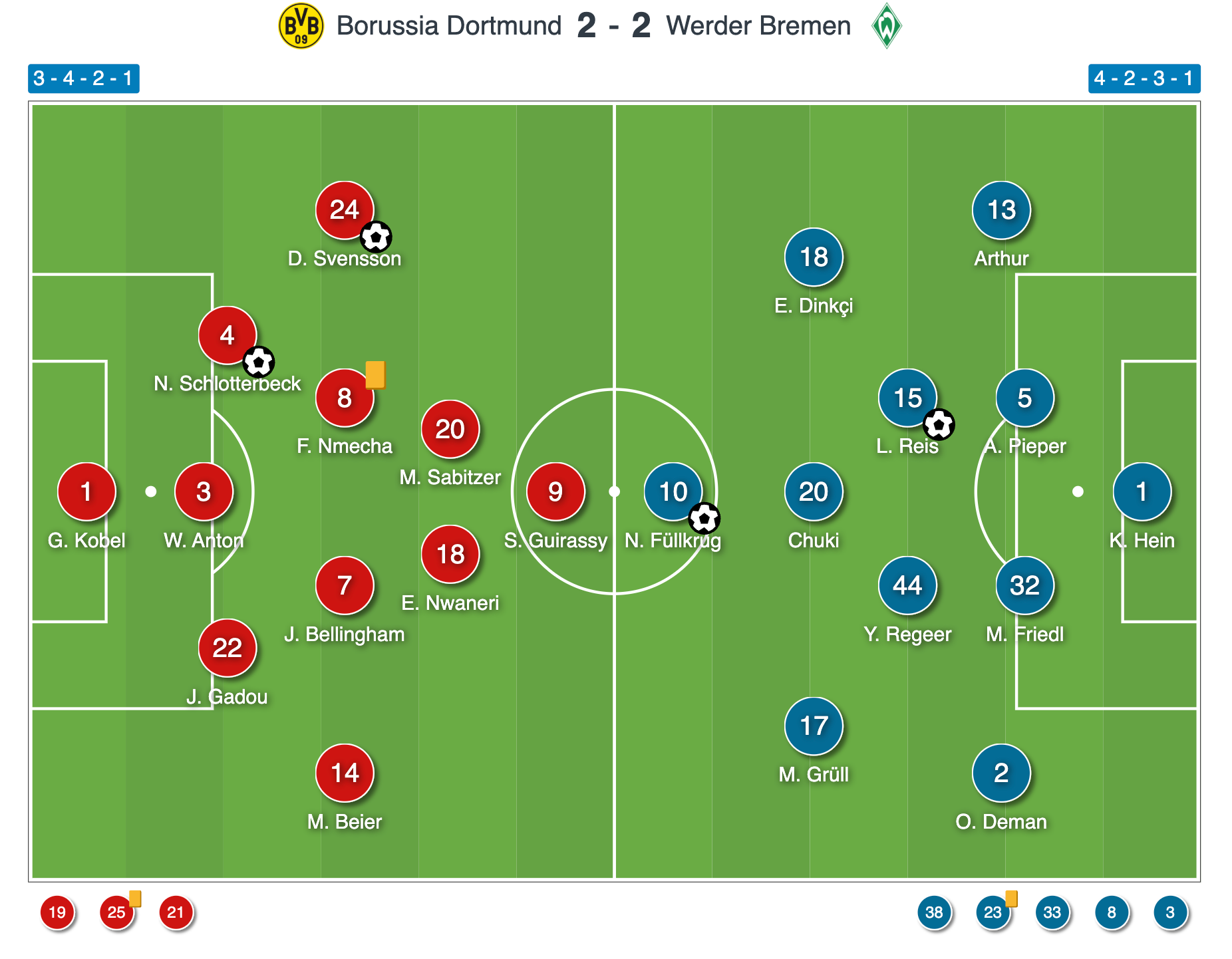
Borussia Dortmund Lineup Vs Werder Bremen
Niko Kovač set his team up in a 3-4-2-1 shape, with Gregor Kobel in goal behind a back three of Joane Gadou, Waldemar Anton and Nico Schlotterbeck.
Maximilian Beier and goalscorer Svensson started at right and left wing-back, with Jobe Bellingham and Felix Nmecha occupying the central midfield spots in between them behind a front three of Ethan Nwaneri, Marcel Sabitzer and Serhou Guirassy.
Kovač made three substitutions during the game, bringing on Fábio Silva for Ethan Nwaneri just after the hour mark and following that up with a double change in the 72nd minute that saw Konstantinos Karetsas and Joey Veerman come on for Sabitzer and Bellingham.
Werder Bremen Lineup Vs Borussia Dortmund
Daniel Thioune set Werder Bremen up in a 4-2-3-1 shape with Karl Hein in goal behind a back four made up of Arthur, Amos Pieper, Marco Friedl and Olivier Deman, from right to left.
Ludovit Reis and Youri Regeer occupied the central midfield positions, while Chuki started as the No. 10 behind right winger Eren Dinkçi, left winger Marco Grüll and centre-forward Niclas Füllkrug.
Thioune played all five of his substitutions, the first of which he was forced into in the 19th minute when centre-back Pieper was withdrawn for Oskar Wójcik.
Then, in the 65th minute, Arthur and Youri Regeer came off for Mitchell Weiser and Dariusz Stalmach, before Thioune’s final double change in the 81st minute saw Paul Erevbenagie and Mick Schmetgens introduced for Chuki and Eren Dinkçi.
Werder Bremen Pressing Intensity
After Werder Bremen went behind, they began to press with much more intensity than they had in earlier parts of the game, determined to not roll over for the league leaders and ensure that they fought for their team until the final whistle.
Werder Bremen PPDA Vs Borussia Dortmund
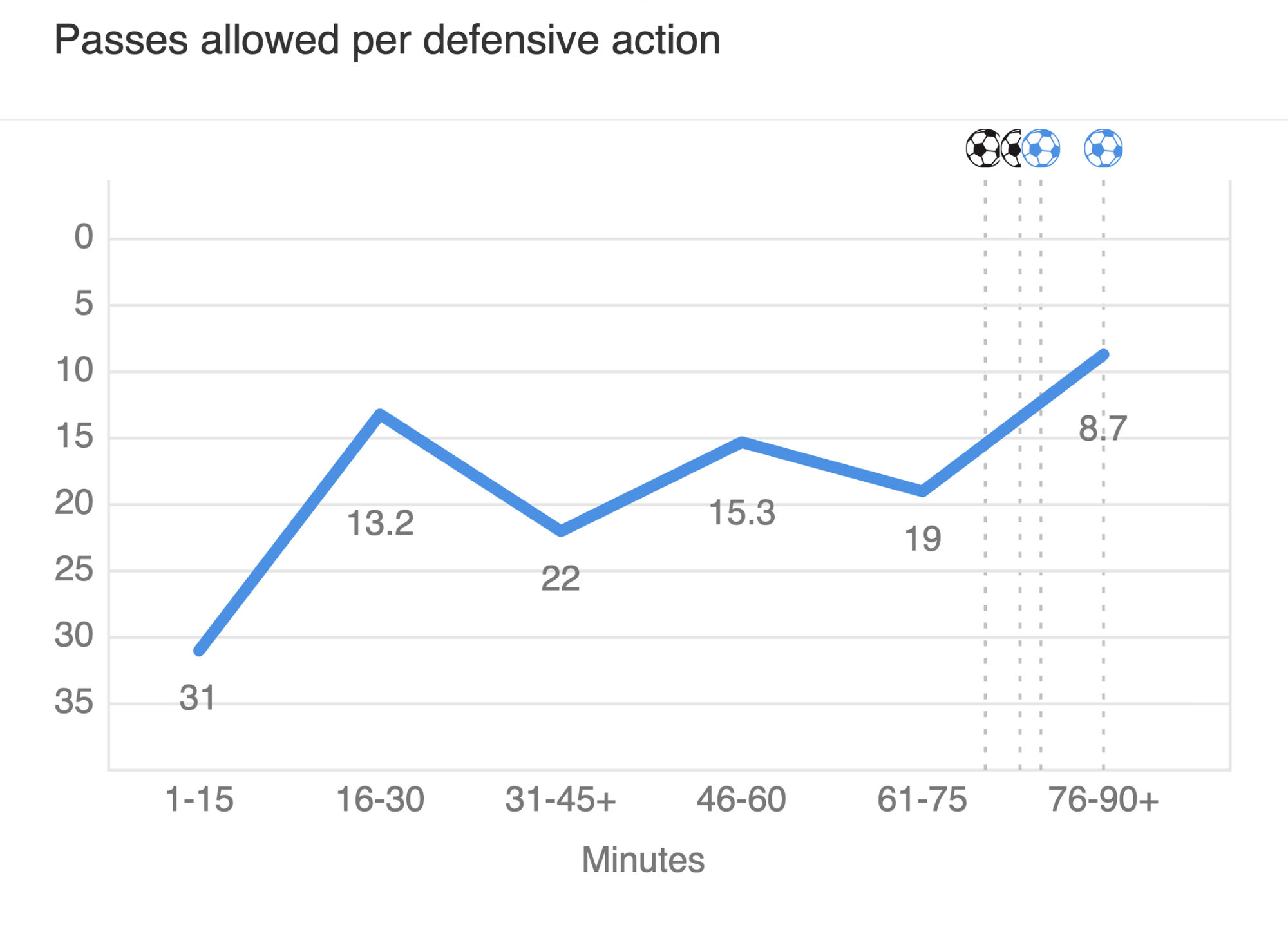
Figure 1 displays Werder Bremen’s PPDA (with a lower number indicating higher pressing intensity) throughout Friday evening’s game.
Their lowest number was recorded in the final portion of the match, for much of which they trailed Dortmund.
Werder Bremen Ball Possession Vs Borussia Dortmund
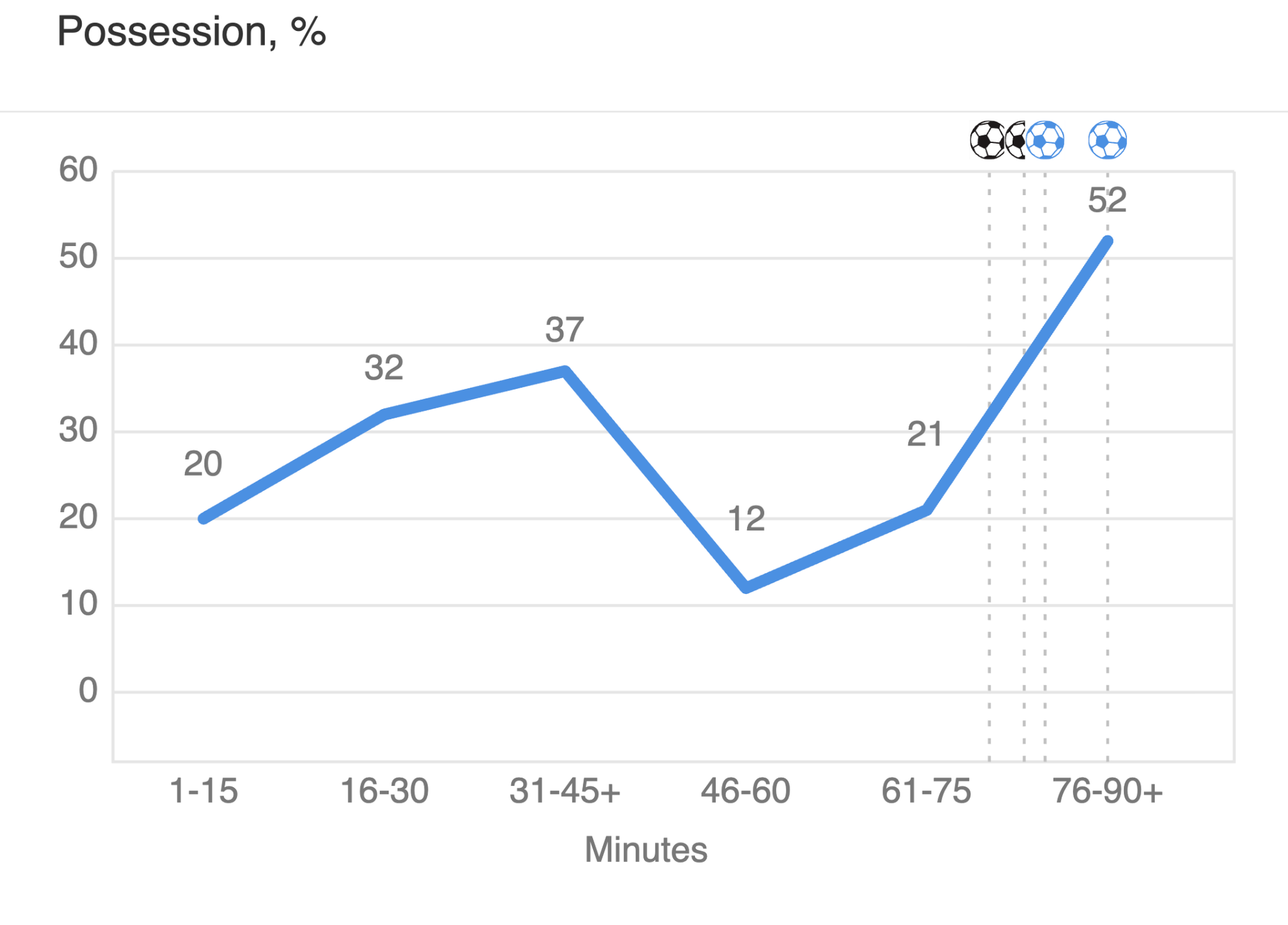
That jump in pressing intensity coincided with a much larger share of ball possession, with the visitors beginning to enjoy the majority of the ball for the first time in the match.
Werder Bremen Long Pass % Vs Borussia Dortmund
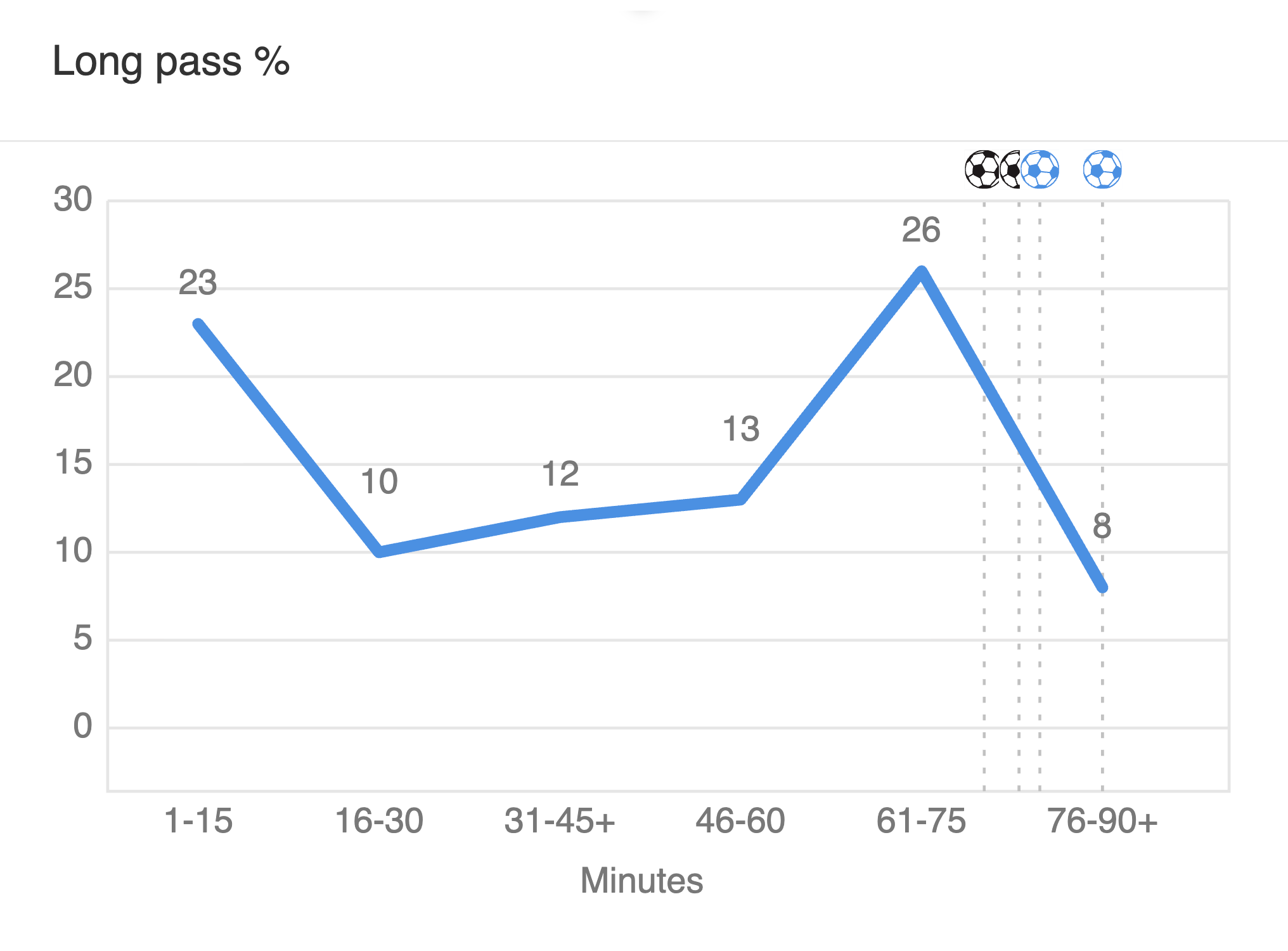
At the same time, Werder Bremen’s long pass % dropped off considerably.
As Werder Bremen took the calculated risk of pressing higher in the dying moments of the game, they began forcing turnovers further away from their own goal, regaining possession high and enabling themselves to put together intricate, short passing sequences, playing inside Dortmund’s half rather than playing out from the back against Niko Kovač’s high press.
The potential risk was Dortmund slicing them open via on-the-ball quality and running up the score, but the upside was, as we ultimately witnessed on the pitch, more goalscoring opportunities for the defiant visitors.
Opta’s recovery data records that Werder Bremen made 41 recoveries, two of which occurred in the attacking third, over the course of Friday’s match.
Seven of those recoveries, including both attacking-third recoveries, came in the final 15 minutes of the contest.
Meanwhile, they recorded 29 defensive-third recoveries over the whole match, but only made three in the last 15 minutes.
That shift in recovery location is notable.
Though the late-game sample is small, the data is consistent with the observed change in Die Grün-Weißen’s approach.
The effectiveness of their late-game shift in approach is reflected in their tackle success rate of 60% in the final 15 minutes versus 55% for the full 90.
We have an example of their higher line later on in the game below.
Their more aggressive out-of-possession approach, combined with high energy and intensity, successfully pinned Borussia Dortmund back, disturbed their attempted build-up and ball progression, thus generating high regains and creating goalscoring opportunities.
![Croatia Vs Spain [1-2] UEFA Nations League 2026/2027: How Slaven Bilić High Pressing Tactics Troubled Spain - Tactical Analysis](https://cdn.mymidnight.blog/77f959f119f4fb2321e9ce801e2f5163/size/w600/2026/10/Croatia-Vs-Spain--1-2--UEFA-Nations-League-20262027---Tactical-Analysis.png)

![Scotland Vs Switzerland [0-3] UEFA Nations League 2026/2027: How Aggressive Pressing Backfired & Murat Yakin Took Advantage - Tactical Analysis](https://cdn.mymidnight.blog/77f959f119f4fb2321e9ce801e2f5163/size/w600/2026/10/Scotland-Vs-Switzerland-20262027---Tactical-Analysis.png)
![Olympique De Marseille Vs PSG [1-2] Ligue 1 2026/2027: How Bruno Génésio Transitions Troubled PSG - Tactical Analysis](https://cdn.mymidnight.blog/77f959f119f4fb2321e9ce801e2f5163/size/w600/2026/09/Marseille-Vs-PSG-2026_2027---Tactical-Analysis.png)
![Fulham Vs Manchester United [1-1] Premier League 2026/2027: How Álvaro Arbeloa Tactics Exposed The Red Devils' Problems - Tactical Analysis](https://cdn.mymidnight.blog/77f959f119f4fb2321e9ce801e2f5163/size/w600/2026/09/Fulham-FC-Vs-Man-United-2026_2027---Tactical-Analysis.png)
![AS Roma Vs Inter Milan [2-2] Serie A 2026/2027: When Undefeated Giallorossi Attack Met Nerazzurri Comeback Resilience - Tactical Analysis](https://cdn.mymidnight.blog/77f959f119f4fb2321e9ce801e2f5163/size/w600/2026/09/AS-Roma-Vs-Inter-Milan-2026_2027---Tactical-Analysis.png)
![Real Sociedad Vs Bournemouth [1-2] Europa League 2026/2027: How Do Marco Rose Pressing Tactics Work? - Tactical Analysis](https://cdn.mymidnight.blog/77f959f119f4fb2321e9ce801e2f5163/size/w600/2026/09/Real-Sociedad-Vs-Bournemouth-20262027---Tactical-Analysis-1.png)
![AC Milan Vs Benfica [0-2] Europa League 2026/2027: How Marco Silva Tactics Exposed Rúben Amorim Defensive Problems - Tactical Analysis](https://cdn.mymidnight.blog/77f959f119f4fb2321e9ce801e2f5163/size/w600/2026/09/AC-Milan-Vs-Benfica-20262027---Tactical-Analysis.png)