Nathaniel Brown Scout Report At Bayern Munich 2026/2027: A New Left-Back For Vincent Kompany Tactics – Player Analysis
New Bayern Munich signing Nathaniel Brown is a versatile German left-back. This scout report analyses his tactical role, pace, ball carrying and attacking movement, areas for improvement in tight spaces, and whether he is a strong fit for Vincent Kompany.

Who Is Nathaniel Brown?
In the transfer market, some deals happen off the back of a player's name or numbers, while others are easily understood simply by looking at the team's needs.
Nathaniel Brown's move to Bayern Munich falls into the latter category, but it also carries more weight than simply being the acquisition of a new left-back.
The 23-year-old Germany international moved from Eintracht Frankfurt to the Bundesliga champions on a contract running until June 2031, after two seasons in which he impressed with his speed, attacking prowess, and versatility.
Crucially, Brown didn't arrive in Munich as a long-term project; he has already become a German international, participating in the 2026 FIFA World Cup, where he scored and assisted.
What makes this deal interesting is that FC Bayern weren't simply looking for a left-back.
The club already had several options for that position, but some of them weren't natural left-backs; Josip Stanišić is more comfortable on the right, and Hiroki Ito is primarily a centre-back.
Brown came in to offer something different: a natural left-back who could also play as a wing-back, on the flank, and even switch to the other side when needed.
In this Nathaniel Brown scout report and player analysis, we examine why Vincent Kompany targeted him to become a key player in the squad.
Nathaniel Brown Tactical Role
The most important point in understanding Nathaniel Brown is not to treat him as a traditional left-back.
His main position is clear, but his style of play allows him to move between different levels on the flank.
At Frankfurt, he appeared as a left-back but also played as a wing-back, sometimes advancing into higher areas of the pitch; in some situations, he was used more centrally during possession phases.
Bayern Munich themselves describe him as capable of playing as a full-back or wing-back.
This flexibility is crucial to Kompany's system, because a full-back in a team like Bayern Munich doesn't have a fixed role throughout the match.
During the build-up play, he might need to stay wide to stretch the pitch or move inside to become an extra player in the attacking phase.
When the ball reaches the final third, he can transform into a player who attacks the space behind the wing or pushes into the penalty area.
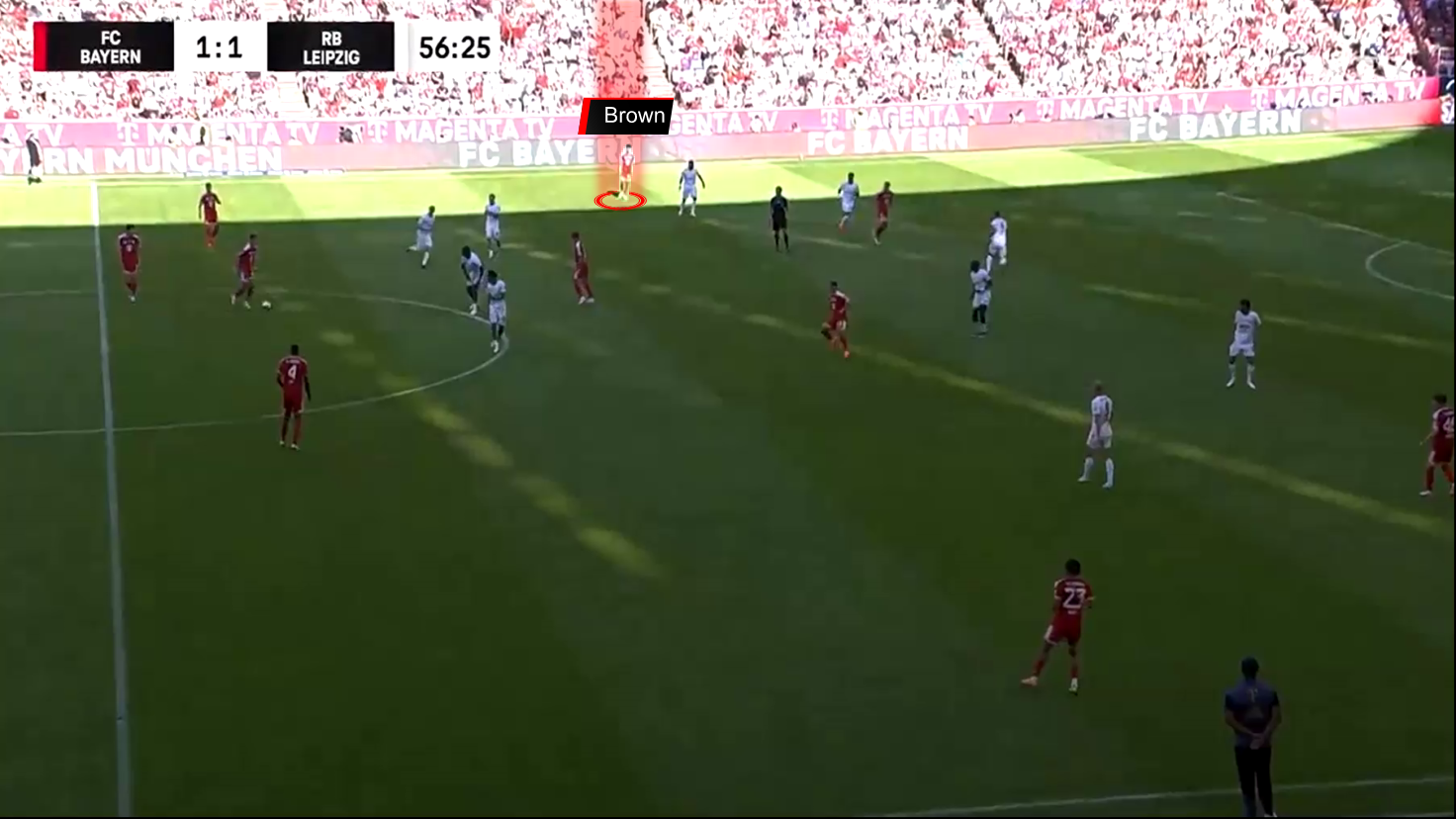
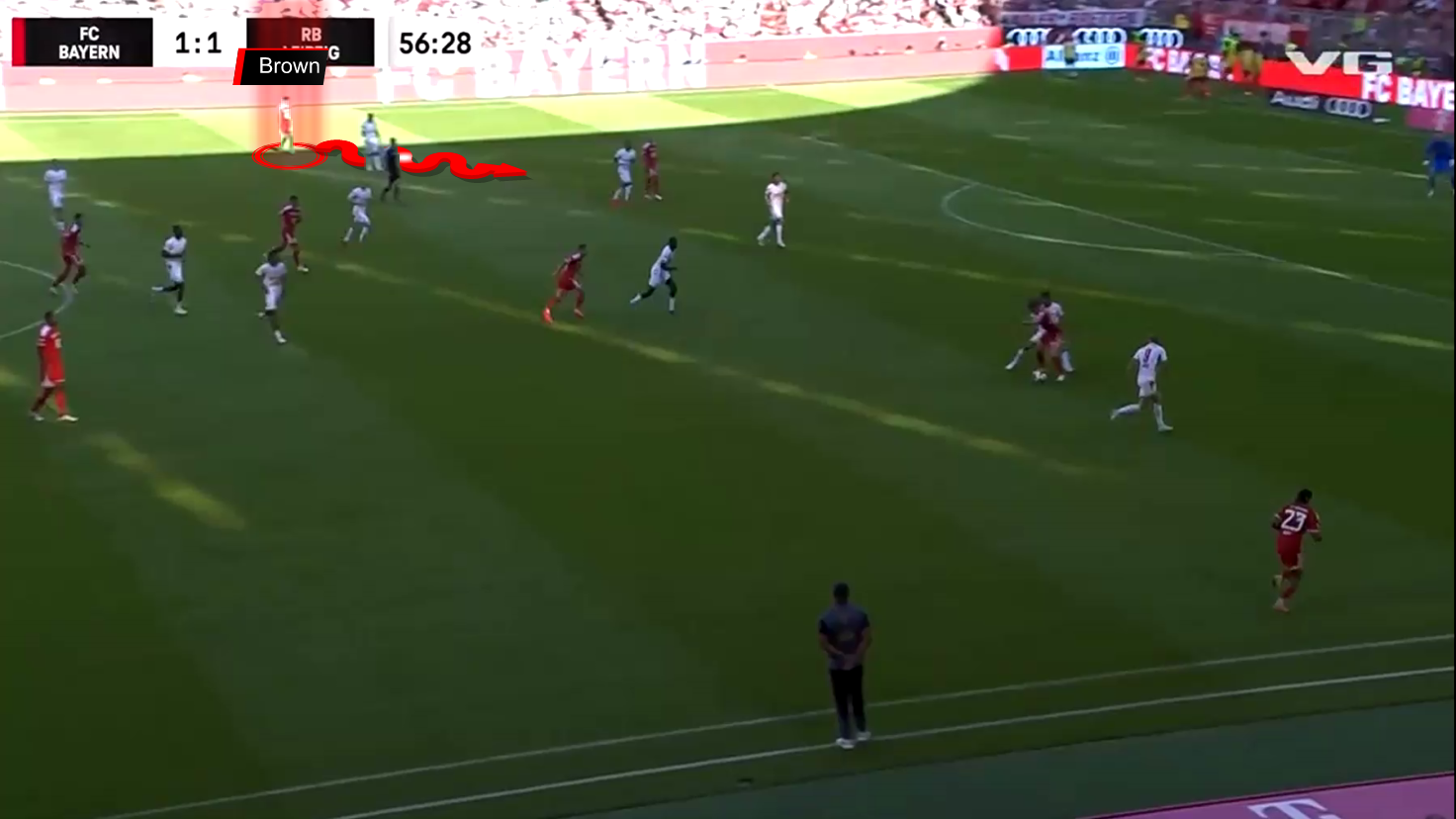
Brown continues to widen the field while advancing into the middle and final third.
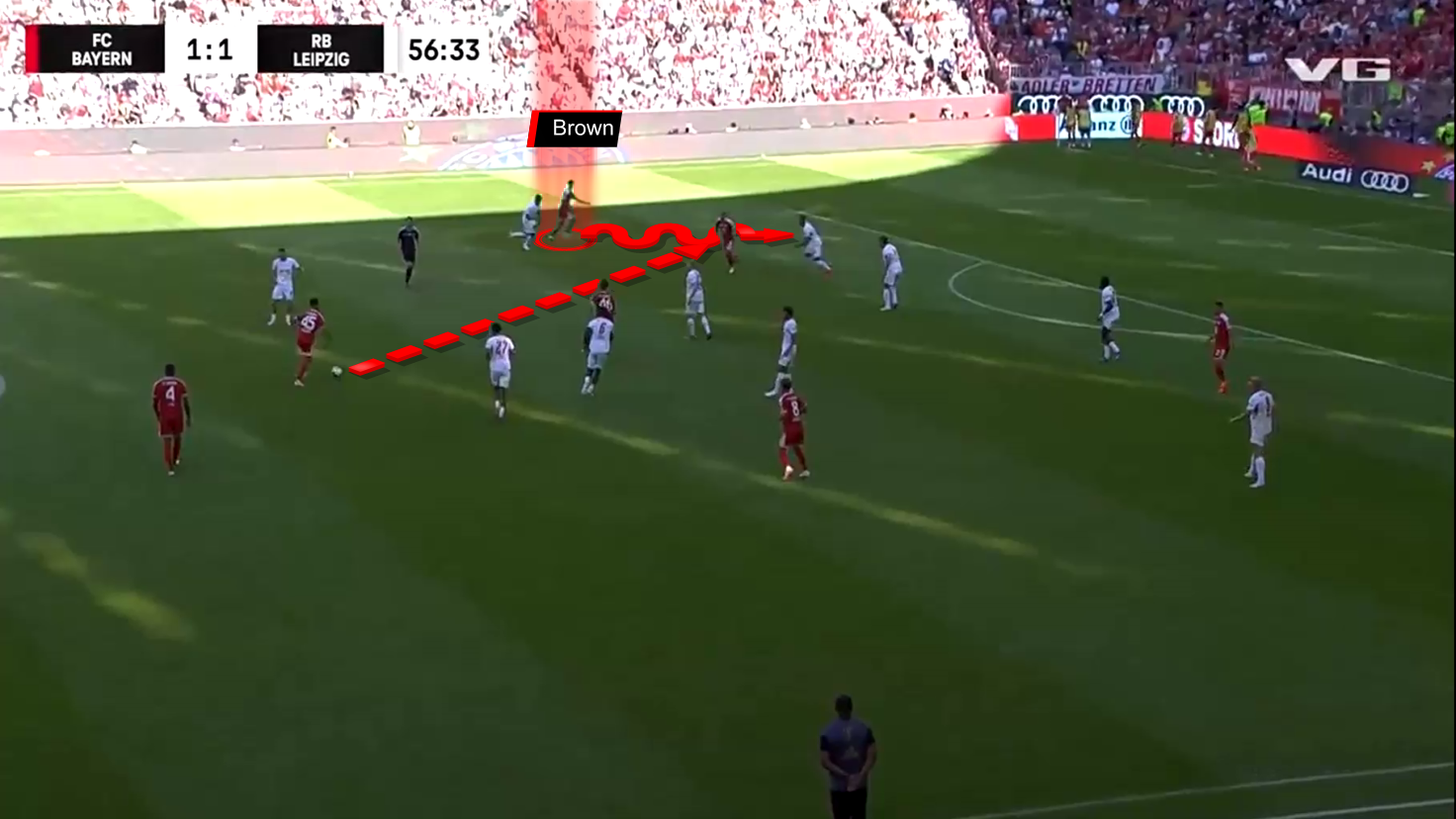
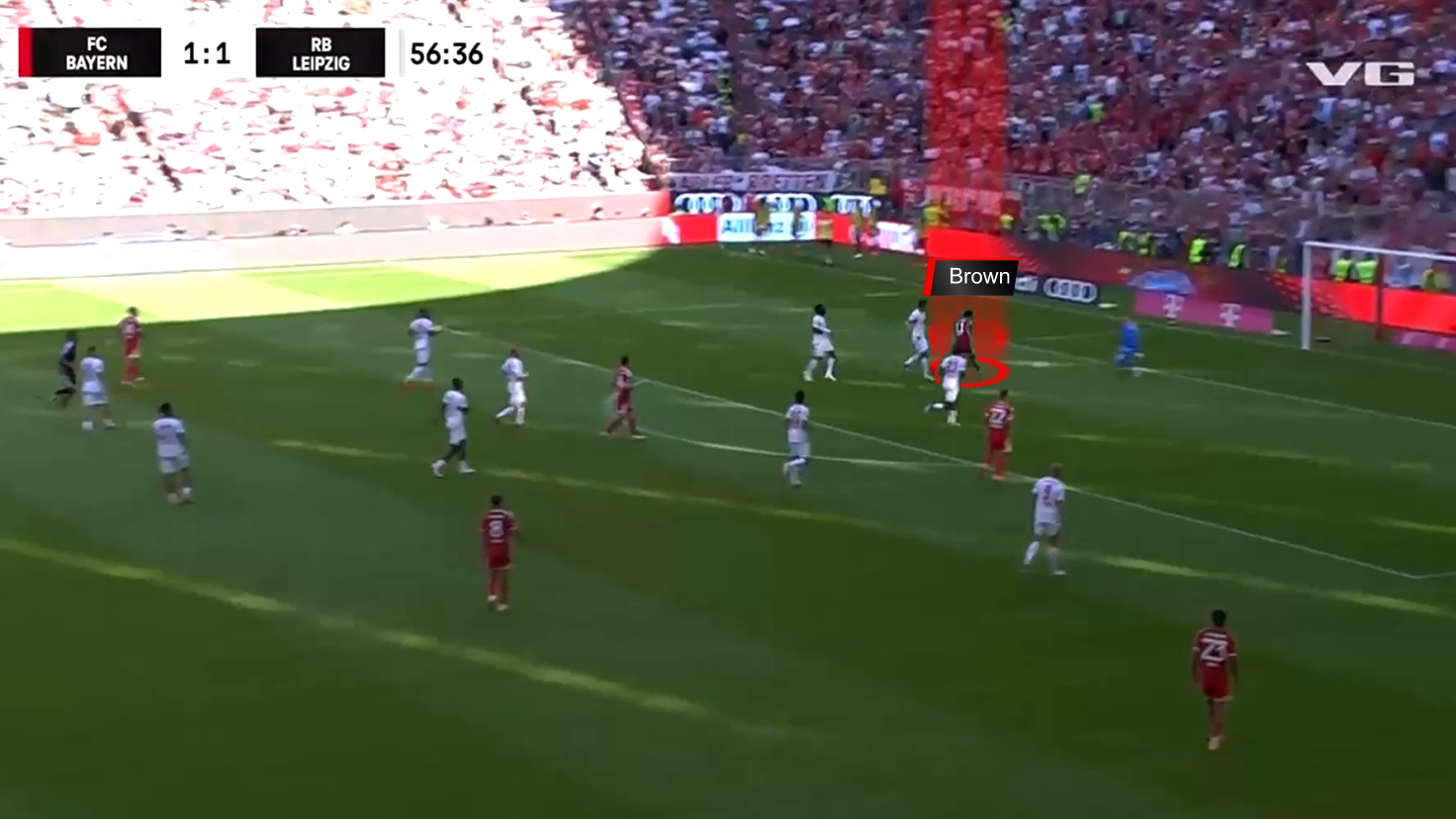
He requests the ball while moving behind the right-back on the blind side, receives the ball, shoots, and scores.
Therefore, his tactical value does not lie in his position on paper, but rather in his ability to move from full-back to attacking full-back to wing-back without looking out of position.
Nathaniel Brown In Build-Up & Progression
In the build-up phase, Nathaniel Brown can offer Bayern Munich more than one option.
When the team builds from the back, he can maintain width on the left flank, forcing the opposing winger to decide whether to come out and challenge him or stay close to the Bayern Munich player positioned inside.
This type of positioning is crucial for a team that wants to create space inside by spreading its players horizontally.
But Brown doesn't need to stay on the sidelines all the time.
During his time at Eintracht Frankfurt, there were instances where he came short in more central positions during possession to support the build-up play, something Bayern themselves noted in their analysis of Eintracht Frankfurt.
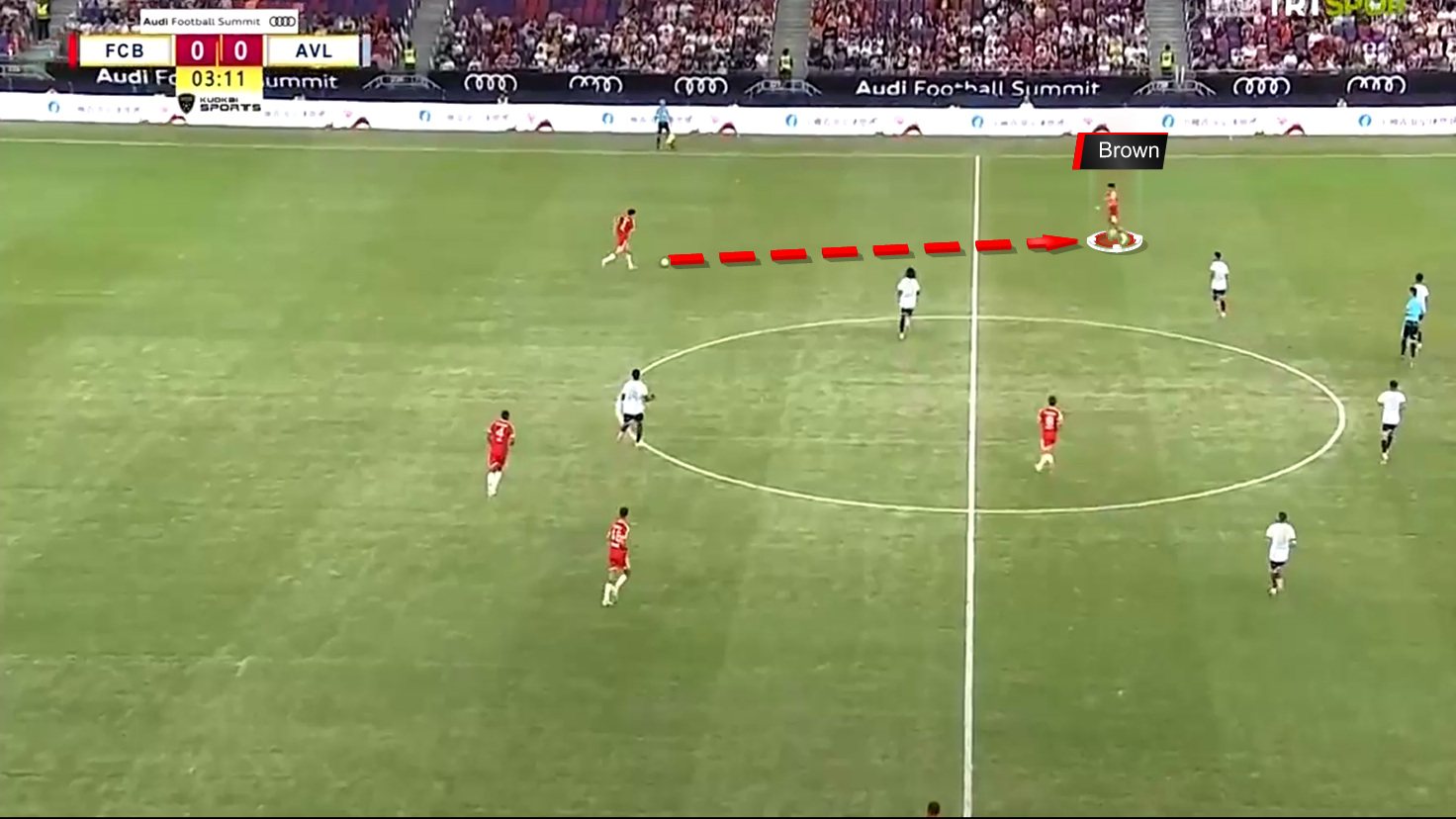
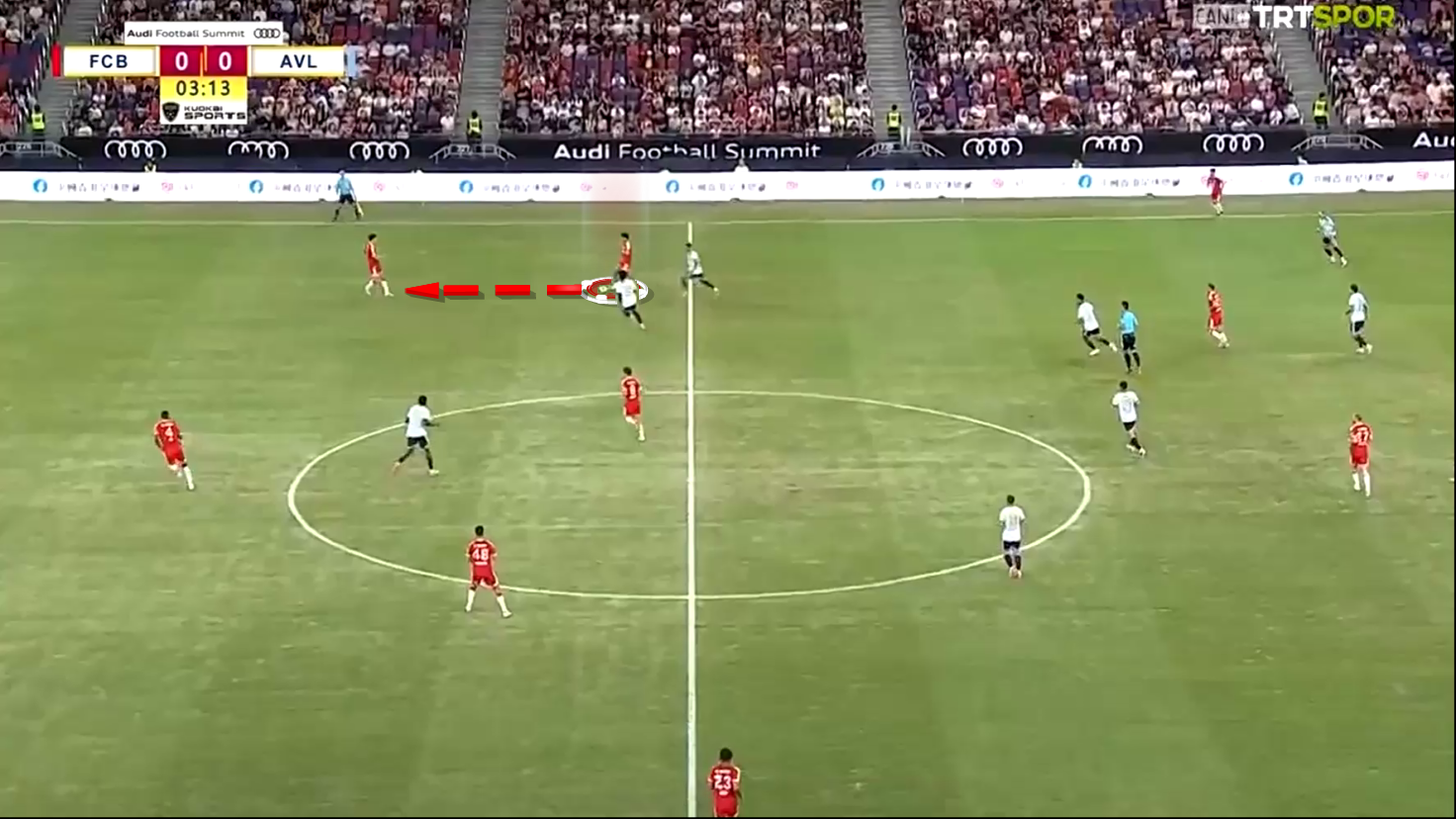
Here in the friendly match against Aston Villa, we see that when he approaches Kim Min-jae, he provides support, receives the ball, and passes it.
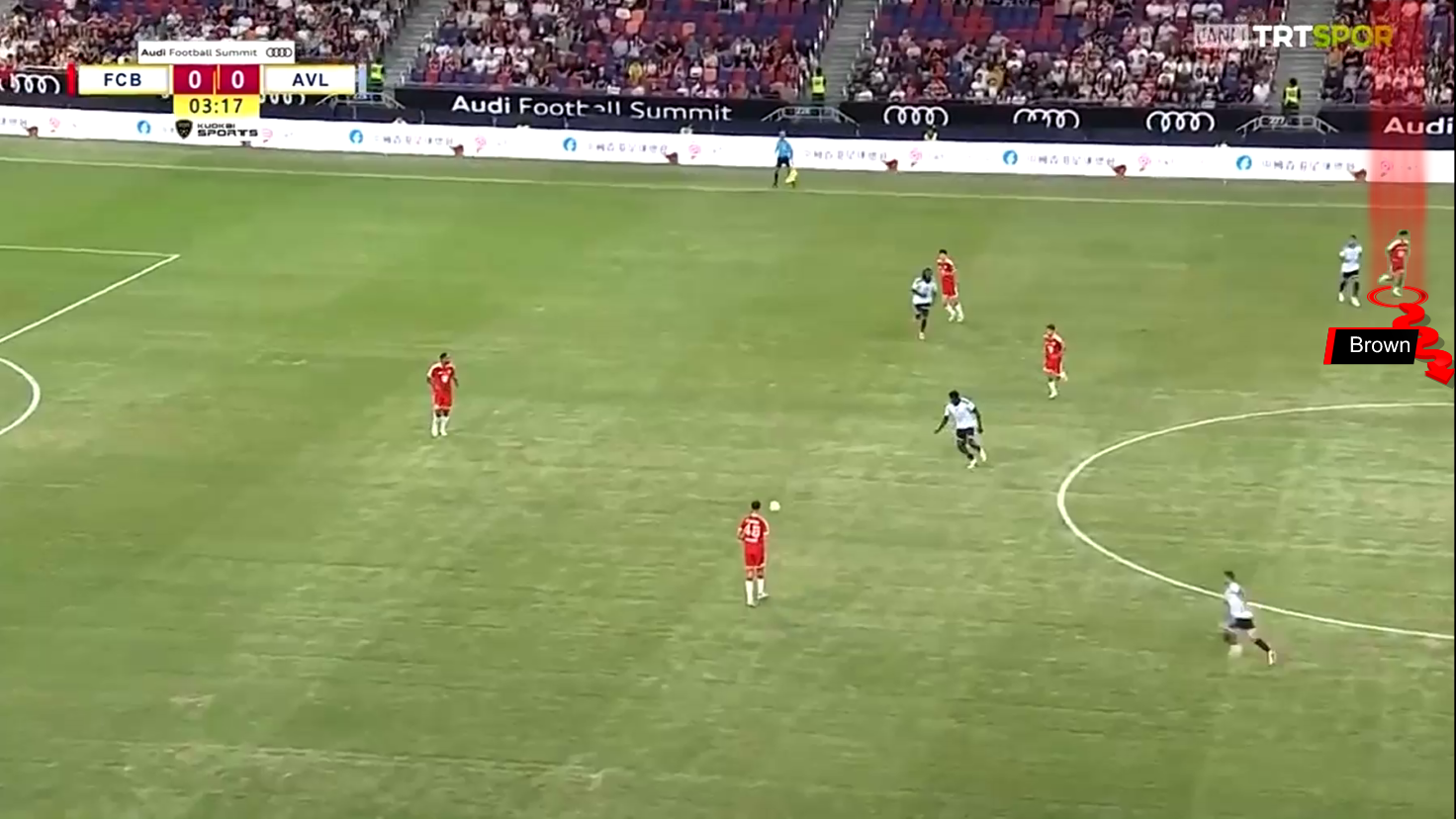
When the ball goes to the opposite side, we notice the beginning of its movement inside the field.
This type of movement can become even more important for Bayern because having an extra player inside gives the team another option to escape pressure, while allowing another player to maintain width.
The question then becomes not just: where does Brown receive the ball? But what does he do with his movement before receiving it?
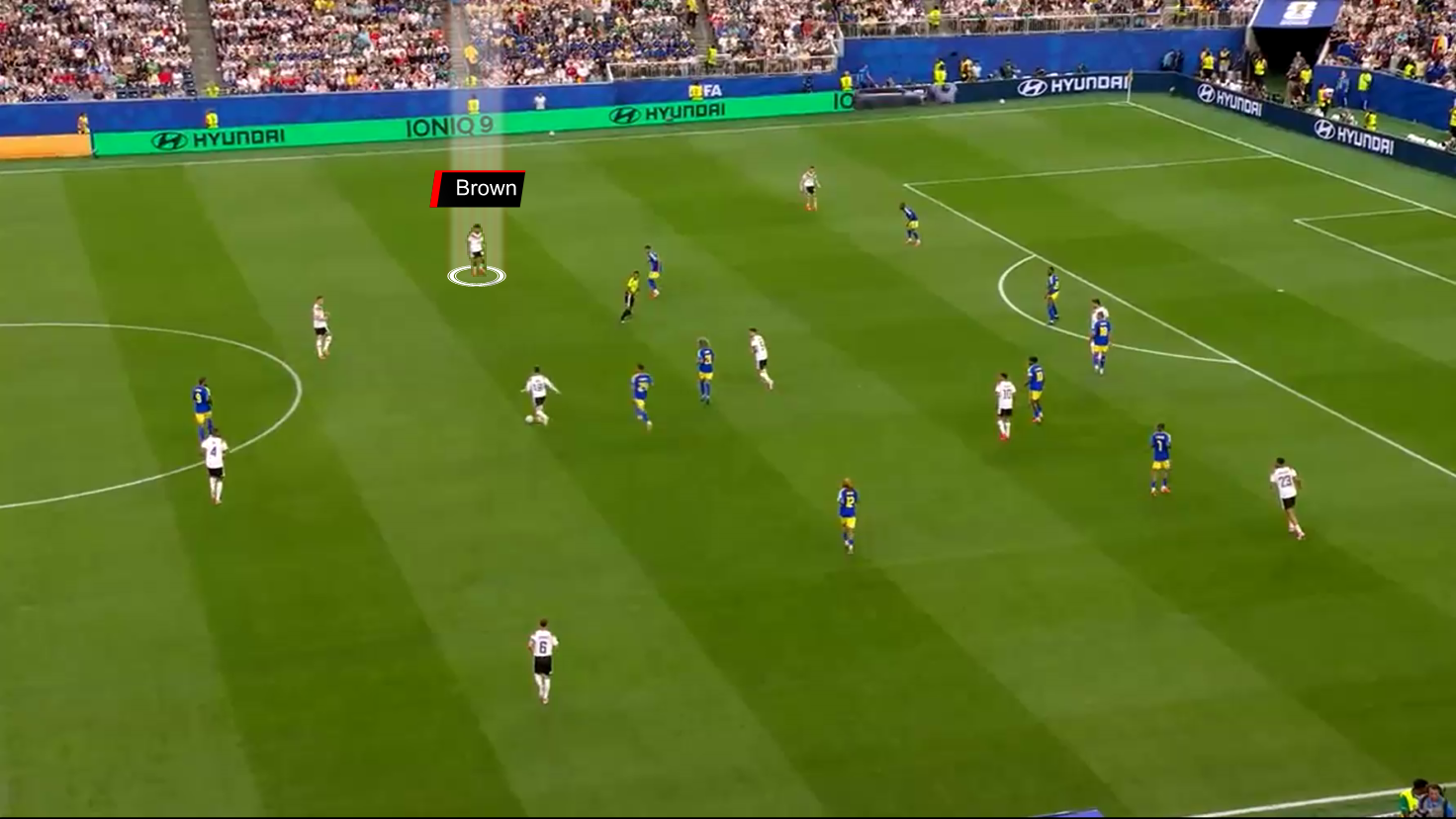
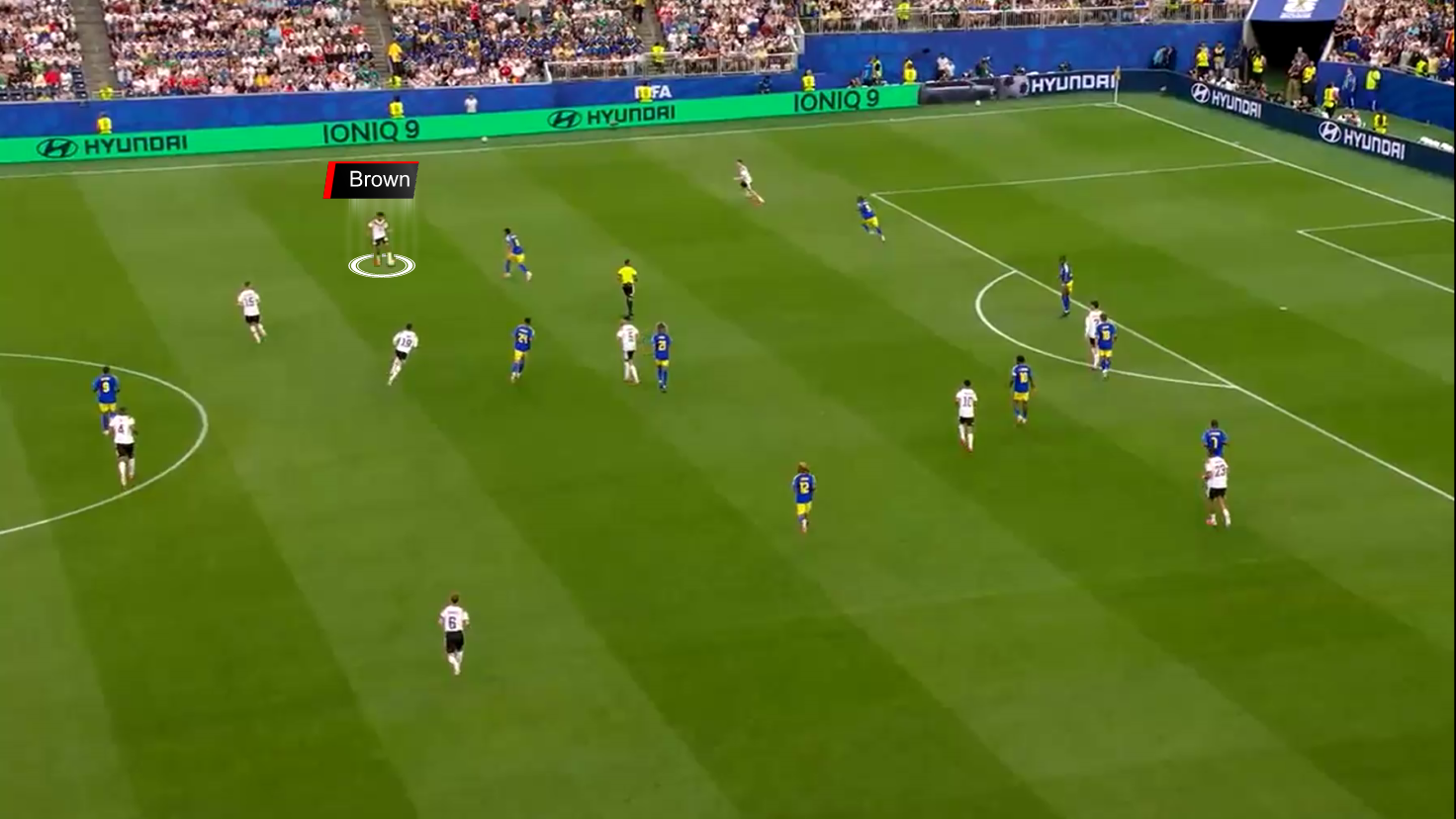
Here, he is positioned deep and provides support after receiving the pass.
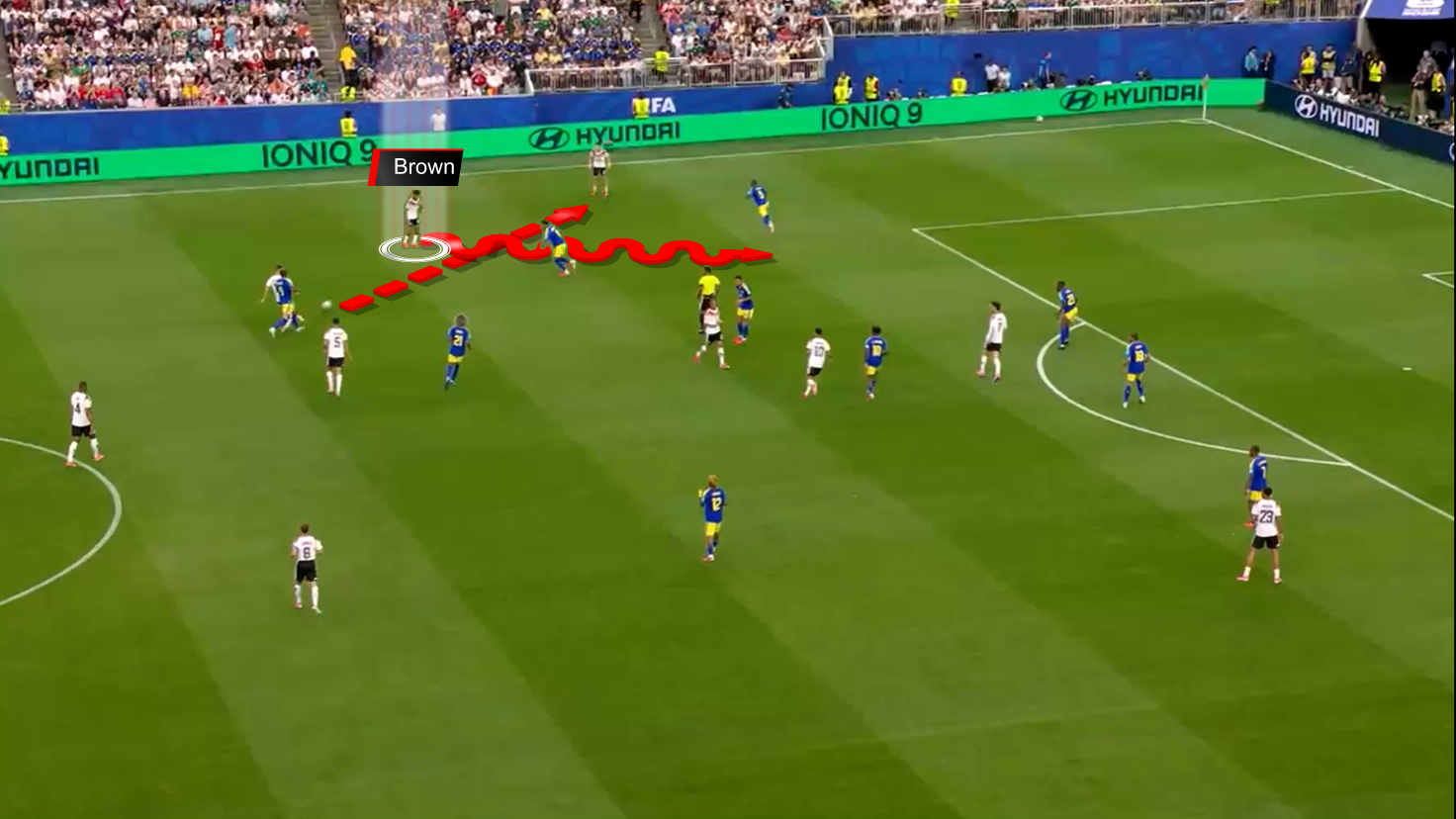
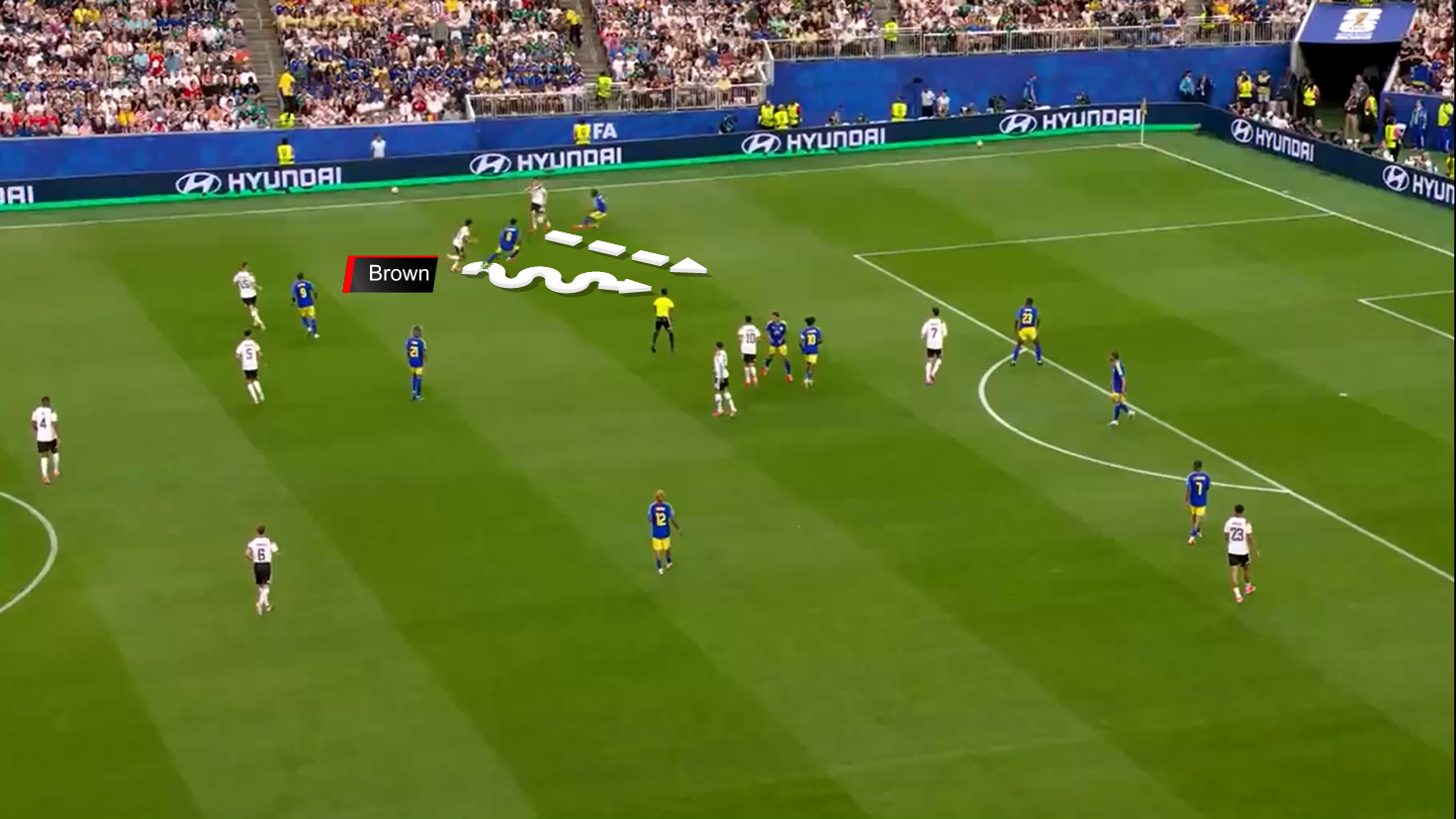
He initiates the attack at the same time as the pass is made outwards, while moving diagonally behind the full-back.
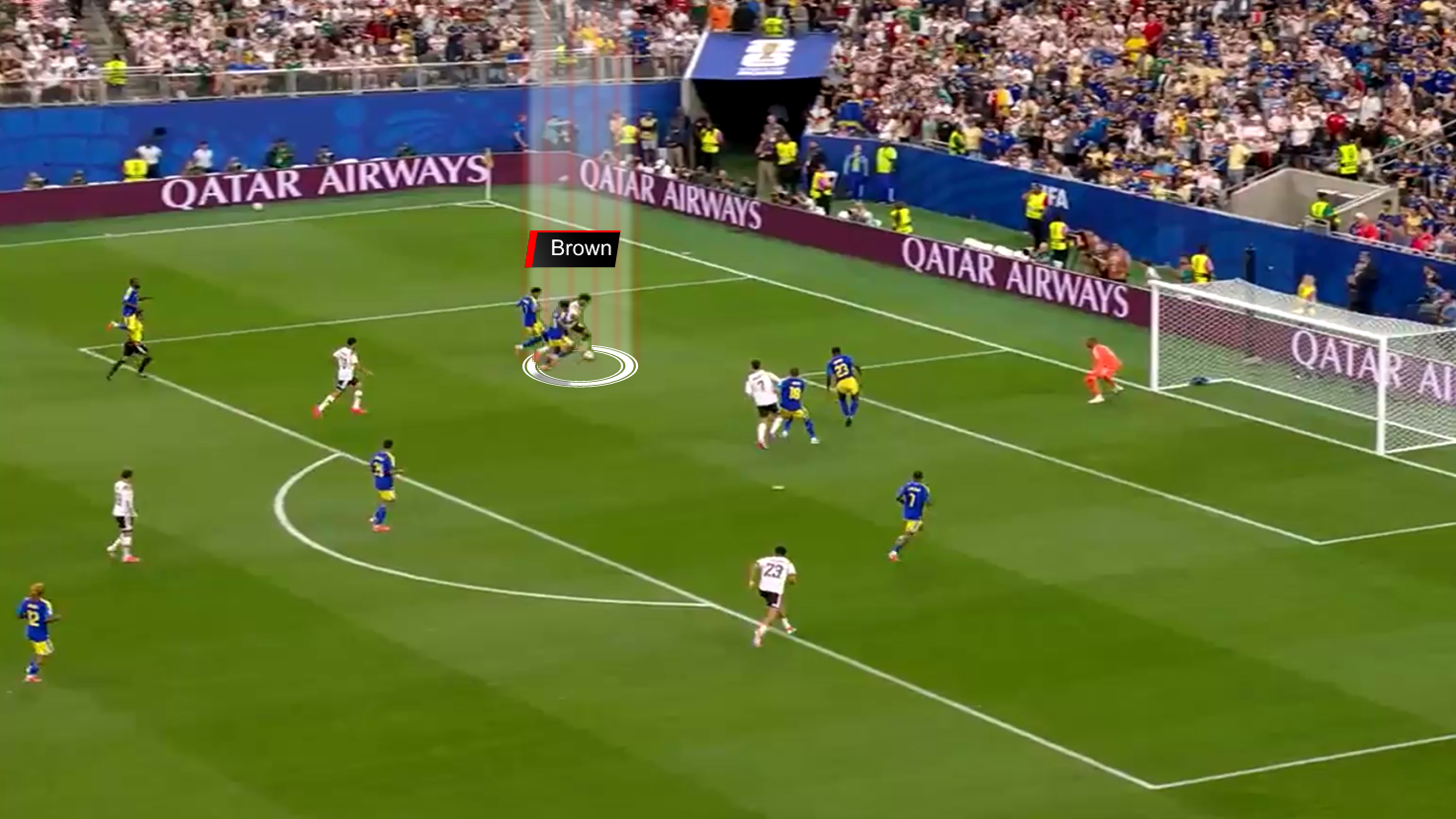
He then receives it in the space and moves forward to become a 1v1 situation until he enters the penalty area.
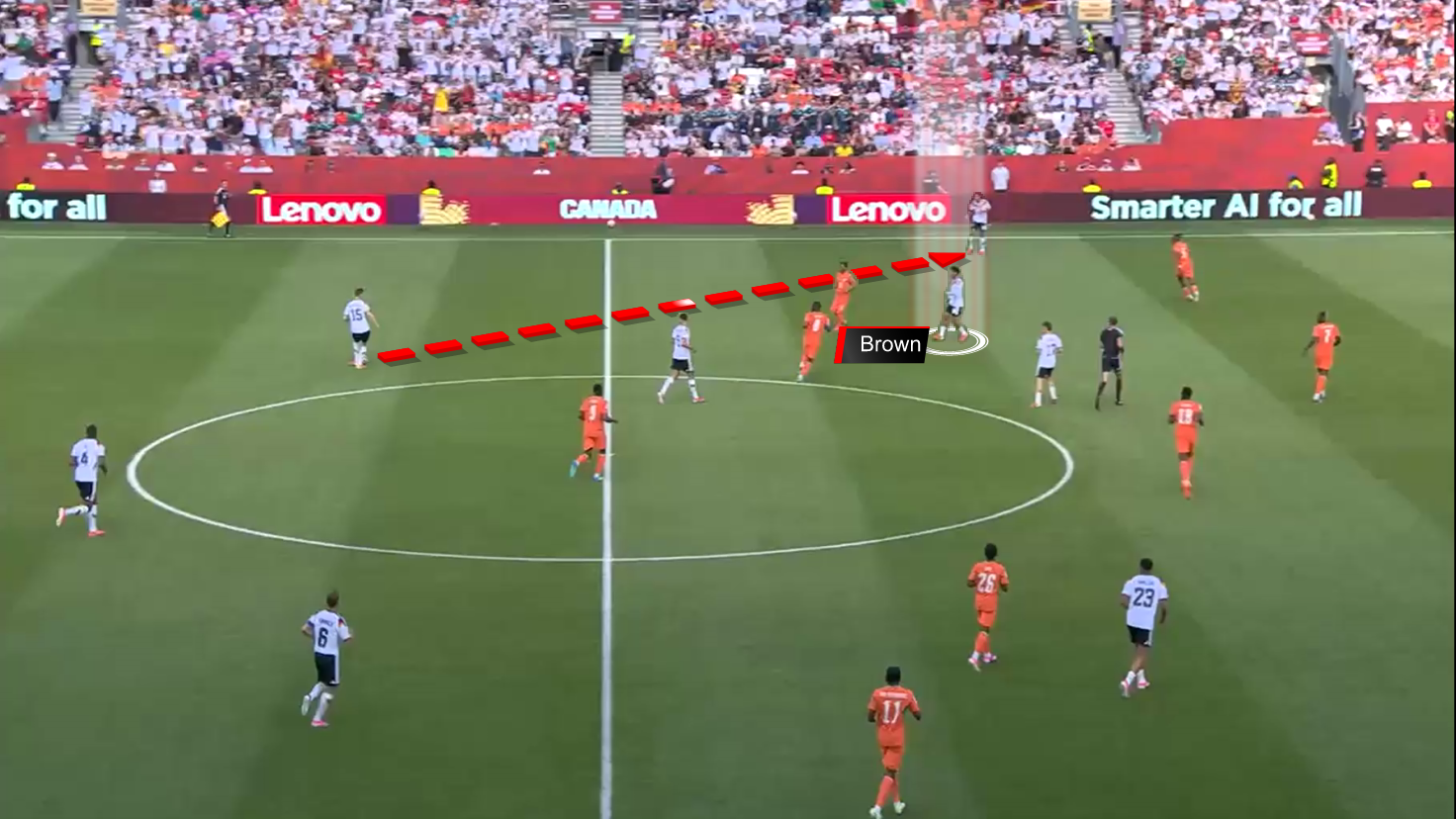
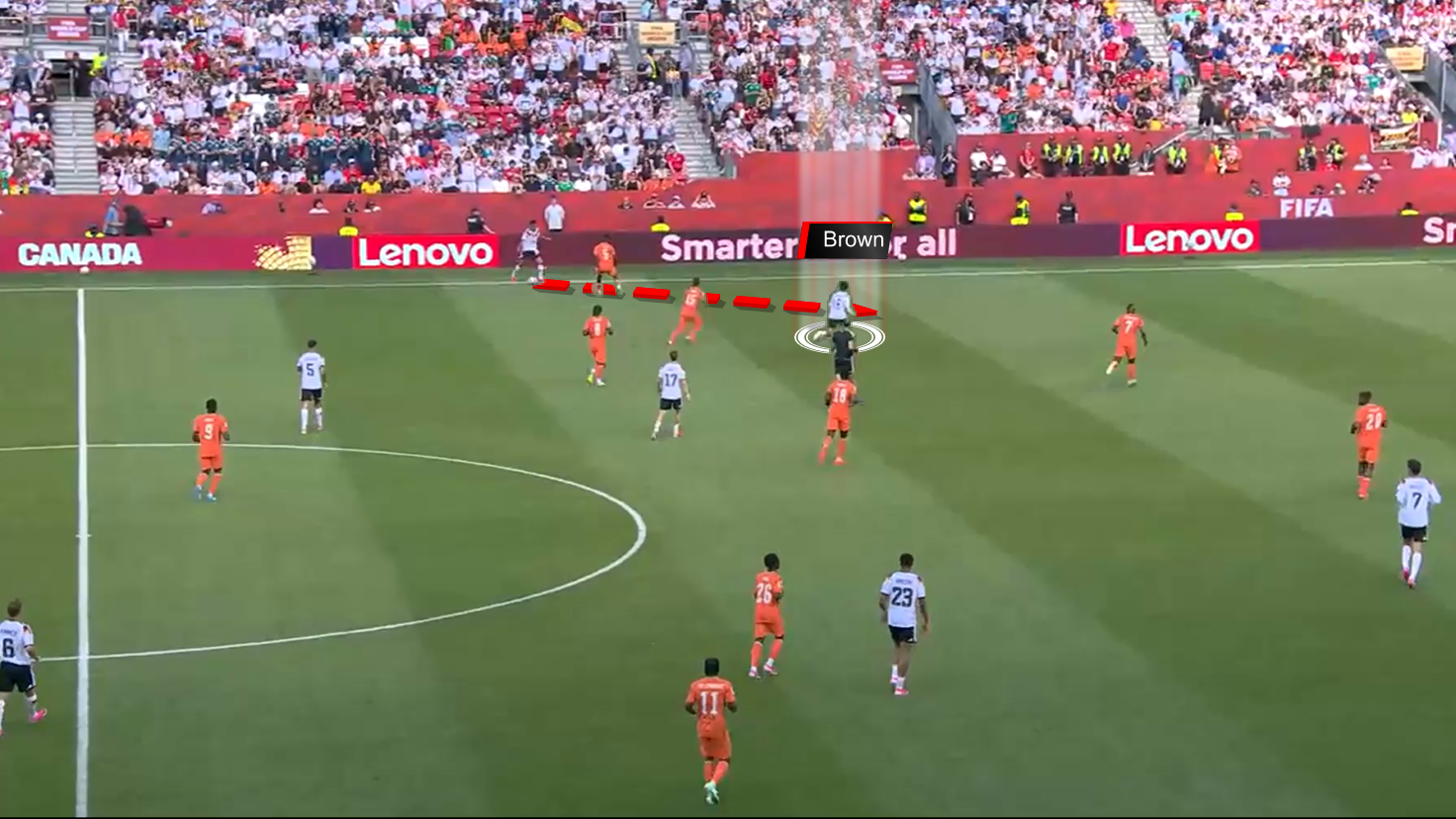
Here, even with the German national team, he is positioned deep in the field, leaving the flanks to the winger.
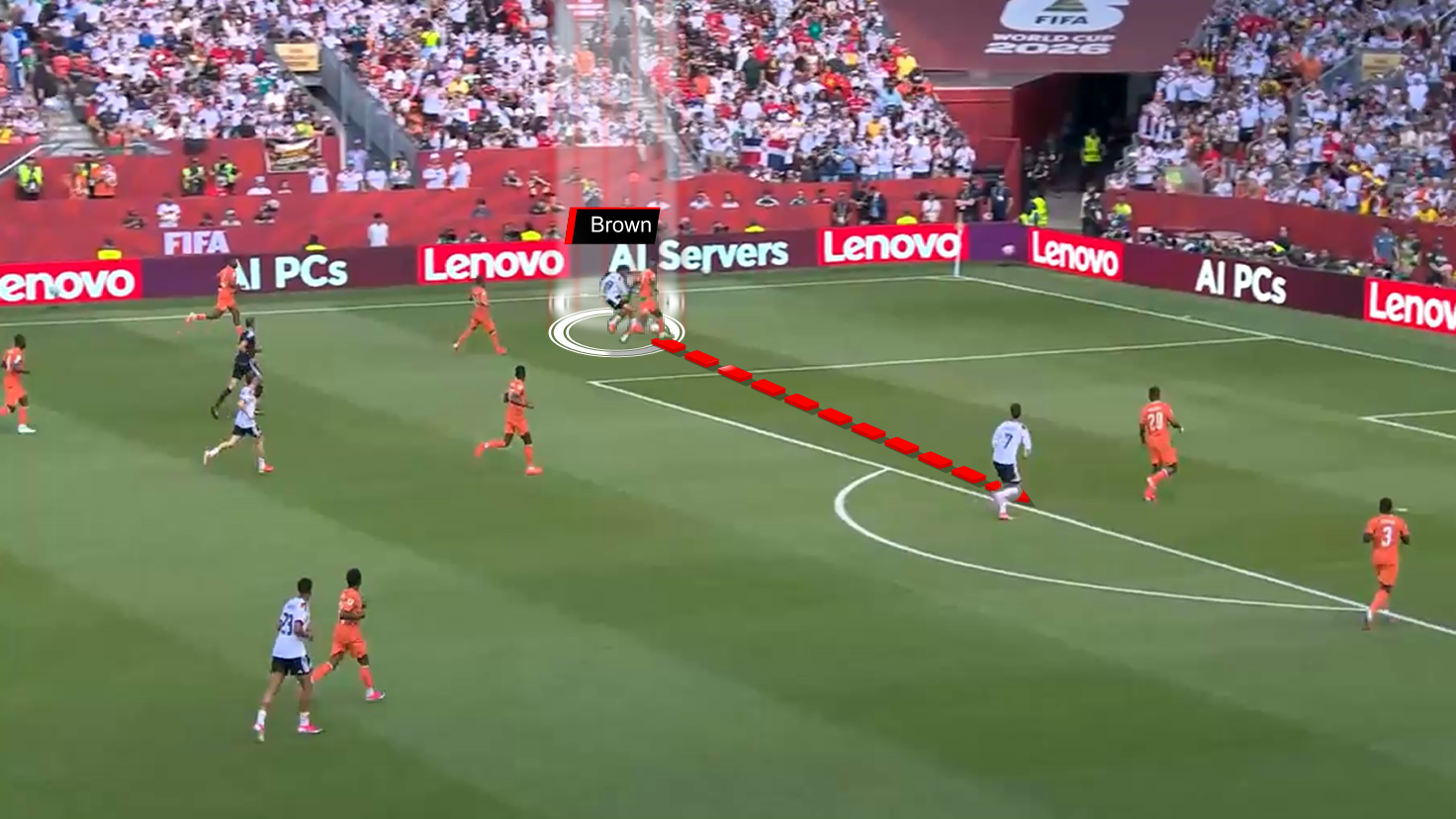
After the winger draws pressure from the opposing right-back, Brown moves to claim the ball.
When he finds space in front of him, speed becomes his primary weapon.
Brown doesn't need a long series of dribbles to advance; he can push the ball into space and then use his speed to reach it, which makes him particularly well-suited to situations where Bayern succeed in drawing the opponent out and then quickly changing the direction of play.
Nathaniel Brown Attacking Contribution
Brown has a big advantage over other full-backs on the attacking side in the Bundesliga last season, and that was what caught Bayern Munich's attention.
Stats alone don't tell the whole story; although he contributed four goals and four assists in 33 matches last term, the story behind the numbers is more likely to show his true value.
In terms of assisting goals, his ball-carrying ability to break lines consistently stands out, as do his accurate crosses after linking up with teammates and showcasing strong off-the-ball movement.