
Vincenzo Montella Tactics At Türkiye 2026: Tactical Flexibility & World Cup Ambition – Tactical Analysis

Since their memorable run to the 2002 FIFA World Cup semi-finals, Türkiye have remained one of international football's most intriguing dark horses.
Led by captain Hakan Çalhanoğlu and coach Vincenzo Montella, they combine experienced leadership with exciting young talents such as Arda Güler and Kenan Yıldız.
This Türkiye tactical analysis examines Turkey's tactical approach under Montella tactics, analysing their structures in and out of possession, as well as the set-piece routines that have become a key attacking weapon.
Türkiye Formations & Key Players
The 4-2-3-1 was Türkiye's most-used formation during the World Cup qualifying campaign, providing a balance between defensive stability and attacking freedom.
Captain Çalhanoğlu remains the team's focal point, tasked with dictating play, creating chances and leading both in open play and from set-pieces.
Former Juventus defender Merih Demiral provides leadership and experience at the heart of the backline.
In attack, much of the creative responsibility falls on the aforementioned rising stars, Arda Güler and Kenan Yıldız.
Their technical ability, movement between the lines and goal threat make them central to Türkiye's attacking plans.
Eintracht Frankfurt midfielder Can Uzun is also capable of playing a key role in the Turkish final third as a creative force.
He's likely in the best Turkish XI based on talent, but remains relatively new to the senior international setup.
Ferdi Kadıoğlu and Kerem Aktürkoğlu also play important roles, with the capacity to offer the team creativity and directness in attack.
Meanwhile, Uğurcan Çakır is expected to start in goal, with Manchester United goalkeeper Altay Bayındır providing strong competition and reliable cover.
Türkiye Style Of Play In Possession
Türkiye generally build from the back using a 3+1 structure during the first phase of possession.
One of the defensive midfielders drops alongside the two centre-backs to create a back three, providing an extra passing option and helping the team play through opposition pressure.
This movement allows the full-backs to advance higher up the pitch and take up more aggressive positions in support of the attack.
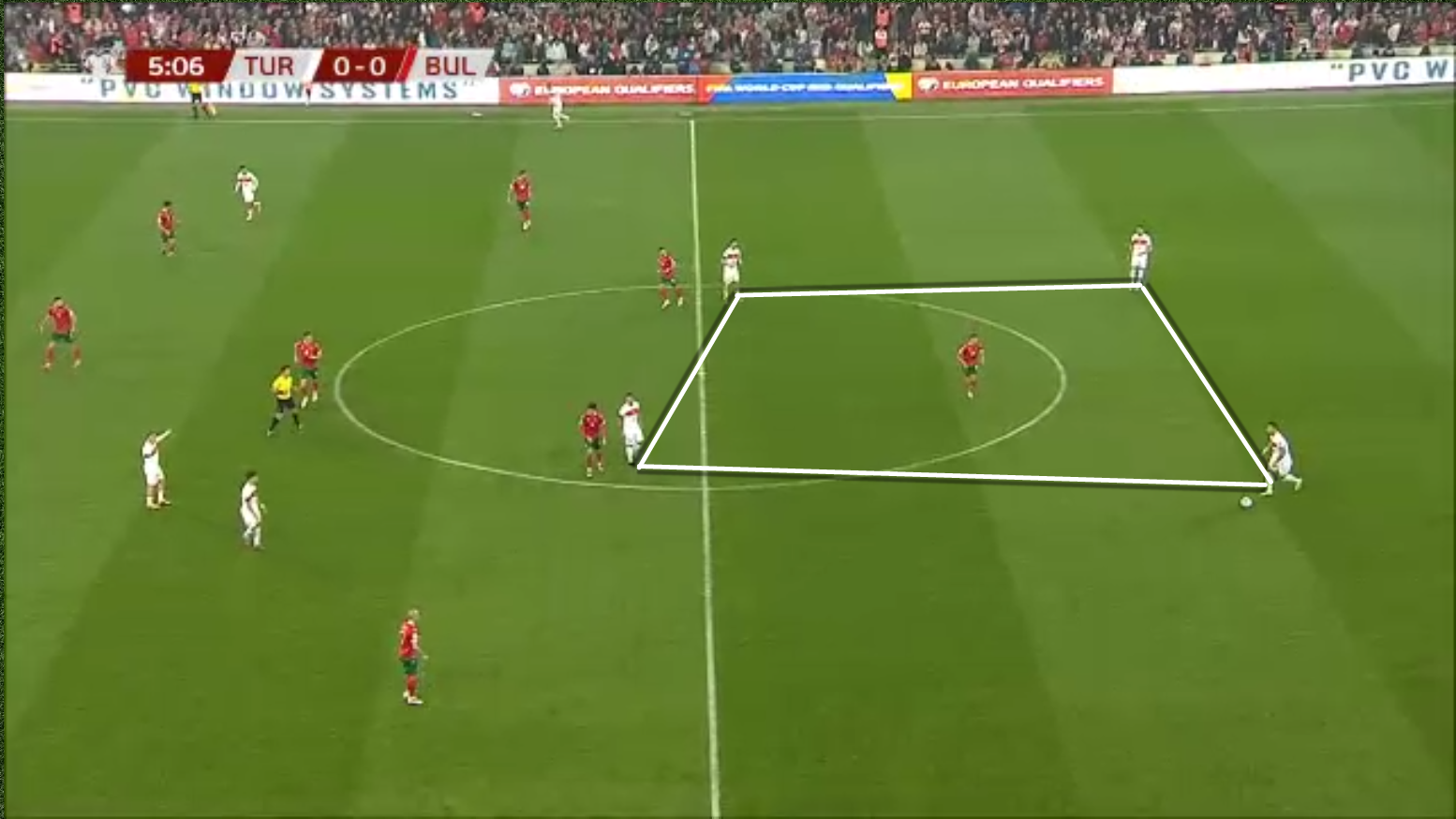
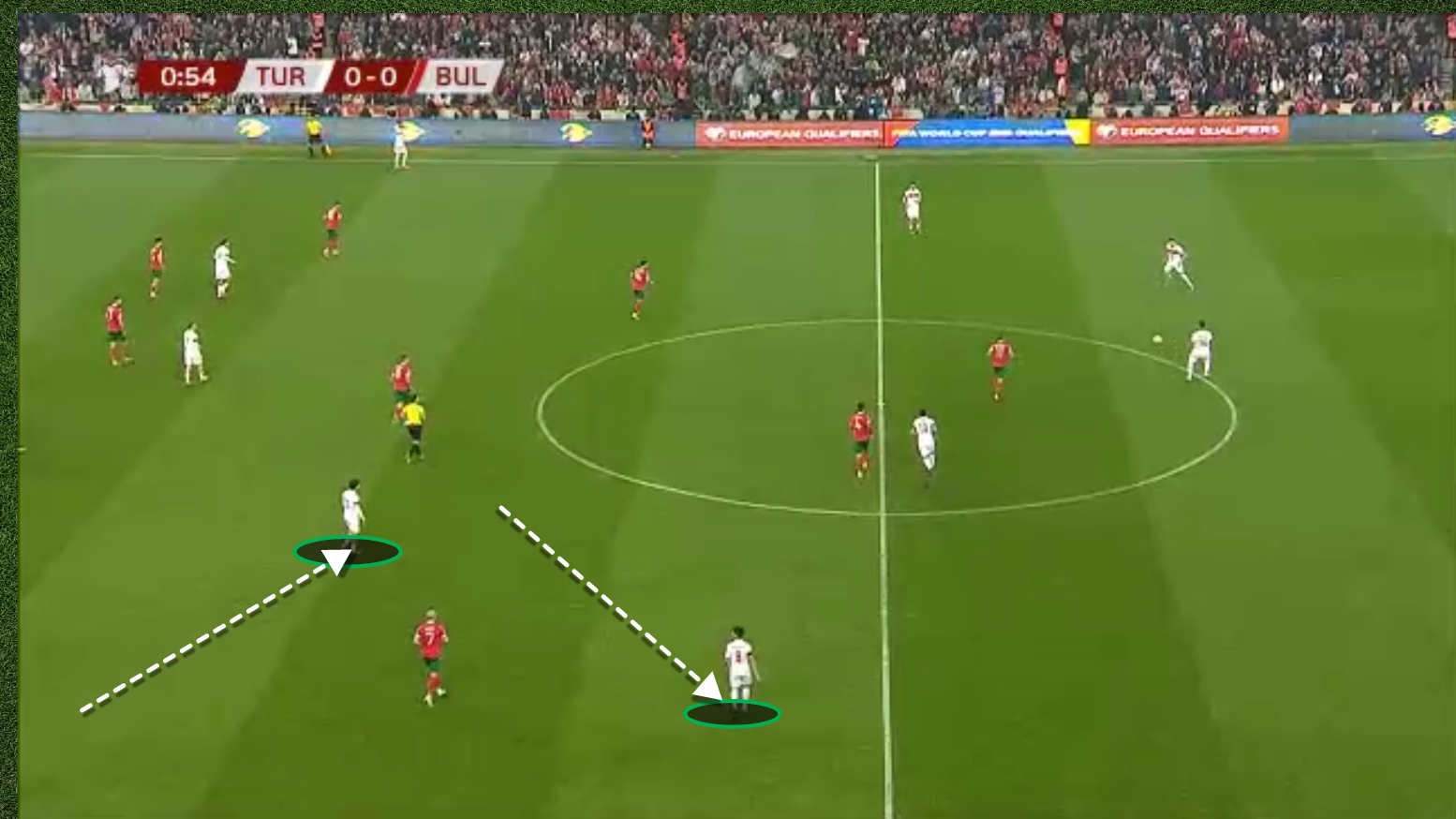
As possession progresses into the middle third, Türkiye often organise themselves into a passing rectangle.
Two players position themselves vertically ahead of the other two, creating multiple passing angles and ensuring there are always options for the player on the ball, as shown in Figure 1.
This structure helps maintain possession while facilitating quick combinations through central areas.
A key feature of Türkiye's attacking play is the freedom afforded to Güler.
Operating as the No. 10, Güler is not restricted to a fixed position and is encouraged to move into different zones to find space.
His intelligent movement often creates uncertainty among defenders and opens areas for teammates to exploit.
By vacating certain spaces, he allows advancing attackers and inverted full-backs to move into the gaps he leaves, making Türkiye's attacking shape highly fluid, as seen in Figure 2.
Türkiye's positional structure is specifically designed to create space between the opposition's defensive and midfield lines.
The forwards remain high and occupy the opposition's last line of defence, pinning defenders deeper and preventing them from stepping forward to compress space.
At the same time, the double pivot of Çalhanoğlu and İsmail Yüksek occupy the opposition's second line, forcing midfielders to remain engaged.
This creates valuable pockets of space between the lines where players such as Güler and Kadıoğlu can receive possession, turn and drive attacks forward.
Kadıoğlu plays a particularly important role in this system through his frequent movements into midfield.
Rather than remaining wide, the left-back regularly inverts into central areas.
This serves two key purposes.
Firstly, it opens a clearer passing lane towards Yıldız on the left wing, making it easier to find him in space.
Secondly, Kadıoğlu's positioning in midfield helps Türkiye establish numerical superiority in central areas and create overloads that improve ball progression.
The relationship between Kadıoğlu and Yıldız is especially significant.
As Kadıoğlu moves inside, Yıldız can maintain width and isolate his direct opponent on the flank.
This gives the winger more opportunities to attack defenders in 1v1 situations, utilise his dribbling ability, and cut inside towards the penalty area, where he can create chances or threaten the goal.
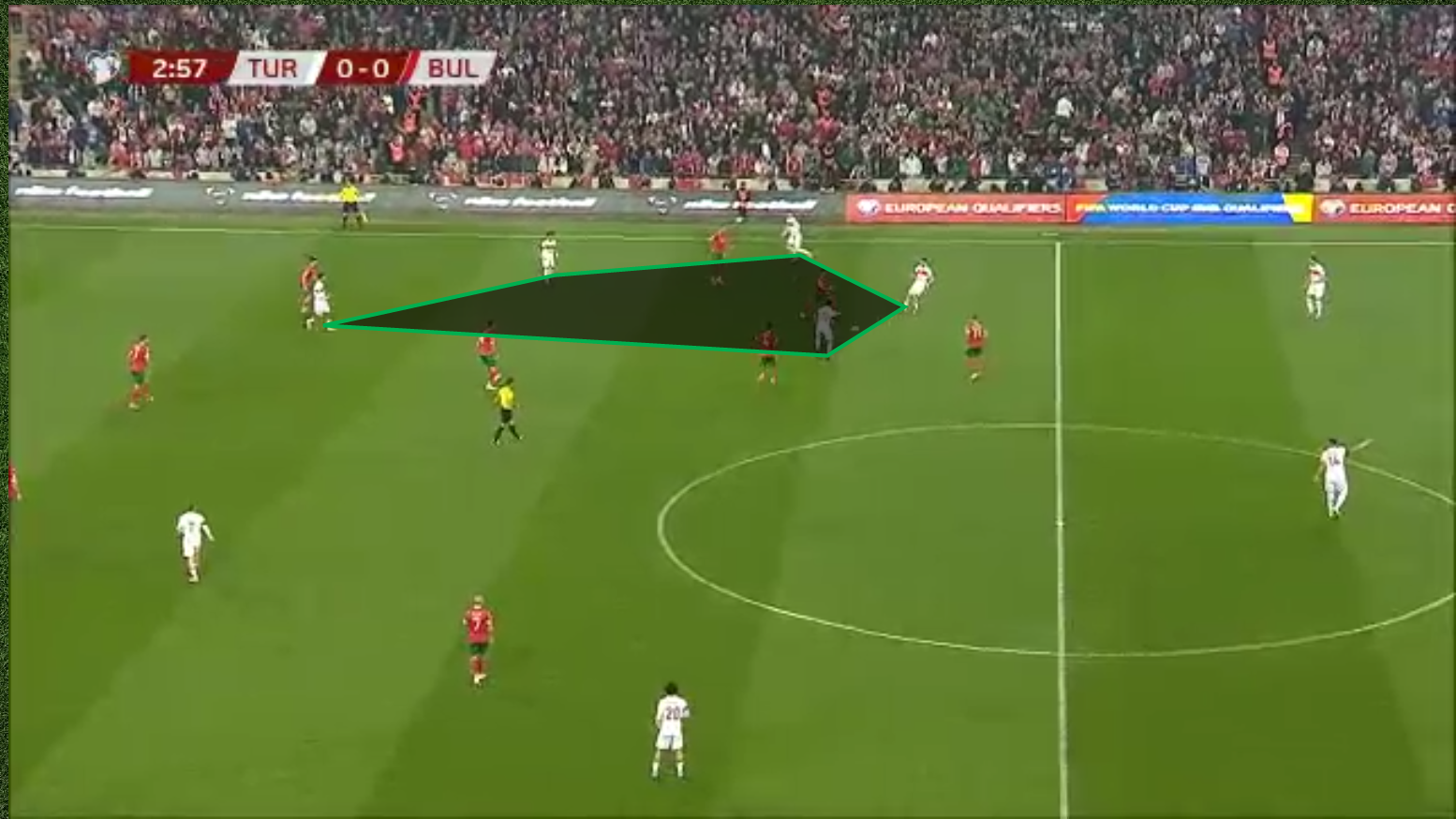
Türkiye also place considerable emphasis on creating overloads on the ball side.
By positioning multiple players in proximity to one another, they create the conditions for quick passing combinations and one-touch football.
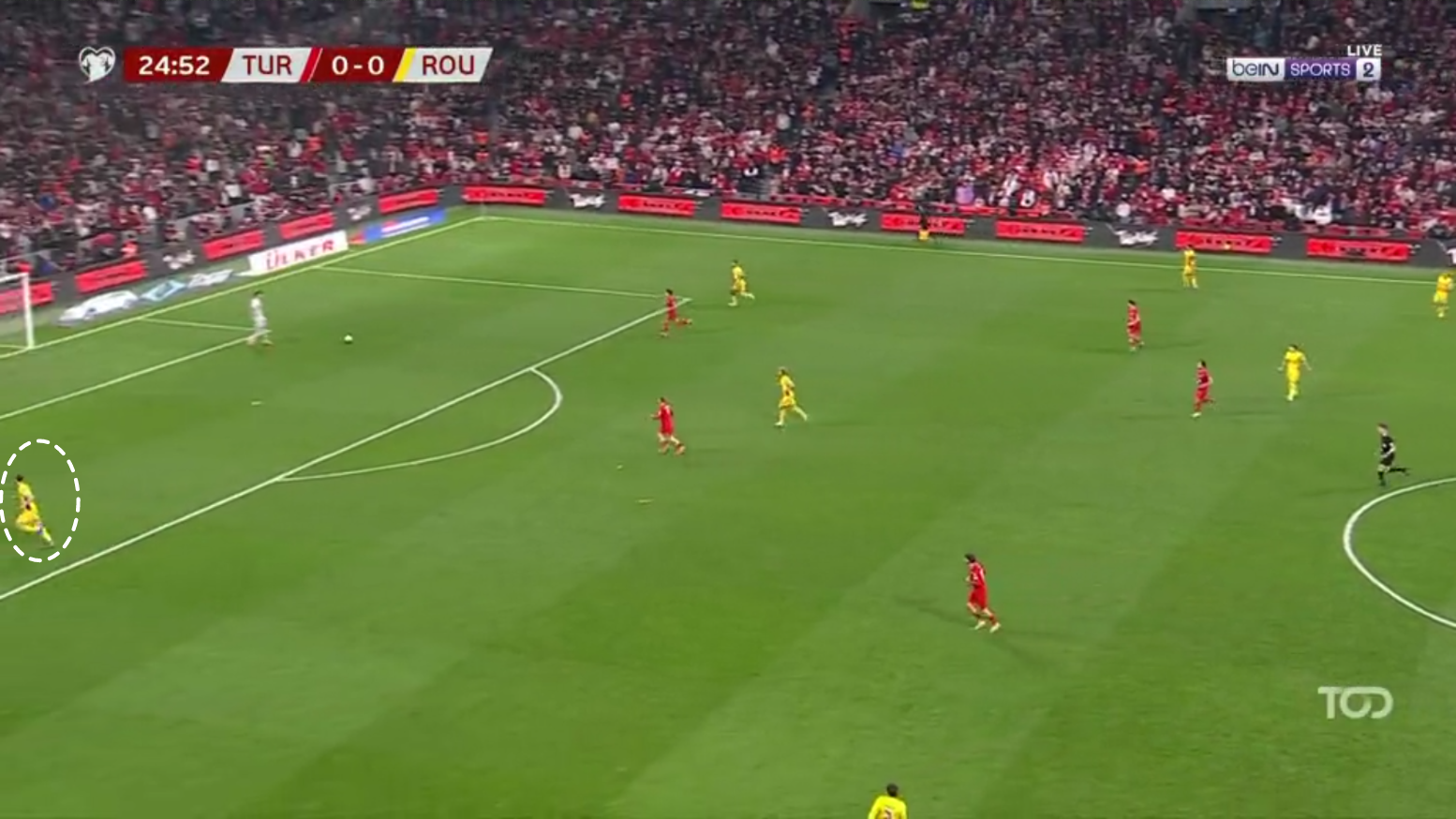
These compact relationships allow Türkiye to move the ball rapidly through congested areas, evade pressure and progress possession while maintaining attacking momentum as seen in Figure 3.
Even while defending deep using the alternate 3-4-2-1 system, Türkiye retain a clear attacking outlet.
Two forwards are deliberately positioned higher up the pitch to provide an immediate counterattacking threat.
As soon as possession is regained, the objective is to verticalise play as quickly as possible, moving the ball forward with minimal touches.
This direct transition strategy allows Türkiye to exploit the spaces left behind by opponents who have committed players forward in attack.
Türkiye Style Of Play Out Of Possession
Türkiye generally defend with a high block, looking to engage opponents higher up the pitch and limit their ability to build comfortably from the back.
However, despite their advanced positioning, their pressing approach is not particularly aggressive.
They are more selective with their pressure rather than constantly attempting to win possession through intense pressing.
A defining characteristic of Montella's defensive approach is the use of man-oriented marking principles.
Players are instructed to closely track their direct opponents and prevent them from receiving possession in dangerous areas.
Despite these man-oriented responsibilities, Türkiye usually maintain a structured 4-1-3-2 defensive shape when operating out of possession.
This allows them to preserve compactness while still applying pressure to individual opponents across the pitch.
Türkiye use pressing traps to manipulate opposition build-up.
By blocking most passing lanes, they intentionally leave one player available for the goalkeeper.
Once the pass is played, Turkish players immediately converge on the receiver, isolating them and restricting options.
This increases the likelihood of turnovers and dangerous attacking transitions as seen in Figure 4.