Ståle Solbakken Tactics At Norway 2026: Can Their Corner-Kicks Eliminate Brazil? – Set-Piece Analysis

The Round of 16 stage of the 2026 FIFA World Cup will see Norway pitted against Brazil in a match with considerable intrigue.
The excitement does not lie solely in the anticipated clash between the Premier League stars Gabriel Magalhães and Erling Haaland; rather, it extends to other facets of the match as well.
Across their four appearances in this World Cup, Norway have exhibited marked superiority in offensive set-pieces, most notably from corner kicks.
Norway, alongside Bosnia and Herzegovina, hold the distinction of being the tallest team in the tournament, with an average height of 187.2 cm.
This physical attribute, however, is not the sole determinant of their effectiveness in attacking set-pieces.
Norway possess well-devised tactical frameworks for countering diverse defensive setups from corner-kick situations, and these are executed with a high degree of proficiency.
In this World Cup tactical analysis, we will show the diverse tactics of Ståle Solbakken's side in attacking corners against man-marking and zonal-marking systems.
Norway Tactics Vs Man Marking
Starting with their tactics against man-marking, we will analyse a brilliant, simple corner routine against France.
As shown in Figure 1 below, France defend with two zonal defenders (blue), a short-option defender (green), a rebound defender (yellow) and the remaining six are man markers.
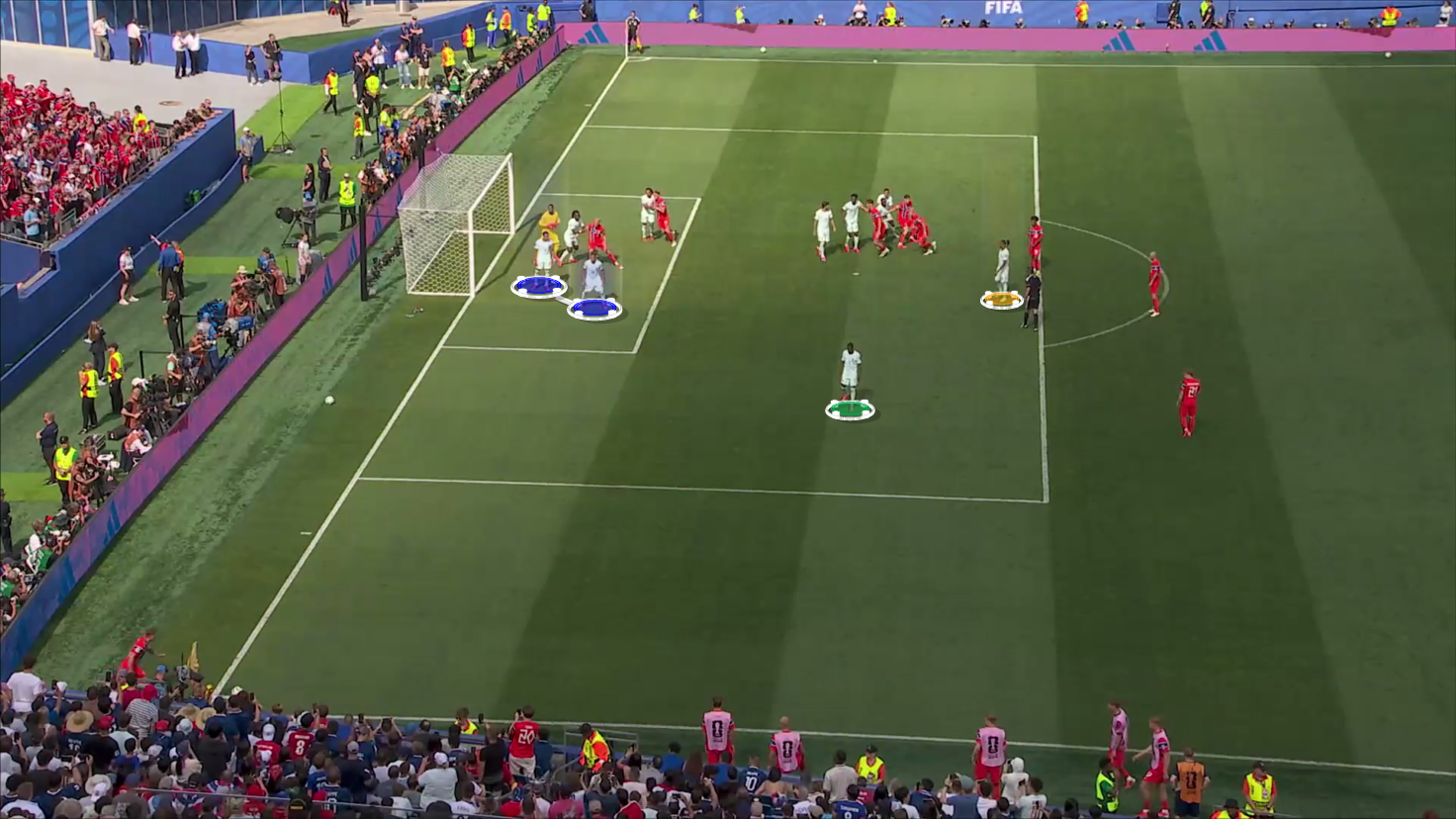
Figure 2 highlights Norway's main scheme at attacking corners.
They have five attackers inside the box, three for the second ball on the edge of the box (orange) and a security player at the back (the 10th player is the taker).
The targeted player is in white, targeting the near post on the six-yard line.
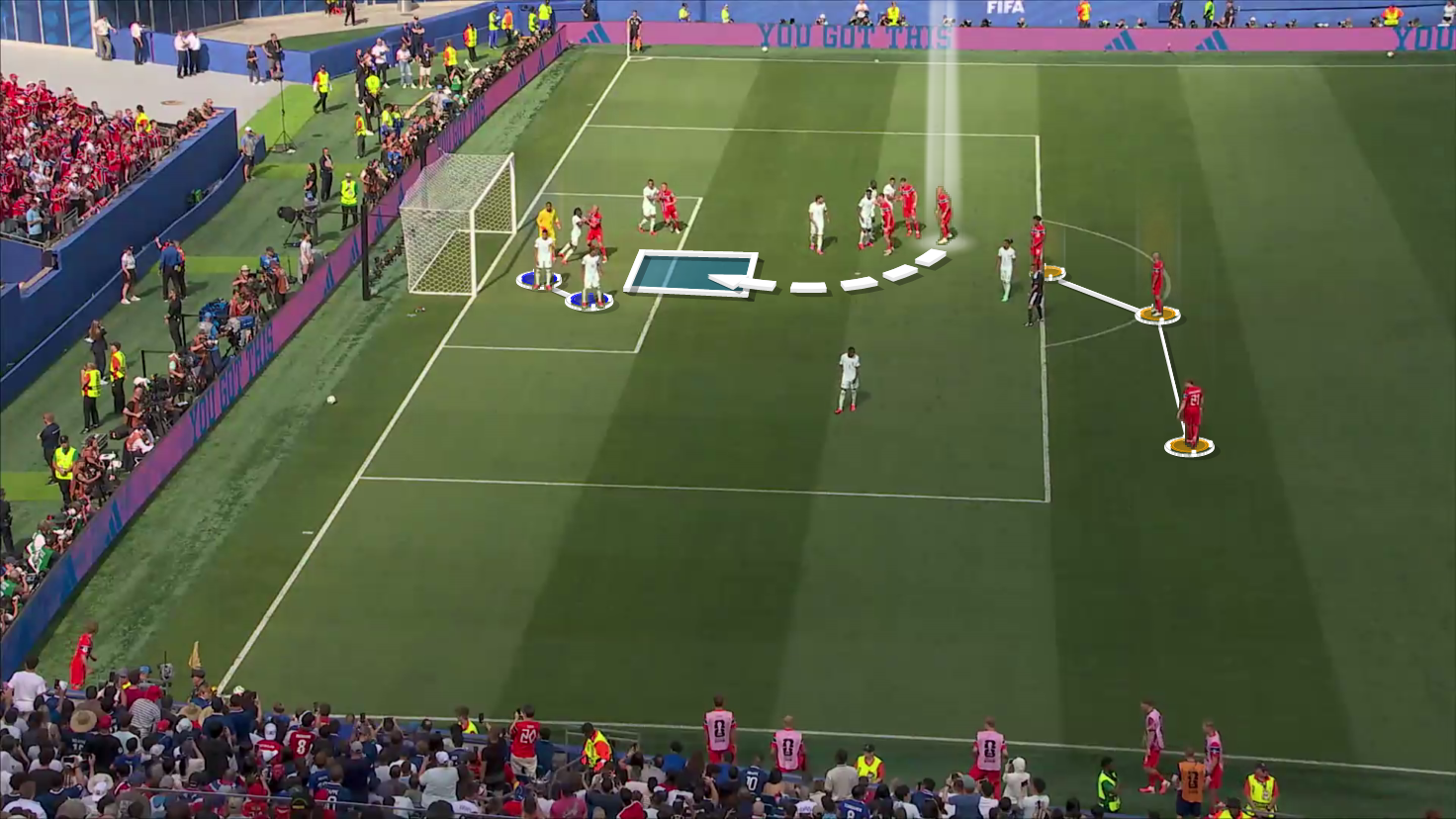
Figure 3 shows Norway's idea to free the targeted player, helping him create separation between himself and his marker.
He stands in a distant position within a pack of his teammates while the yellow player pushes his direct marker to make sure he won't chase the targeted man.
This curved run helps the targeted player earn seconds before his man marker, who takes more time because he has to go around the yellow player.
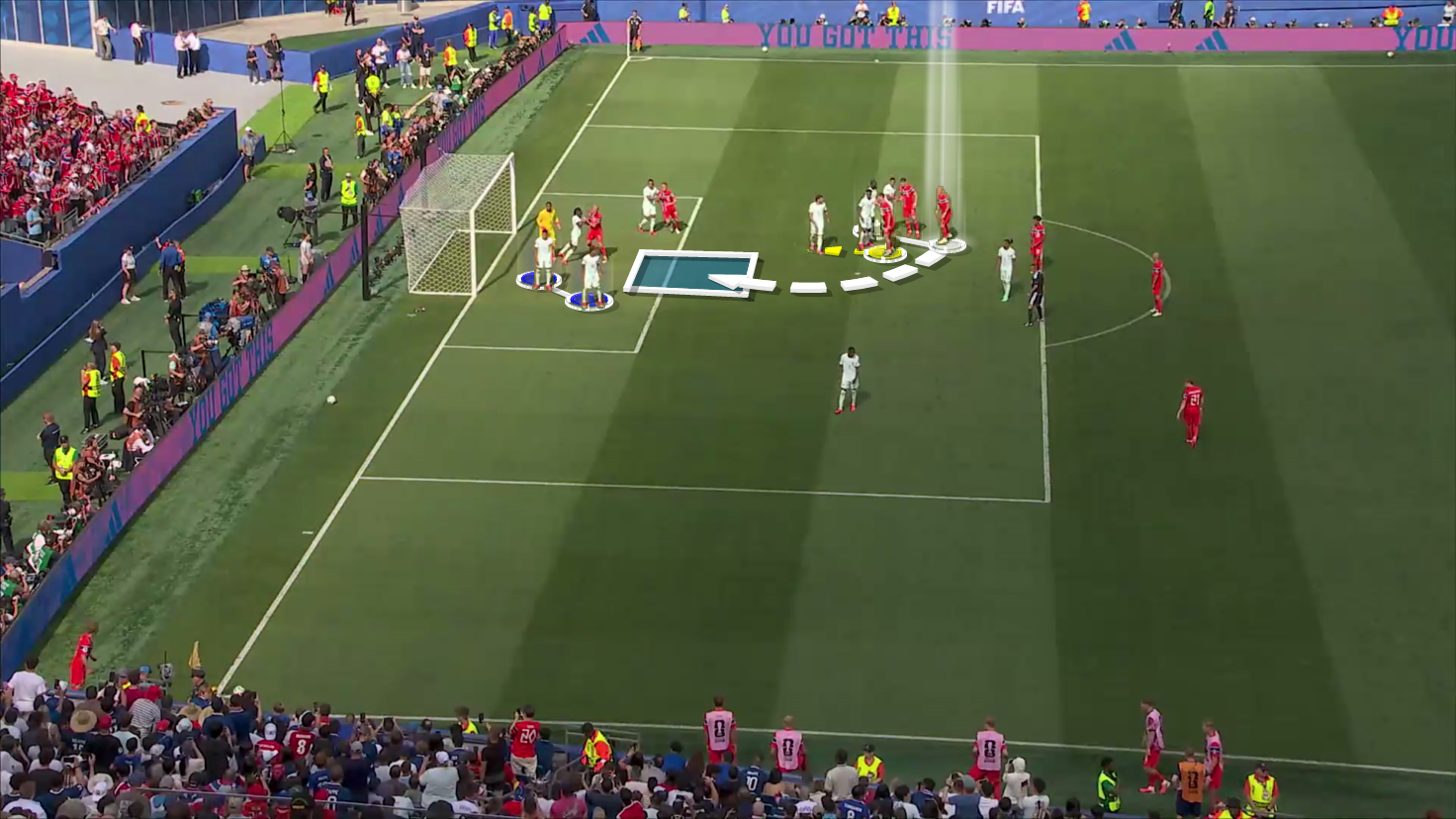
Figure 4 shows that the targeted player has already won time before his man marker, while the green player makes an opposite curved run to the far post to be ready in case the targeted player flicks the ball on.
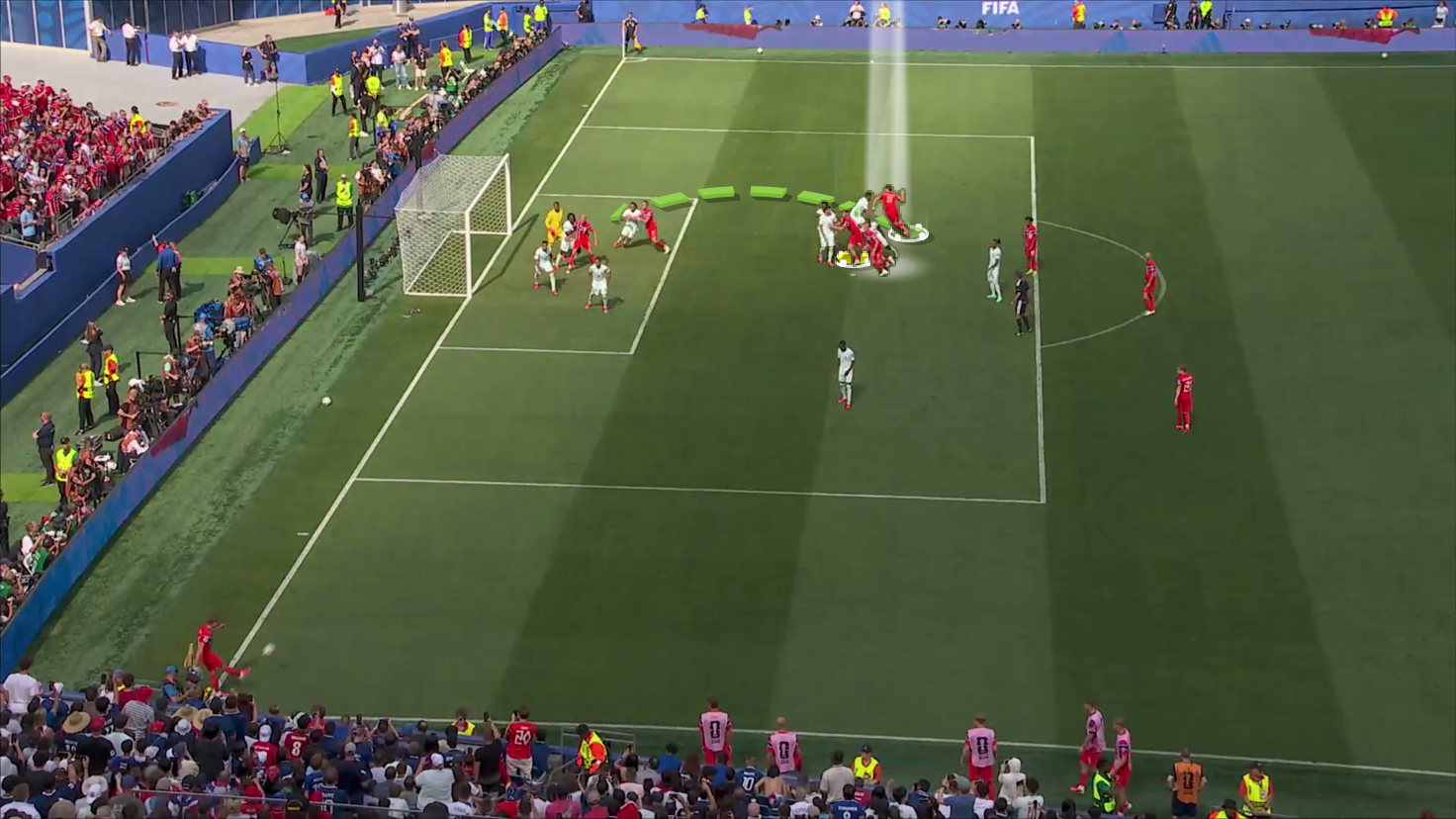
Caring about the details, two blue players stand alongside their two-man markers, acting as a barrier between the goalkeeper and the targeted area to make sure that he won't be able to go out and claim the ball.
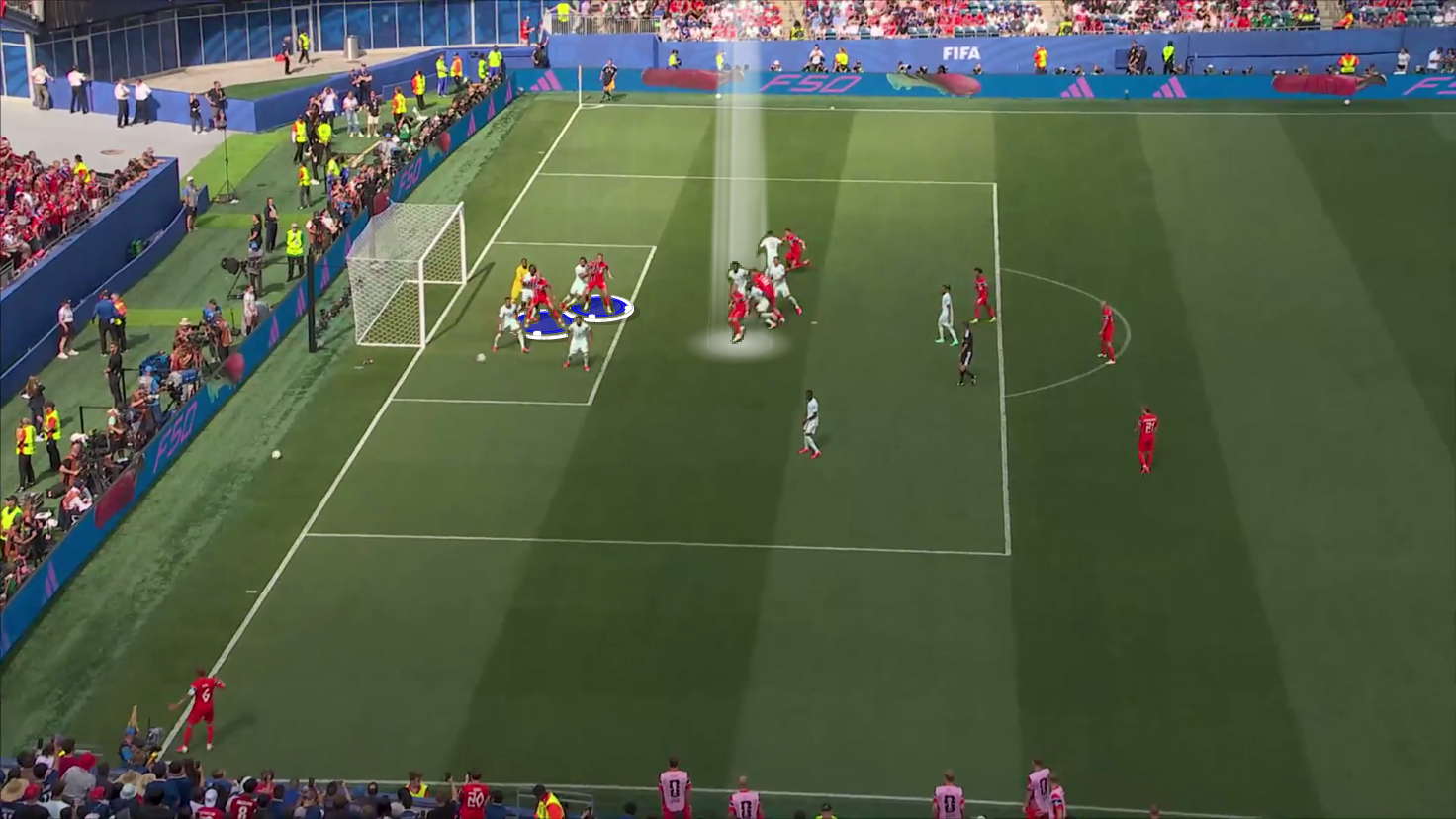
In Figure 6 below, all is set, and you can see the targeted player gets the ball while the green player is ready to attack the far post.
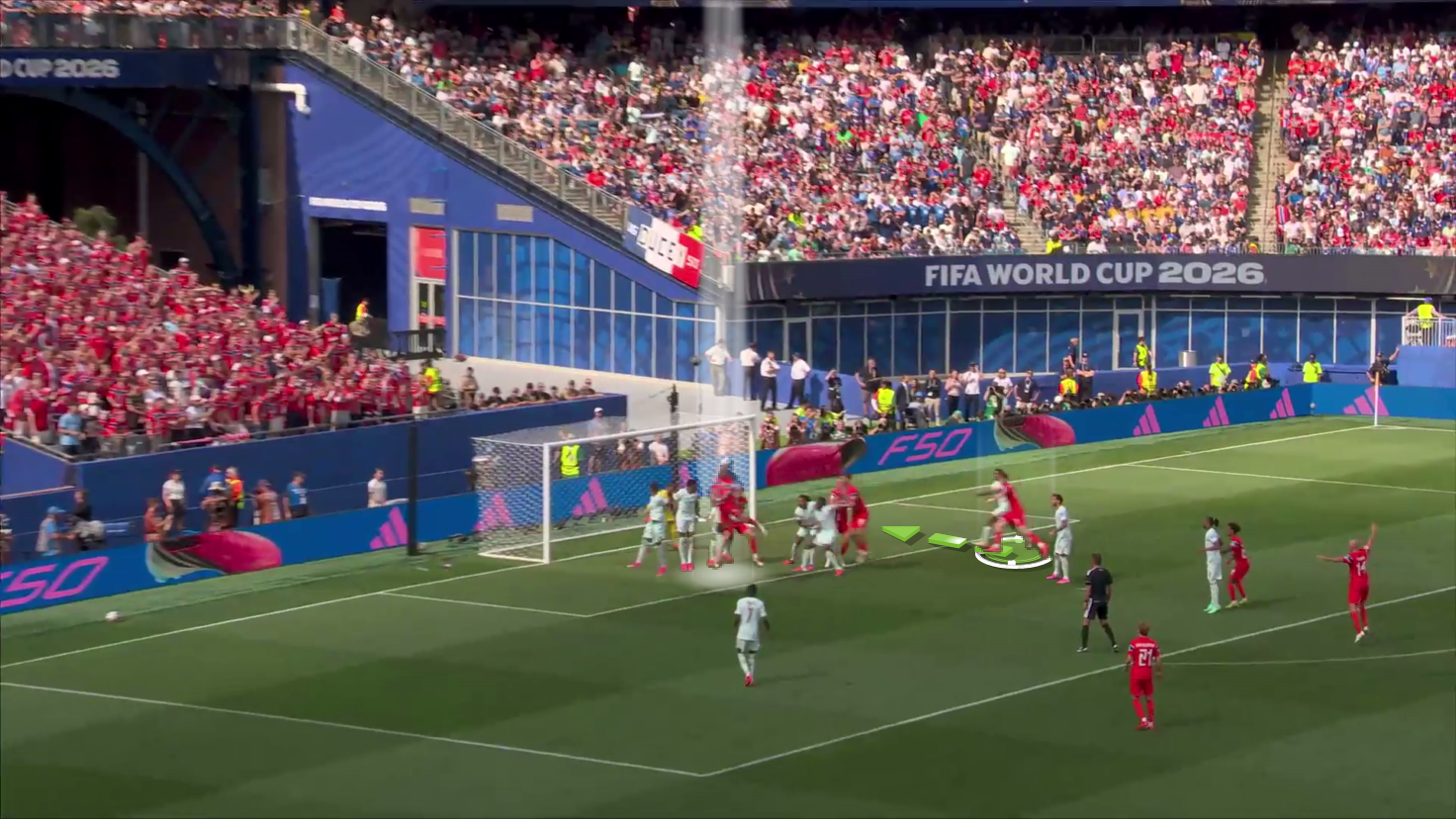
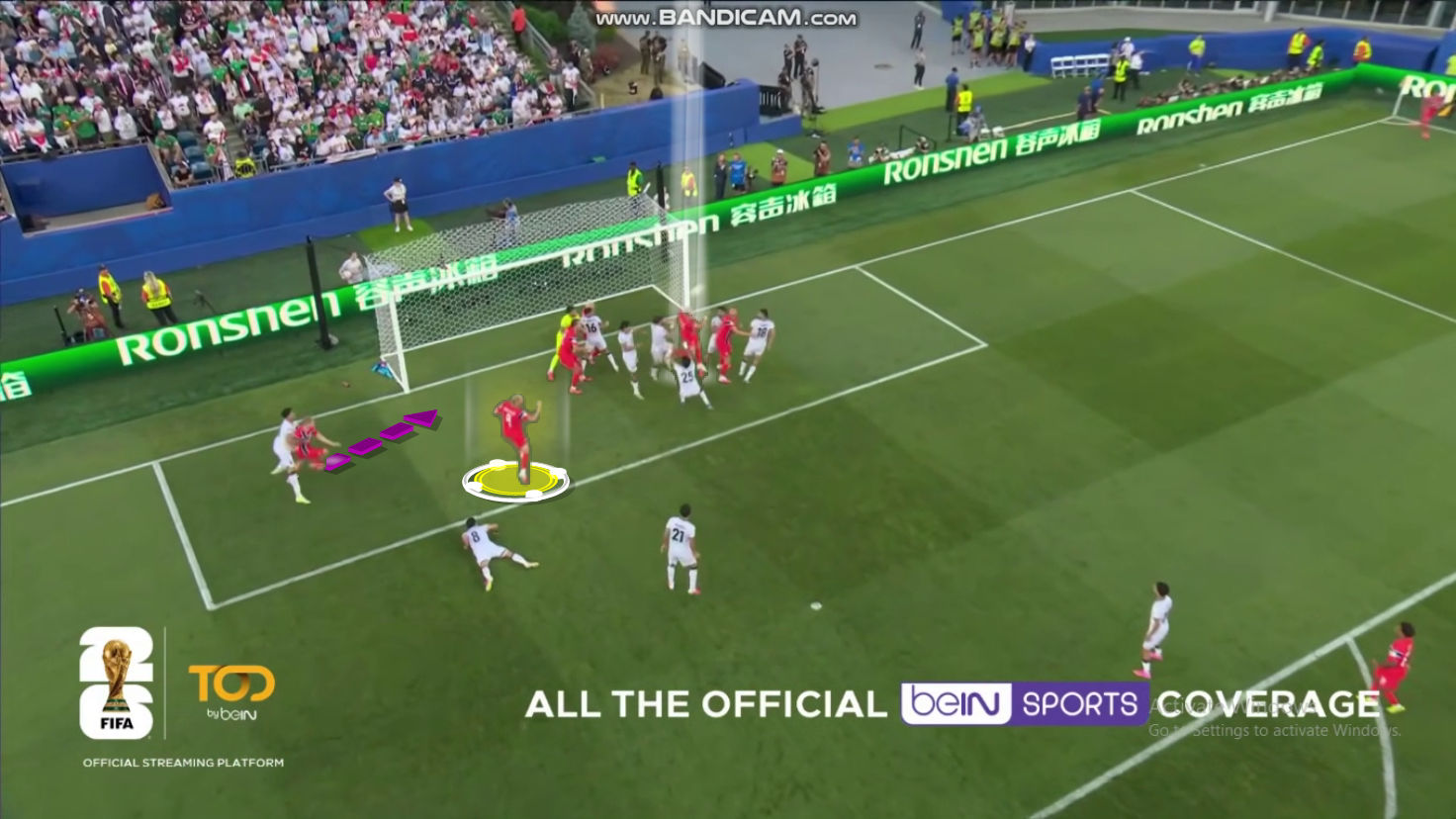
Against Iraq, they implemented a similar idea, scoring an important goal.
In Figure 7 below, note their pre-starting position.
They start in a pack on the far post (or even beyond it), moving away from goal, dragging their man markers with them before going back to their normal starting position.
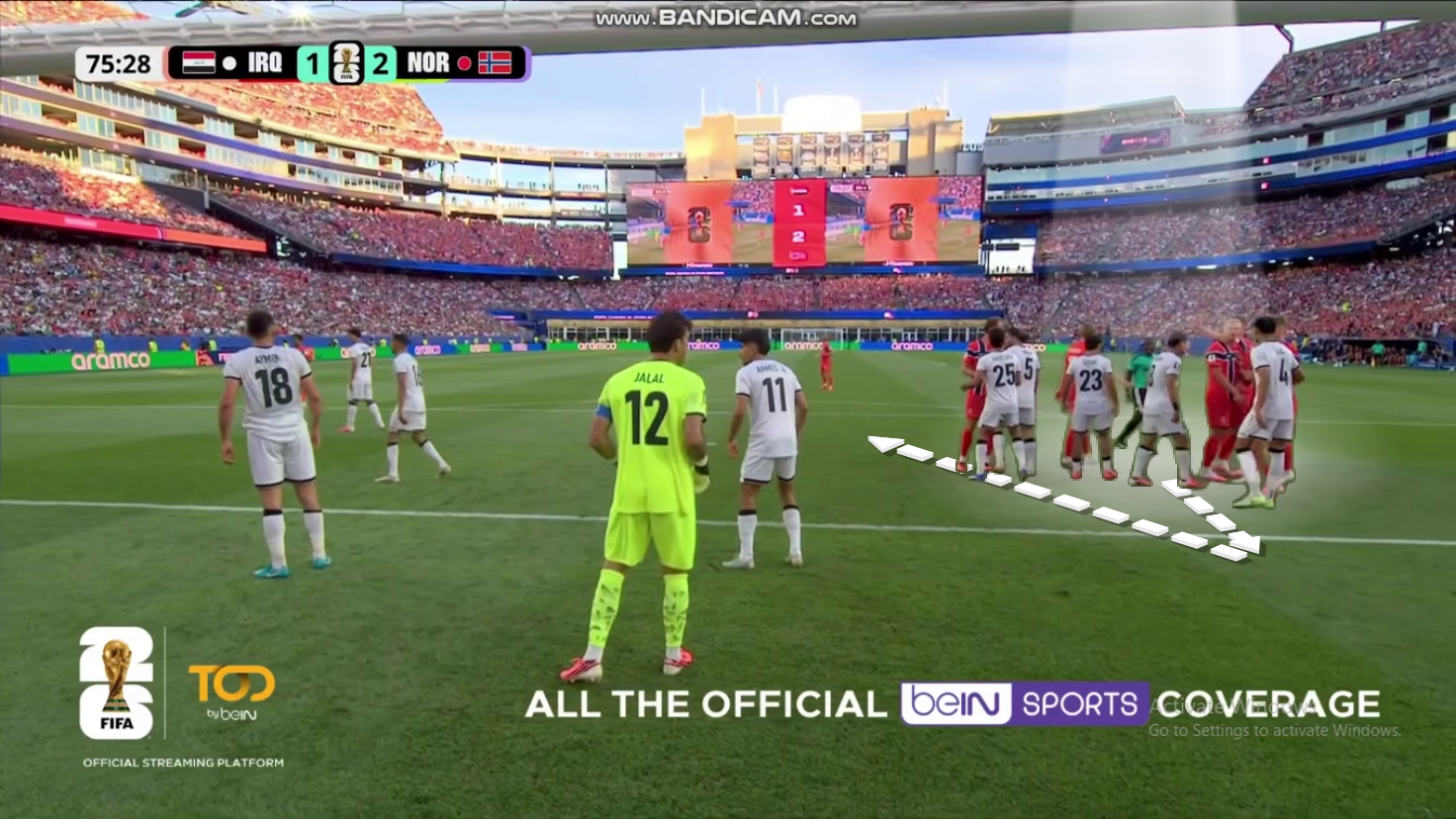
The purpose of this pre-starting position is to make it easy for the targeted player and the one who performs the block for freeing him to create separation between them and their man markers.
Figure 8 below shows the start of the story; Leo Østigård (white) is the targeted player, and Erling Haaland (yellow) is the one who performs the block to free him.
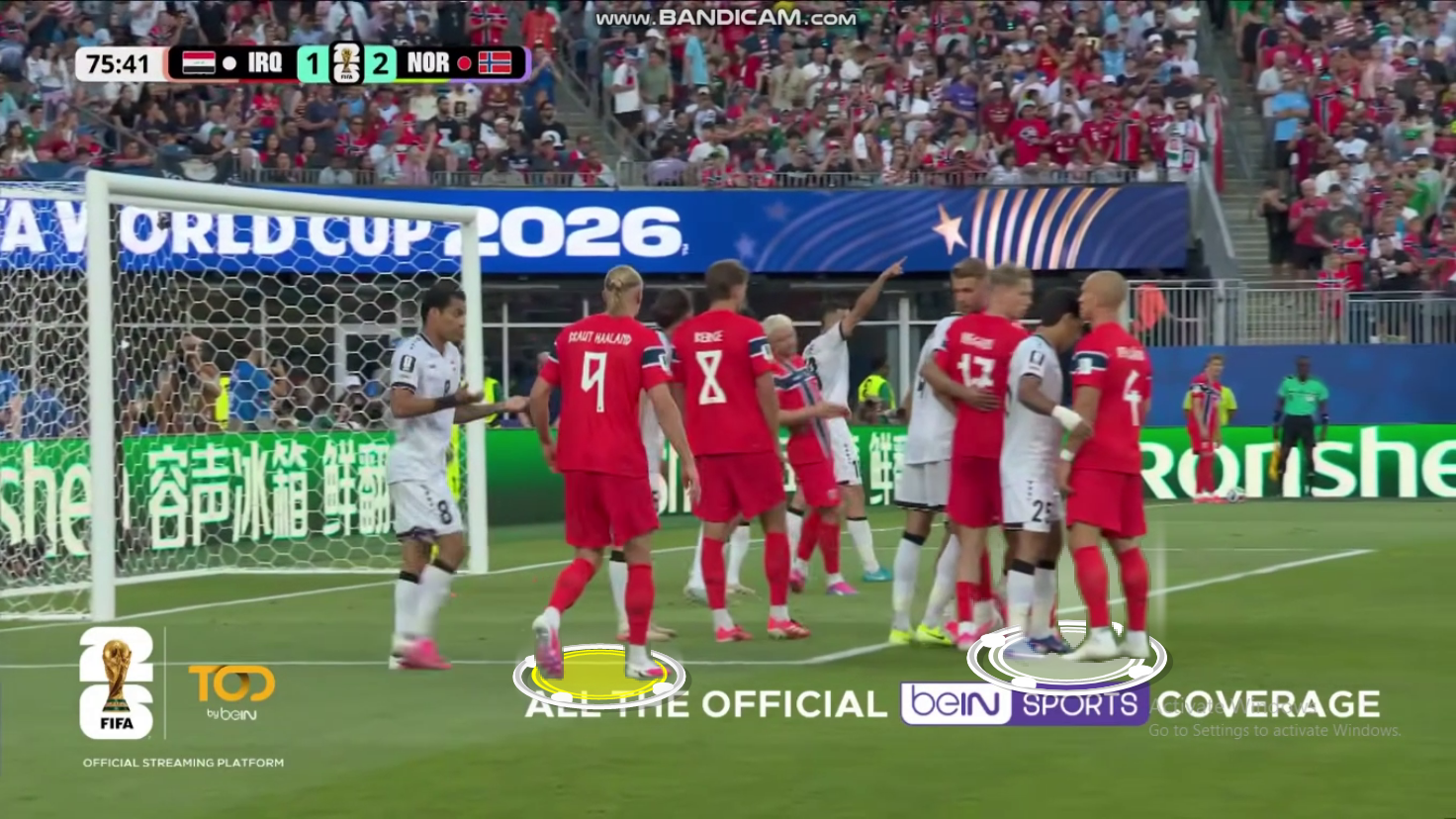
Figure 9 below shows that Leo Østigård starts to retreat back to the normal starting position while Haaland, who knows the plan, reaches next to him before his man marker.
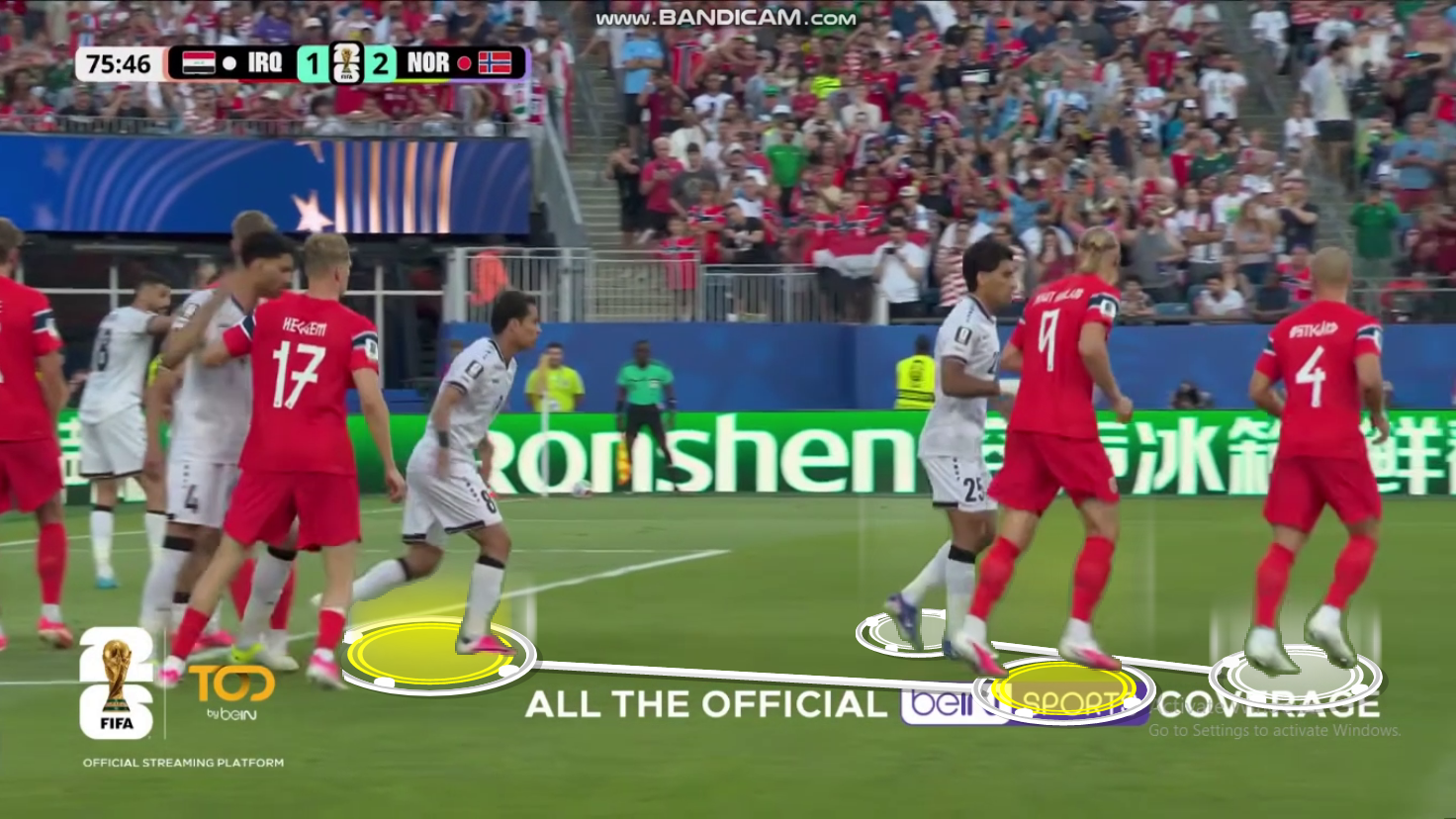
Figure 10 below shows their actual starting position with enough distance to enable Haaland to push his marker and the targeted player's marker, allowing the targeted player to launch free early.
Iraq's two zonal defenders (blue) can't deal with this run because they are stationary while the targeted player comes free-jumping from running, which allows him to have a dynamic advantage.
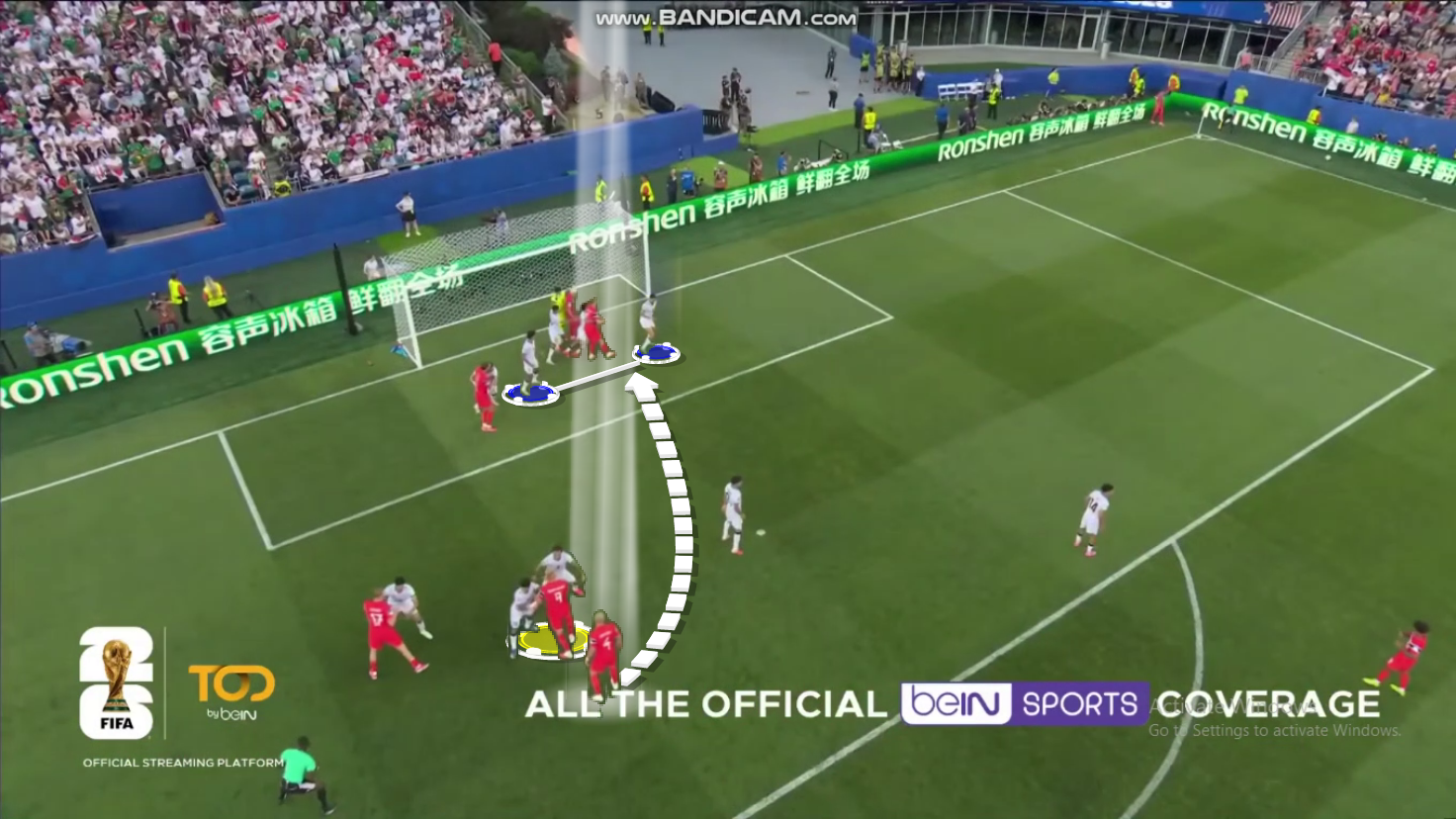
Figure 11 below shows that they add a player (orange) behind the first zonal defender to make him busy with him, to make sure that he won't retreat to fill the targeted area.
In green, you can find a player running towards the goalkeeper, making it two players having a barrier to prevent the goalkeeper from claiming the ball.
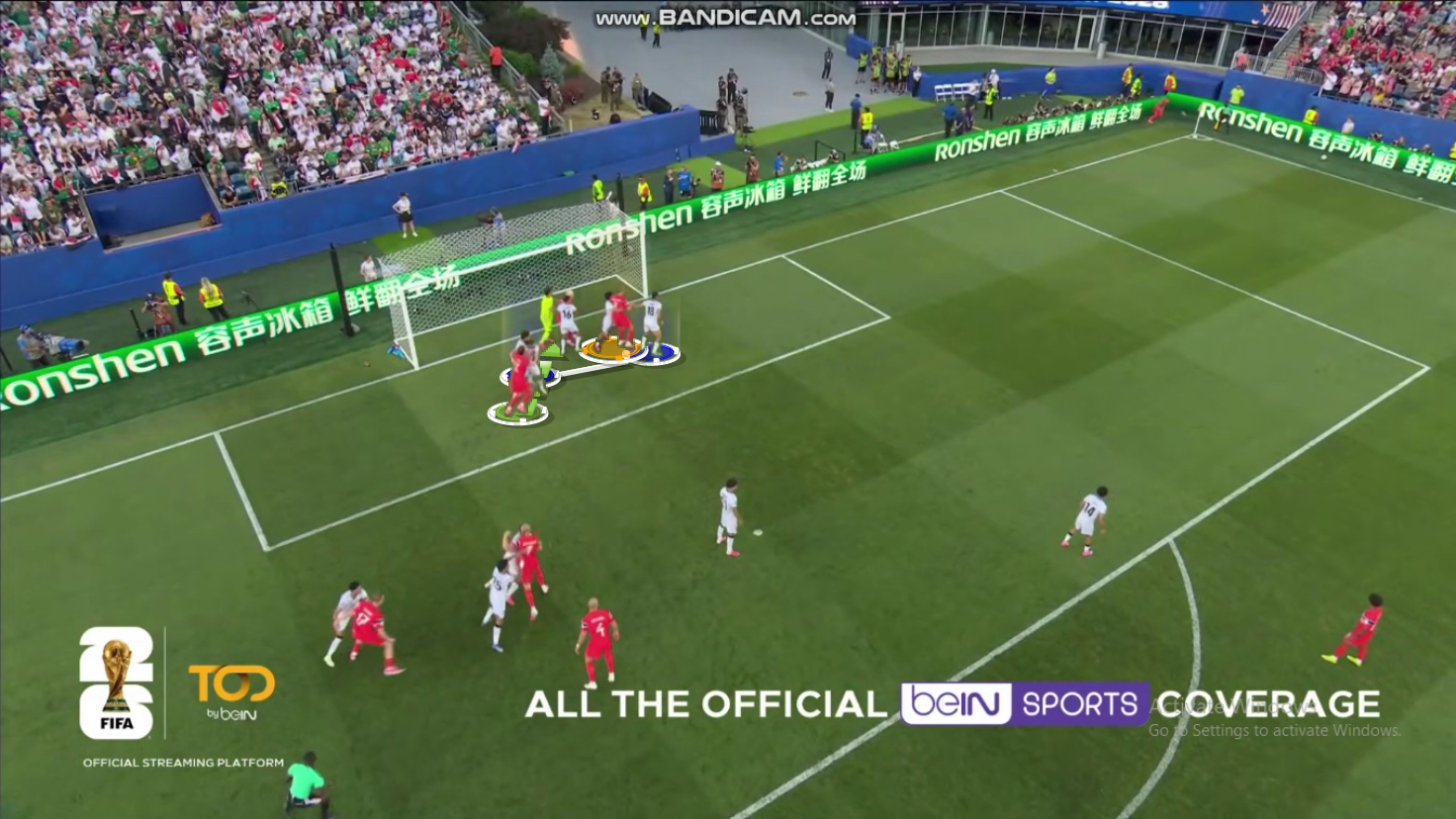
Haaland also has another work to frame the goal after that to be ready for any possible flick, as shown in Figure 12 below.
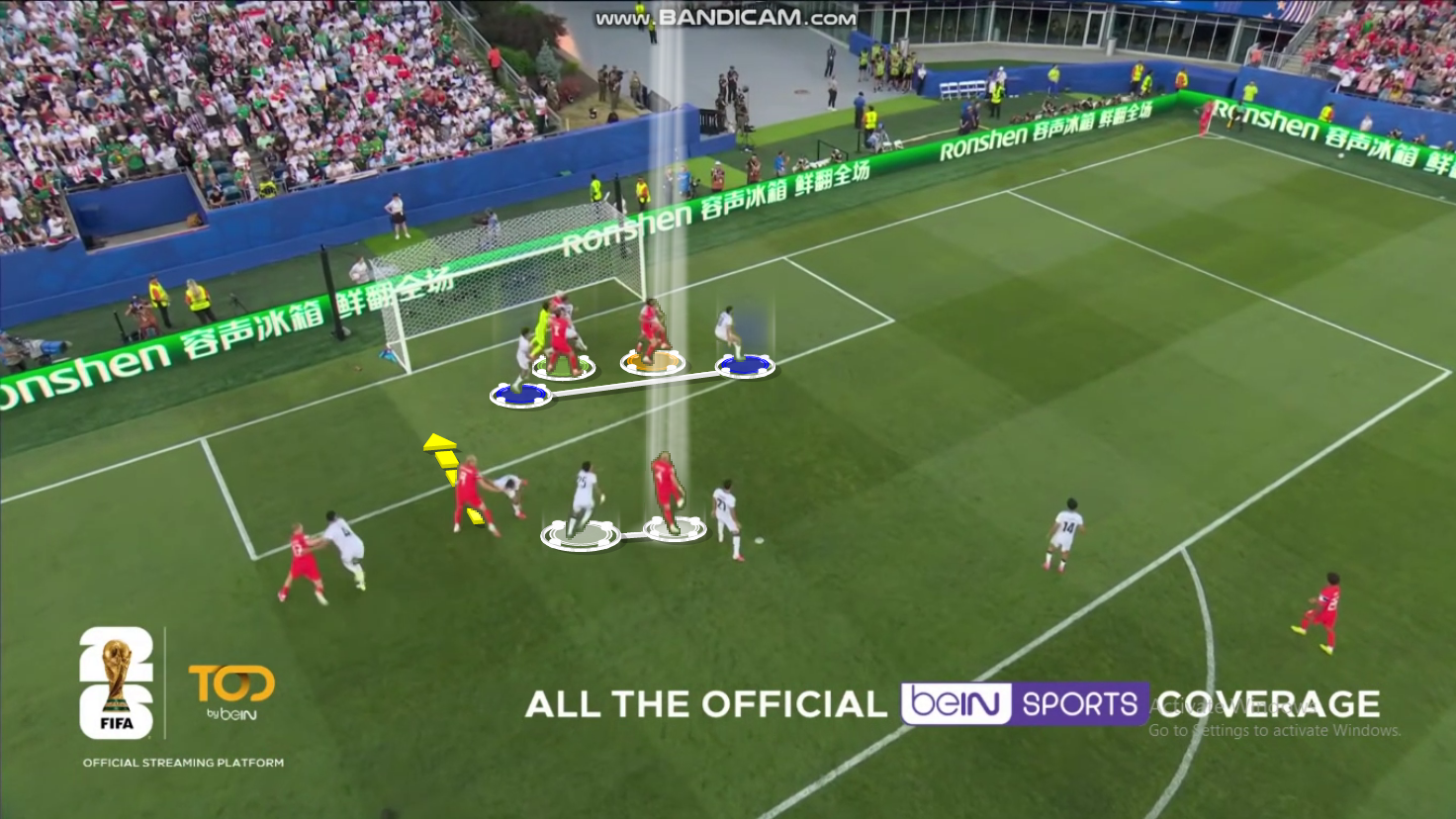
The plan works, and you can see the usual principle of (framing the goal), which allows them to follow the ball.
However, the result was a direct, headed shot into the net, scoring an important goal.