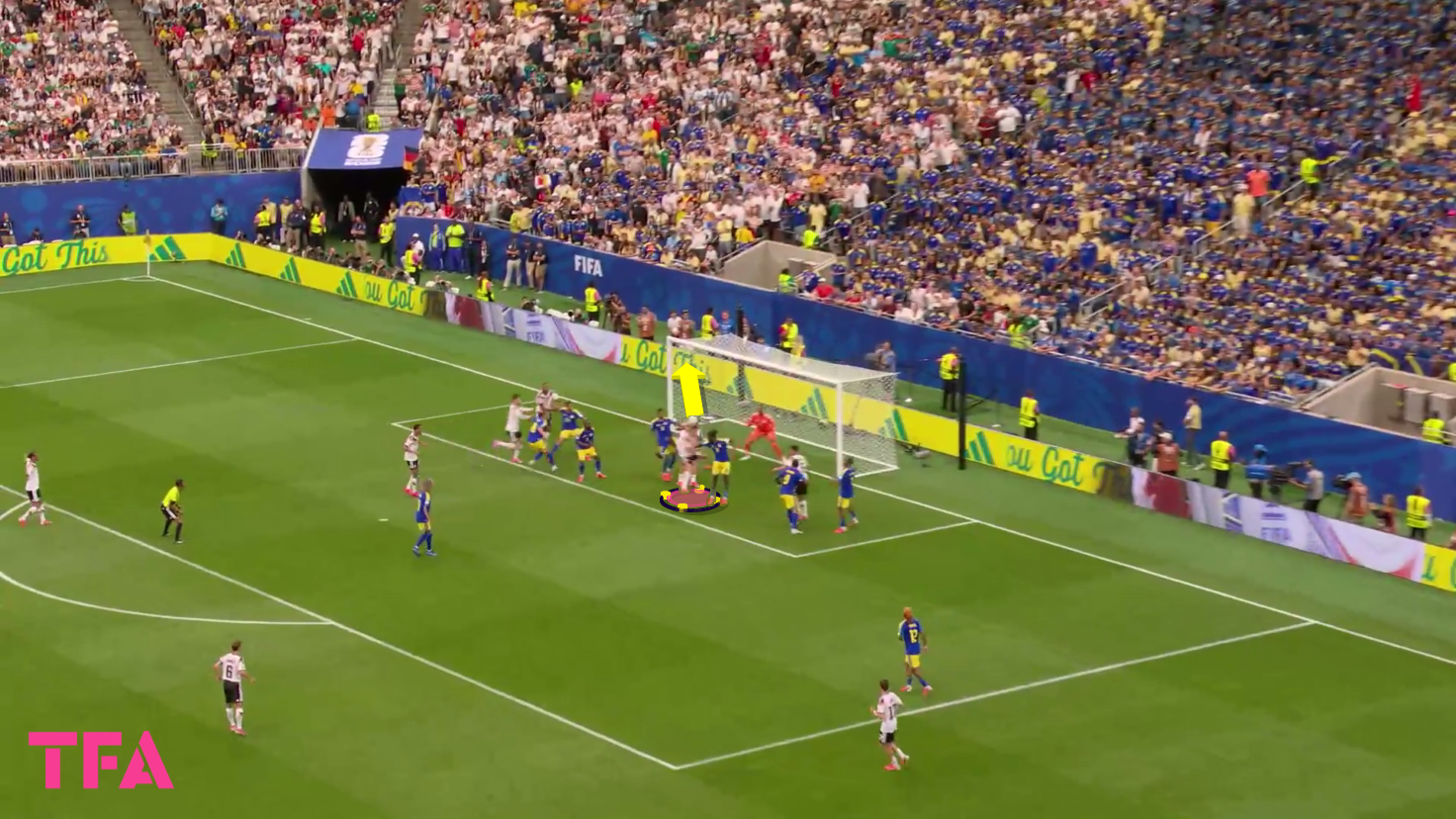

FIFA World Cup 2026: Inside The Group Stage Set-Piece Trends – Set-Piece Analysis

Set-pieces have been an increasingly decisive part of football over the past few years, and international teams are attempting to maximise the fine margins at the 2026 FIFA World Cup.
In response to rule changes and tactical shifts, this year's tournament has been a fascinating case study in set-pieces.
New rule changes have forced tactical adaptation from corners, while long throws have emerged as a crucial method of chance creation for many teams.
As teams navigate the challenges of the biggest stage in football, they are gravitating towards set-pieces in particular.
In this World Cup tactical analysis, we will use data analysis to understand the broad set-piece themes of the group stages, and then examine the details in our set-piece analysis.
Who Are The Best Set-Piece Teams At The World Cup?
The scatter plot below, based on event data from the group stage, plots xG gained per attacking set-piece delivery against xG conceded per defensive set-piece delivery faced.
This helps to determine which teams thrive and/or struggle in both attacking set-pieces and/or defensive set-pieces.
"Set-pieces" in this context are defined by corner kicks, and free-kicks/throw-ins delivered into the 18-yard box.
For this analysis, direct free-kick chances are excluded.
2026 FIFA World Cup Attacking & Defensive Set-Piece Efficiency
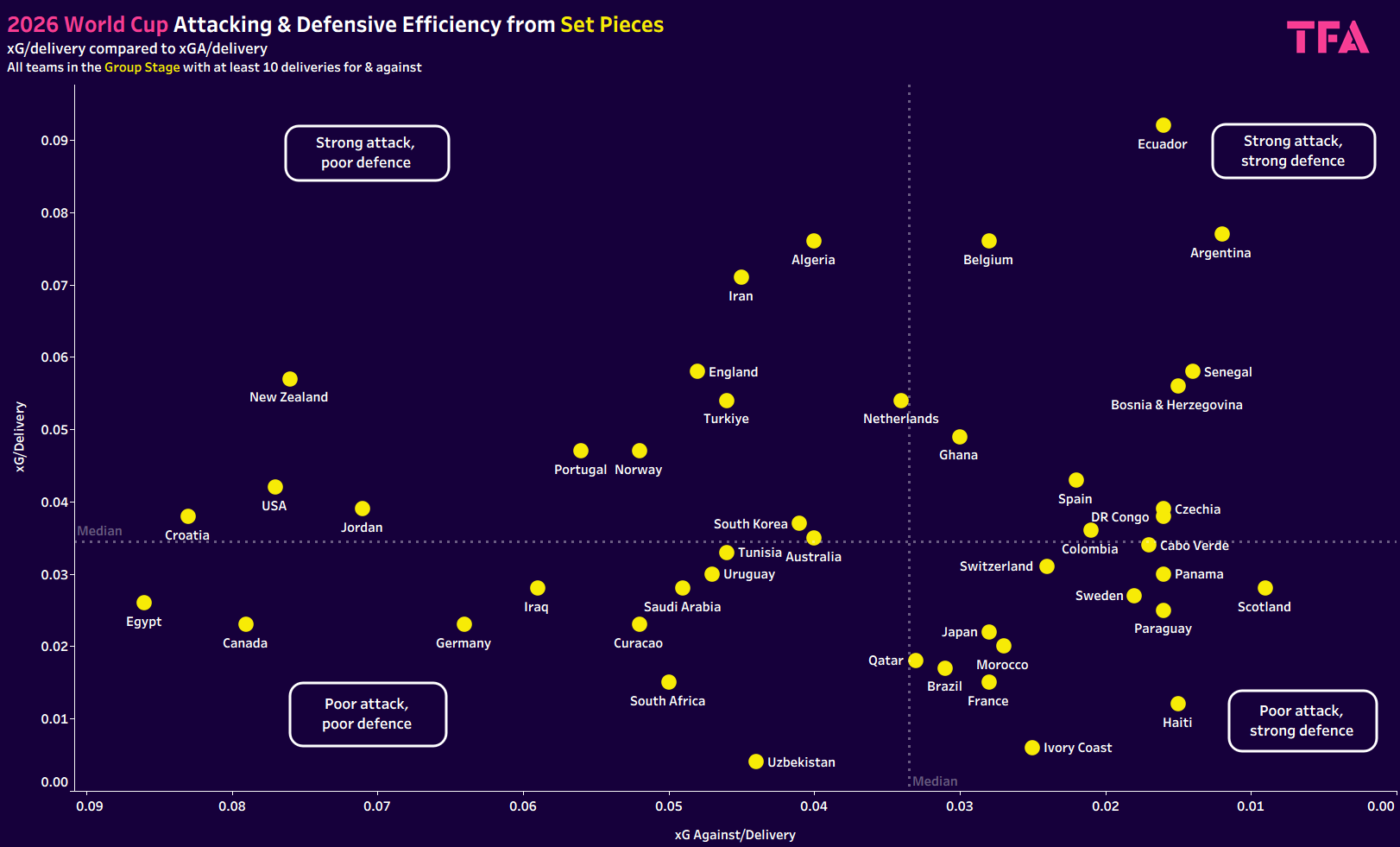
By normalising per delivery, we can evaluate teams on their efficiency in defending and attacking set-pieces, not merely on volume.
A few teams stand out in particular, with Ecuador, Belgium, Argentina, and Senegal displaying elite statistics on both sides of the ball.
A few high-profile teams surprisingly show subpar defending stats, notably Portugal, Germany, and England, below the median in xGA per delivery.
Set-play strengths and vulnerabilities from the group stage will only matter more as the knockout rounds begin.
Tactical Adaptations From Corner Kicks
The past club season was defined by a progressive homogenisation of corner-kick tactics.
In the Premier League, especially, clubs gravitated towards in-swinging deliveries into an overloaded six-yard box.
In this chaos, attackers looked to block the opposing goalkeeper and pin down the defenders to create high-percentage aerial opportunities.
This "meat-wall", as it is often called disparagingly, was pioneered by clubs like Arsenal and Chelsea.
While many expected this strategy to feature prominently in the World Cup, recent IFAB rule changes have led to its decline in popularity.
The new IFAB rules allowed VAR intervention for attacking fouls committed before play has started.
The intense and aggressive contact central to "meat-wall" corners is under greater scrutiny at the World Cup, and teams are reacting by removing players from the goalmouth, taking more outswingers and short corners, and utilising deep attacking runs.
2026 FIFA World Cup Set-Piece Delivery Types By Team
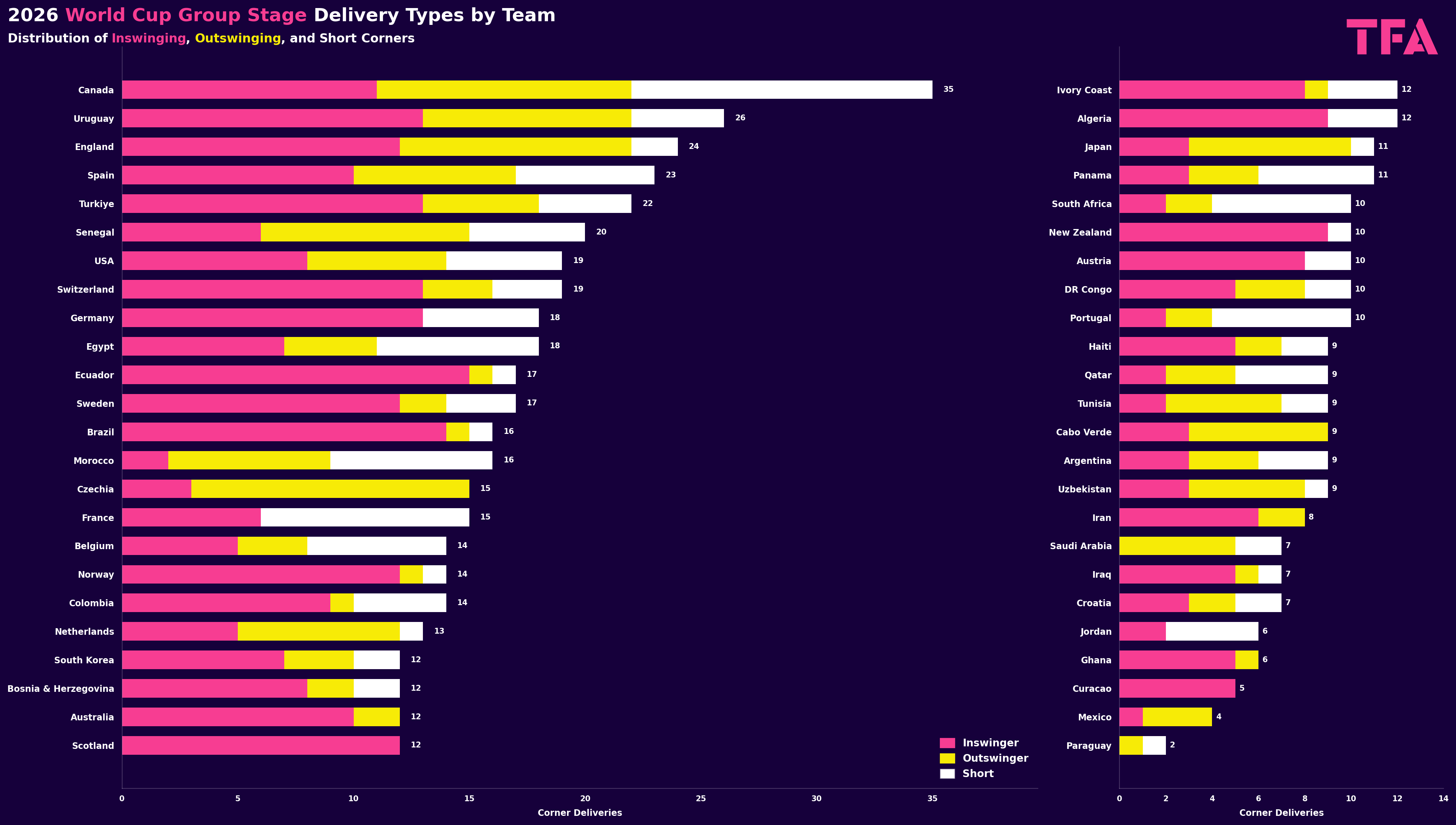
In the Premier League last season, about 70% of corners were in-swinging deliveries.
Only 51.2% of corners were in-swingers in the group stage.
While short corners rates are effectively identical, the percentage of outswingers is up to 25% at the World Cup.
Some teams are clearly still favouring in-swinging deliveries, but the broader picture reflects an increase in out-swingers.
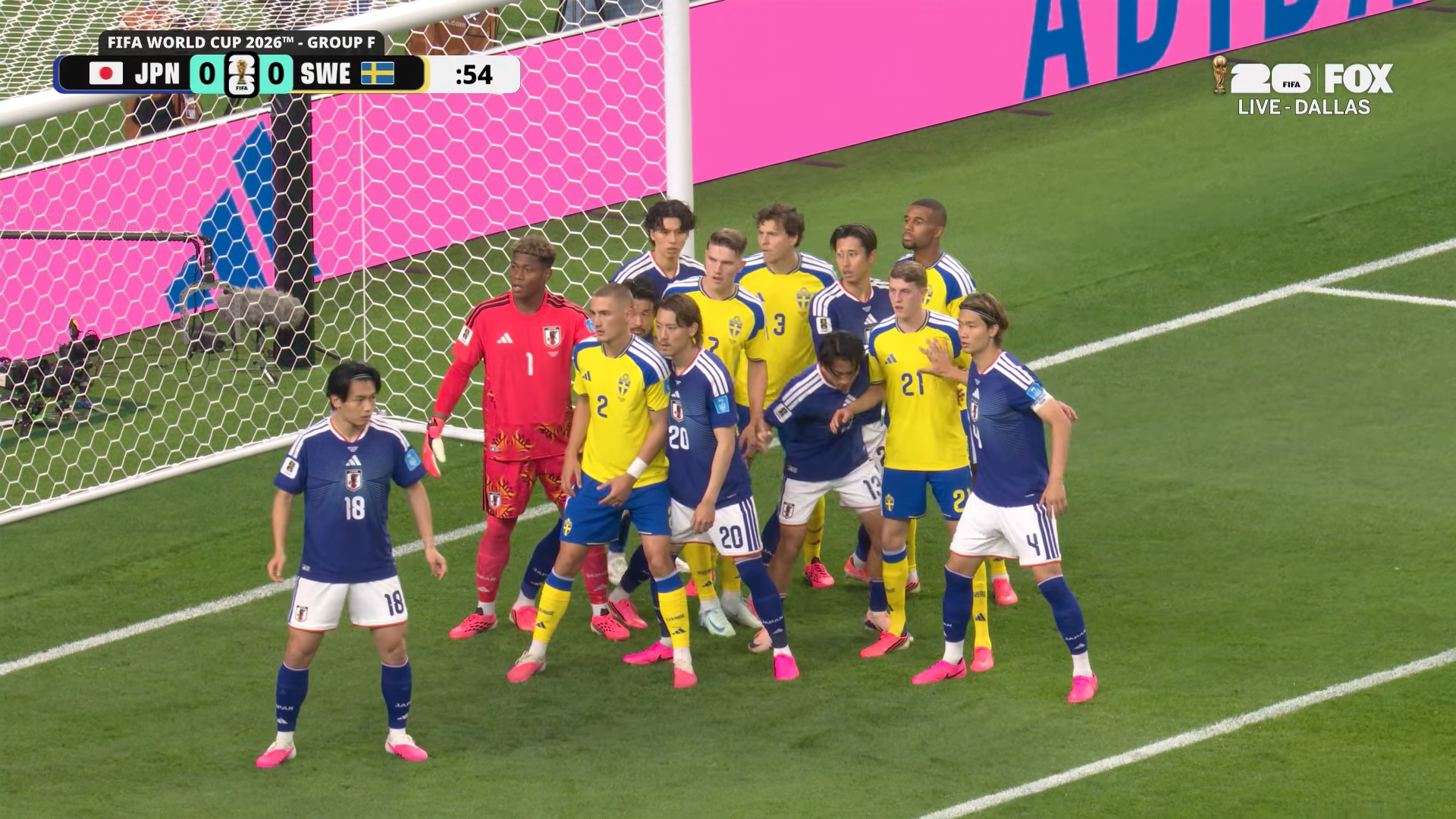
Some of this may be due to the constraints of international squads, since some teams may not have the players to take in-swingers on both sides of the pitch.
For many teams, however, it is a carefully made decision.
Even though England have multiple world-class corner takers on both sides of the pitch, Thomas Tuchel chose to implement outswingers as an integral part of their set-piece strategy.
Against Croatia's hybrid defence, England deployed an intelligent routine to create space for their star striker, Harry Kane.
They begin with Noni Madueke positioned to receive a short pass, which draws a Croatian defender out of the target area to cover the winger.
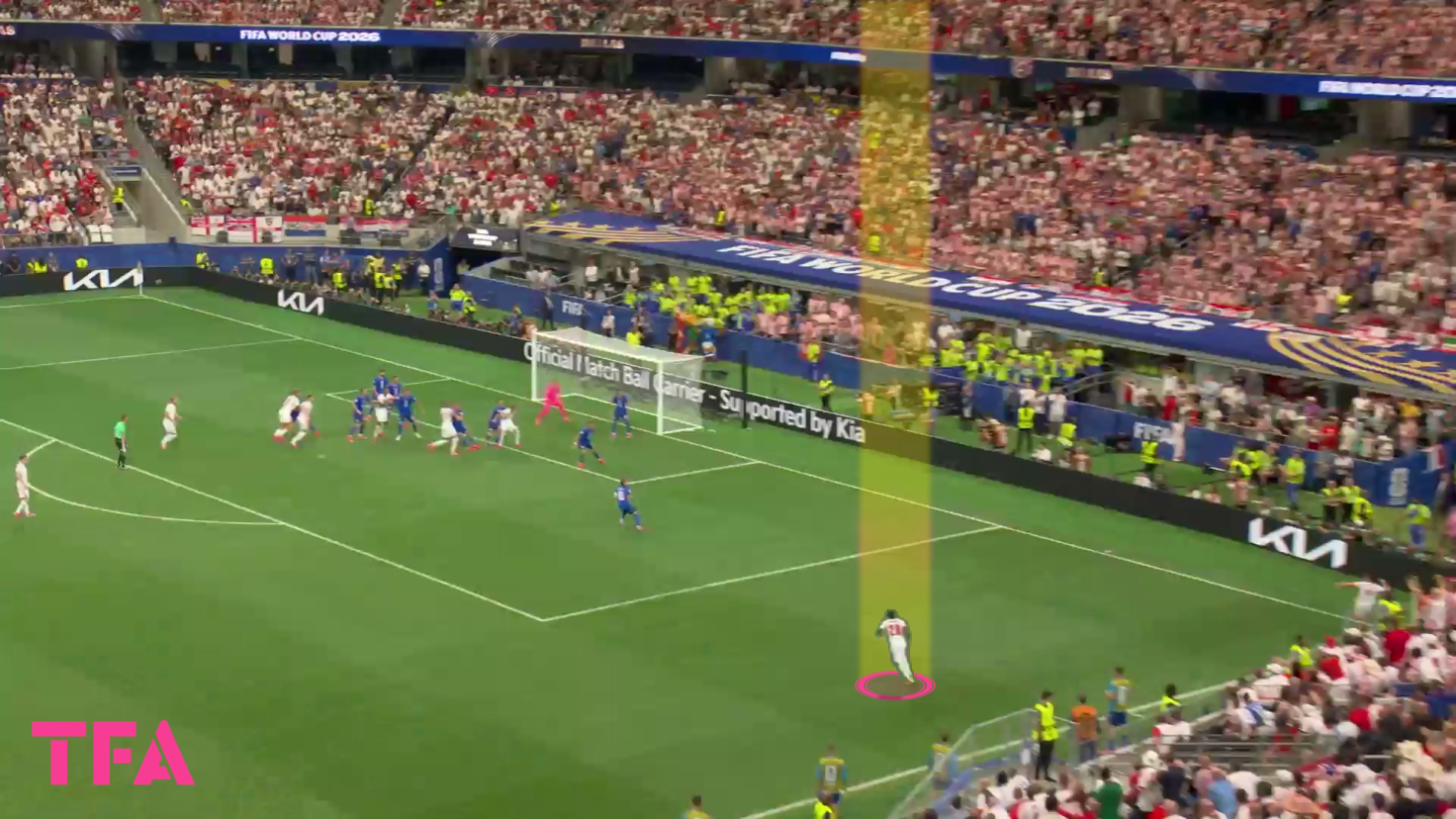
Harry Kane is positioned to make a deep run at pace toward Declan Rice's delivery.
With the running start, Kane generates a dynamic advantage against static defenders.
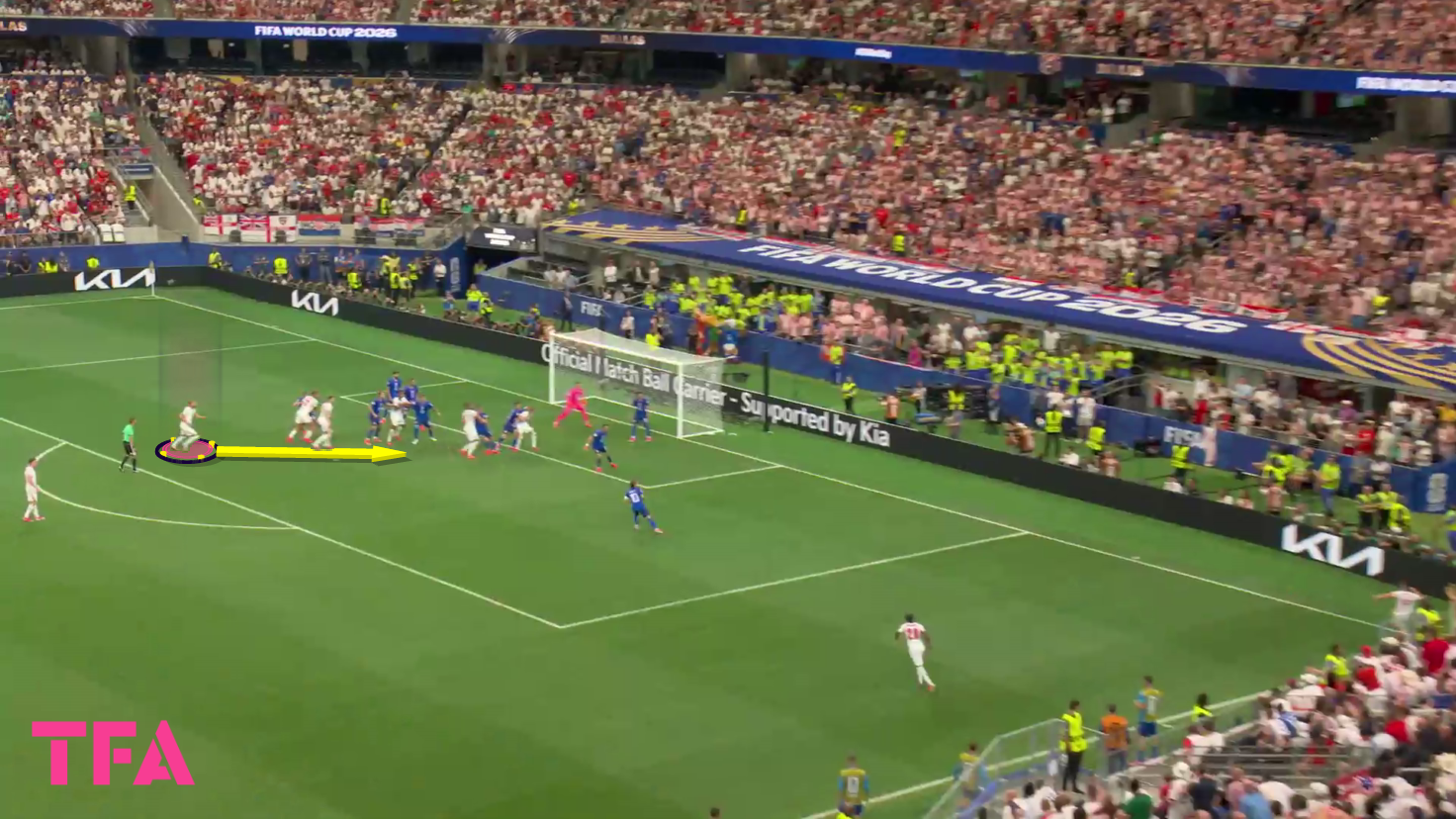
While Kane is making a run towards the target area, four England attackers create blocks to prevent any defenders from intercepting the cross or impeding Kane's attacking movement.
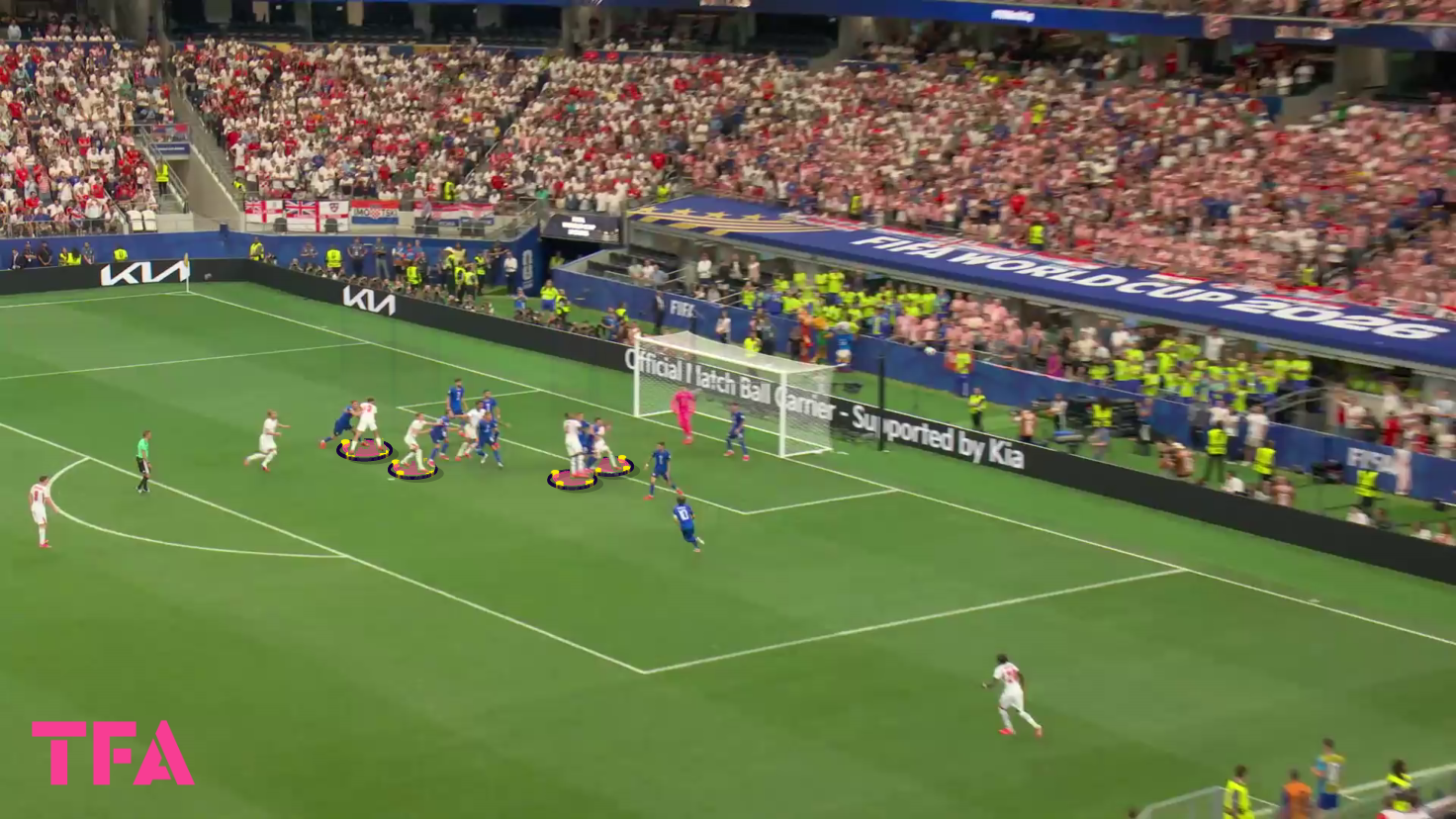
Completely uncontested due to England's attacking blocks, Harry Kane can comfortably head the ball in for a goal.
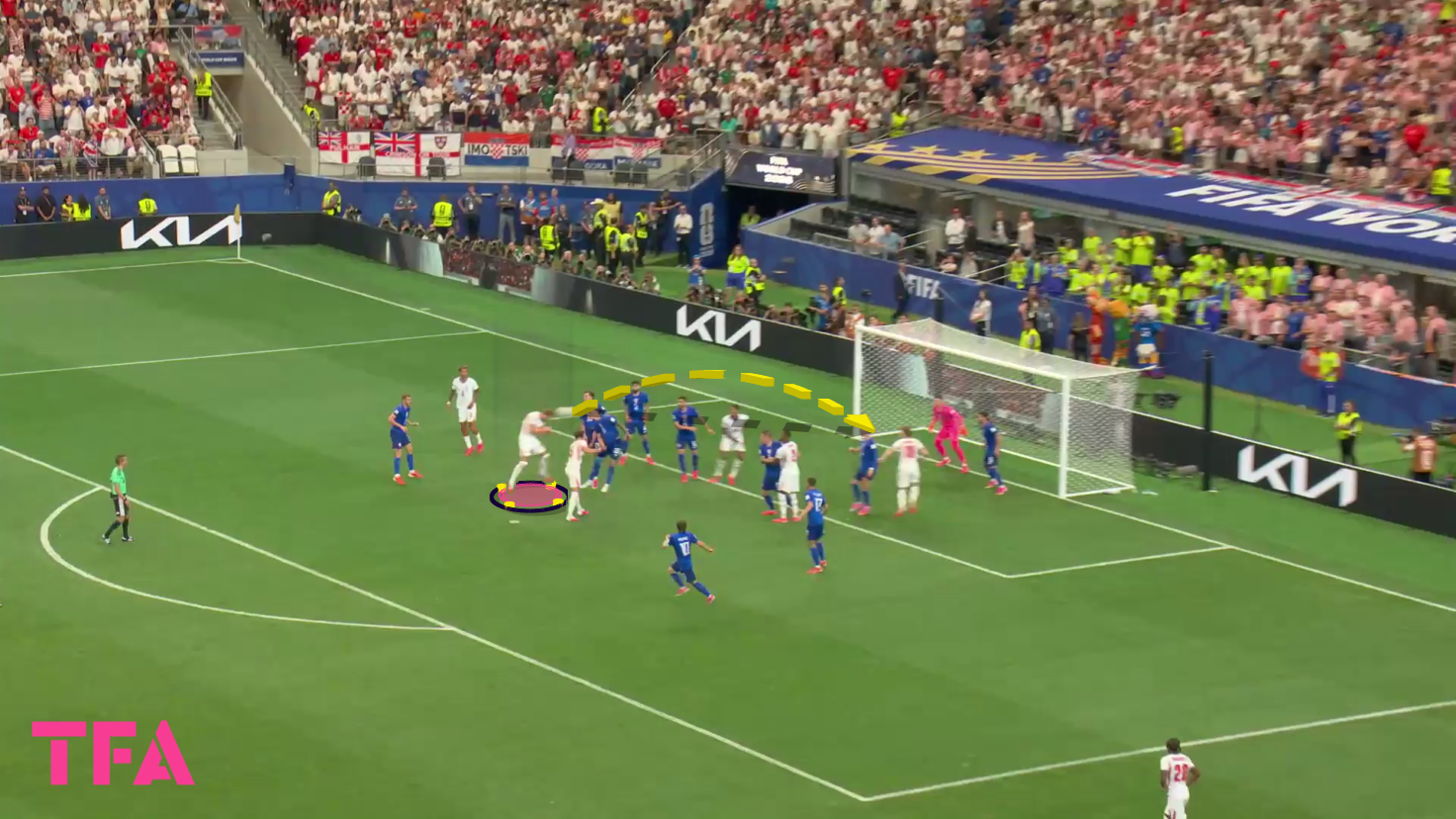
Like contemporary club set-piece tactics, this routine is heavily focused on impeding defensive movement.
While club tactics focused on creating congestion in the goalmouth, this routine aims to create space.
With the new rules, teams may be discouraged from creating the congestion that requires aggressive attacking movements to wade through a sea of defenders.
So many international teams have opted to focus on impeding defensive movements while creating space for attackers.
Outswingers are a simple method to create more space.
Since hybrid and zonal defensive setups need to cover more area against outswingers, there is naturally more space for attacking movement.
Paired with intelligent blocks, teams can create quality chances with a lower risk of committing fouls.
Germany also experimented with deeper attacking runs and blocks in a more spacious setup.
Against Curaçao, Germany placed Florian Wirtz as a short-option to draw a defender out of the box, creating more space for attacking movement.
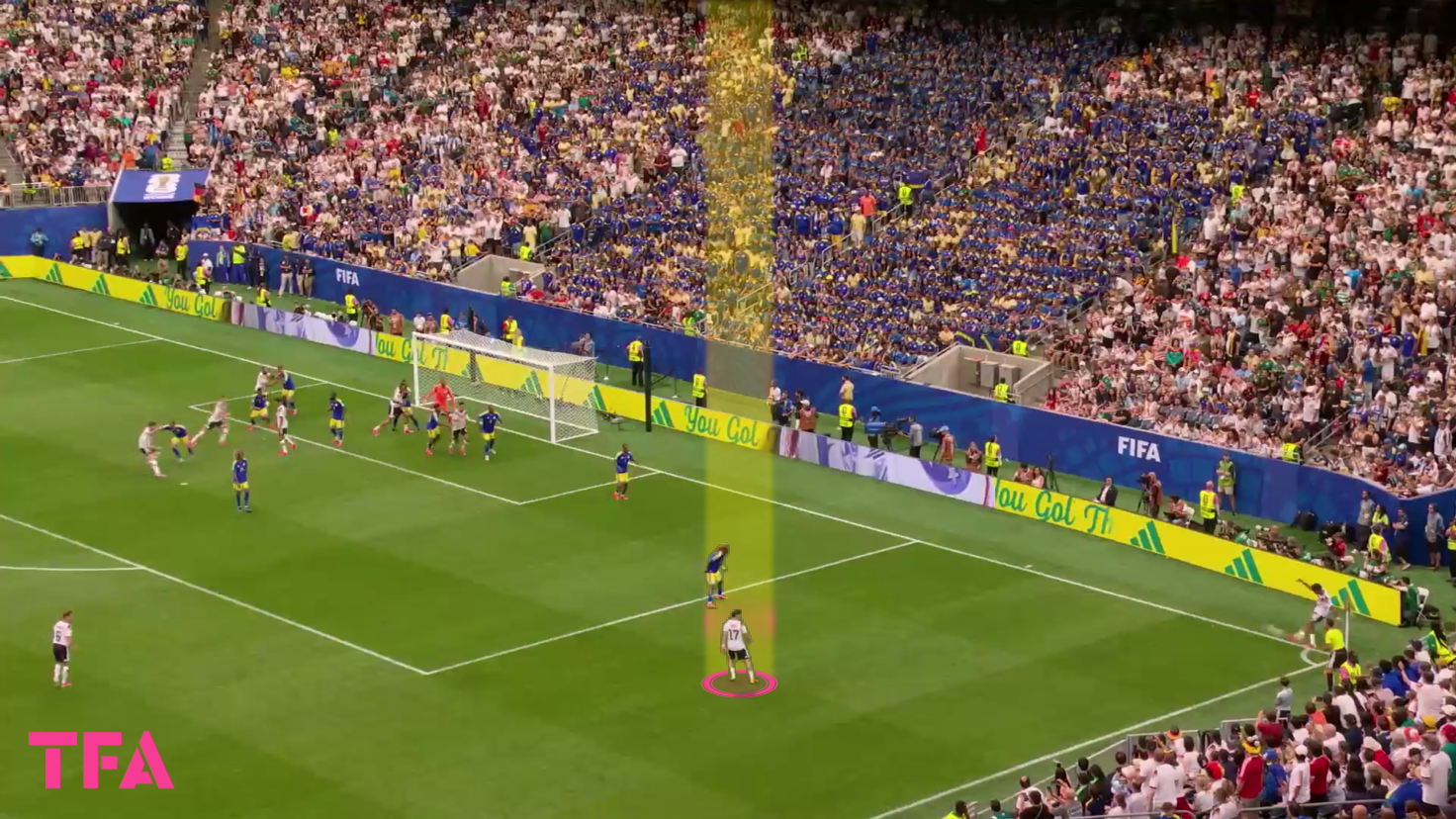
As Nathaniel Brown takes the inswinging delivery, two German attackers run towards the delivery, attacking the defenders' blind side to catch them off guard.
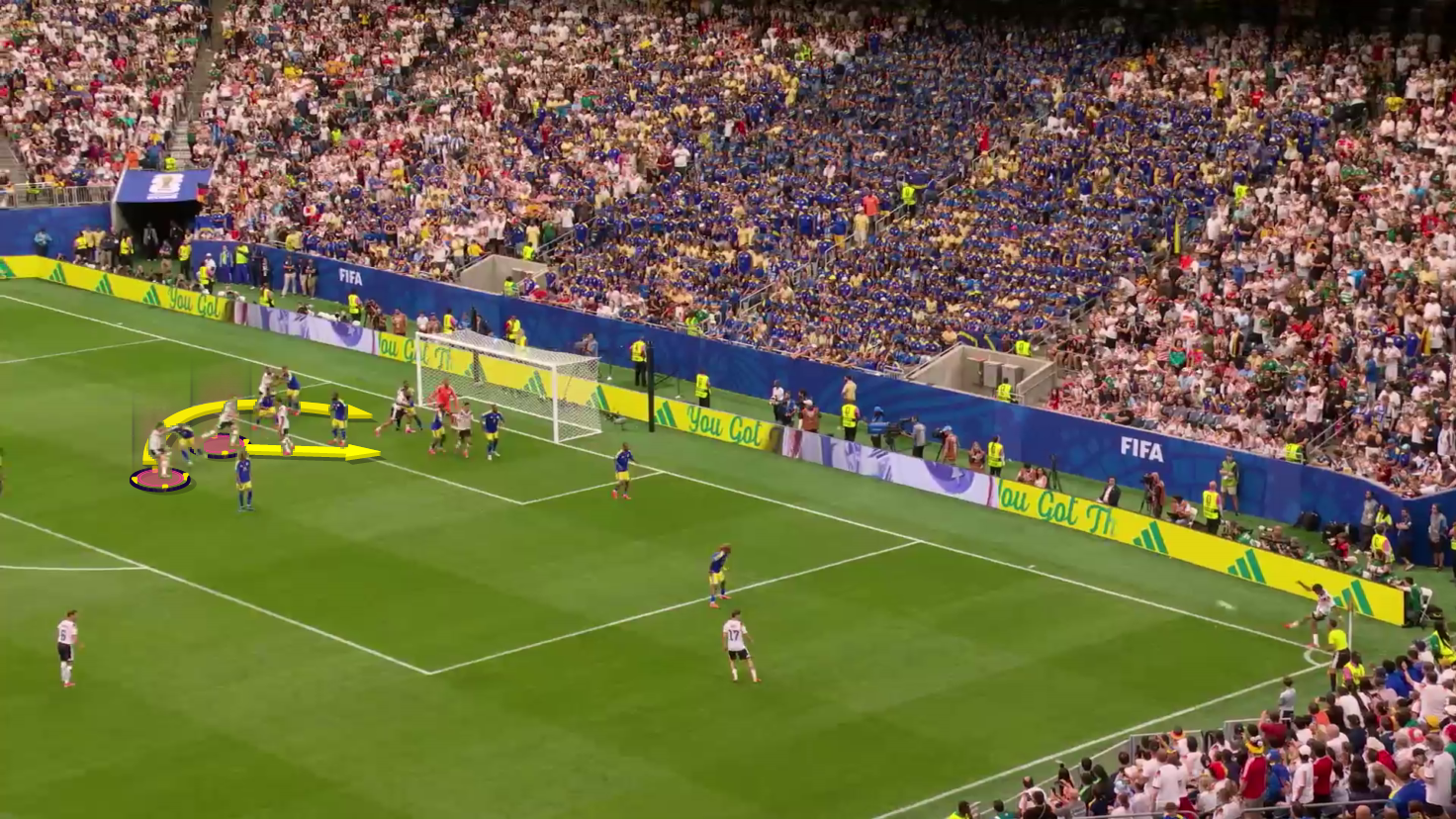
Germany simultaneously deploy two blocks to restrict the movement of the defenders and create space for Nico Schlotterbeck.
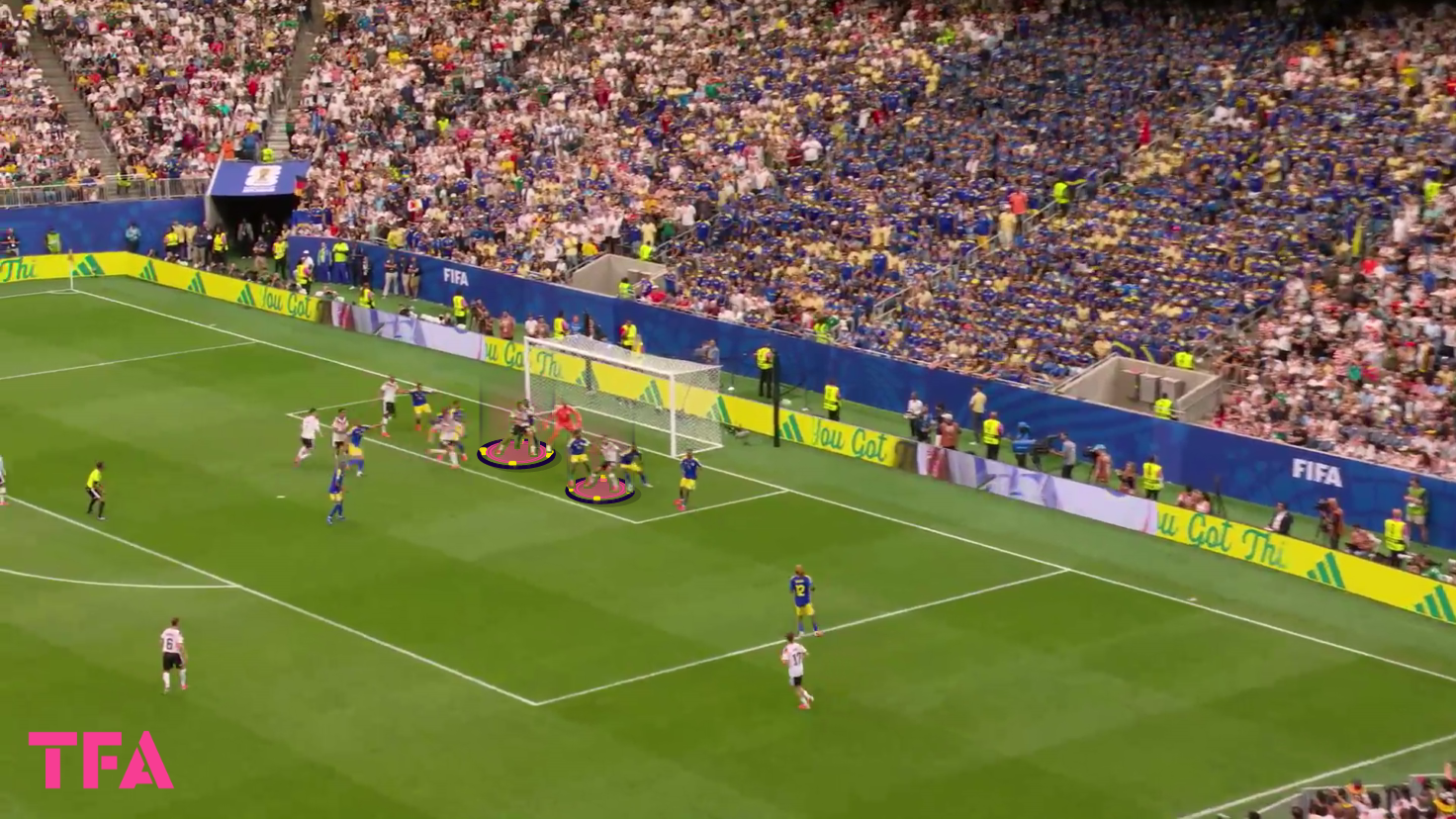
Attacking the delivery unimpeded at pace, Schlotterbeck can comfortably head the ball into the back of the net for a goal.