
Georgios Donis Tactics At Saudi Arabia 2026: The Corner-Kick Blueprint To Upset Spain – Set-Piece Analysis

Although Spain will enter their match against Saudi Arabia as favourites to win, 2026 World Cup matches are often decided by small details more than by overall technical differences.
While the Spanish team relies on possession and territorial control to manage matches, Georgios Donis's Saudi Arabia demonstrated in their match against Uruguay that they possess a completely different weapon: their ability to create danger from set-pieces and corner kicks.
The significance of this aspect lies not only in the goal Saudi Arabia scored against Uruguay, but also in the way they managed to create instability in the penalty area throughout the match.
Given Spain's goalless draw against Cape Verde in the first round, such details could prove crucial in determining the outcome of the upcoming encounter.
In this World Cup tactical analysis, we discuss how Saudi Arabia tactics can pose a threat and surprise Luis de la Fuente's La Roja.
Numerical Superiority In The Box
One notable aspect of modern football is that the distinction between major and minor teams has become less pronounced in set-piece situations compared to open play.
When the ball is stationary, many of the advantages of possession-based teams disappear, and the focus shifts to positioning, movement, timing, and the ability to win individual duels.
During the match against Uruguay, Saudi Arabia did not rely on sending the ball into the area and waiting for the outcome of the aerial duel; rather, there appeared to be a clear attempt to create numerical and kinetic superiority in specific areas.
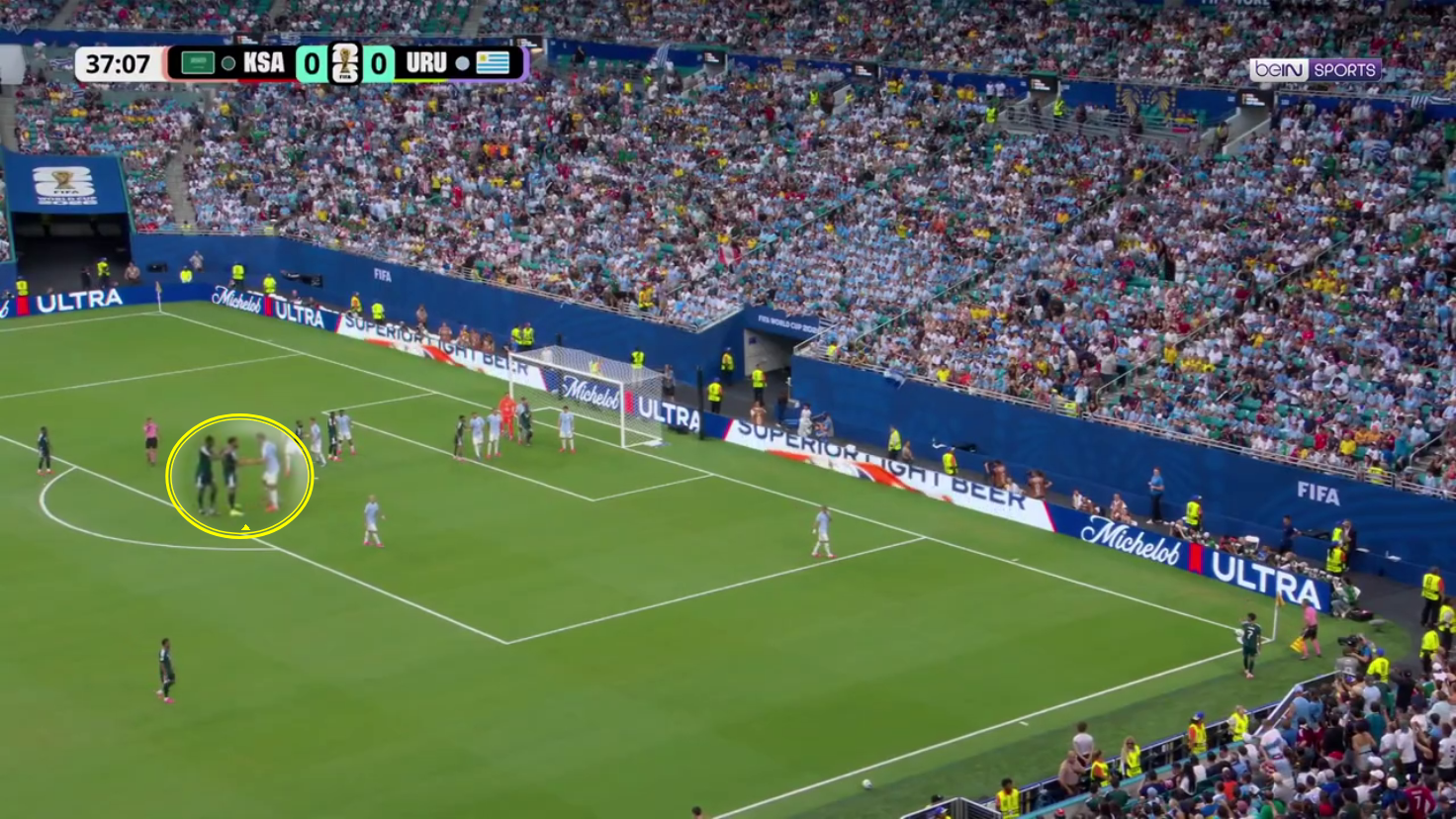
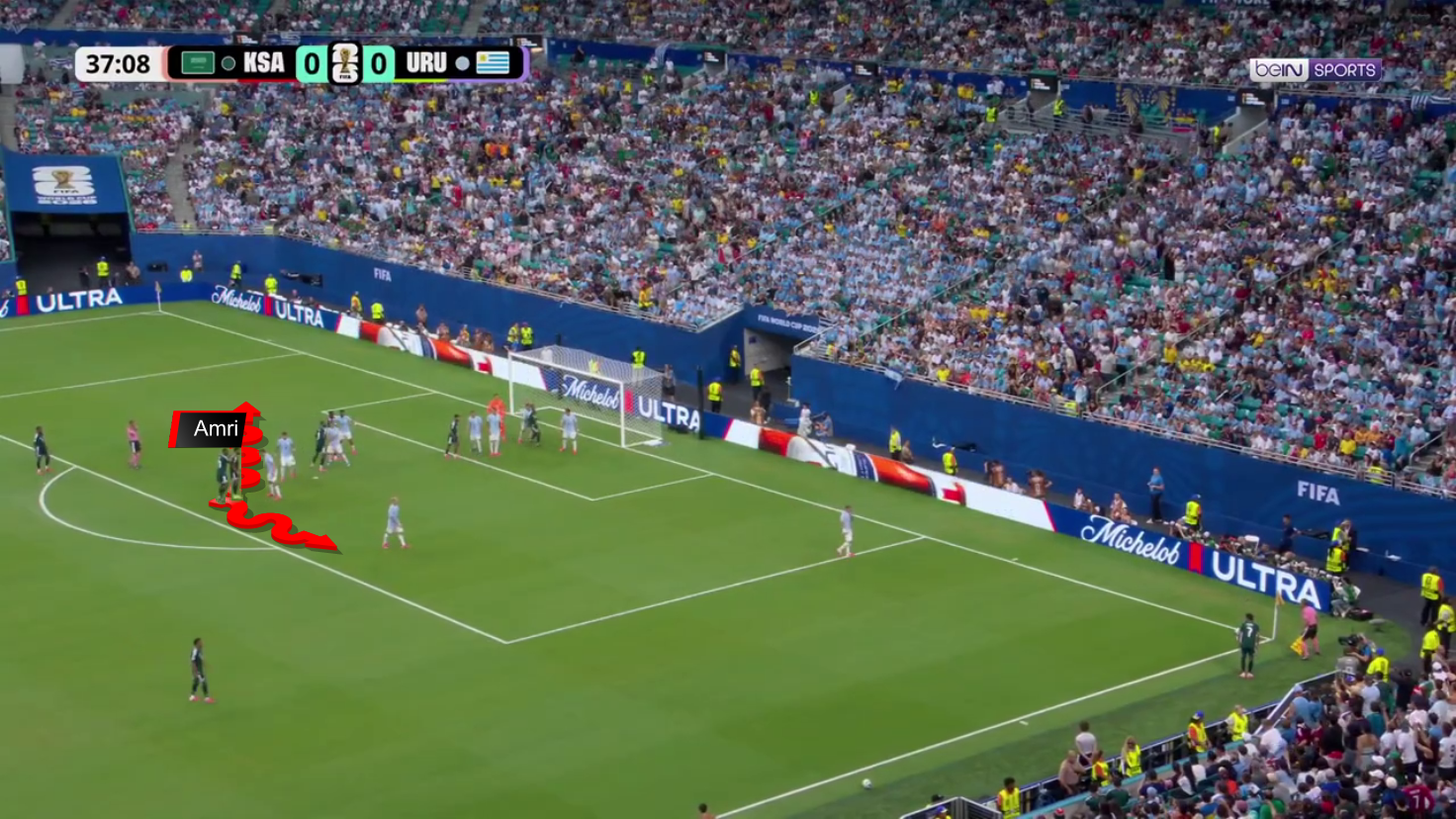
Here, there is numerical superiority at a point close to the penalty spot, with movement in the opposite direction diagonally.
Abdulelah Al-Amri is the key target player in the box; here, he becomes the free player.
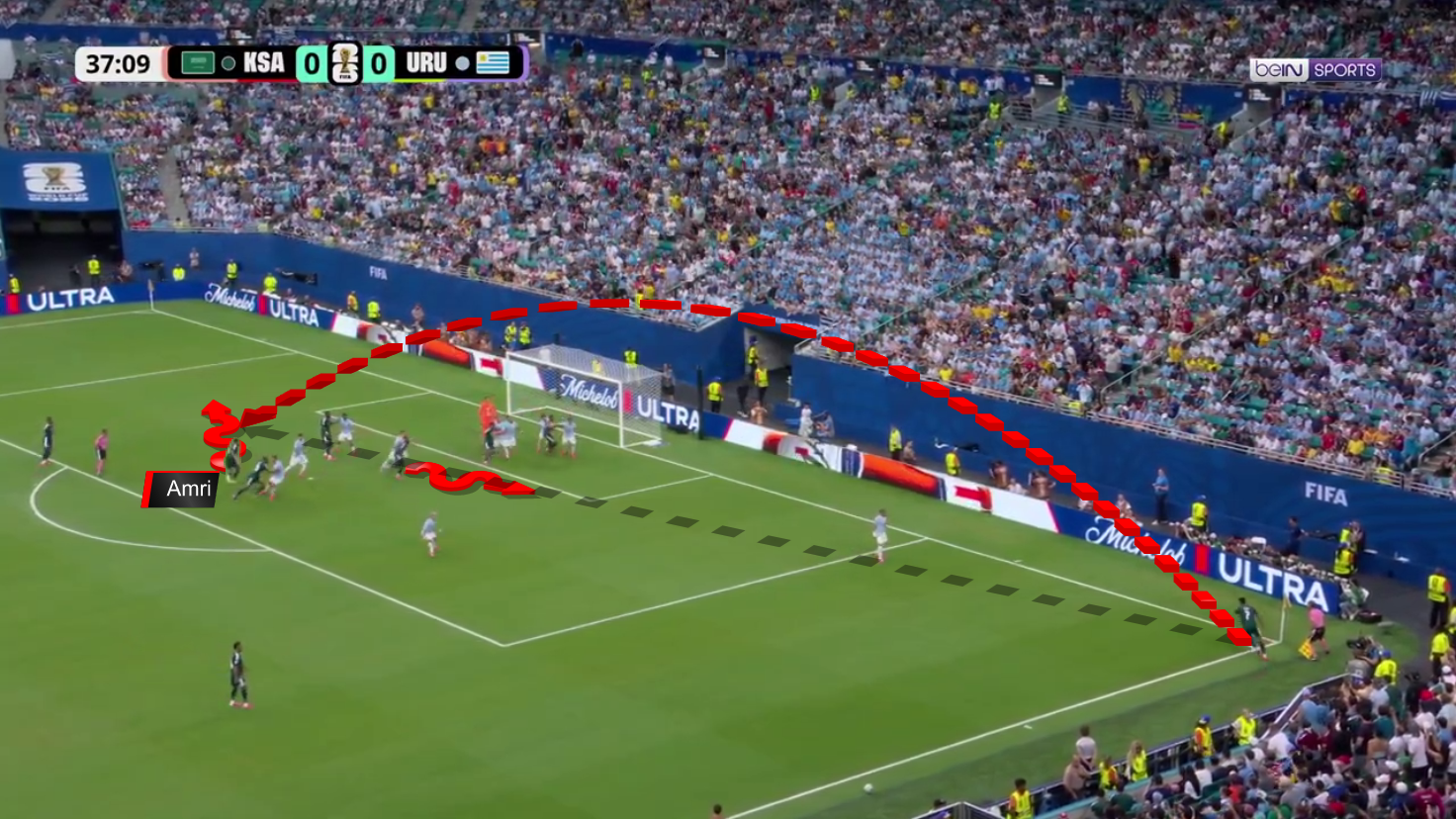
A player moves towards the near post, and the player closest to Amri moves inside.
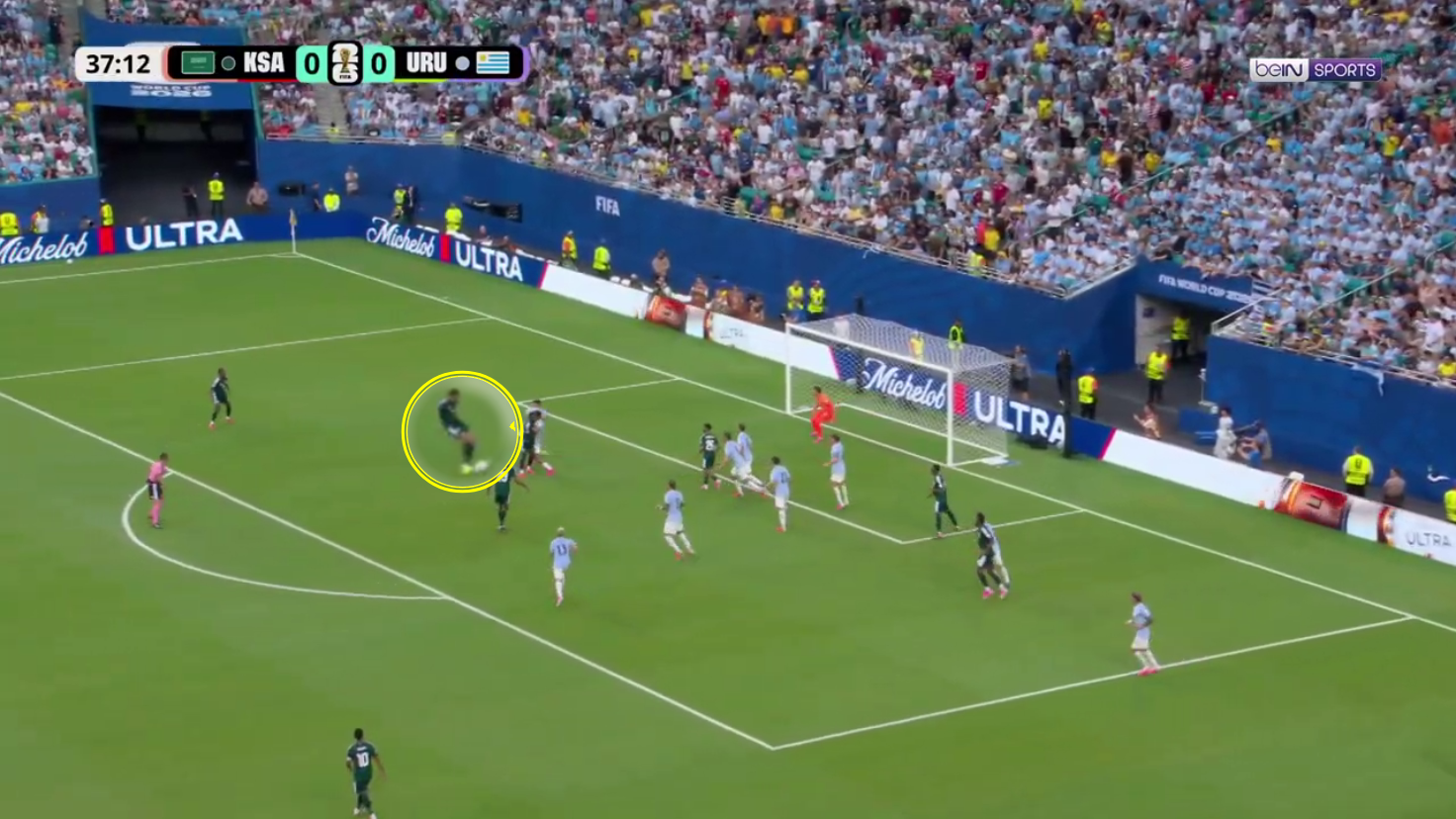
The attackers began moving in different directions, with one player pressing towards the near post while another moved towards the penalty spot.
These simultaneous movements were aimed not only at winning the first ball but also at disrupting the defensive organisation and creating confusion among the defenders about whom to mark and whom to leave alone.
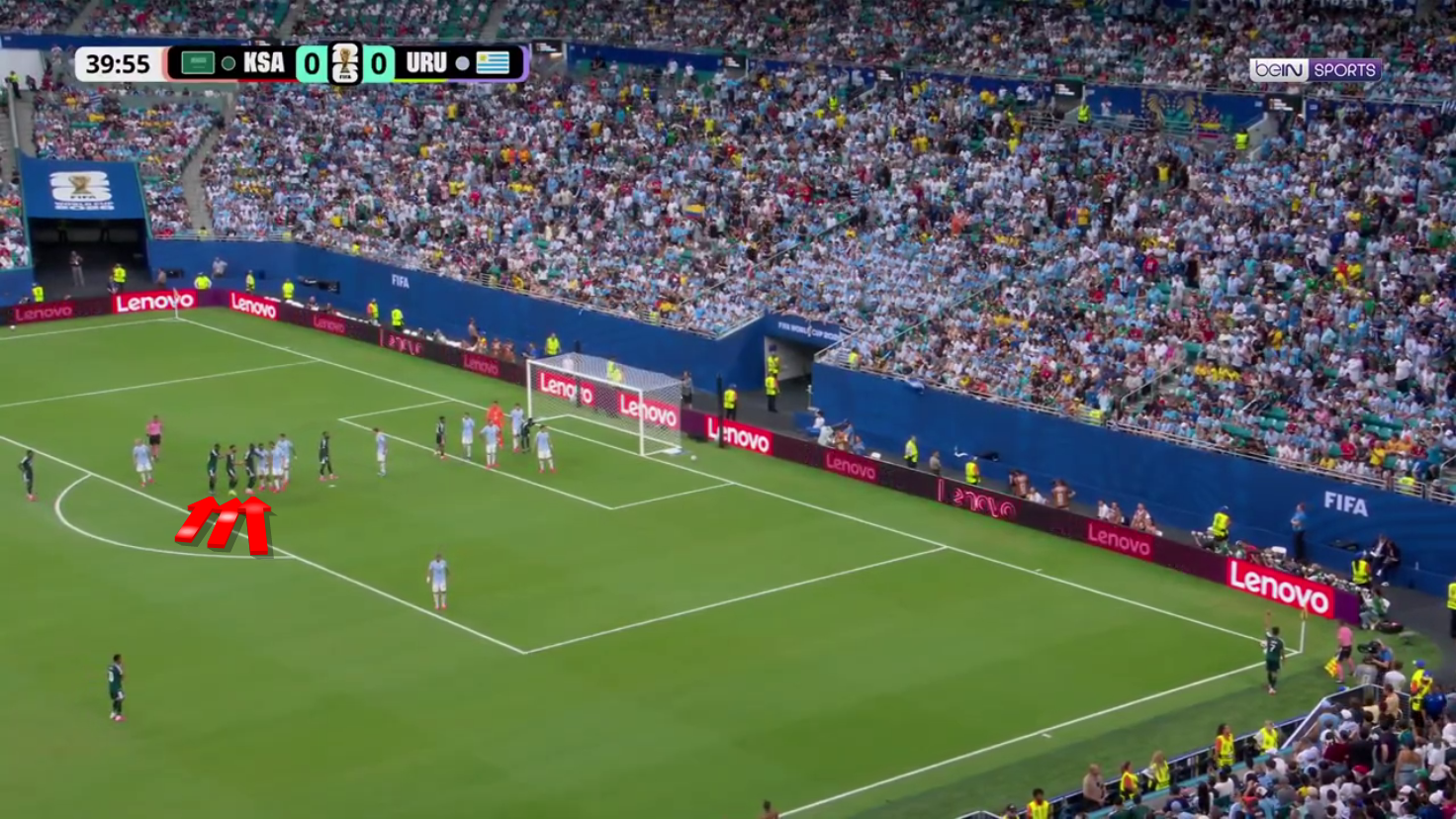
Here, we see three players in a train system; the middle player here is Amri, and behind him is Mohamed Kanno.
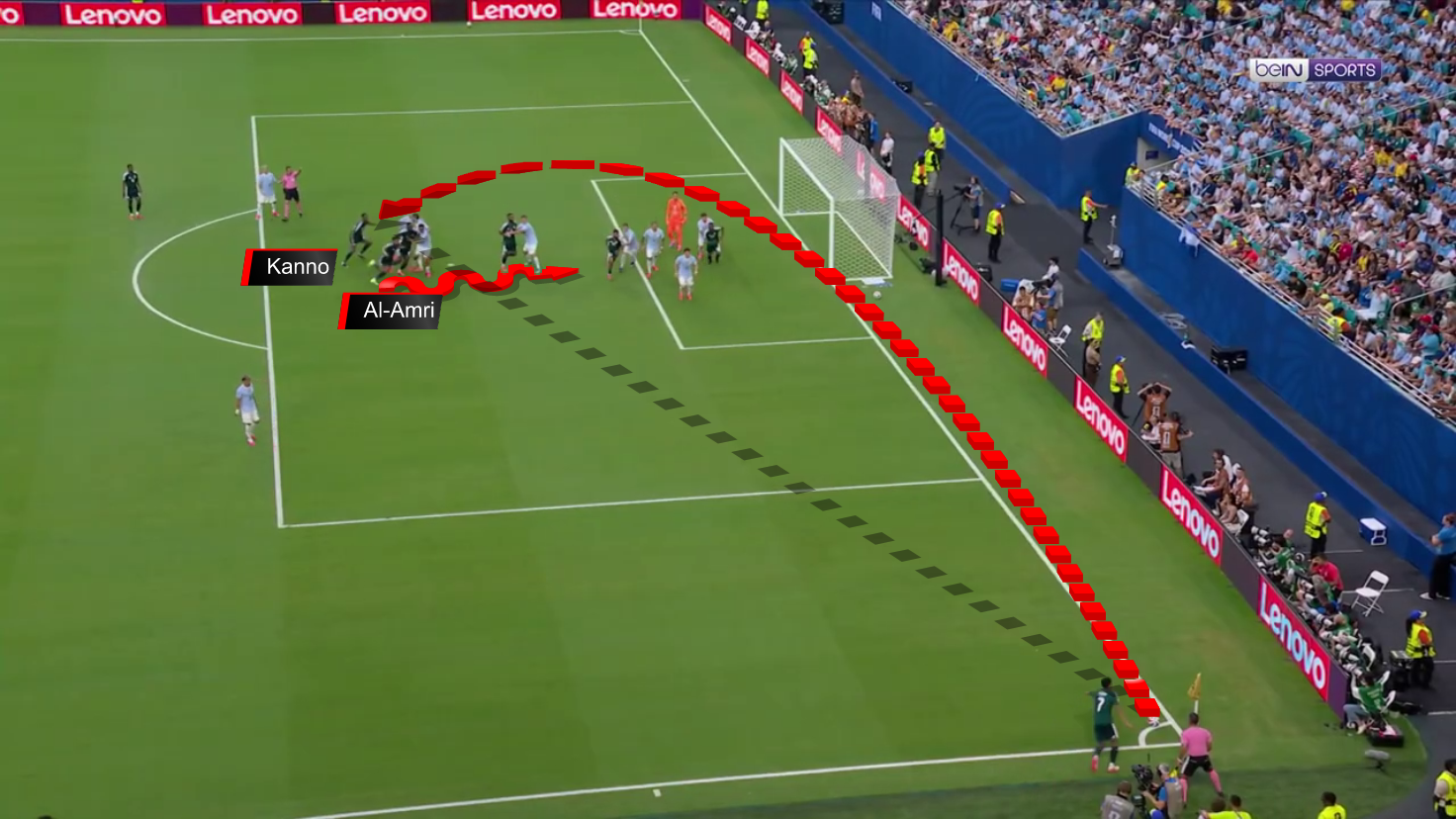
Amri moves vertically into the six-yard box, and Kanno moves horizontally to receive the cross.
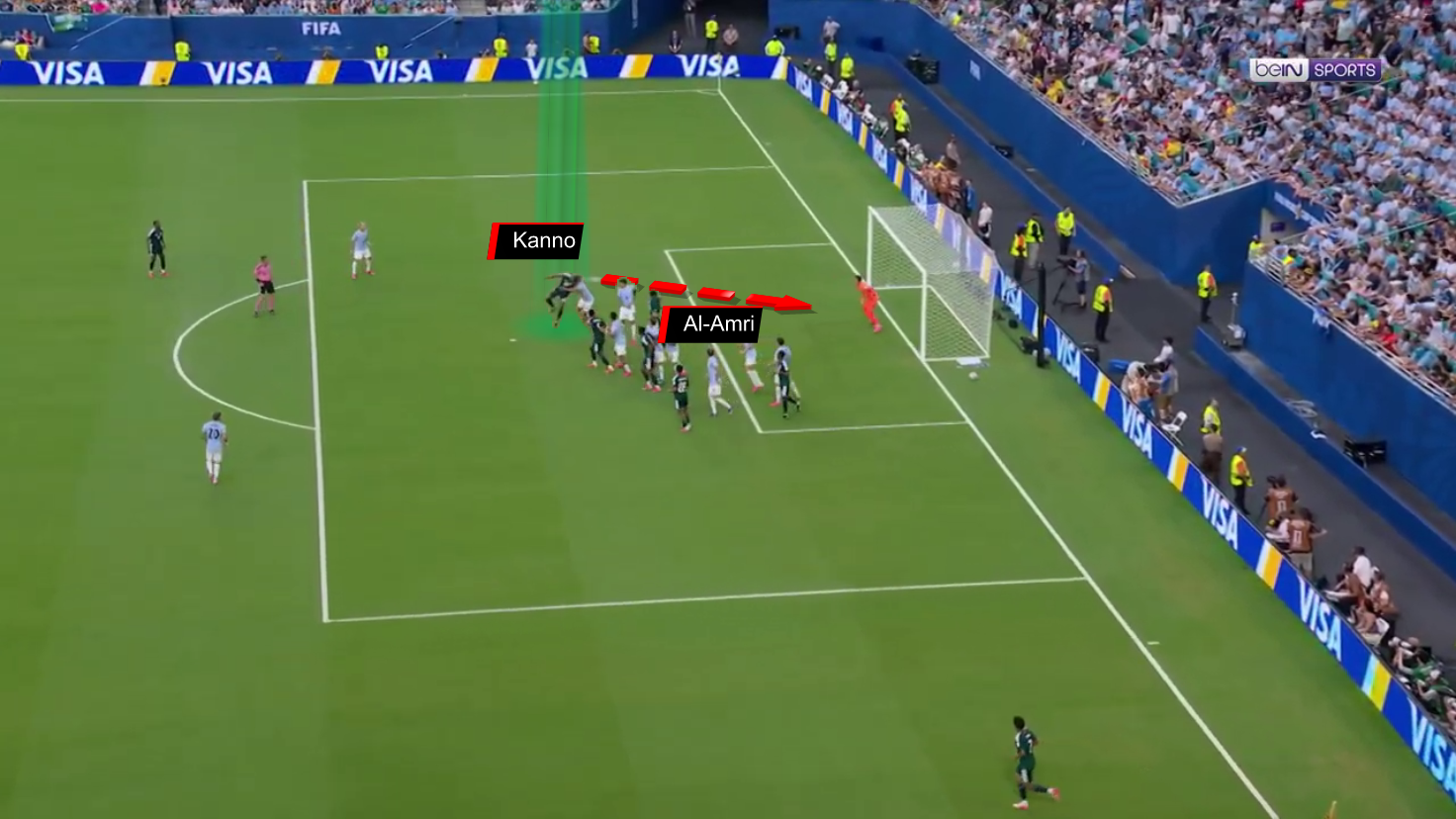
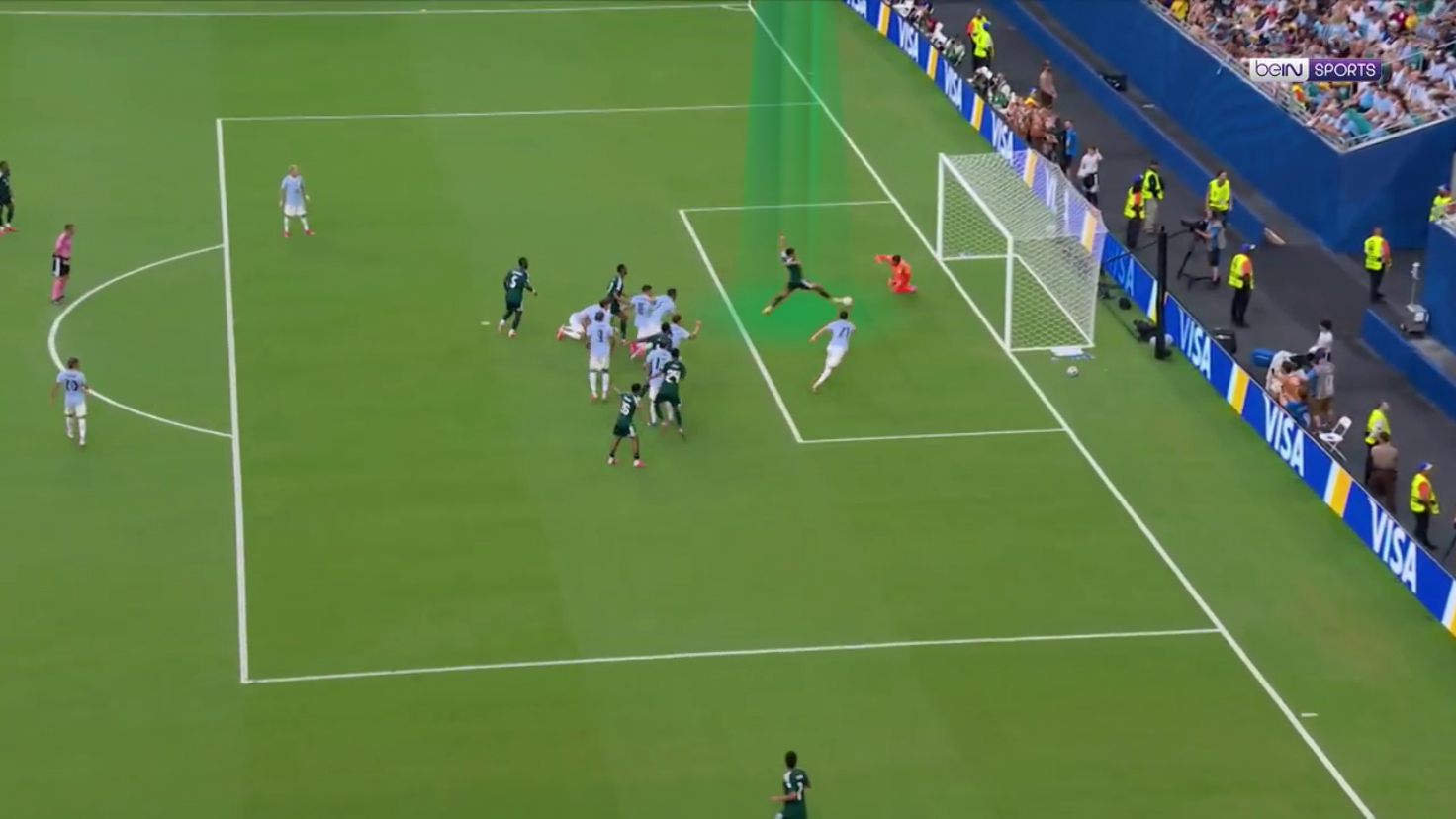
The header went towards the goal, and after the save, Amri was in the empty space to score.
This type of corner kick relies not only on physical superiority but also on forcing the defence into delayed decisions.
The more moments of hesitation there are inside the penalty area, the higher the likelihood of a genuine scoring opportunity.
Second Ball As A Weapon
If winning the first ball represents the initial phase of a corner kick, then what Saudi Arabia did against Uruguay showed that the real focus was on what happened next.
On more than one occasion, players were seen positioned just outside the six-yard box, ready for any rebound or poor clearance from the defenders.
This is clearly evident in the shot immediately preceding the Saudi goal.
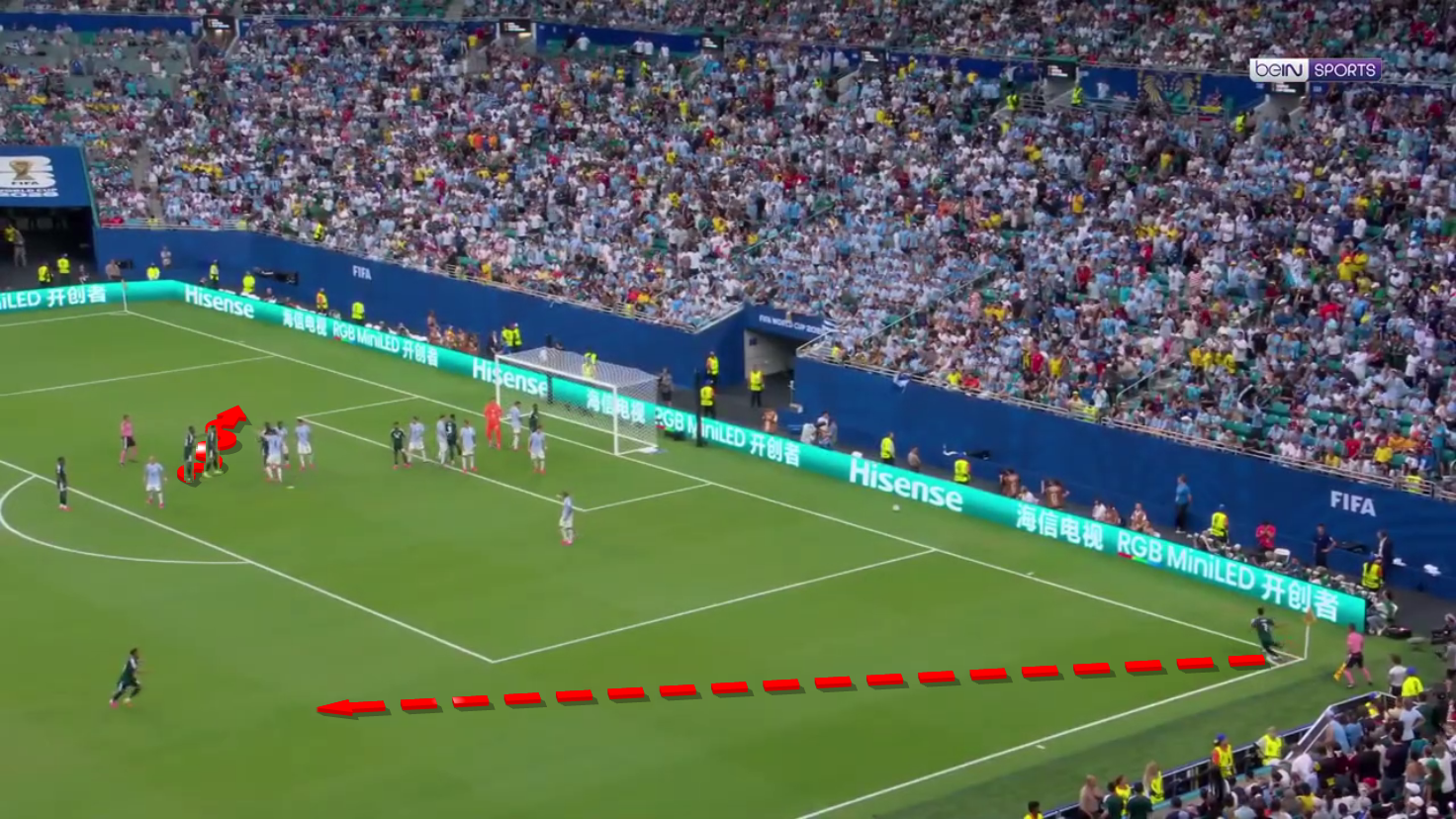
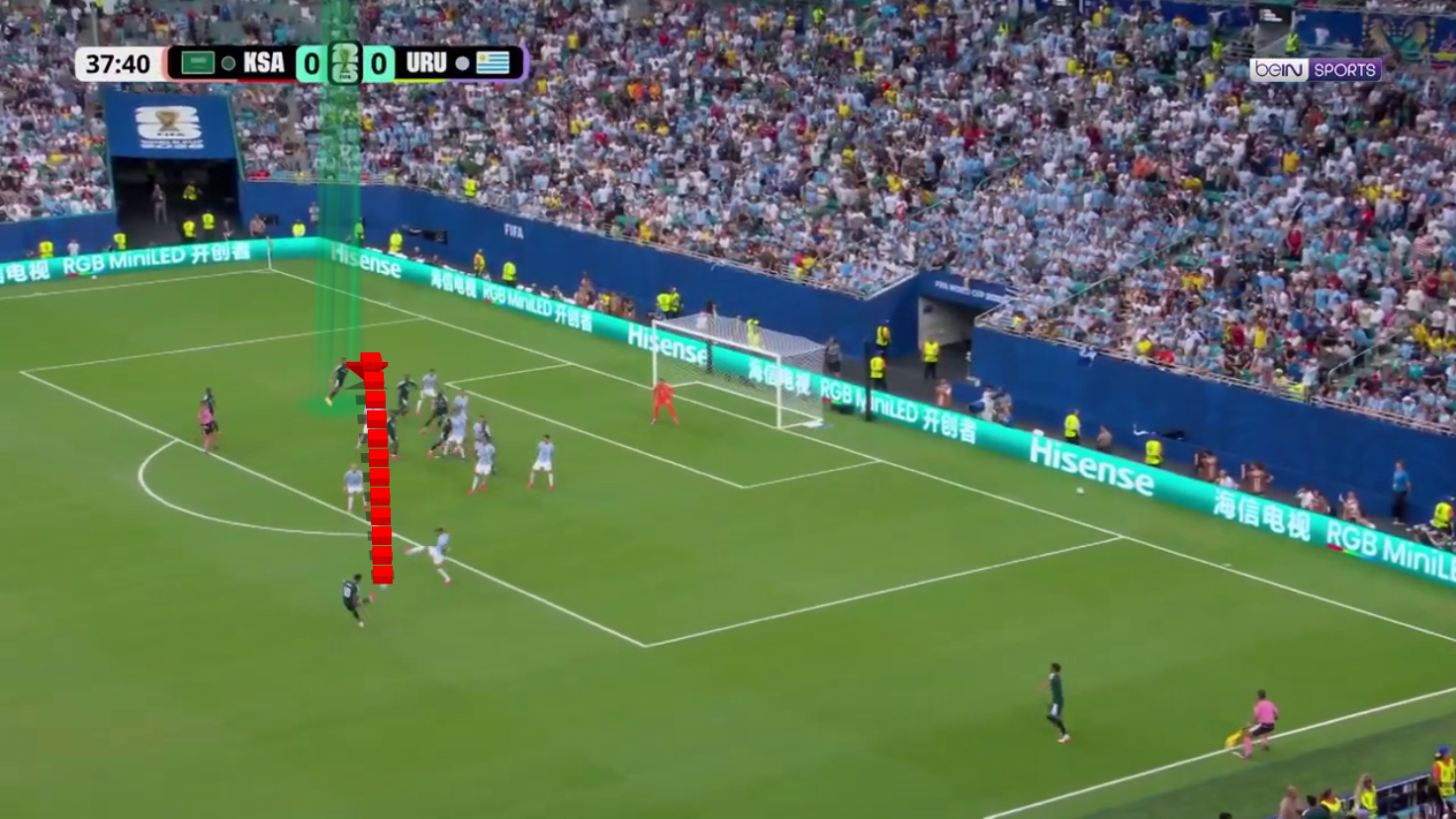
Here, after the short corner kick, the last player moved to the far post, with several Saudi players moving towards the goal waiting for the ball to return.
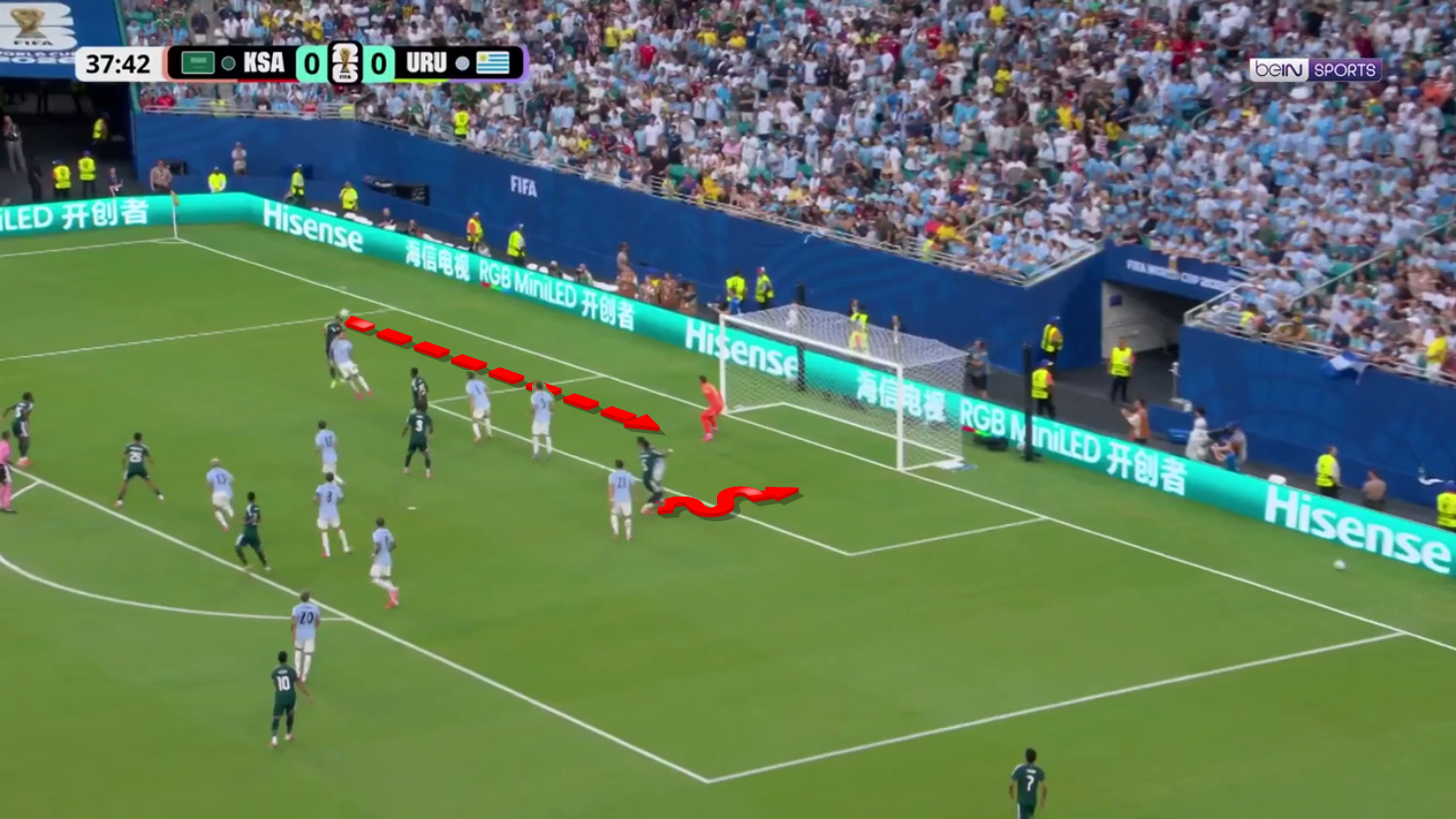
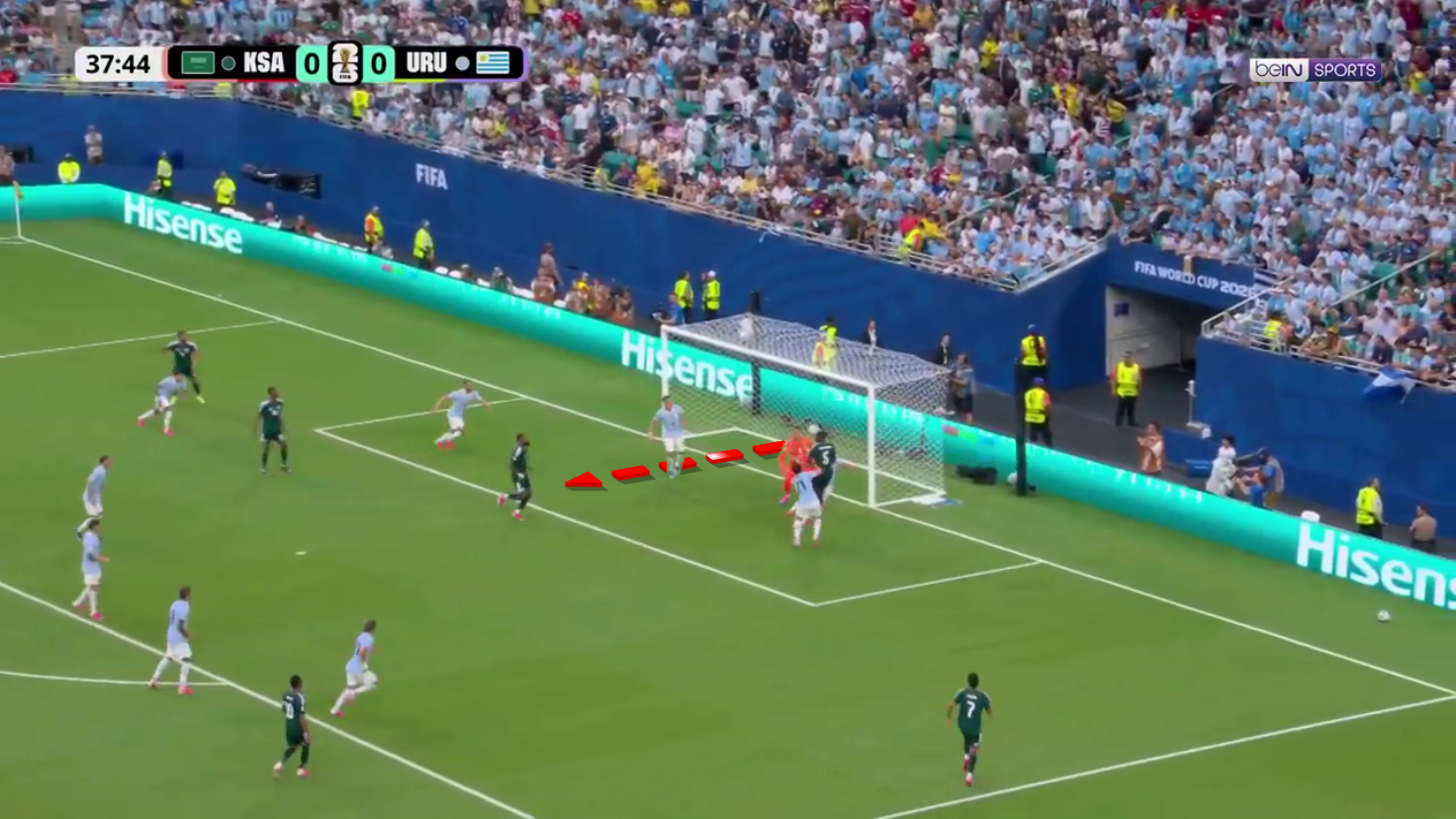
He then played it towards the six-yard box with the defenders poorly positioned, but the opportunity was lost.
When the ball fell after the first defensive intervention, Saudi Arabia had more players near the bottom of the pitch than Uruguay.
This positional advantage gave them a clear edge in reaching the rebound and converting it into a scoring opportunity.
The importance of this point lies in the fact that Spain could face the same type of situation.
Even the best defensive systems become more vulnerable when forced to deal with multiple consecutive balls inside the penalty area in a short period of time.
Just seconds later, the goal perfectly illustrated this point.
Instead of the attack ending after the first touch, the pressure continued inside the penalty area until Saudi Arabia capitalised on the defensive disarray and converted it into a goal.
How Saudi Arabia Could Utilise Those Situations To Hurt Spain
Spain's tactics against Cape Verde demonstrated that possession doesn't negate the need for defensive solidity within the penalty area.
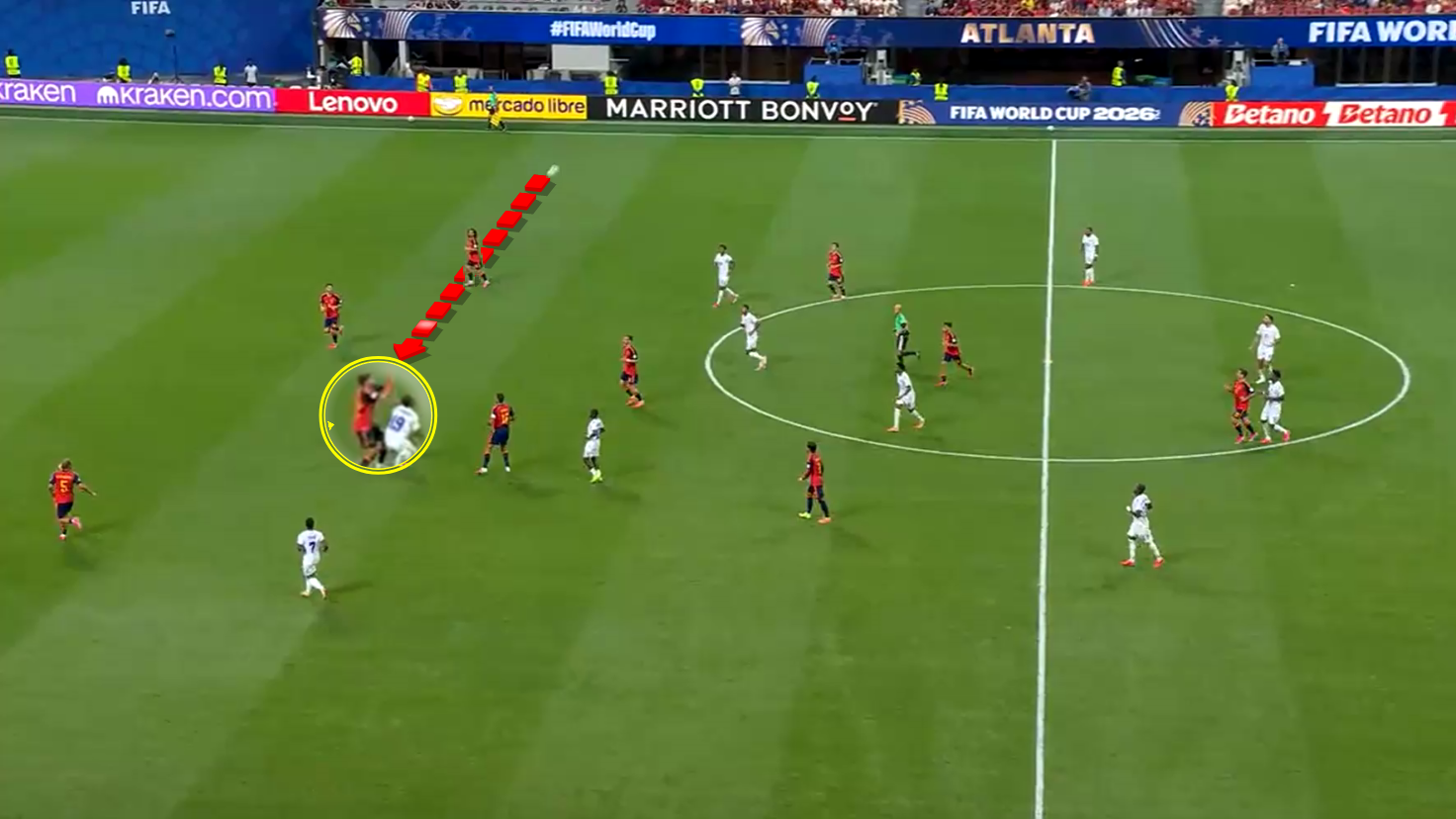
At times, the African team managed to penetrate dangerous areas and force the Spanish defenders into 1v1 situations inside the box.