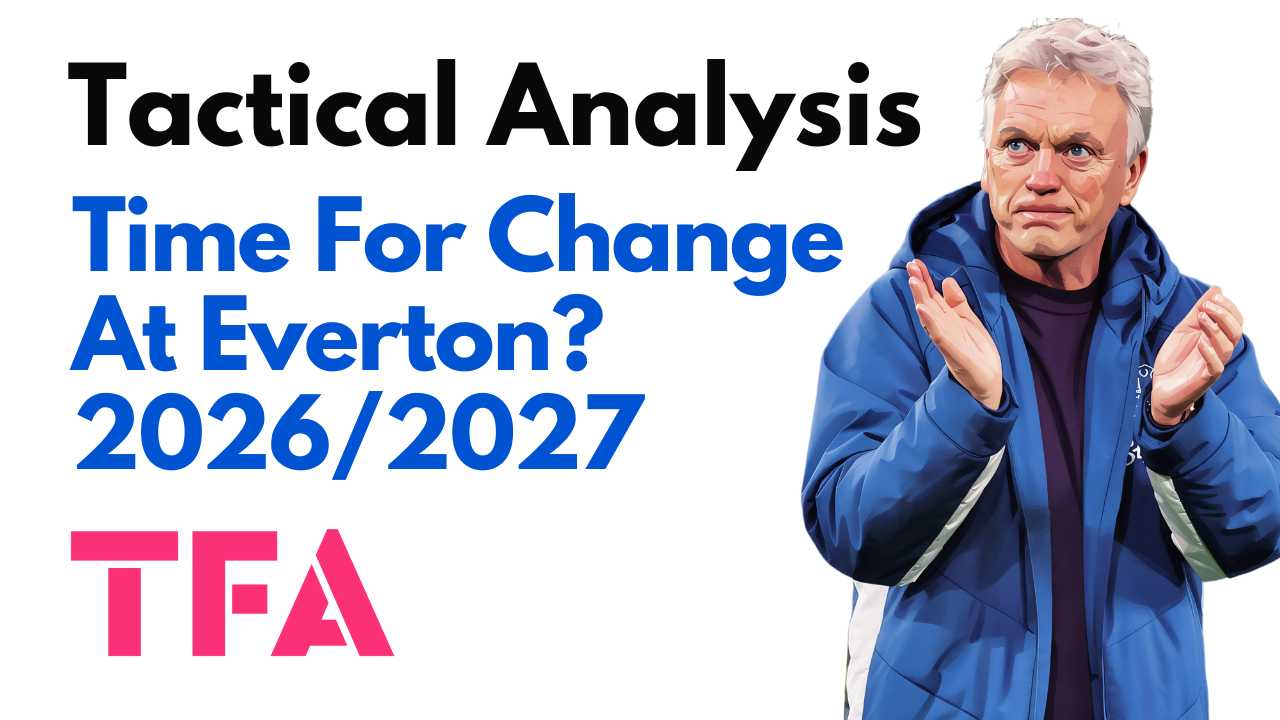
Have Everton Outgrown David Moyes? Why Claudio Giráldez & Iñigo Pérez Tactics Make Sense – Tactical Analysis

Everton have always lived comfortably with tension.
The Merseyside club measures itself by history and has spent the last decade dealing with survival, sanctions, a conveyor belt of players and an identity that tends to begin and end with resistance.
The return of David Moyes initially felt like a sensible synthesis of romance and pragmatism.
His previous 11-year spell still represents Everton's best period in the Premier League era, and his later work at West Ham United validated the belief that his methods could still be scaled.
A sixth-place finish and a European trophy gave Moyes something he did not have at Everton, and proof that he could build an outcomes-driven team with a defensive spine and a repeatable attacking plan.
Moyes has become a poor coach, but Everton are no longer at the stage where stability is the ceiling.
New ownership and a new stadium shift the club's internal expectations, whether stated publicly or not.
Home form in 2025/2026 ranked 14th, which is not what is expected of a side hoping to push into the top half, and the recent run of six games without a win has heightened the criticism.
This becomes alarming when teams like AFC Bournemouth and Crystal Palace, who have comparable resources (or even less), are breaking trophy droughts and chasing European places.
Everton spent €150.66m across the two seasons, yet only finished 13th in 2025/2026 with no major success to show for it.
However, Crystal Palace spent far less, at €56.65m, yet won the FA Cup and UEFA Conference League during the same period.
Bournemouth also outperformed Everton, by finishing sixth despite losing key players and operating with fewer resources.
Everton have leaned too heavily on directness, without the supporting structure that makes direct football sustainable against modern-day Premier League pressing and second-ball preparation.
At the same time, the squad have felt under-rotated and under-optimised, with match plans that appear to flatten the differences between players who can solve different problems.
The football is structurally incoherent against the way modern Premier League sides defend their own build-up and attack second phases.
If Everton are to consider change, the selection criteria must match the moment.
A new head coach needs to deliver three things quickly:
- A clearer in-possession identity that raises the floor against low blocks and mid blocks at home.
- A transition and rest-defence framework that prevents the team from becoming weak when it tries to attack with more numbers.
- An improvement pathway for key assets, particularly the younger and higher-value players.
The current meta at the elite end is possession that preserves directness.
It is the ability to access the final third through structured build-up and still execute fast once the advantage appears.
This tactical analysis explores Everton's two most credible next-step candidates in that mould: Claudio Giráldez and Iñigo Pérez.
They are aligned in principle and different in their execution.
Most importantly, Everton need a model that fits their squad and a recruitment plan that closes the gaps without forcing a three-window overhaul before the football works.
Everton Strengths To Build Around & Areas Of Weakness
Everton's best platform is a technical, press-resistant midfield core.
James Garner, Kiernan Dewsbury-Hall and Merlin Röhl are all comfortable receiving under pressure and playing forward, which increases the range of build-up structures Everton can use.
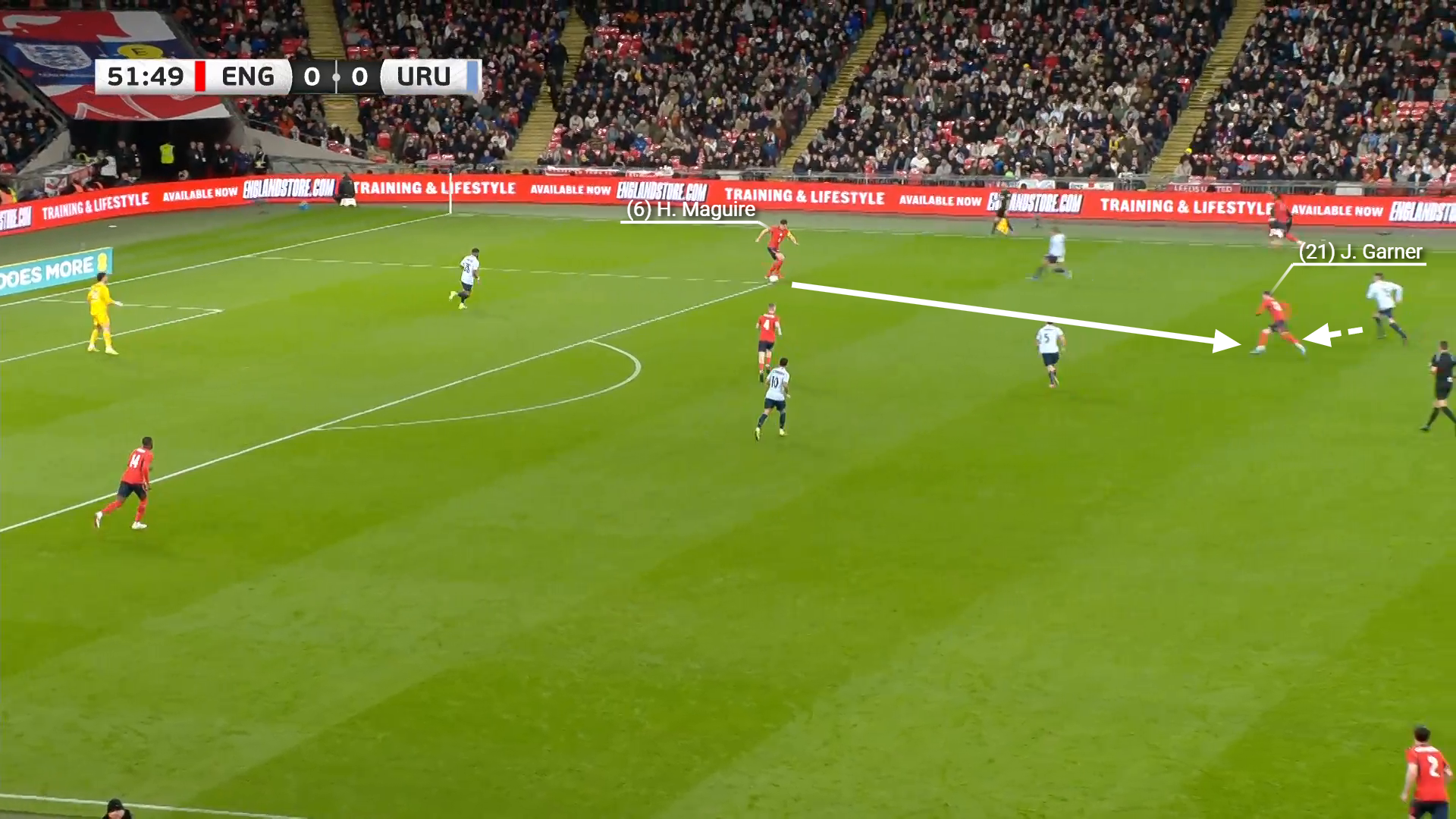
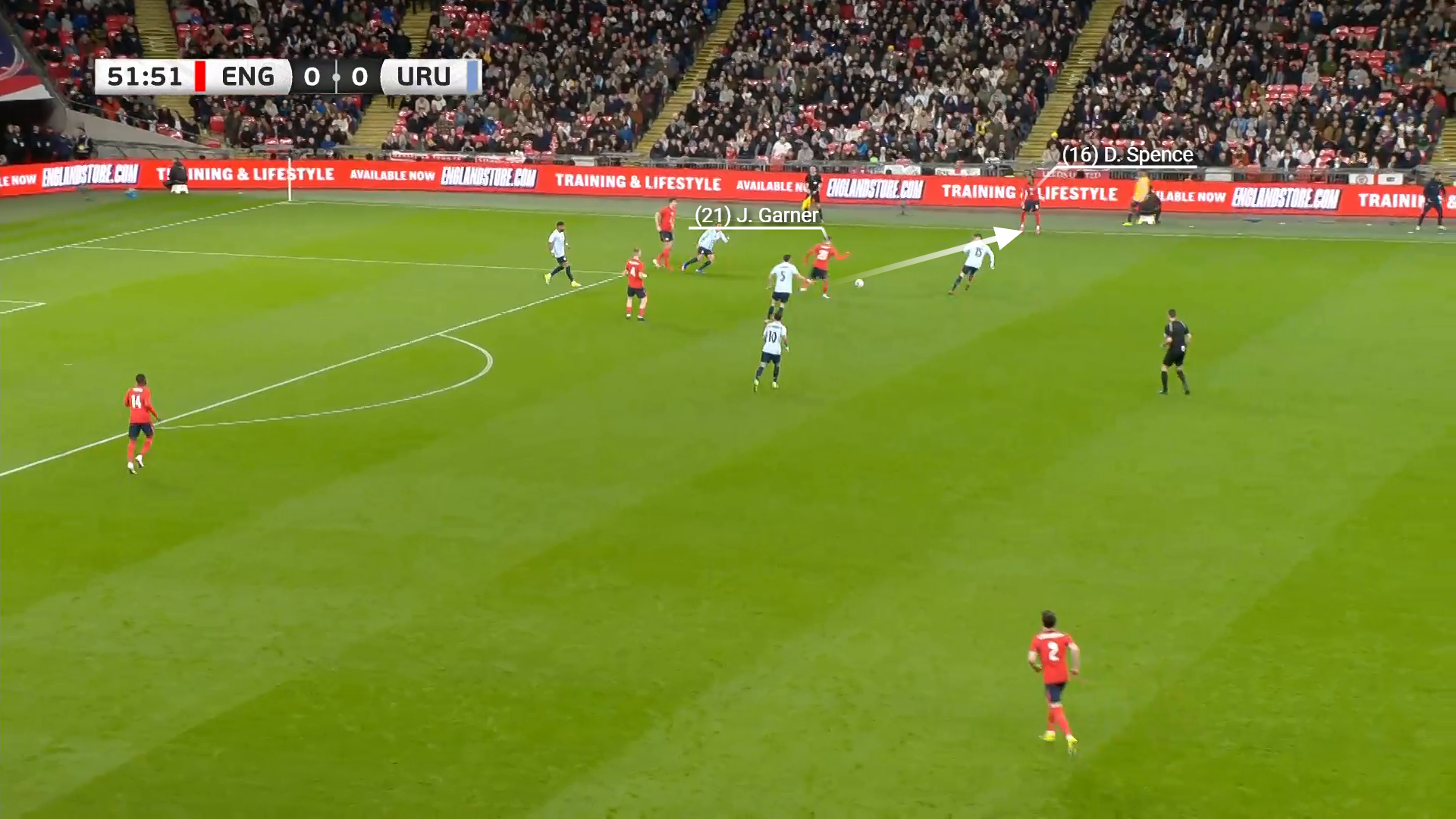
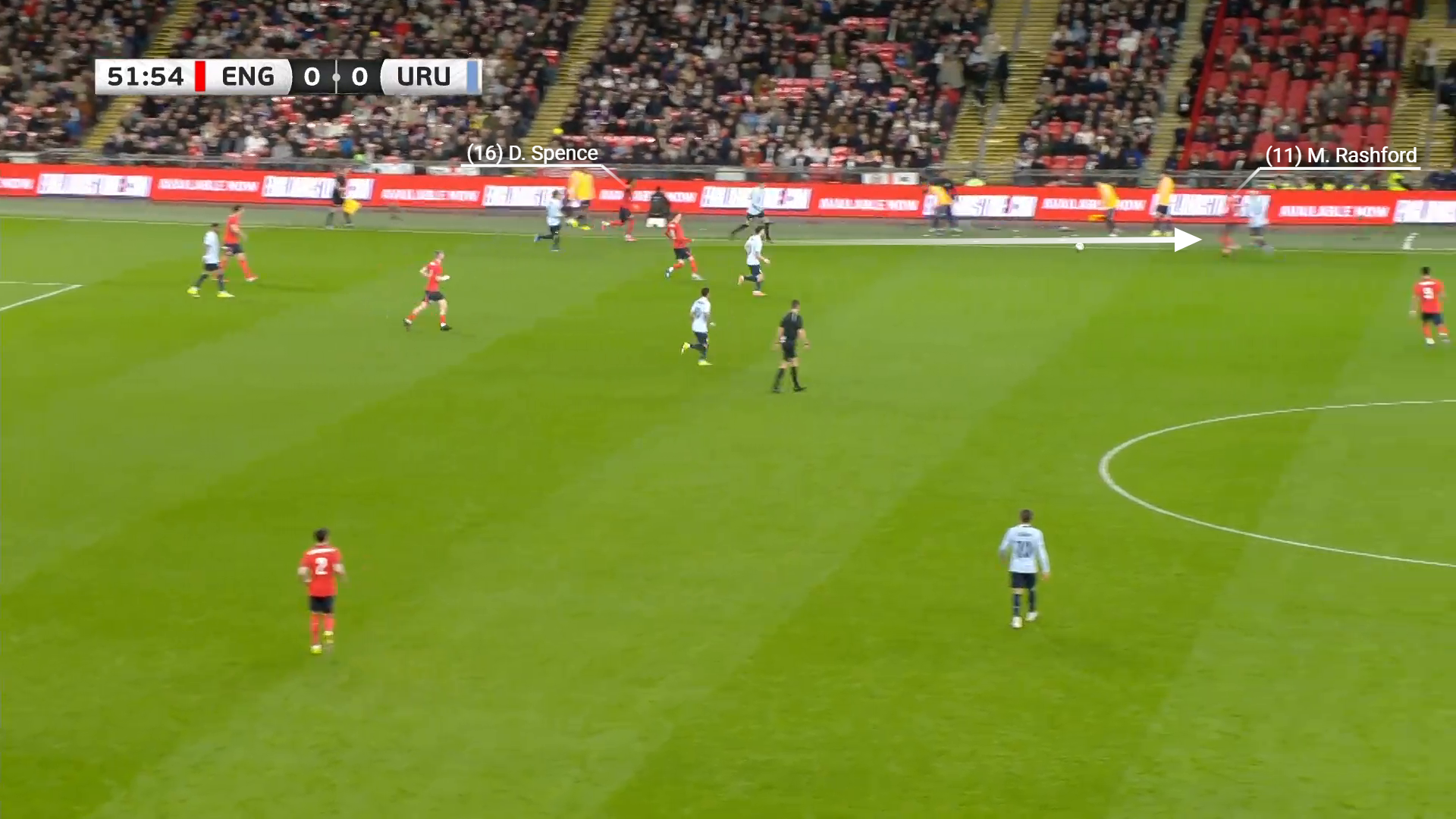
During an international fixture against Uruguay, James Garner confidently made himself available for Harry Maguire despite having three Uruguayan players nearby.
Garner opened up his body well and played a first-time pass to Djed Spence, helping to progress play down the left side.
A coach can ask Garner to potentially be a single pivot or part of a double pivot.
Dewsbury-Hall can be a high '8', a second pivot, or a high-pressing connector depending on the rest of the shape, and Röhl is not an elite game breaker '10' but can function as a link player in the half-spaces.
Another area of strength is the vertical threat out wide.
Iliman Ndiaye can carry through contact and slip passes in spaces.
As shown against Tottenham Hotspur, Ndiaye can receive the ball in central areas and drive directly at the opposition.