
FIFA World Cup 2026: The Mikel Arteta Effect On England & Spain Tactics – Data Analysis
The 2026 FIFA World Cup has highlighted a tactical trend that extends far beyond individual formations or pressing systems.

What Is The Arteta Effect On England & Spain?
The 2026 FIFA World Cup has highlighted a tactical trend that extends far beyond individual formations or pressing systems.
Instead, one of the tournament’s defining characteristics has been the growing emphasis on defensive security during attacking phases, with several of the competition’s leading nations prioritising structural stability over committing excessive numbers forward.
Coaches have increasingly favoured controlled possession, measured progression and carefully protected defensive structures to minimise the threat of counterattacks.
England under Thomas Tuchel tactics, and Spain under Luis de la Fuente style of play have both demonstrated these principles at different stages of the tournament, even in matches where their performances appeared more conservative than expected.
While their approaches occasionally attracted criticism, the underlying data suggest these tactical decisions were deliberate rather than reactive.
In this World Cup data analysis, we examine data from across the tournament to explore how rest defence, risk management and transition control have emerged as defining tactical trends of the 2026 FIFA World Cup.
England Chose Control Over Chaos Vs Mexico In The Round Of 16
England’s victory over Mexico illustrated a growing tactical trend that has become increasingly associated with Mikel Arteta’s influence on elite football, prioritising structural security over attacking risk.
Rather than committing excessive numbers forward in possession, England consistently maintained a balanced attacking shape that protected them against defensive transitions.
The match data reinforces this approach.
Despite completing 91% of their passes, both Ezri Konsa and Marc Guéhi rarely forced ambitious vertical balls, while Declan Rice also finished with a 90% completion rate, highlighting controlled circulation instead of unnecessary risk-taking.
England’s progression reflected the same cautious philosophy; they attempted just 10 passes to break the defensive line throughout the match.
England Line-Breaking Passes Attempted Vs Completed Against Mexico - FIFA World Cup 2026 Round Of 16
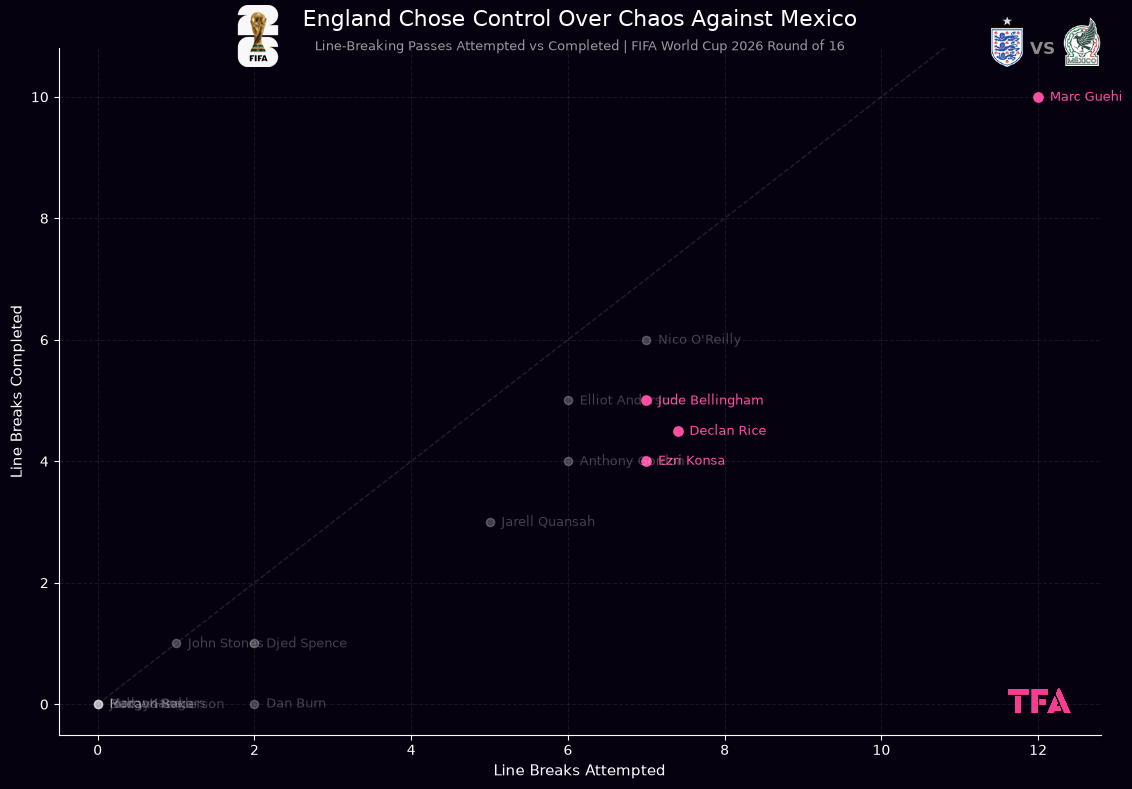
Jude Bellingham contributed four of those attempts, while Declan Rice added one.
Instead of forcing vertical progression at every opportunity, Thomas Tuchel’s side appeared content to circulate possession until the appropriate conditions emerged, prioritising structural stability over unnecessary risk.
Out of possession, England combined aggressive pressing with positional discipline rather than chaotic counterpressing.
Bellingham (32 direct pressures), Anthony Gordon (33) and Rice (23) all contributed heavily to regaining possession.
The physical data shows relatively restrained sprint numbers compared to their overall running volumes, indicating intelligent positioning instead of constant recovery running.
England Direct & Indirect Pressures Stats Vs Mexico - FIFA World Cup 2026 Round Of 16
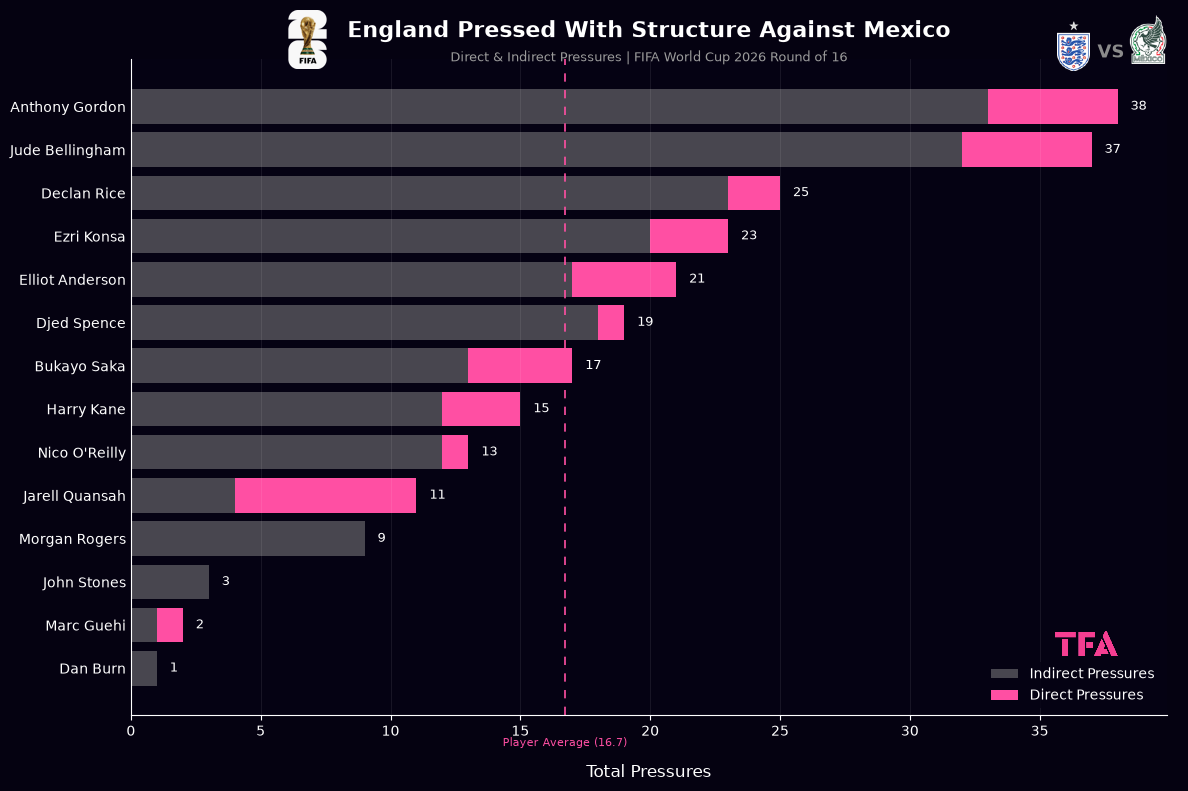
This balance between pressure and protection reflects one of the defining characteristics of modern positional football, controlling transitions before chasing additional attacking opportunities.
England repeatedly favoured maintaining defensive stability behind the ball, limiting Mexico’s opportunities to attack open spaces and demonstrating how rest defence has evolved from a club principle into an increasingly visible feature of international football.
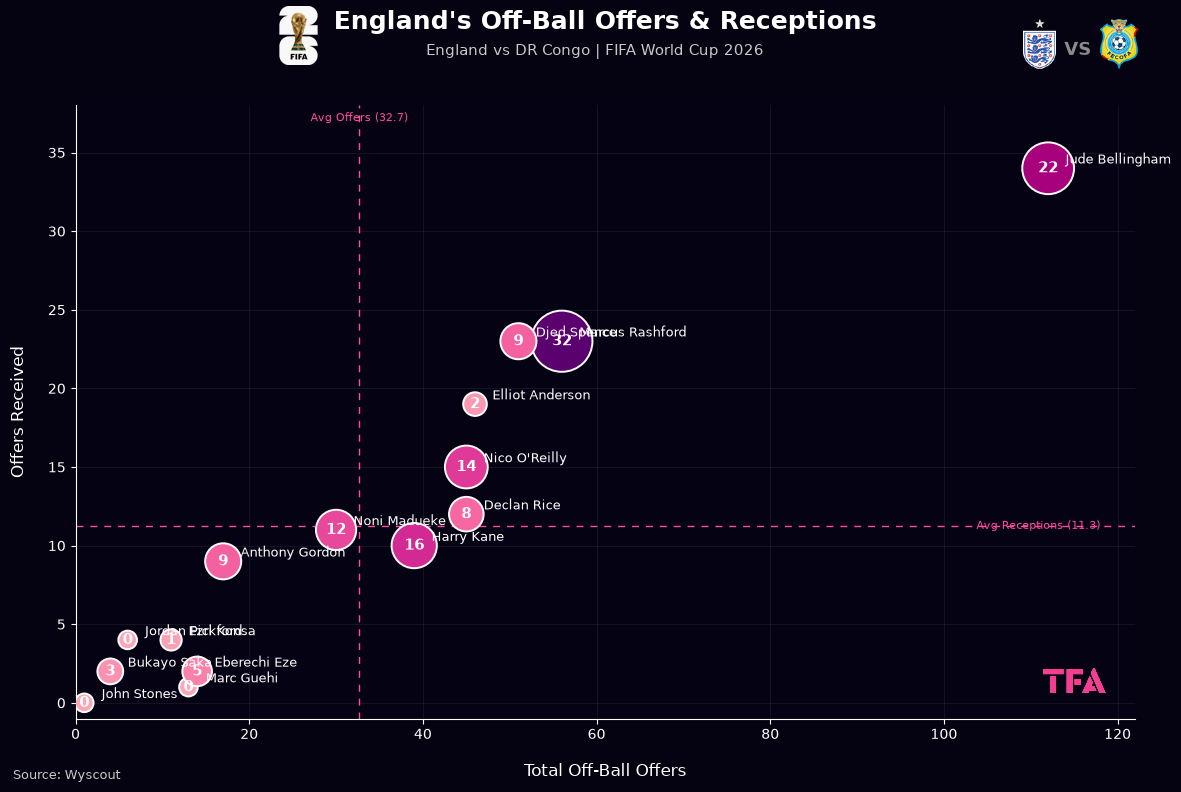
England's Off-The-Ball Structure Prioritises Stable Possession
If we delve deeper into England's off-ball data against DR Congo, an equally revealing pattern begins to emerge.
The movement profiles of England's players illustrate how their attacking structure was carefully constructed before the ball even arrived.
England’s Off-The-Ball Movement Vs DR Congo Was Centred On Creating Stable Passing Connections