
![Mexico Vs Ecuador [2–0] – FIFA World Cup 2026: Javier Aguirre Tactical Tweaks Produce Mexico's Best Performance – Tactical Analysis](https://cdn.mymidnight.blog/77f959f119f4fb2321e9ce801e2f5163/size/w1000/2026/07/Mexico-Vs-Ecuador-World--Cup-2026.png)
Mexico Vs Ecuador [2–0] – FIFA World Cup 2026: Javier Aguirre Tactical Tweaks Produce Mexico's Best Performance – Tactical Analysis

The home-field advantage at Estadio Azteca in the 2026 FIFA World Cup has turned into something thrilling for Mexico following a winning debut against South Africa and closing the group stage by thrashing Czechia.
This positive dynamic has carried over into the Round of 32.
Javier Aguirre's team gave a football masterclass against Ecuador, advancing to the Round of 16 and shedding the mere "host" label to rightfully claim that of a true protagonist in this World Cup.
The 2-0 victory, while featuring a solid defensive closure by the Mexicans, boasted one of the most stimulating, entertaining, and refreshing first-half performances of the entire World Cup.
Driven by positive flank dynamics through offensive off-the-ball movement, the Mexican team successfully disorganised Ecuador's backline during advanced build-up phases and found free men in the initial phases of construction, enjoying fluidity in possession and a clean progression.
The key?
A crucial adjustment by the experienced manager ahead of this match: the inclusion of wonderkid Gilberto Mora and winger Roberto Alvarado's inverted movements from the flank into interior zones.
In this World Cup tactical analysis, we will attempt to break down the key movement within the progression of Aguirre's side.
Mexico Vs Ecuador Lineups & Formations
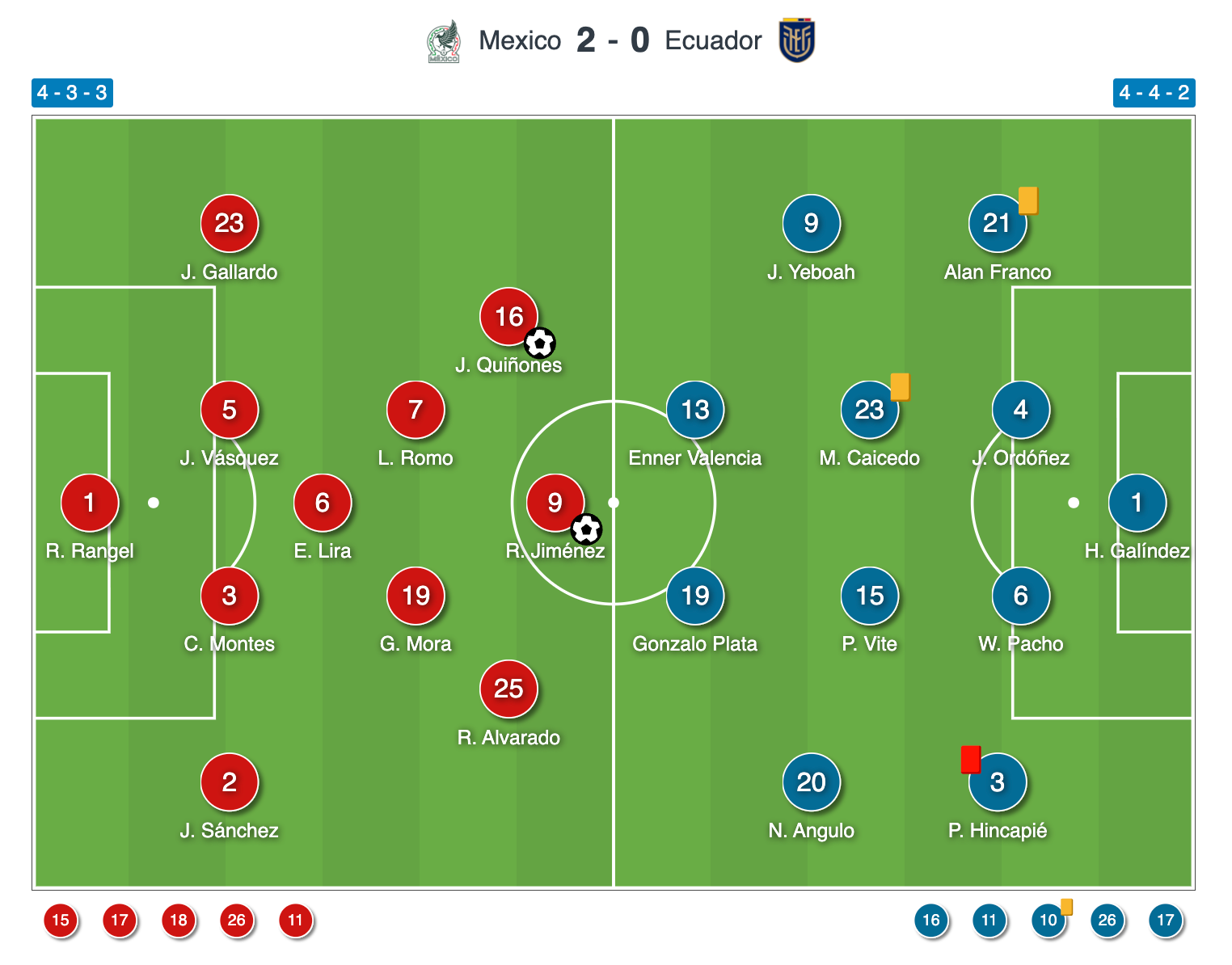
Mexico Lineup Vs Ecuador
Mexico used a 4-4-1-1 formation in this game, with Raúl Rangel playing in goal behind Jorge Sánchez at right-back, César Montes at right centre-back, Johan Vásquez at left centre-back, and Jesús Gallardo at left-back.
Érik Lira and Luis Romo played in central midfield, with Roberto Alvarado and Julián Quiñones on the right and left wing, respectively.
Gilberto Mora played in the hole just behind centre-forward Raúl Jiménez.
Javier Aguirre made five substitutions in the match, the first of which came in the 58th minute when Gilberto Mora was replaced by Brian Gutiérrez.
Then, 15 minutes later, Luis Romo and Raúl Jiménez made way for Obed Vargas and Santiago Giménez.
Lastly, in the 80th minute, Julián Quiñones and Roberto Alvarado left the pitch, with Orbelín Pineda and Israel Reyes coming on in their place.
Ecuador Lineup Vs Mexico
As for Ecuador, Sebastián Beccacece set his side up in a 4-4-2 shape with Hernán Galíndez in goal behind a back four consisting of Alan Franco, Joel Ordóñez, Willian Pacho, and Piero Hincapié, from right to left.
Pedro Vite and Moisés Caicedo played in central midfield, with John Yeboah and Nilson Angulo at the right and left wing, respectively.
Gonzalo Plata and Enner Valencia played up front for the South American side, who went on to make five substitutions during the match.
Firstly, Joel Ordóñez and Alan Franco made way for Ángelo Preciado and Yaimar Medina at half-time.
Then, around the hour mark, Kevin Rodríguez was introduced for Enner Valencia.
Ecuador's final two substitutions came in the 79th minute when Jordy Caicedo and Kendry Páez came on for John Yeboah and Nilson Angulo.
Mexico Build-Up Play
We cannot discuss Mexico's build-up play without highlighting Gilberto Mora's inclusion in the starting XI.
The national team manager's trust in the young footballer was no coincidence.
During the group stage, Mora delivered an outstanding performance against Czechia, a display that ultimately convinced the coaching staff to grant him a starting spot in the knockout clash against Ecuador.
At 17 years and 259 days old, he became the second-youngest player to start a World Cup knockout match, a list still topped by Pelé.
And the kid delivered under pressure.
He forced Aguirre to rethink the structure, adapting it to Mora's natural attacking midfielder profile, with Mexico shaping up in a 4-4-1-1 where Mora floated behind the centre-forward, leaning toward the inside-right channel.
This created an ideal environment to strengthen relationships and connections, establishing the right side of the attack and build-up as Mexico's strong side.
This zone featured highly associative players such as Mora himself, Alvarado, Jorge Sánchez pushing up from full-back, and the supporting movements toward the strong side by the double pivot formed by Luis Romo and Érik Lira.
What Was Mexico's Key Tactical Move Vs Ecuador?
In one of the most brilliant tactical adjustments of the World Cup, these right-flank build-up dynamics were amplified by the behaviour of Alvarado, nominally the right winger.
The mission of the game plan?
To deactivate, or draw into the wrong zones, the opponent's best defender, Piero Hincapié, is a proven asset in open-field duels or when anticipating early in the build-up phase.
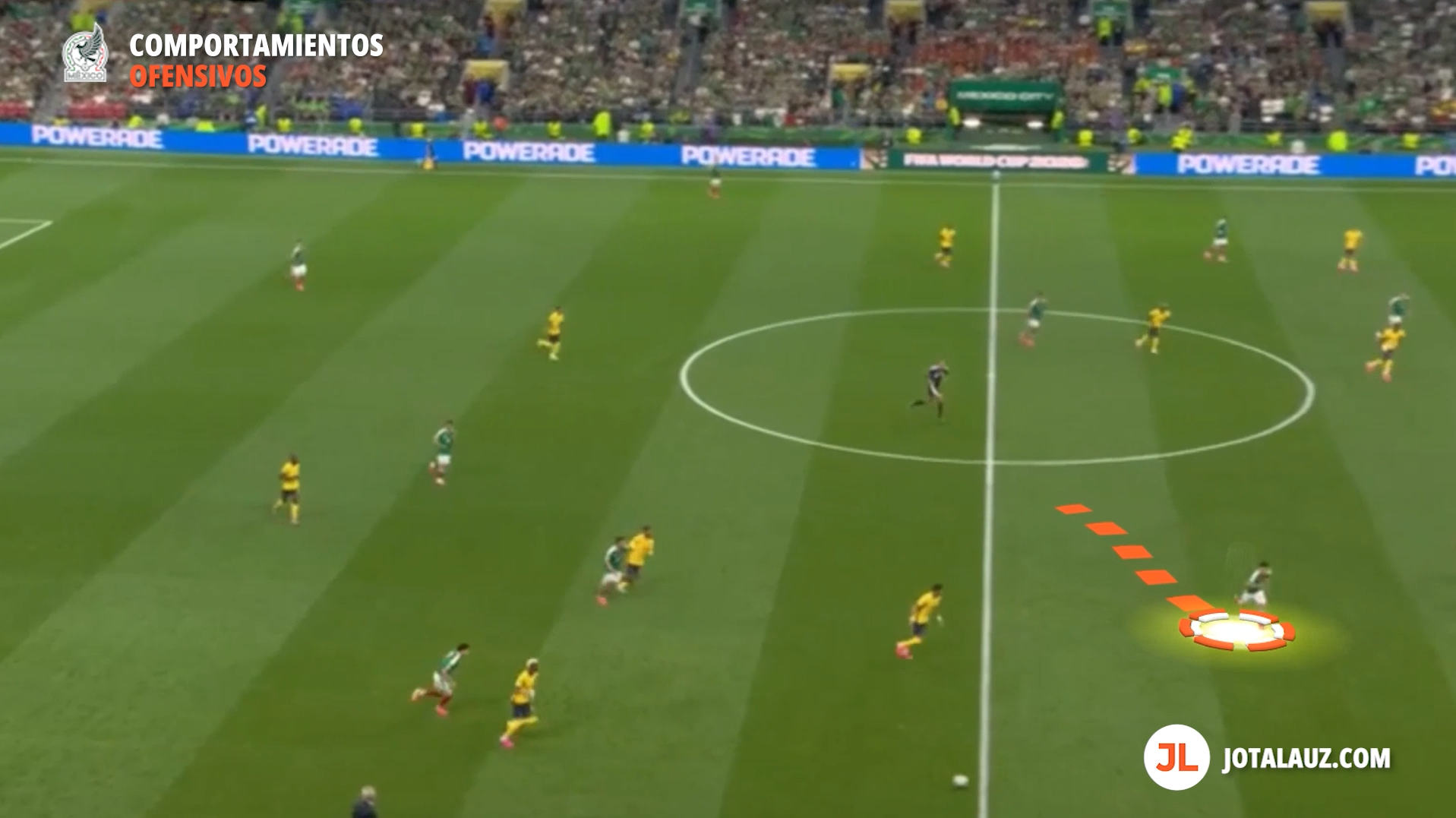
To avoid finding Alvarado in uncomfortable scenarios, such as receiving with his back to goal or in 1v1 situations against Hincapié, the winger tended to move into interior zones through supporting runs or by dropping deep.
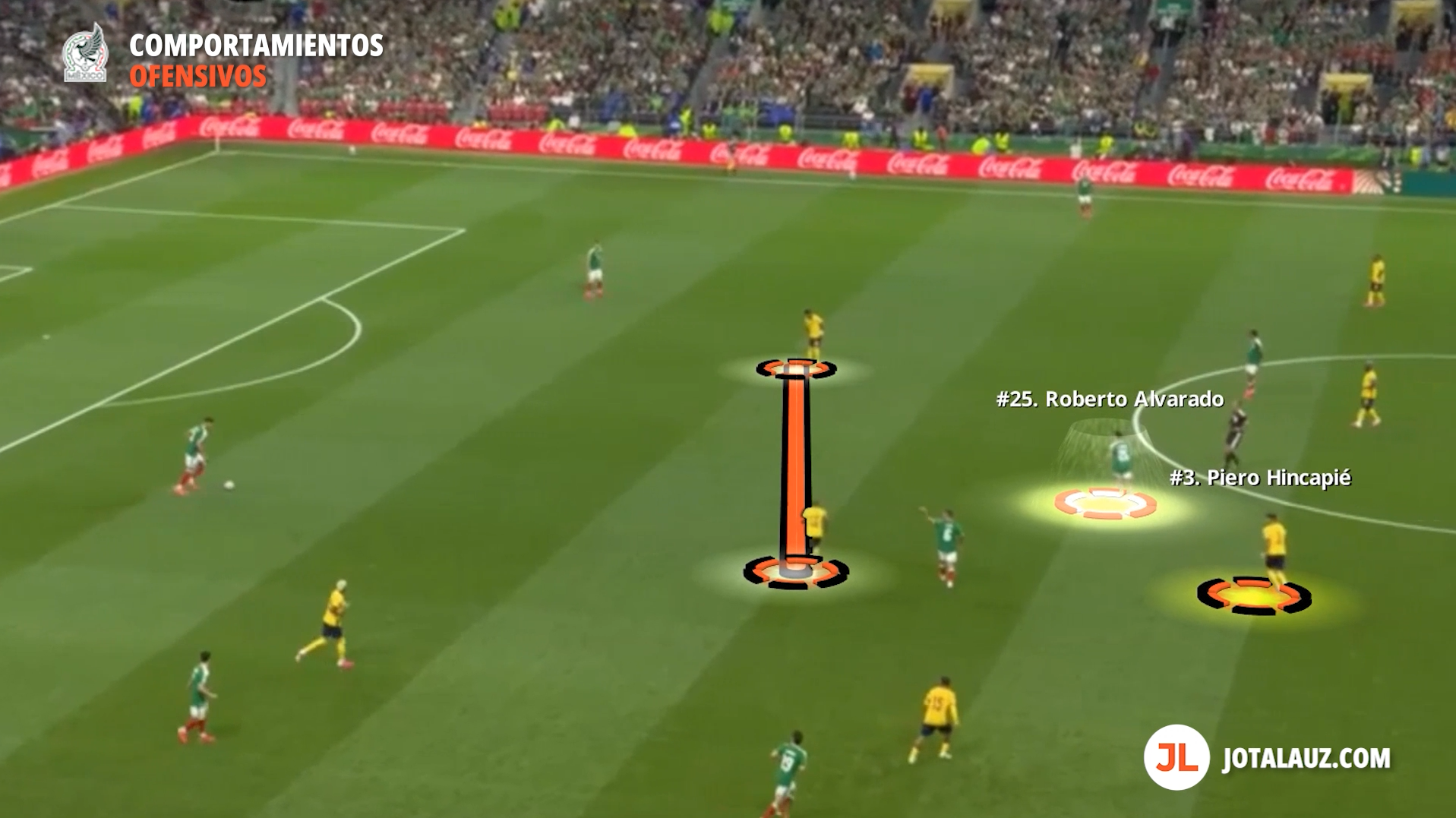
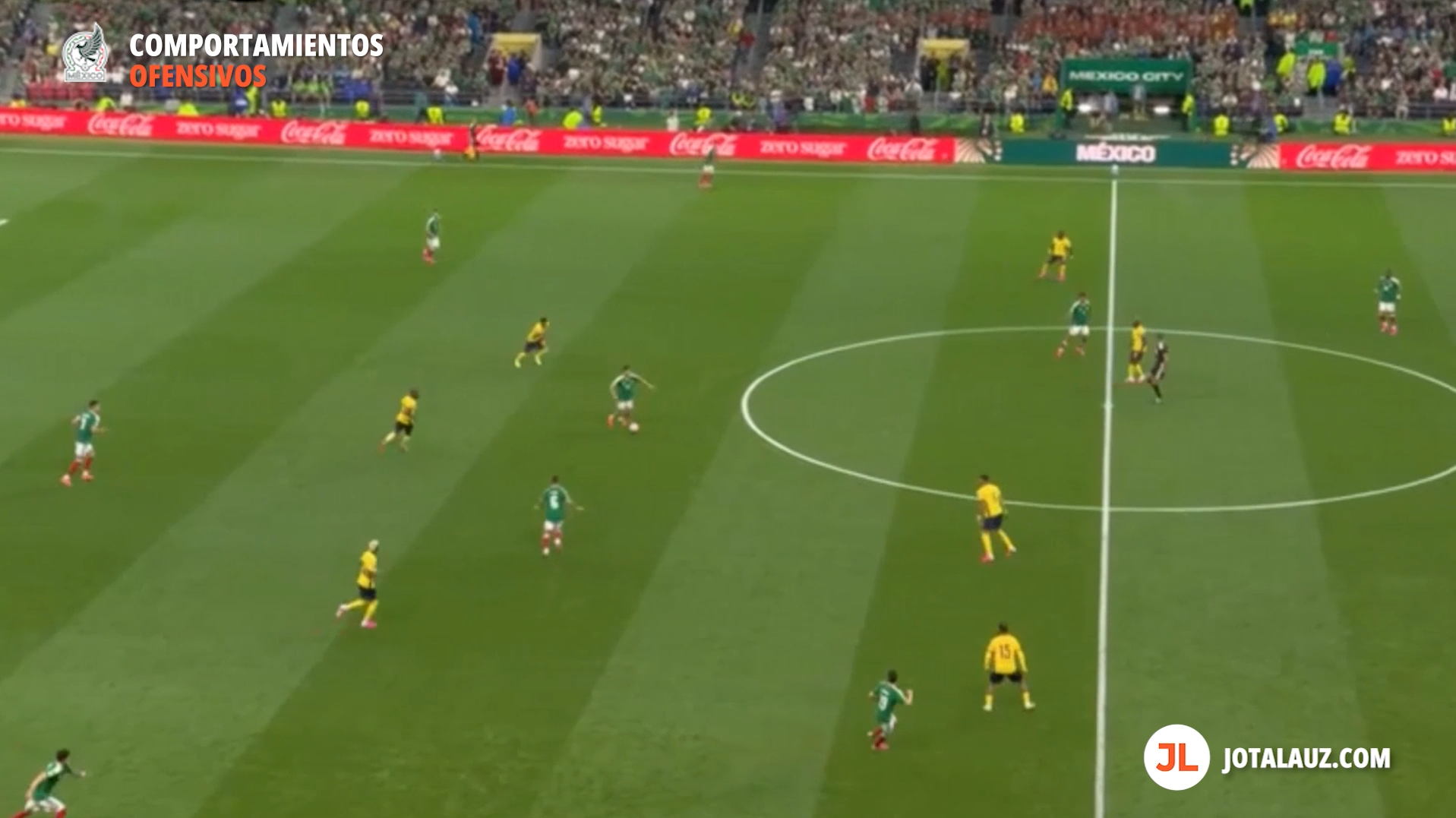
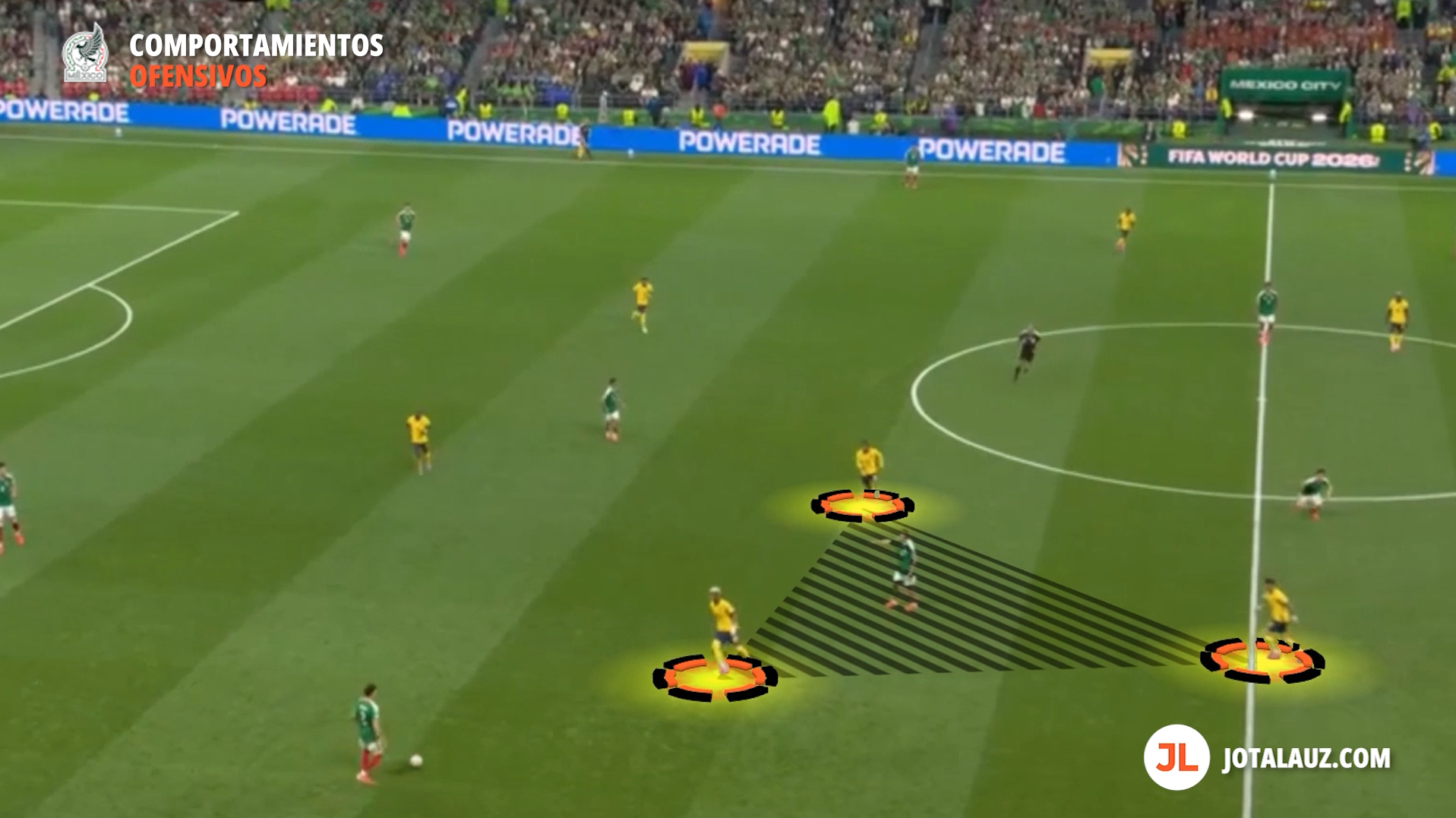
Ecuador, deploying a mirrored structure at the back to neutralise Mexico's 4+2 build-up via their own 4-4-2 and individual man-marking, failed to detect Alvarado's movement, which forced Hincapié to either step up or press far from his original position.
This triggered two potential reactions: Hincapié would track Alvarado as he dropped deep into the pitch, leaving space behind him and forcing the centre-back to cover, or he would remain cautious, giving Alvarado the time and space to receive, open his body up, and carry or progress the ball.
Thus, Mexico began building numerical and positional superiority right from their initial build-up phases.
Unleashing Gilberto Mora
The reason we highlight young Mora is that his natural profile as an attacking midfielder triggered a massive upgrade in the tempo of Mexico's attacks.
His brilliant technique is matched by an outstanding football IQ for his age, possessing the mental and cognitive capacity to dominate spaces between the lines, detect deep areas to exploit, and connect smoothly with nearby teammates (known as socio-affective superiority).
Even though Mexico build and attack within a positional model, prioritising the rational occupation of space, Aguirre gave his star boy the freedom to threaten wherever his intuition took him.
This, combined with Alvarado moving into interior channels, generated a sort of double playmaker setup within the initial 4-4-2.
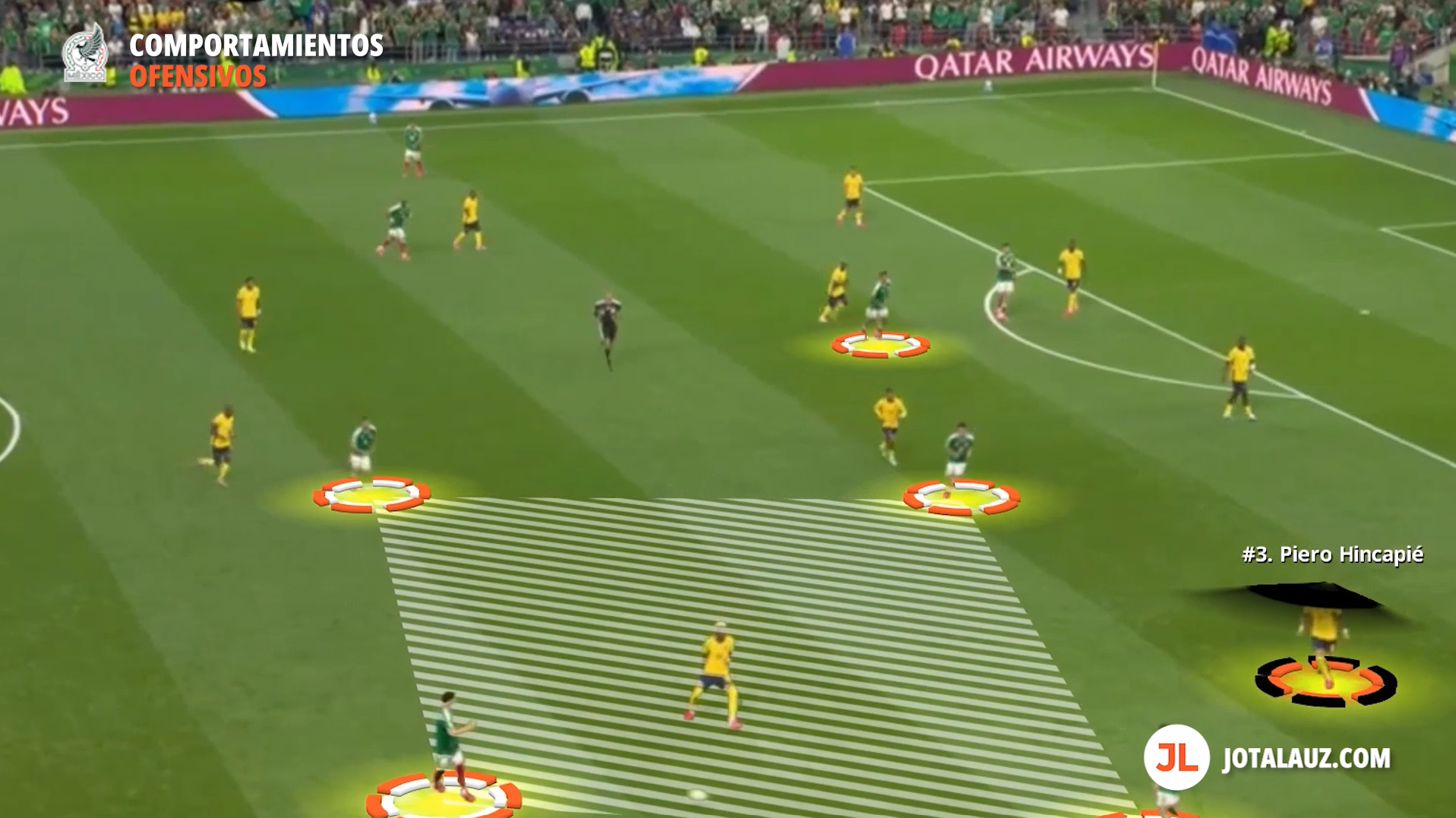
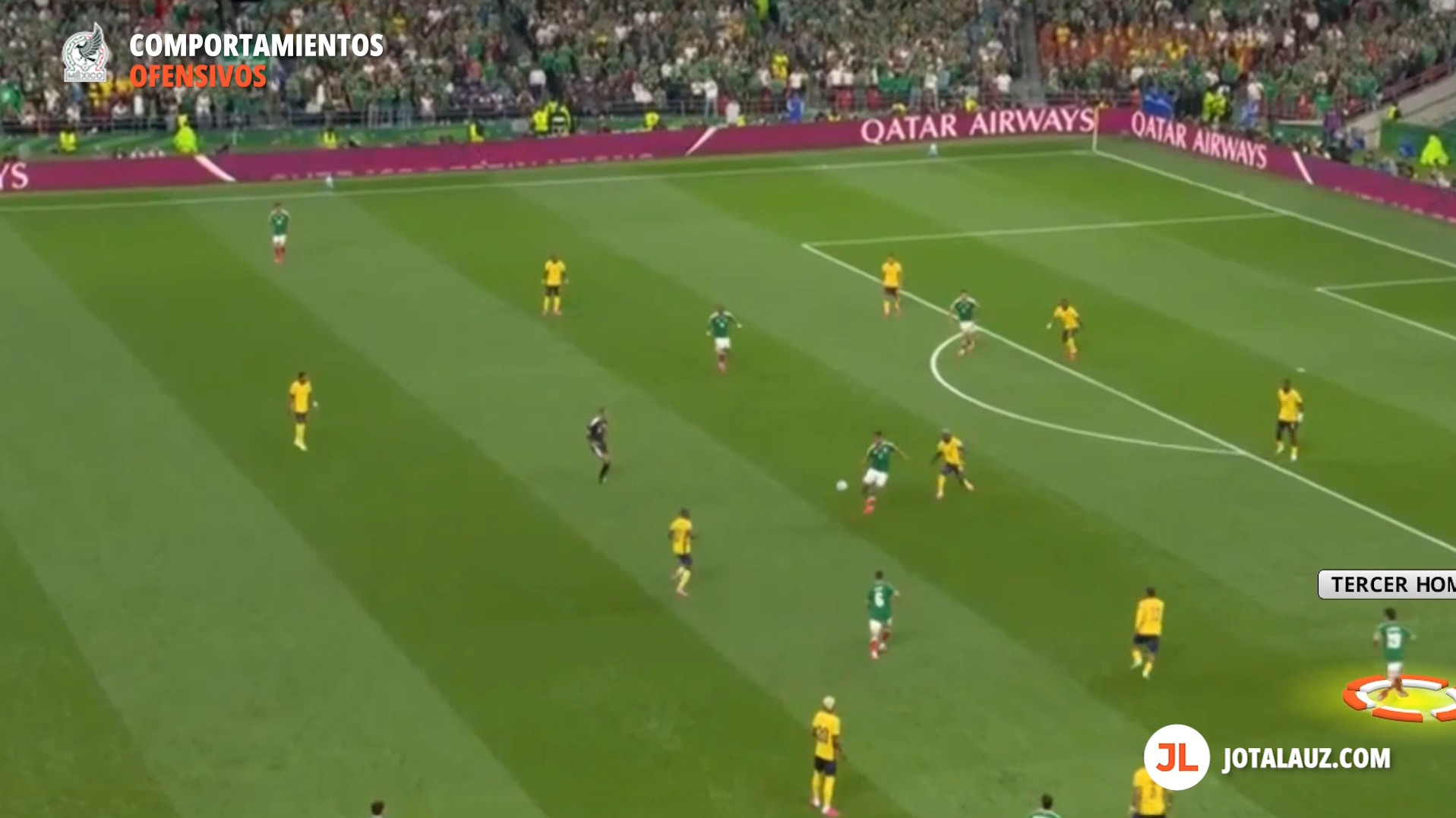
The chemistry between both players allowed the hosts to further exploit the space behind Hincapié through a combination of supporting runs (Alvarado) and runs in behind (Mora).

![Scotland Vs Switzerland [0-3] UEFA Nations League 2026/2027: How Aggressive Pressing Backfired & Murat Yakin Took Advantage - Tactical Analysis](https://cdn.mymidnight.blog/77f959f119f4fb2321e9ce801e2f5163/size/w600/2026/10/Scotland-Vs-Switzerland-20262027---Tactical-Analysis.png)
![Olympique De Marseille Vs PSG [1-2] Ligue 1 2026/2027: How Bruno Génésio Transitions Troubled PSG - Tactical Analysis](https://cdn.mymidnight.blog/77f959f119f4fb2321e9ce801e2f5163/size/w600/2026/09/Marseille-Vs-PSG-2026_2027---Tactical-Analysis.png)
![Fulham Vs Manchester United [1-1] Premier League 2026/2027: How Álvaro Arbeloa Tactics Exposed The Red Devils' Problems - Tactical Analysis](https://cdn.mymidnight.blog/77f959f119f4fb2321e9ce801e2f5163/size/w600/2026/09/Fulham-FC-Vs-Man-United-2026_2027---Tactical-Analysis.png)
![AS Roma Vs Inter Milan [2-2] Serie A 2026/2027: When Undefeated Giallorossi Attack Met Nerazzurri Comeback Resilience - Tactical Analysis](https://cdn.mymidnight.blog/77f959f119f4fb2321e9ce801e2f5163/size/w600/2026/09/AS-Roma-Vs-Inter-Milan-2026_2027---Tactical-Analysis.png)
![Real Sociedad Vs Bournemouth [1-2] Europa League 2026/2027: How Do Marco Rose Pressing Tactics Work? - Tactical Analysis](https://cdn.mymidnight.blog/77f959f119f4fb2321e9ce801e2f5163/size/w600/2026/09/Real-Sociedad-Vs-Bournemouth-20262027---Tactical-Analysis-1.png)
![AC Milan Vs Benfica [0-2] Europa League 2026/2027: How Marco Silva Tactics Exposed Rúben Amorim Defensive Problems - Tactical Analysis](https://cdn.mymidnight.blog/77f959f119f4fb2321e9ce801e2f5163/size/w600/2026/09/AC-Milan-Vs-Benfica-20262027---Tactical-Analysis.png)
![Sunderland Vs AZ Alkmaar [1-0] Europa League 2026/2027: Why The Black Cats Make Better Underdogs - Tactical Analysis](https://cdn.mymidnight.blog/77f959f119f4fb2321e9ce801e2f5163/size/w600/2026/09/Sunderland-Vs-AZ-Alkmaar-20262027---Tactical-Analysis.png)